
Introduction
Picture pulling into your driveway after a long day, and instead of just seeing “your house,” you actually feel something when you look at it. That’s the quiet power of the right exterior house color. It’s not just about following trends or picking whatever shade looks nice on a paint chip. It’s about choosing a color that genuinely makes your home feel like it belongs to you.
I’ve always found it fascinating how much emotion exterior color can carry. A soft, sun-washed yellow feels cheerful and welcoming. A deep, moody charcoal feels confident and architectural. A crisp white with black trim feels timeless and put-together. The color you choose becomes part of your home’s personality, long before anyone steps through the front door.
In this guide, I’m walking through 15 gorgeous exterior house color ideas, along with the practical considerations that go into choosing the right one for your specific home.
Key Takeaways
- The right exterior house color should reflect your home’s architecture, not just current trends
- Undertones matter enormously, since the same color can look completely different depending on hidden warm or cool tones
- Lighter colors tend to make a home appear larger, while darker tones create a more dramatic, grounded look
- Always test paint on your actual home’s exterior material before committing to a full repaint
- Roof color, brick, and stone elements should guide your paint choice, not the other way around
- A well-chosen front door color can refresh curb appeal even without repainting the entire exterior
- Neutral, timeless palettes tend to hold their value better than highly trendy color choices
How to Choose the Right Exterior House Color
Before diving into specific color ideas, it helps to understand what actually makes an exterior color choice successful. The best exterior colors work with your home’s existing materials rather than against them. If you have natural stone, brick, or a specific roof color you can’t easily change, your paint choice needs to complement those fixed elements first.
In my experience, the biggest mistake homeowners make is choosing a color purely from a small paint chip or an online photo of someone else’s house. Lighting, climate, and your home’s specific architectural details all change how a color will actually look once it’s applied. Testing a large sample directly on your home, and observing it across a full day of natural light, makes a genuine difference in avoiding regret.
Idea 1: Soft Sage Green with Cream Trim
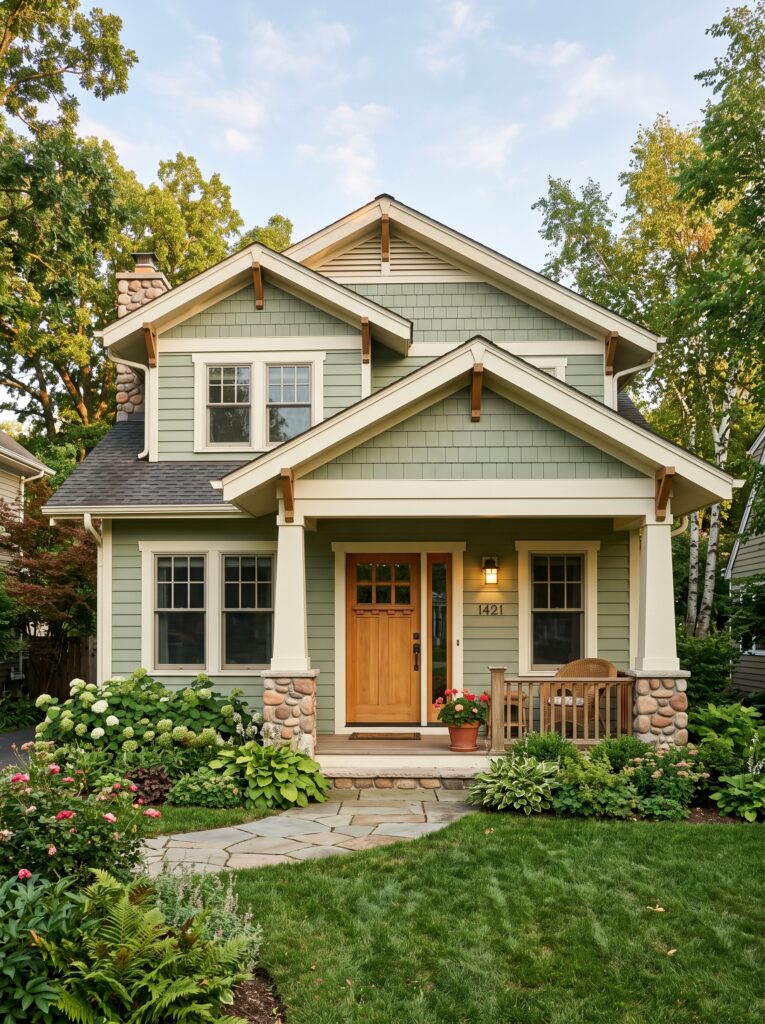
Soft sage green has become one of the most beloved exterior colors in recent years, bringing a calm, nature-inspired quality to a home’s facade. It’s loved for blending beautifully into garden landscaping, and it works especially well on craftsman or cottage-style homes, creating a soft, welcoming curb appeal.
Key Elements:
- Soft sage green siding
- Cream or soft white trim
- A natural wood front door
- Mature, layered landscaping
- Black or bronze light fixtures
- Simple stone or brick pathway
How to Style It:
- Choose a muted, dusty sage rather than a bright or yellow-leaning green.
- Pair with cream trim around windows and the roofline for soft contrast.
- Select a natural wood front door to add warmth against the cool green.
- Allow garden landscaping to grow in naturally, complementing the soft color palette.
- Add black or bronze light fixtures for a classic, grounded finish.
Idea 2: Warm Beige with White Accents
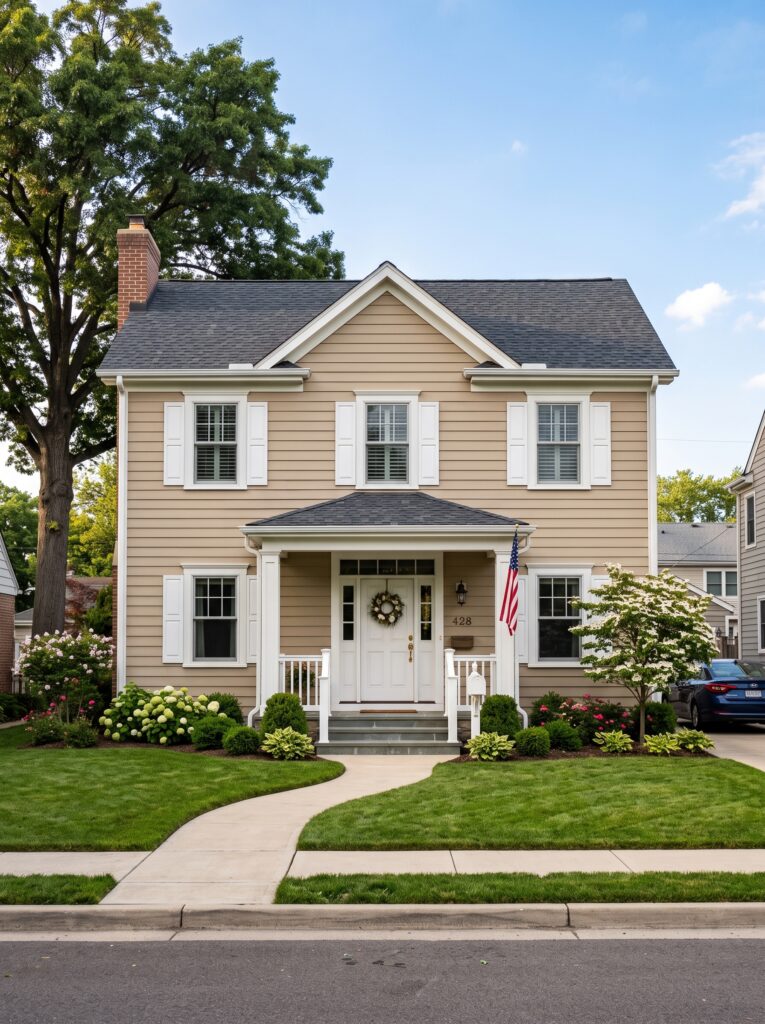
Warm beige remains one of the safest, most universally appealing exterior colors, working on nearly any architectural style and complementing almost any landscaping. It’s loved for its timeless versatility, and it works especially well on traditional or suburban homes, creating a classic, approachable curb appeal.
Key Elements:
- Warm beige siding
- Crisp white trim and shutters
- A simple wood or painted front door
- Manicured landscaping
- White porch railings
- Classic black light fixtures
How to Style It:
- Choose a beige with warm undertones rather than a cool, grayish beige.
- Pair with crisp white trim and shutters for classic, clean contrast.
- Choose a front door color that adds a small pop of personality, like navy or red.
- Keep landscaping tidy and well-maintained to support the traditional aesthetic.
- Add classic black light fixtures on either side of the entrance.
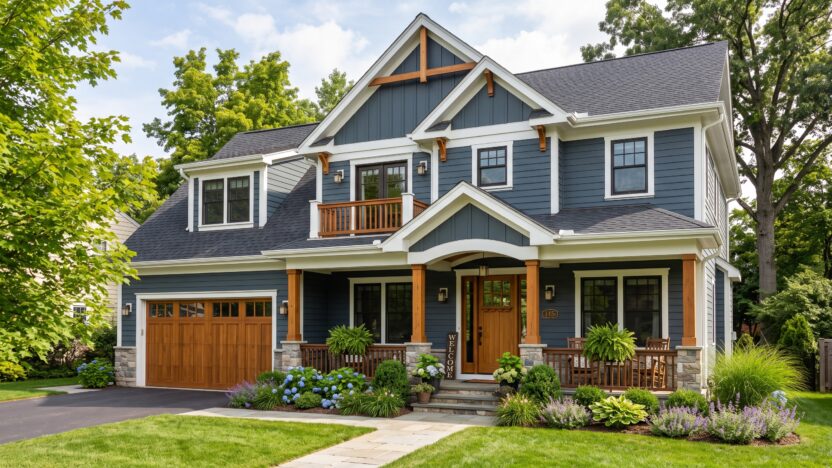
Idea 3: Deep Slate Blue Statement
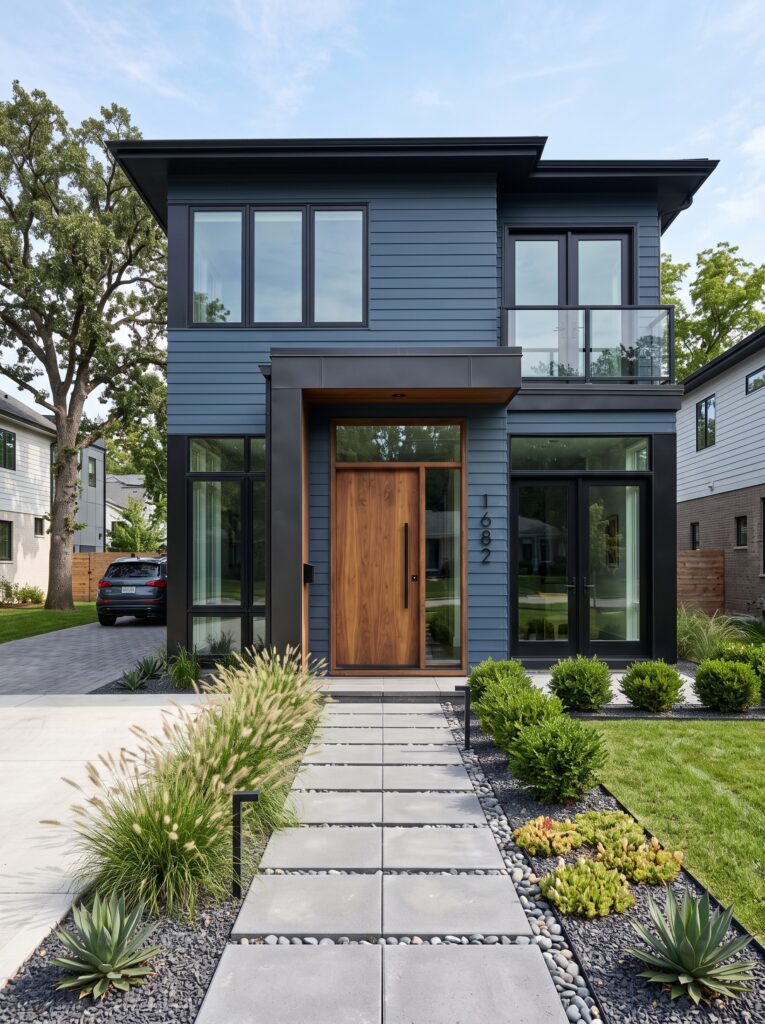
Deep slate blue brings sophistication and depth to a home’s exterior without feeling as stark as black or as cold as gray. It’s loved for its rich, moody character, and it works especially well on modern or transitional homes, creating a dramatic yet approachable curb appeal.
Key Elements:
- Deep slate blue siding
- Black window frames
- A natural wood front door
- Minimal, structured landscaping
- Black exterior light fixtures
- Simple concrete or stone pathways
How to Style It:
- Choose a true slate blue with enough depth to read as sophisticated rather than flat.
- Pair with black window frames for strong, modern contrast.
- Add a natural wood front door to introduce warmth against the cool blue.
- Keep landscaping minimal and structured to let the bold color stand out.
- Add black exterior lighting to complete the cohesive, modern look.
Idea 4: Classic Gray with Navy Door
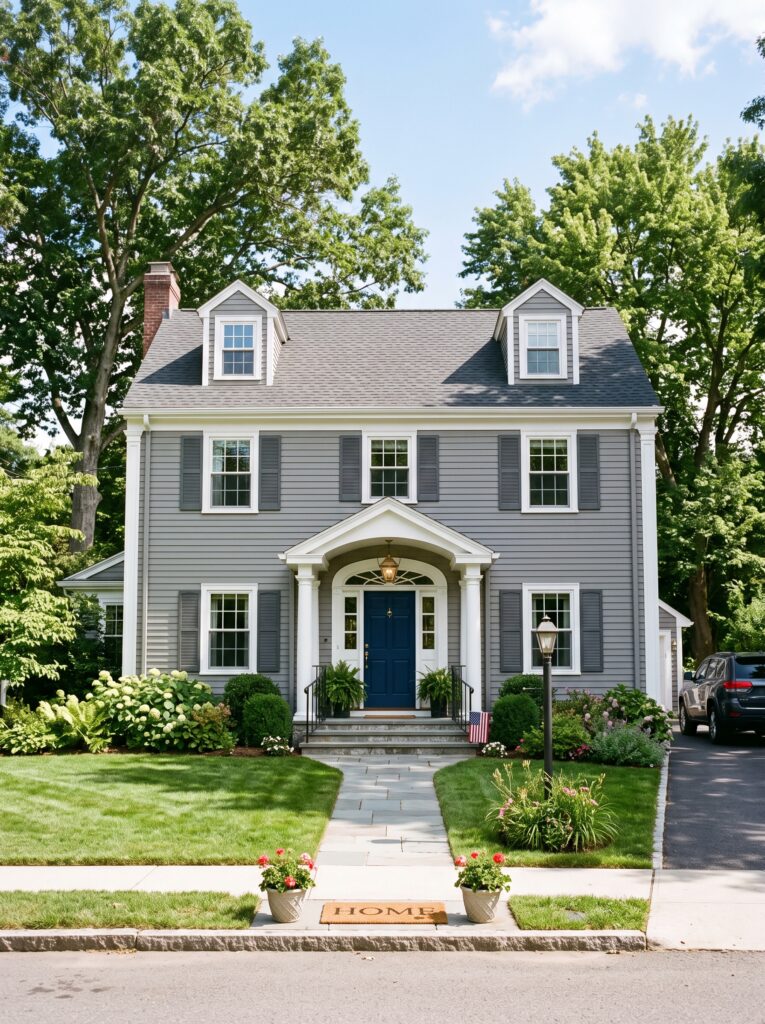
Gray remains one of the most consistently popular exterior colors, and pairing it with a navy front door adds just enough personality without straying from a timeless aesthetic. It’s loved for its versatility across architectural styles, and it works especially well on colonial or traditional homes, creating a polished, classic curb appeal.
Key Elements:
- Classic gray siding
- White trim
- A deep navy front door
- Mature, established landscaping
- Black or bronze light fixtures
- White porch railings, if applicable
How to Style It:
- Choose a true gray, avoiding shades that lean too blue or too brown.
- Pair with white trim around windows and the roofline for crisp contrast.
- Add a deep navy front door for a classic, sophisticated pop of color.
- Allow mature landscaping to frame the home’s traditional architecture.
- Add black or bronze light fixtures to complete the timeless look.
Idea 5: Warm White with Natural Wood Accents
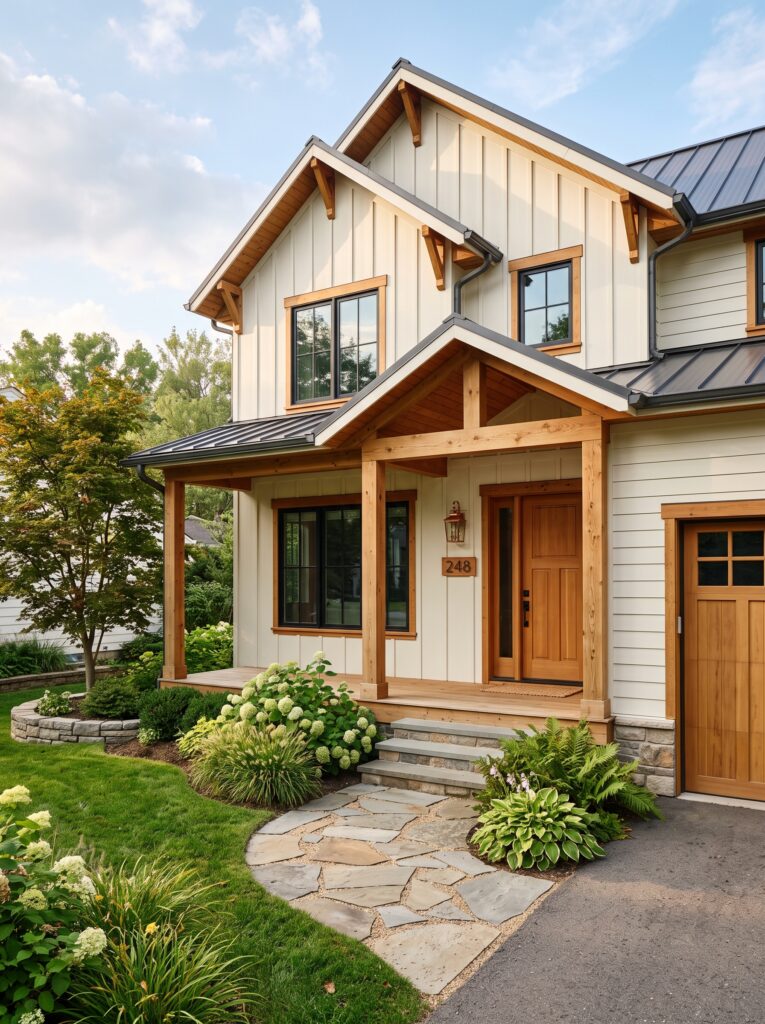
Warm white paired with natural wood accent panels has become a defining look for modern farmhouse and contemporary homes, balancing brightness with organic texture. It’s loved for its fresh, current character, and it works especially well on new builds or updated facades, creating a bright, architecturally interesting curb appeal.
Key Elements:
- Warm white siding
- Natural wood accent paneling
- A black front door
- Black window frames
- Minimal, structured landscaping
- Modern black light fixtures
How to Style It:
- Choose a warm, slightly creamy white for the main siding color.
- Add a natural wood accent panel section, often framing the entrance or garage.
- Choose a black front door and matching black window frames for contrast.
- Keep landscaping minimal and structured to support the modern aesthetic.
- Add black, modern light fixtures to complete the contemporary look.
Idea 6: Rich Terracotta Warmth
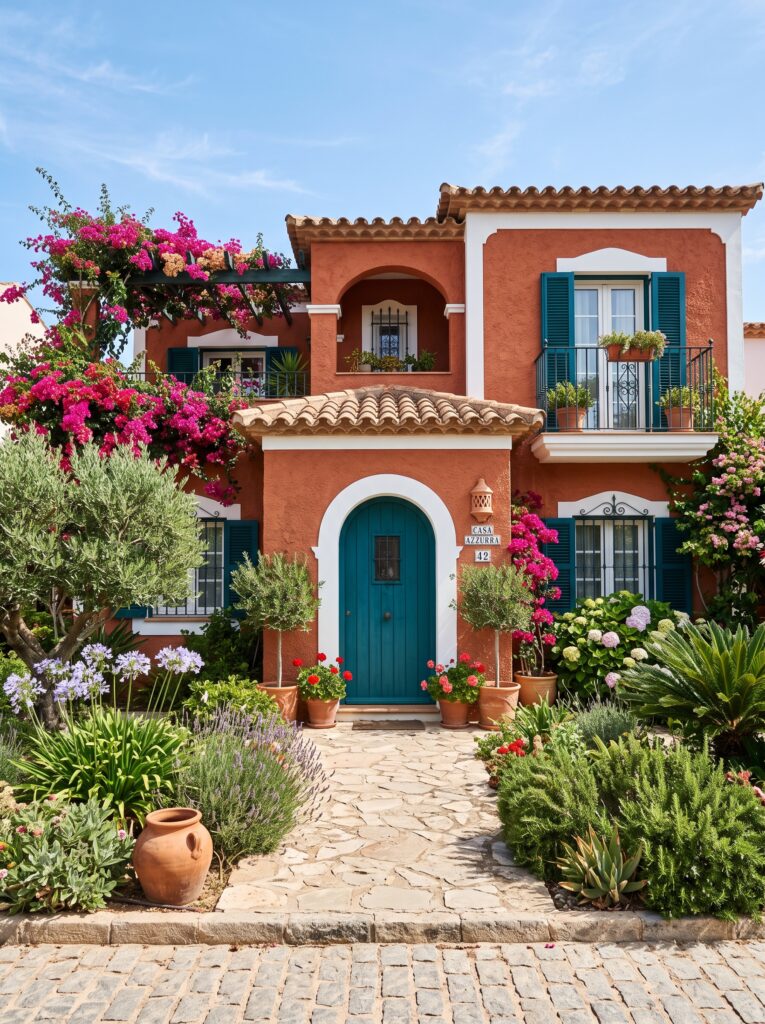
Rich terracotta brings genuine warmth and sun-soaked character to a home’s exterior, especially in warmer climates where this color feels naturally at home. It’s loved for its vibrant, inviting quality, and it works especially well on Mediterranean or Spanish-style homes, creating an earthy, energetic curb appeal.
Key Elements:
- Rich terracotta stucco
- White trim
- A deep teal or turquoise front door
- Warm-climate landscaping
- Wrought iron light fixtures
- Terracotta or clay planters
How to Style It:
- Choose a rich, warm terracotta that complements your region’s natural tones.
- Pair with white trim around windows and doorways for contrast.
- Add a deep teal or turquoise front door for a vibrant, eye-catching accent.
- Incorporate warm-climate landscaping like palms, succulents, or olive trees.
- Add wrought iron light fixtures and terracotta planters to complete the look.
Idea 7: Muted Olive Green Modern
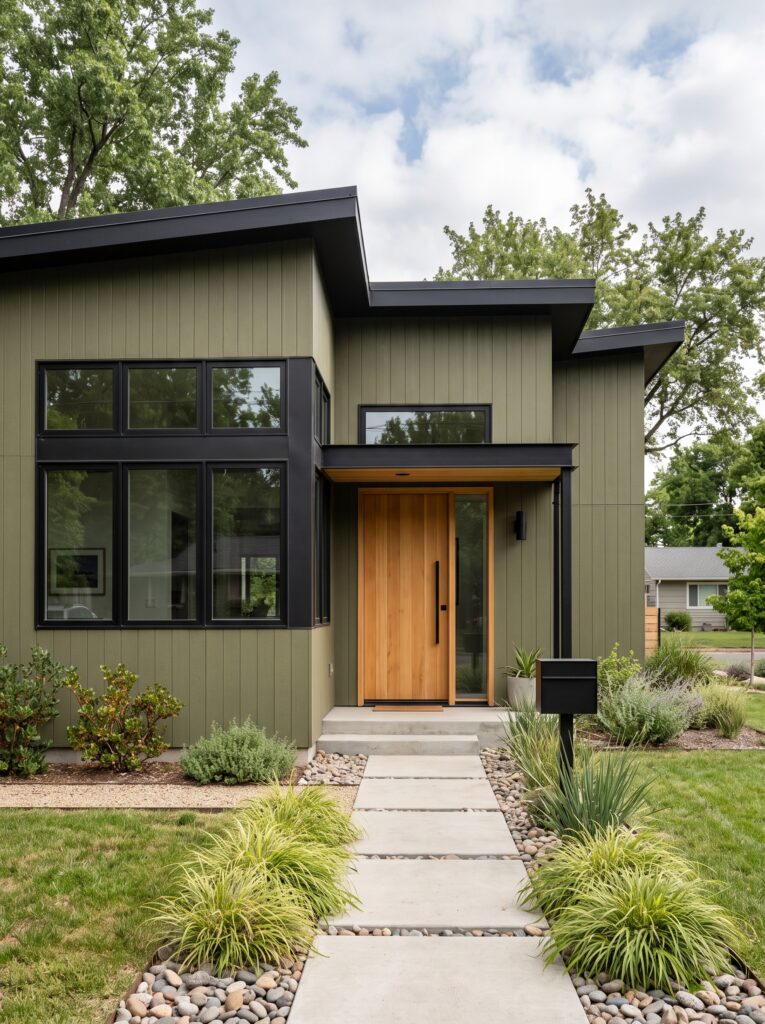
Muted olive green offers a genuinely unique alternative to more common exterior greens, bringing an earthy, slightly unexpected richness. It’s loved by homeowners who want something distinct, and it works especially well on modern or contemporary homes, creating a grounded, sophisticated curb appeal.
Key Elements:
- Muted olive green siding
- Black window frames
- A natural wood front door
- Minimal, structured landscaping
- Black exterior light fixtures
- Simple concrete pathways
How to Style It:
- Choose a deep, muted olive rather than a bright or yellow-leaning green.
- Pair with black window frames for clean, modern contrast.
- Add a natural wood front door to introduce warmth.
- Keep landscaping minimal and structured to let the unique color stand out.
- Add black exterior lighting to complete the cohesive, modern aesthetic.
A helpful styling trick is to test olive green samples against your specific roof color before committing, since olive can shift dramatically depending on whether your roof reads warm or cool.
Idea 8: Crisp White Traditional Colonial
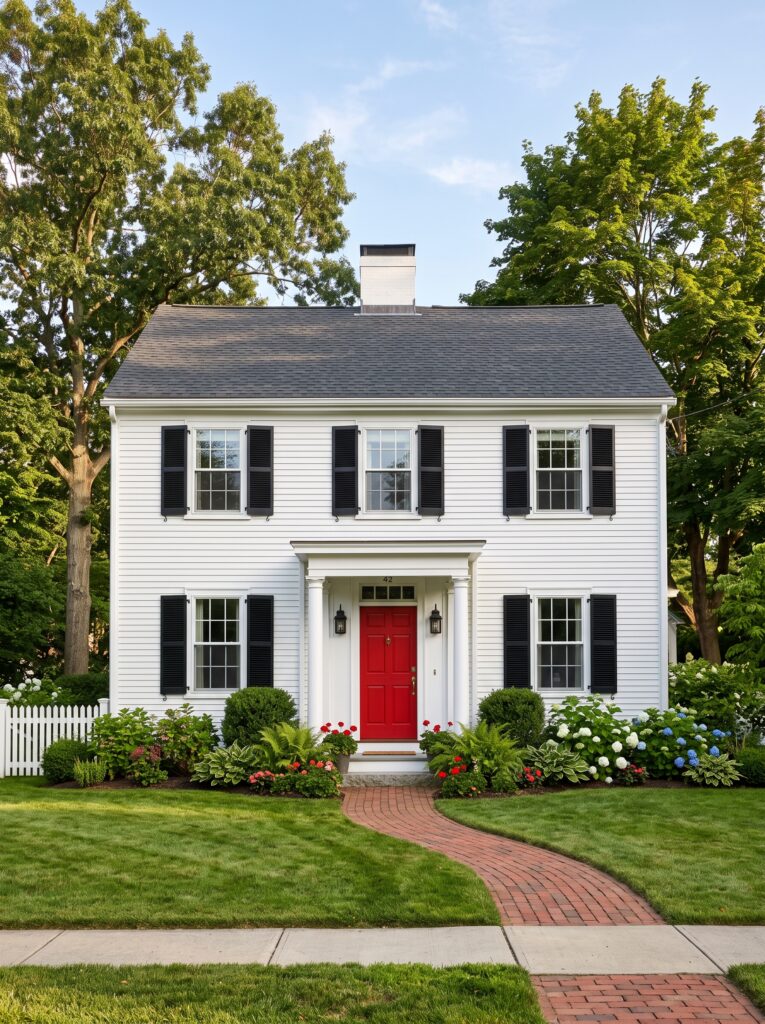
Crisp white remains the gold standard for traditional colonial homes, especially when paired with black shutters and a bold front door color. It’s loved for its timeless, all-American charm, and it works beautifully on colonial or federal-style homes, creating a classic, dignified curb appeal.
Key Elements:
- Crisp white siding
- Black shutters
- A bold red, navy, or black front door
- Mature, established landscaping
- Black or brass light fixtures
- Symmetrical foundation plantings
How to Style It:
- Choose a clean, slightly warm white rather than a stark, cool white.
- Pair with black shutters at every window for classic colonial symmetry.
- Add a bold front door color, like red or navy, for a striking focal point.
- Plant symmetrical foundation beds on either side of the entrance.
- Add black or brass light fixtures to complete the traditional aesthetic.
Idea 9: Soft Blue-Gray Cottage Charm
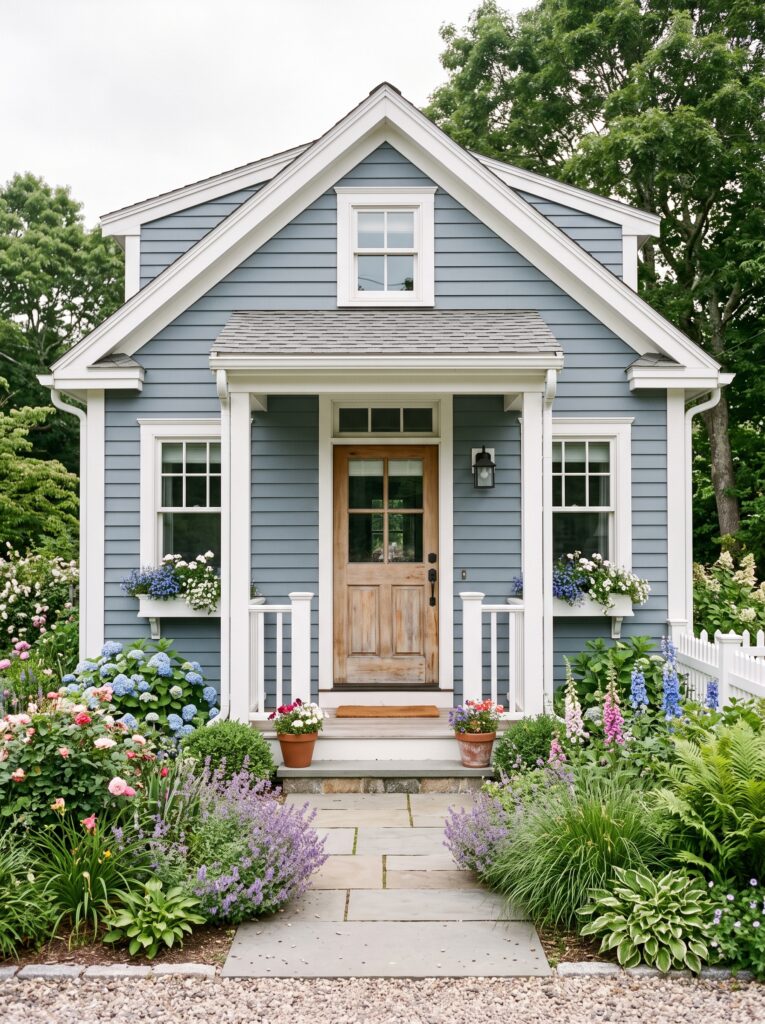
Soft blue-gray brings a gentle, calming quality to smaller cottage-style homes, evoking a coastal or countryside charm without leaning too heavily into any one specific theme. It’s loved for its versatility, and it works especially well on smaller historic or cottage homes, creating a peaceful, storybook curb appeal.
Key Elements:
- Soft blue-gray siding
- White trim
- A weathered or natural wood front door
- Charming cottage garden landscaping
- Vintage-style light fixtures
- White porch railings
How to Style It:
- Choose a muted, soft blue-gray rather than a bold or saturated blue.
- Pair with white trim for classic, crisp contrast.
- Add a weathered wood front door for natural texture and character.
- Plant a charming garden bed with layered, cottage-style flowers.
- Add vintage-style light fixtures to reinforce the cottage charm.
Idea 10: Bold Black Modern Edge
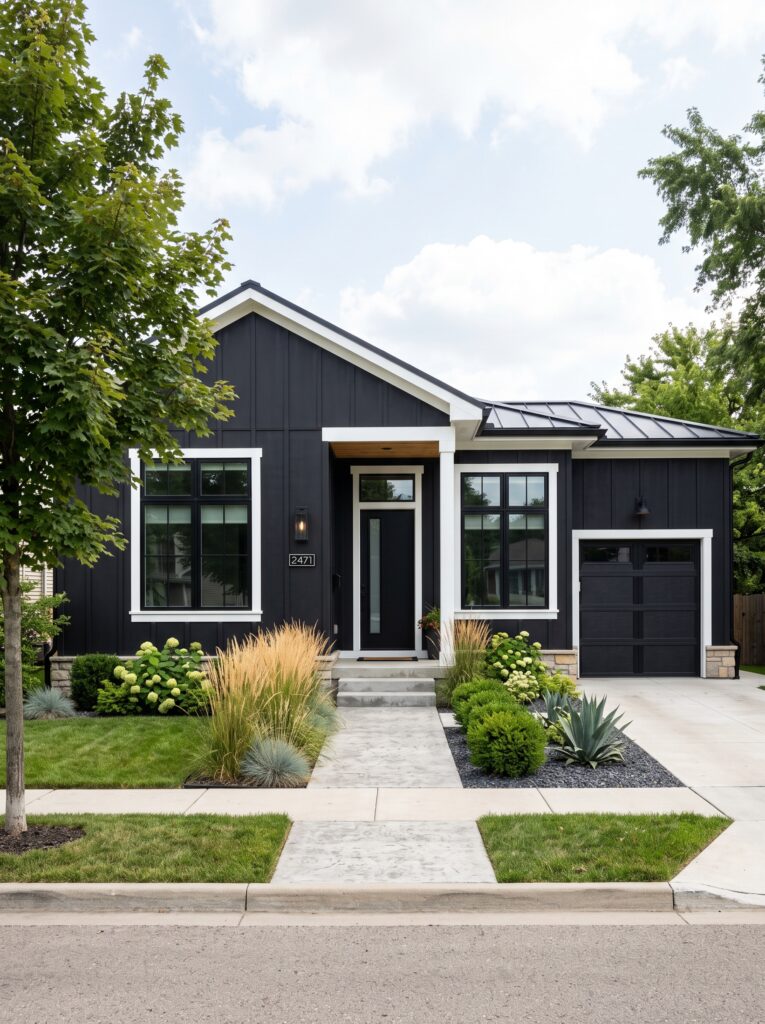
All-black exteriors continue to be one of the boldest, most architecturally striking choices available, creating an instantly memorable curb appeal. It’s loved for its confident, gallery-like presence, and it works especially well on modern or contemporary farmhouse homes, creating a dramatic, sophisticated mood.
Key Elements:
- Matte black siding
- White trim accents around windows
- A black front door
- Board and batten or shiplap texture
- Black exterior light fixtures
- Simple, structured landscaping
How to Style It:
- Choose a matte, rather than glossy, black for a sophisticated, modern finish.
- Add white trim accents around windows for definition and contrast.
- Match the front door to the siding for a cohesive, monochromatic statement.
- Incorporate board and batten or shiplap texture if your home’s architecture allows.
- Keep landscaping simple and structured to let the bold color remain the focal point.
Idea 11: Warm Taupe Sophistication
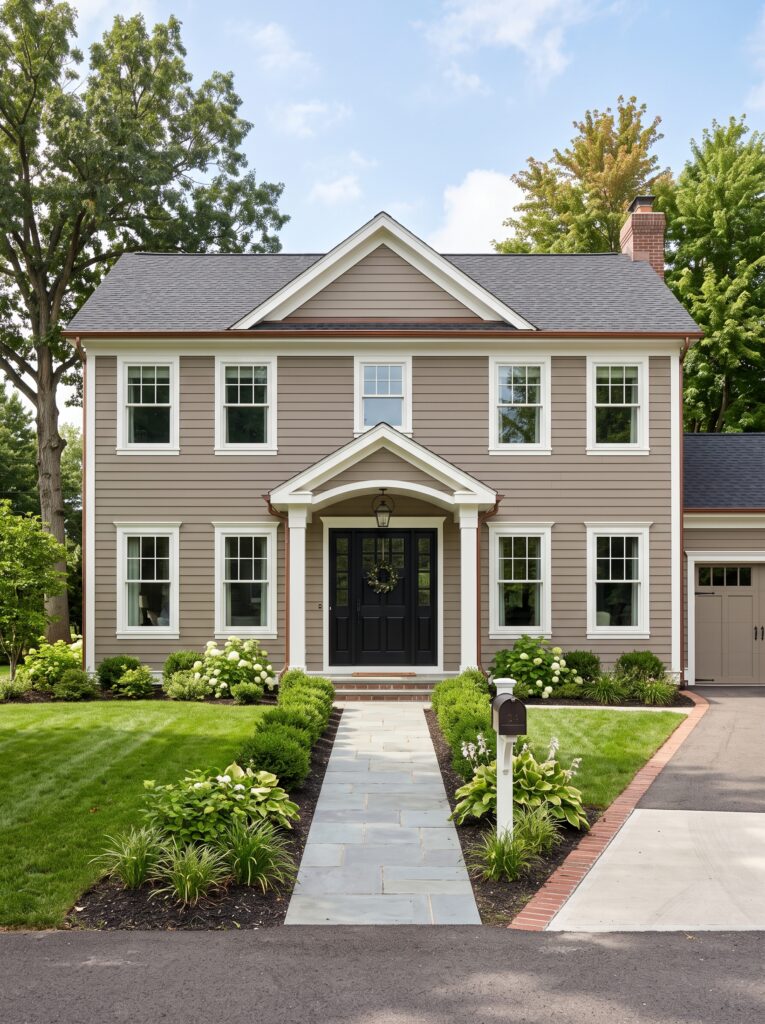
Warm taupe offers a sophisticated, slightly elevated alternative to standard beige or gray, working beautifully across a range of architectural styles. It’s loved for feeling intentional rather than overly safe, and it works especially well on transitional or traditional homes, creating a polished, timeless curb appeal.
Key Elements:
- Warm taupe siding
- White window trim
- A black front door
- Manicured landscaping
- Black or bronze light fixtures
- Simple stone or concrete pathways
How to Style It:
- Choose a warm taupe with subtle brown undertones rather than a cool, grayish taupe.
- Pair with white trim around windows for clean, classic contrast.
- Add a black front door for a modern, grounding accent.
- Keep landscaping manicured and tidy to support the sophisticated overall look.
- Add black or bronze light fixtures to complete the polished aesthetic.
Idea 12: Soft Yellow Cheerful Curb Appeal
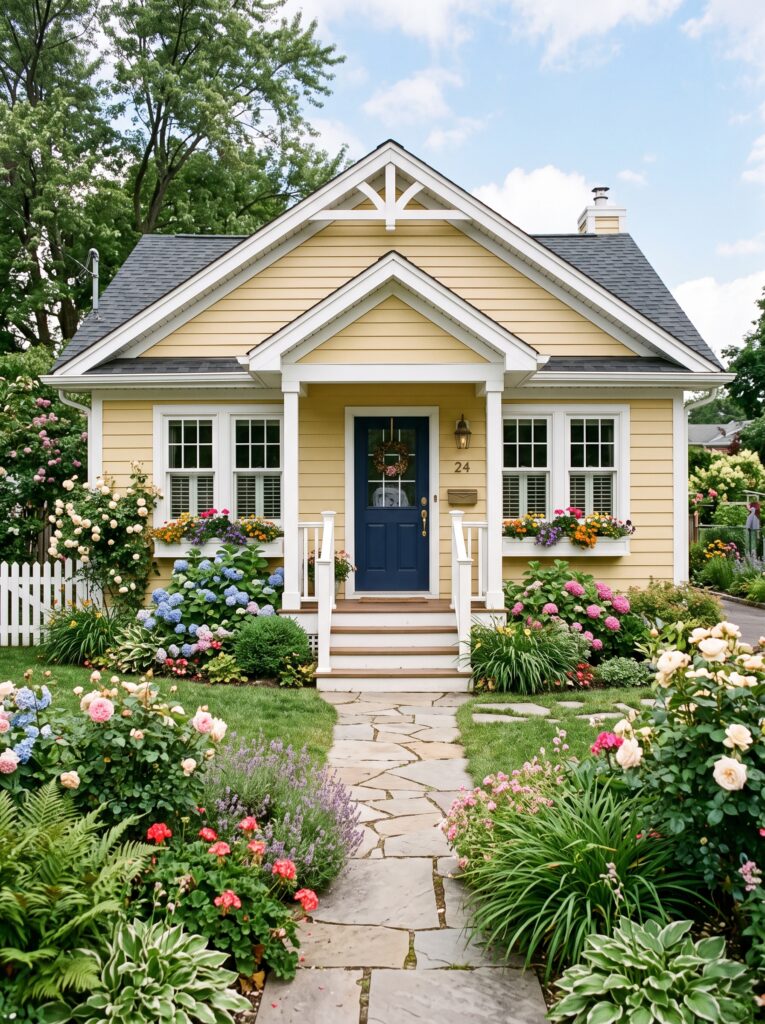
Soft yellow brings genuine warmth and personality to a home’s exterior without feeling overwhelming or overly bold. It’s loved for its cheerful, welcoming character, and it works especially well on smaller cottages or starter homes, creating a joyful, memorable curb appeal.
Key Elements:
- Soft, muted yellow siding
- White trim
- A navy or contrasting front door
- Charming garden landscaping
- White porch railings
- Vintage-inspired light fixtures
How to Style It:
- Choose a soft, slightly muted yellow rather than a bright or neon shade.
- Pair with crisp white trim for classic contrast and definition.
- Add a navy front door for a playful, contrasting pop of color.
- Plant charming, layered garden beds to soften the home’s facade.
- Add vintage-inspired light fixtures to reinforce the cheerful, welcoming mood.
Idea 13: Deep Forest Green Traditional Elegance
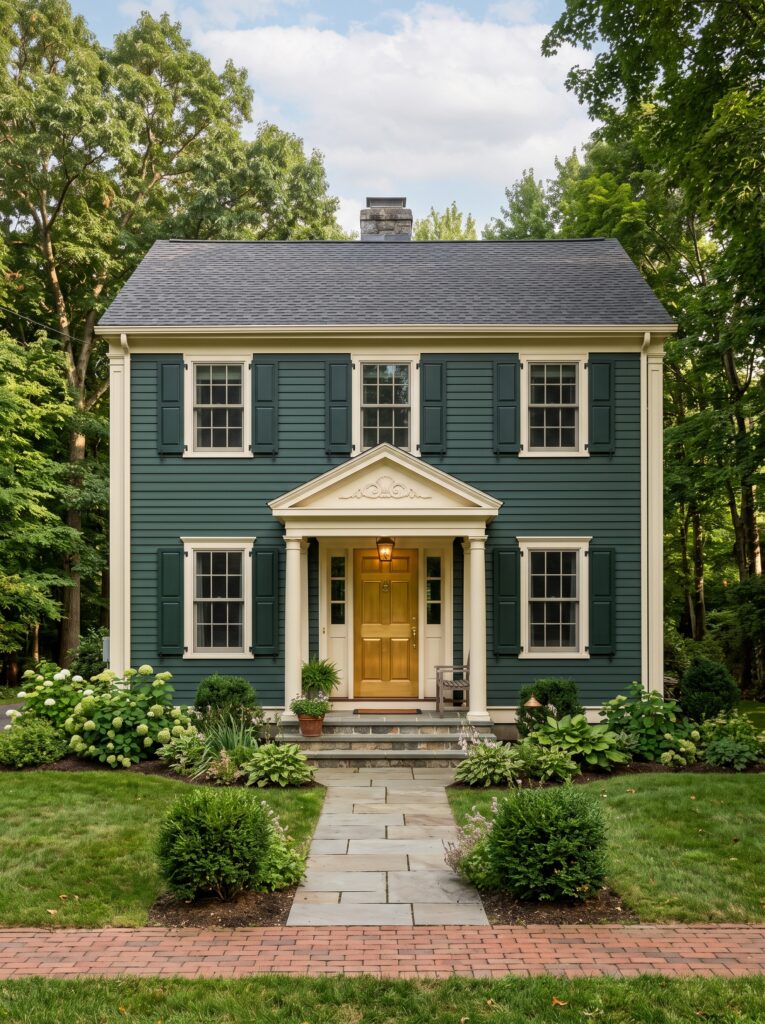
Deep forest green brings an elegant, slightly old-world richness to a home’s exterior, especially when paired with warm cream trim and brass accents. It’s loved for its sophisticated, grounded character, and it works especially well on traditional or colonial-style homes, creating a refined, elegant curb appeal.
Key Elements:
- Deep forest green siding
- Cream trim
- A brass or wood front door
- Mature, established landscaping
- Brass light fixtures
- Classic shutters, if applicable
How to Style It:
- Choose a deep, rich forest green rather than a bright or muted sage tone.
- Pair with cream trim around windows and the roofline for elegant contrast.
- Add a brass or natural wood front door for warmth and sophistication.
- Allow mature trees and landscaping to frame the home naturally.
- Add brass light fixtures to complete the elegant, traditional aesthetic.
I’ve noticed that forest green homes tend to age beautifully alongside mature landscaping, the deeper the surrounding greenery gets over the years, the more intentional and established the whole exterior color scheme feels.
Idea 14: Light Gray with Black Roof Contrast
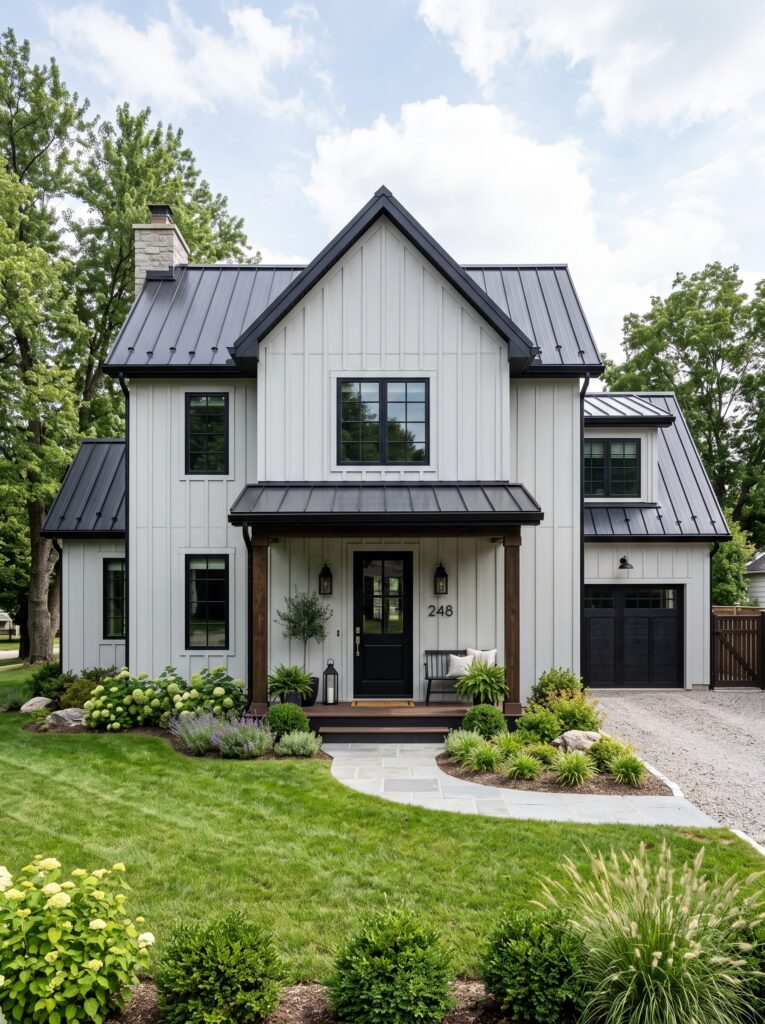
Light gray paired with a black metal roof creates strong, architectural contrast that’s become a signature look for modern farmhouse and contemporary homes. It’s loved for its crisp, current character, and it works especially well on homes with simple, clean architectural lines, creating a fresh, timeless curb appeal.
Key Elements:
- Light gray siding
- A black metal roof
- Black window frames
- A black or natural wood front door
- Board and batten texture, if applicable
- Simple, structured landscaping
How to Style It:
- Choose a light, slightly cool gray for the siding to contrast against the black roof.
- Allow the black metal roof to create strong, natural contrast against the lighter siding.
- Match window frames to the roof color for a cohesive, modern look.
- Add a black or natural wood front door depending on your preferred contrast level.
- Keep landscaping simple and structured to let the architectural contrast remain the focal point.
Idea 15: Warm Greige Modern Classic
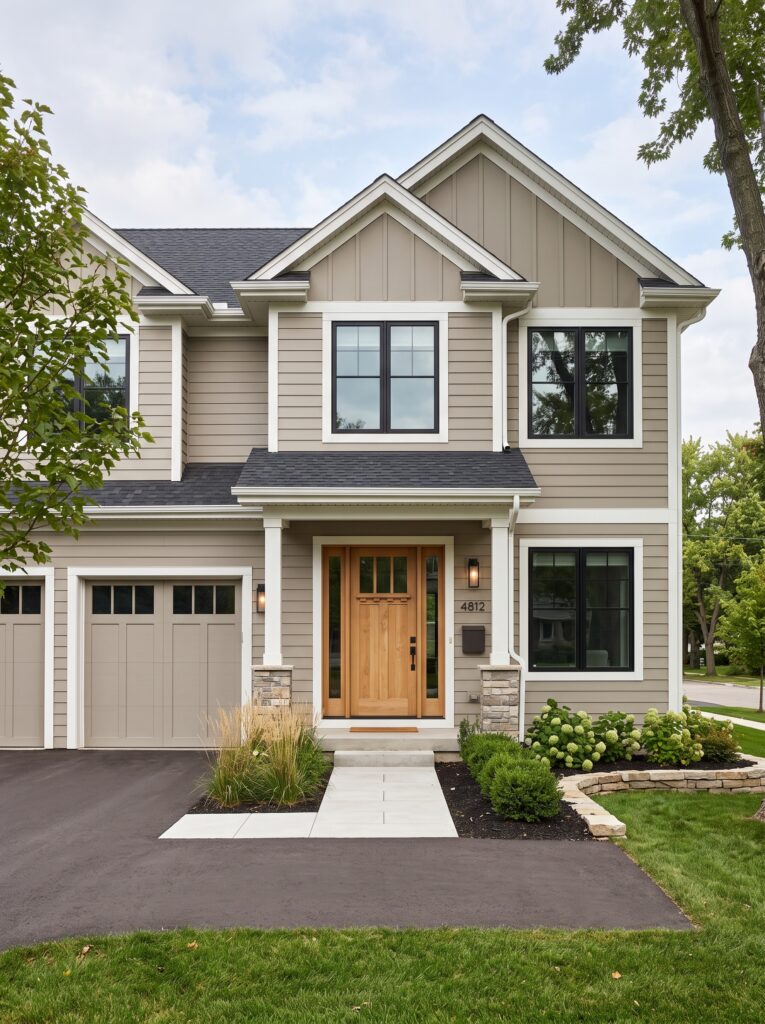
This final idea uses warm greige, a blend between gray and beige, as a genuinely versatile, modern-classic exterior color that suits nearly any home style. It’s loved for working with almost any roof or landscaping color, and it works especially well on transitional homes, creating a soft, sophisticated curb appeal that won’t feel dated quickly.
Key Elements:
- Warm greige siding
- White trim
- A natural wood front door
- Black or bronze hardware
- Minimal, modern landscaping
- Simple black house numbers
How to Style It:
- Choose a greige with warm undertones rather than cool gray undertones for a softer feel.
- Pair with white trim around windows and rooflines for gentle contrast.
- Add a natural wood front door to introduce warmth and texture.
- Use black or bronze hardware and house numbers for a modern finishing touch.
- Keep landscaping simple and structured to complement the home’s clean lines.
Exterior House Color Selection Guide
| Home Style | Best Color Direction | Trim Pairing | Mood Created |
|---|---|---|---|
| Craftsman | Sage green, olive, dusty blue | Cream or white | Warm, organic |
| Colonial | White, gray, soft beige | Black or white | Classic, dignified |
| Modern Farmhouse | Black, light gray, warm white | White or black | Bold, contemporary |
| Mediterranean | Terracotta, warm stucco tones | White | Vibrant, earthy |
| Coastal Cottage | Blue-gray, soft white | White | Calm, breezy |
| Transitional | Warm taupe, greige | White or black | Sophisticated, timeless |
Common Decorating Mistakes to Avoid
- Skipping a large-scale sample test. A small paint chip never accurately represents how a color will look across an entire exterior.
- Ignoring fixed elements. Roof color, brick, and stone should always guide your paint choice, since they’re far more expensive to change.
- Choosing color without considering lighting direction. North-facing homes often need warmer tones to avoid looking flat or cold.
- Overlooking trim and door color. These details have an outsized impact on the final look and shouldn’t be an afterthought.
- Following trends too closely. A color popular today may not age well with your home’s specific architecture or neighborhood.
- Forgetting maintenance considerations. Darker colors may show fading or dust more visibly depending on your climate and sun exposure.
Final Thoughts
Choosing the right exterior house color is genuinely one of the most impactful decisions you can make for your home’s overall presence. Whether you’re drawn to a soft, calming sage or a bold, dramatic black, the right color transforms how your home feels from the moment it comes into view.
I’ve seen how simple decorating changes like these can completely transform how a home feels without requiring a major renovation, and exterior color is one of the clearest examples of that truth. Start by testing a few samples directly on your home, considering your roofline, landscaping, and natural light, and let your decision grow from there.
Save this article to your Pinterest board for your next exterior refresh, and share it with anyone who’s been dreaming of giving their home a beautiful new look.

Indy Santos is a passionate interior styling specialist and home living enthusiast with a focus on contemporary decor, smart space planning, and affordable design inspiration. At Inspired Homex, she provides readers with fresh decorating concepts, actionable advice, and professional guidance to create comfortable, elegant, and well-organized homes that reflect their personal style.