
Introduction
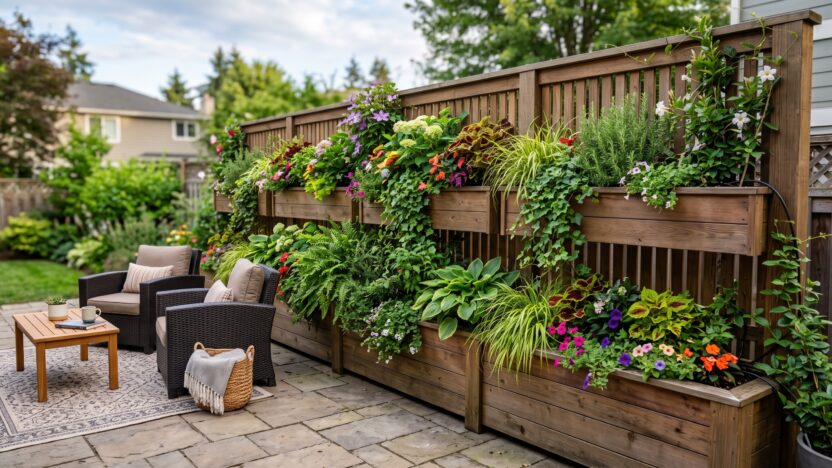
There’s nothing quite like sitting outside on your patio, completely relaxed, only to realize your neighbor’s window looks directly into your space. A planter privacy wall solves that problem in a way that feels nothing like a typical fence. Instead of a flat, solid barrier, you get living greenery, texture, and genuine garden beauty doing double duty as a screen.
What I love most about planter privacy walls is how much more inviting they feel compared to a traditional wood or vinyl fence. They soften hard property lines, bring in seasonal color, and actually improve the air quality and ambiance of your outdoor space while they’re at it. Whether you’re dealing with a nosy neighbor, a busy street, or just want to carve out a more intimate patio corner, there’s a planter wall style for nearly every situation.
In this guide, I’m sharing 17 planter privacy wall ideas, from simple tiered planter boxes to more elaborate living wall structures, so you can find the right fit for your own outdoor space.
Key Takeaways
- Planter privacy walls block unwanted views while adding greenery, unlike solid fencing
- Tall, dense plants like bamboo and arborvitae offer the fastest, most reliable screening
- Tiered and modular planter systems allow you to adjust height and coverage over time
- Mixing planter materials, like wood and metal, adds visual interest beyond just the plants
- Trellis-style planters support climbing vines for an even denser, greener barrier
- Wheeled planter walls offer flexible, movable privacy for renters or changing needs
- Year-round screening requires evergreen plants, while seasonal screening can use a wider plant variety
Why Planter Privacy Walls Work So Well
Planter privacy walls succeed because they solve a practical problem, blocking unwanted sightlines, while also adding genuine beauty to your outdoor space. Unlike a traditional fence, which is purely functional, a planter wall becomes a living, growing feature that changes and improves over each season.
In my experience, the most successful planter privacy walls combine height with density. A single row of tall, skinny plants might block a view from one specific angle, but a slightly layered approach, mixing different plant heights and a few structural elements like lattice or trellis, creates privacy that holds up from multiple vantage points around your yard.
Idea 1: Tiered Wood Planter Boxes
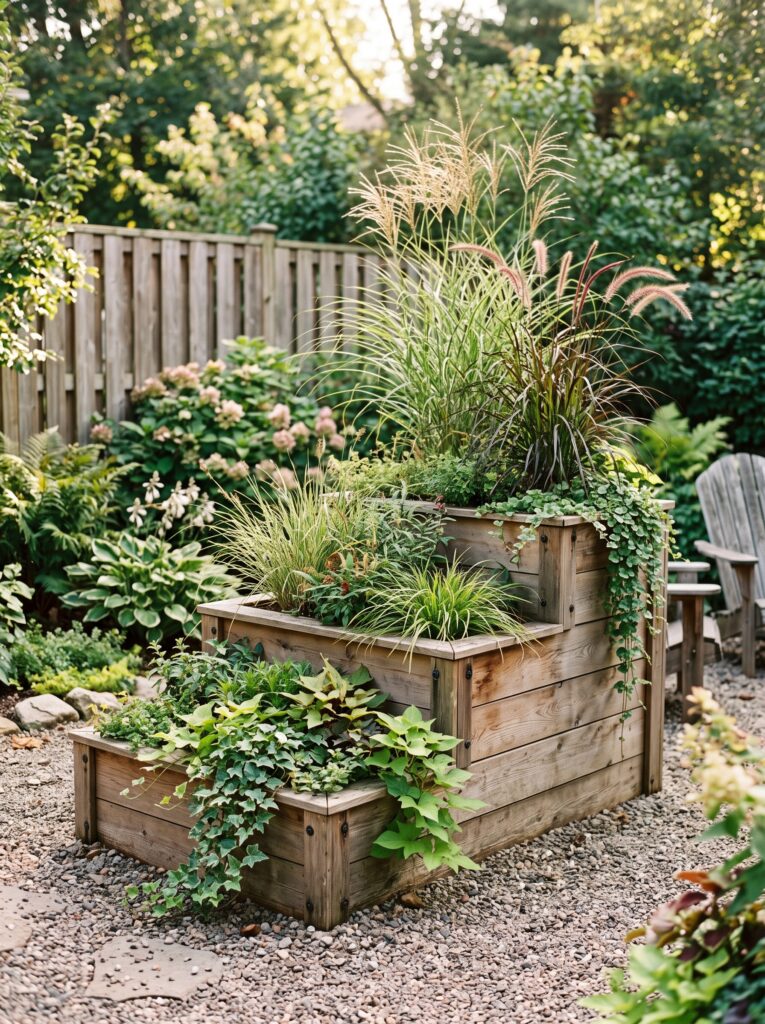
Tiered wood planter boxes create a privacy wall with built-in visual interest, since the staggered heights naturally draw the eye upward while blocking sightlines. Homeowners love it because it’s achievable as a DIY project, and it works beautifully along patio edges or property lines, creating a layered, garden-like screen.
Key Elements:
- Three or more wood planter boxes in varying heights
- Tall ornamental grasses or bamboo
- Trailing greenery for the lower tiers
- Quality potting soil with good drainage
- A gravel or paver base for stability
- Weather-sealed or naturally rot-resistant wood
How to Style It:
- Build or purchase planter boxes in at least three different heights, from 18 inches to 4 feet.
- Arrange them in a row or staggered pattern along the area you want to screen.
- Plant the tallest boxes with dense, upright plants like ornamental grass or bamboo.
- Add trailing plants to the shorter boxes to fill in gaps near the ground.
- Water consistently, checking soil moisture every two to three days during summer months.
- Trim and shape plants regularly to maintain consistent screening coverage.
Idea 2: Bamboo Screen Planters
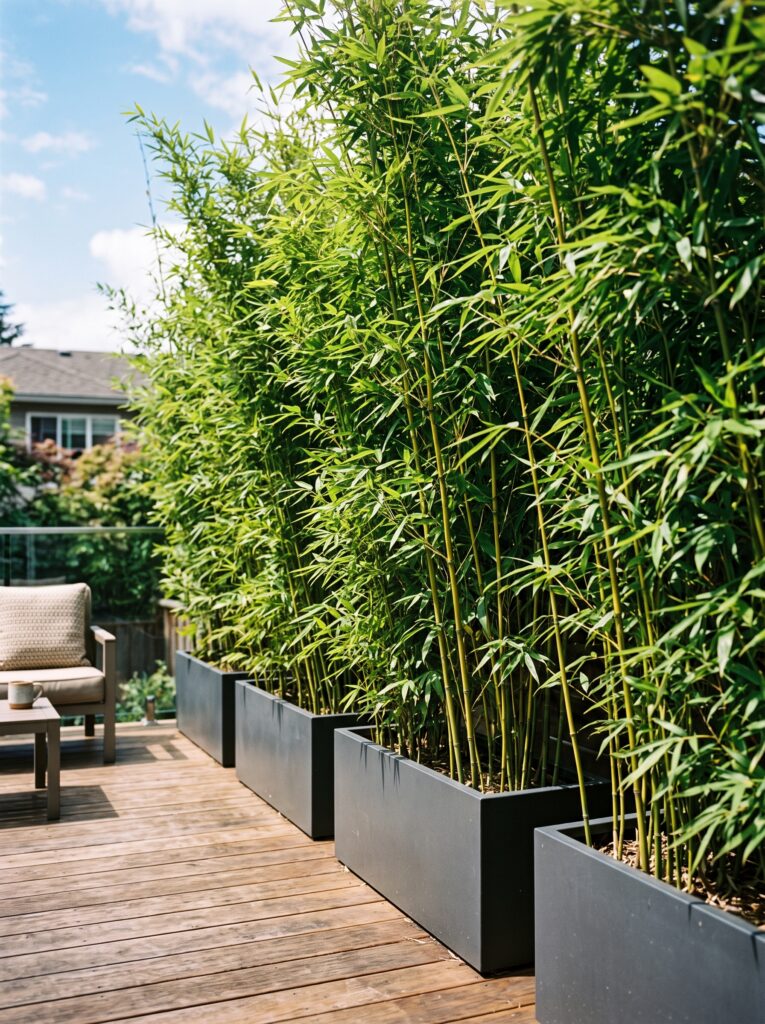
Bamboo is one of the fastest-growing, most effective privacy plants available, making it a favorite for anyone who wants quick, dense screening. It’s loved for its tropical, lush appearance, and it works especially well along patios or pool areas, creating a true resort-like sense of seclusion.
Key Elements:
- Tall, narrow planters or large containers
- Clumping bamboo varieties (avoid running bamboo in containers)
- Quality potting soil with good drainage
- A sturdy container base to prevent tipping
- Mulch topping to retain moisture
- Regular fertilizer for healthy growth
How to Style It:
- Choose clumping bamboo varieties specifically, since they stay more contained than running types.
- Select tall, narrow containers at least 24 inches deep to support root growth.
- Position containers in a row along the area needing privacy.
- Mulch the soil surface to help retain consistent moisture.
- Water deeply two to three times per week, more often during hot summer months.
- Trim canes as needed to maintain your desired height and density.
I’ve noticed that bamboo in containers stays much more manageable than bamboo planted directly in the ground, which makes it a smart choice for anyone nervous about it spreading uncontrollably.
Idea 3: Modular Living Wall System
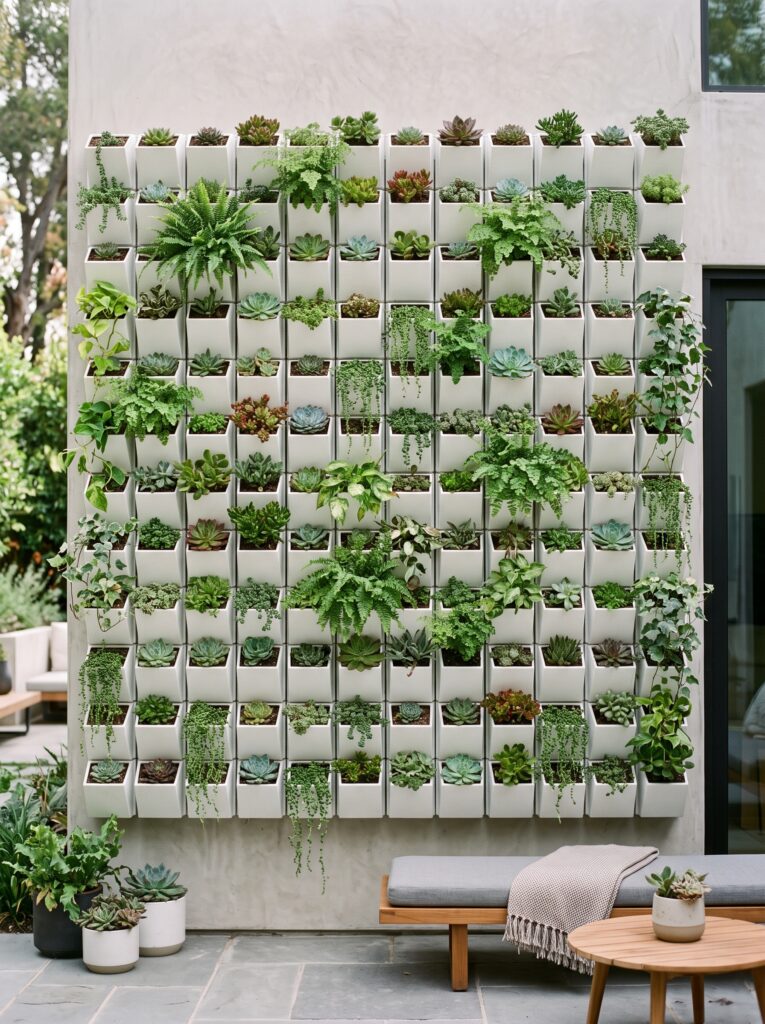
Modular living wall systems use stackable, often geometric planter units to create a true vertical garden that doubles as a privacy screen. It’s loved for its modern, architectural look, and it works especially well on smaller patios or balconies, creating a striking, space-efficient green wall.
Key Elements:
- Modular planter cubes or stackable units
- A mix of succulents, ferns, and trailing plants
- Quality potting soil suited to each plant type
- A stable base or wall-mounted support system
- Drip irrigation, if available, for consistent watering
- Varying plant heights and textures
How to Style It:
- Choose a modular planter system sized appropriately for your available space.
- Plan your plant selection based on each section’s light exposure.
- Group plants with similar water needs together within the modular grid.
- Install at a height that maximizes privacy for your specific seating or viewing area.
- Water according to each plant’s individual needs, checking soil moisture regularly.
- Trim and rotate plants as needed to keep the living wall looking full and balanced.
Idea 4: Trellis Planter with Climbing Vines
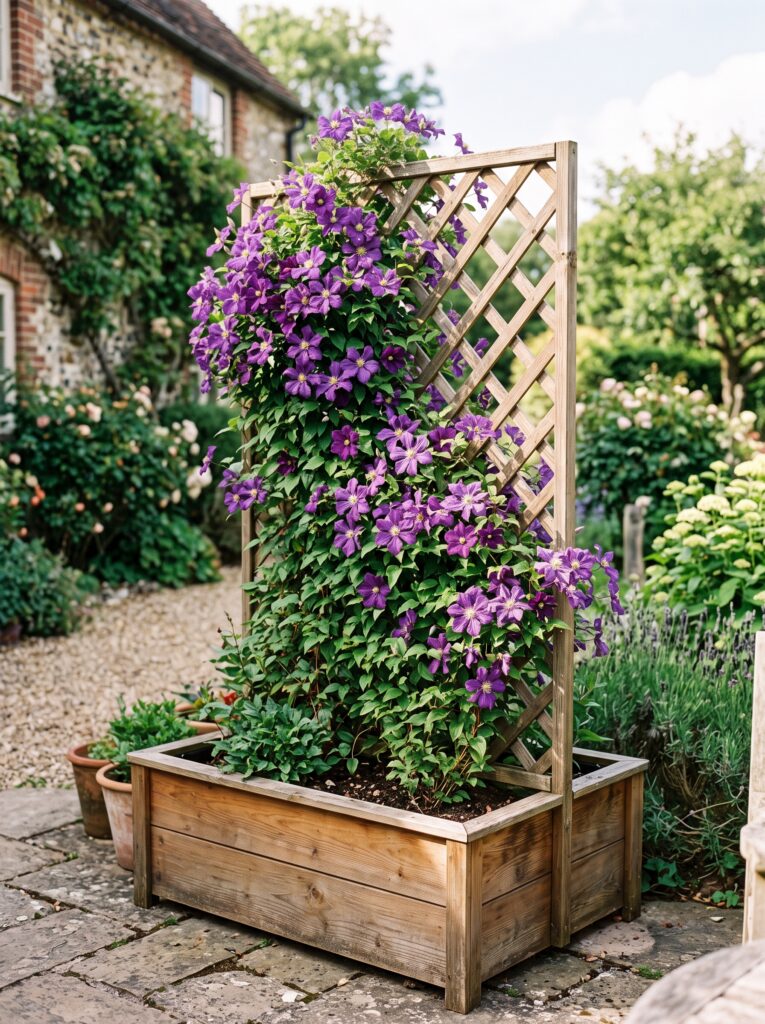
Combining a planter box with a trellis creates a privacy wall that grows denser and taller over time as climbing vines fill in the structure. It’s loved for its romantic, cottage-garden charm, and it works especially well along patios, decks, or property lines, creating a lush, flowering screen.
Key Elements:
- A wood planter box with an attached lattice trellis
- Climbing vines like clematis, jasmine, or climbing roses
- Quality potting soil with good drainage
- Garden twine for training young vines
- Mulch topping to retain soil moisture
- Regular fertilizer for healthy, vigorous growth
How to Style It:
- Choose a planter box with a sturdy, attached trellis or lattice panel.
- Select a climbing vine suited to your climate and desired bloom color.
- Plant at the base of the trellis, gently training young growth upward with twine.
- Water consistently, especially during the vine’s first growing season while it establishes.
- Prune and redirect growth as needed to keep the vine evenly covering the trellis.
- Fertilize during the growing season to encourage fuller, faster coverage.
Idea 5: Cedar Planter Wall with Evergreens
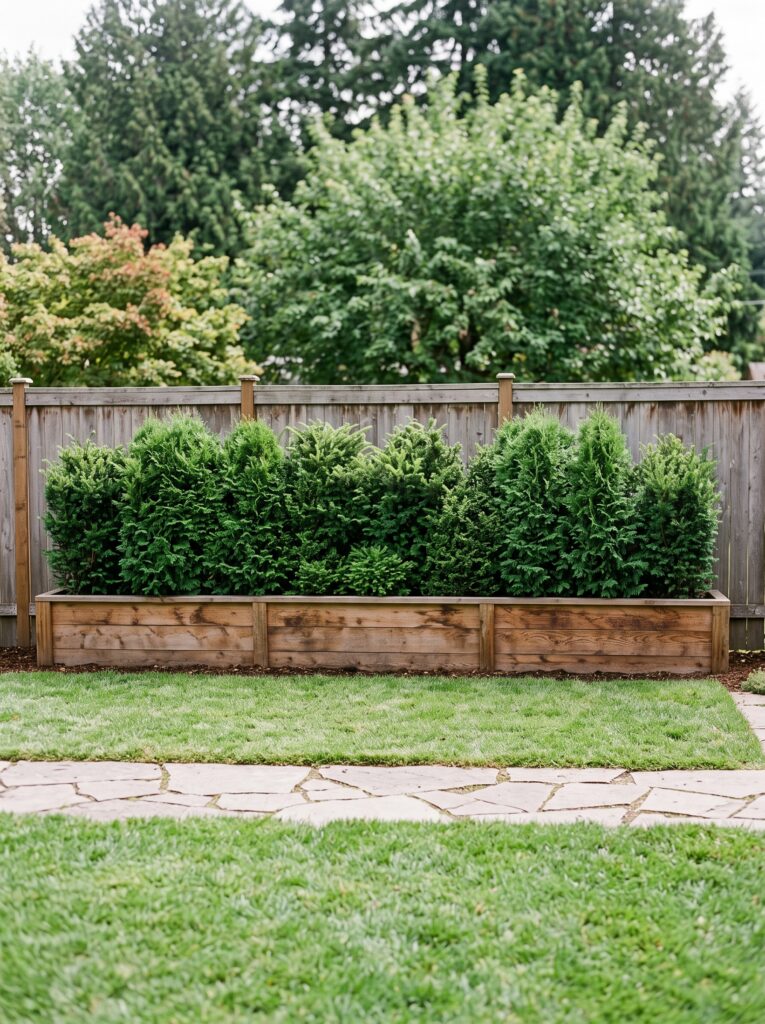
For privacy that holds up through every season, evergreen shrubs planted in a long cedar box create a reliable, year-round screen. It’s loved for its low-maintenance consistency, and it works especially well along fence lines or property borders, creating a lush, dependable green wall.
Key Elements:
- A long cedar wood planter box
- Dense evergreen shrubs like boxwood or arborvitae
- Quality potting soil with good drainage
- Mulch topping for moisture retention
- A weather-sealed finish on the cedar box
- Regular trimming tools for shape maintenance
How to Style It:
- Choose a long, continuous cedar planter box for a seamless screening line.
- Select evergreen shrubs known for dense, consistent year-round foliage.
- Space plants closely enough that their mature growth will overlap slightly for full coverage.
- Mulch the soil surface to retain moisture and suppress weeds.
- Trim shrubs two to three times during the growing season to maintain a tidy, uniform shape.
- Check soil moisture regularly, since container plants dry out faster than in-ground beds.
Idea 6: Wheeled Movable Planter Wall
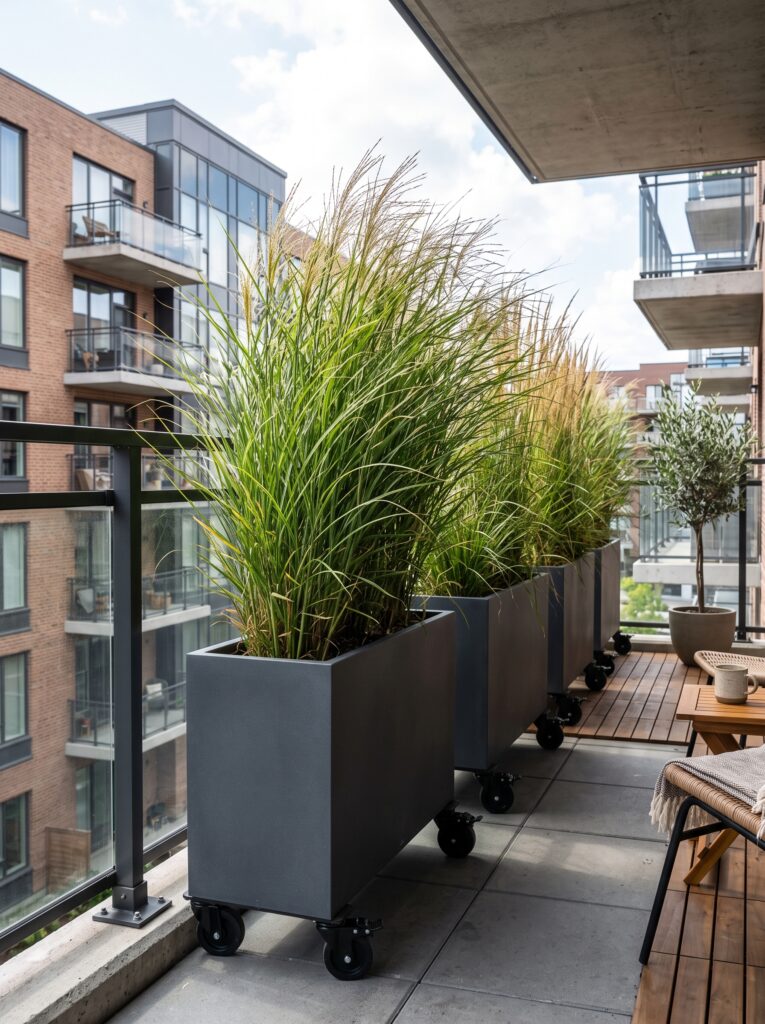
For renters or anyone who wants flexible privacy that can be repositioned, wheeled planters offer a movable solution that doesn’t require any permanent installation. It’s loved for its practicality and flexibility, and it works especially well on balconies, patios, or rental properties, creating an adaptable, renter-friendly screen.
Key Elements:
- Large planters with built-in wheels or wheeled plant caddies
- Tall ornamental grasses or upright shrubs
- Lightweight potting mix to keep planters manageable
- A stable, level surface for rolling
- Drainage trays to protect decking or flooring
How to Style It:
- Choose large planters with built-in wheels or add a wheeled caddy beneath standard containers.
- Select tall, upright plants that provide screening without requiring deep root systems.
- Use a lightweight potting mix to keep the overall planter weight manageable for moving.
- Position planters to block your specific problem sightline, adjusting as needed throughout the season.
- Add drainage trays beneath each planter to protect your patio or balcony surface.
A helpful styling trick is to group two or three wheeled planters together rather than spacing them too far apart, since a cluster creates denser, more effective screening than a single row.
Idea 7: Corner Privacy Planter Cluster
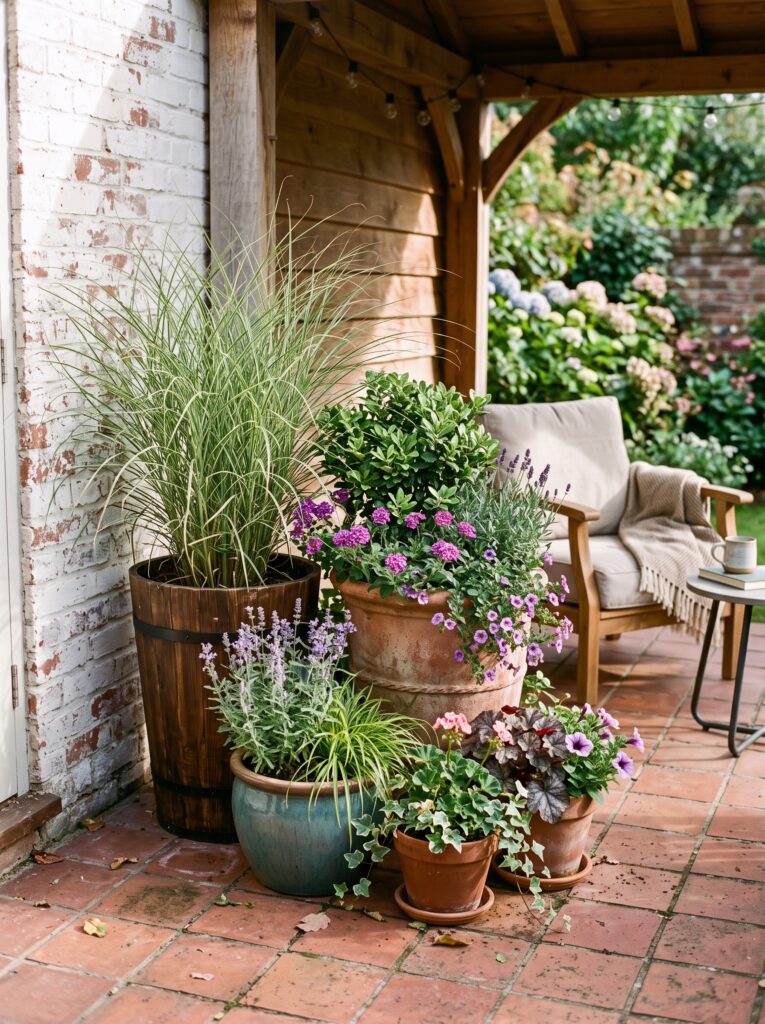
Clustering several planters of different heights in one corner creates a natural, garden-like privacy screen that feels less rigid than a single straight row. It’s loved for its organic, layered appearance, and it works especially well for creating a single private seating nook, creating an intimate, secluded mood.
Key Elements:
- Three to five planters in varying heights and materials
- A mix of tall grasses, mid-height shrubs, and trailing flowers
- Quality potting soil suited to each plant type
- A defined corner or seating area to anchor the cluster
- Mixed planter materials like terracotta, wood, and concrete
How to Style It:
- Choose planters in at least three different heights for a layered, natural look.
- Position the tallest planters at the back or outer edge of the cluster.
- Plant tall grasses or shrubs in the largest planters for primary screening.
- Add trailing flowers or smaller plants to the shorter planters for softness.
- Arrange the cluster around your seating area to block the specific view you want screened.
- Rotate or add seasonal plants to keep the cluster looking fresh throughout the year.
Idea 8: Metal Planter Wall with Grasses
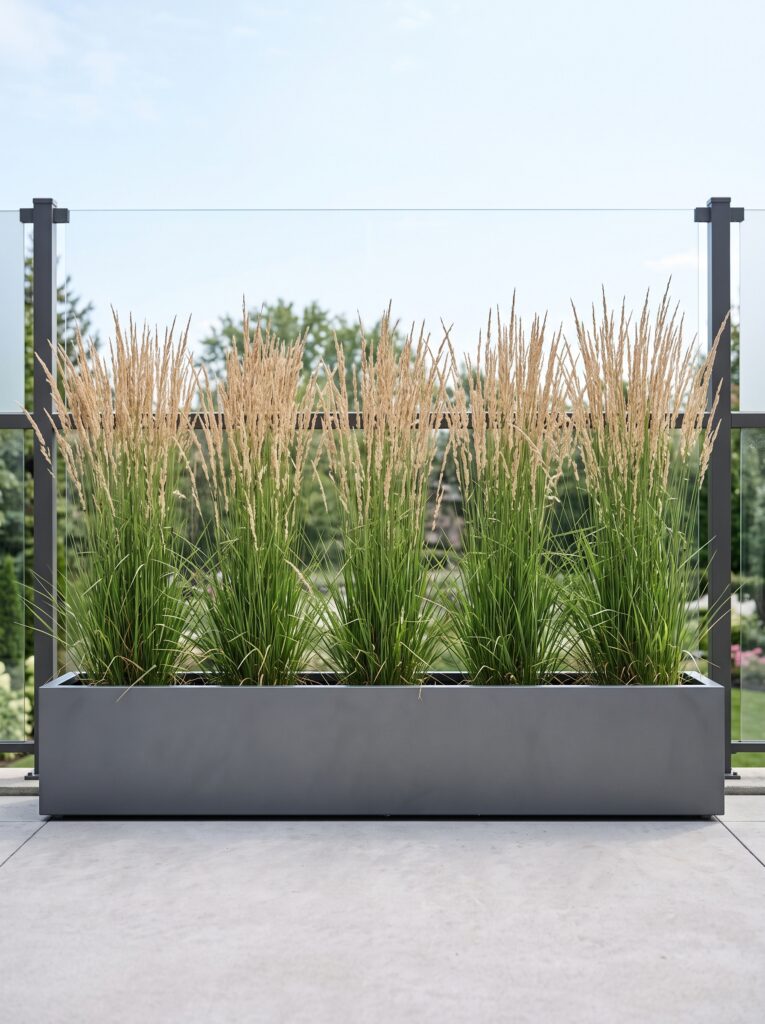
Metal planters bring a clean, modern edge to a privacy wall, especially when paired with the soft movement of ornamental grasses. It’s loved for its contemporary contrast between hard and soft materials, and it works especially well on modern patios, creating a sleek, sophisticated screen.
Key Elements:
- A long metal planter trough
- Tall ornamental grasses like feather reed or maiden grass
- Quality potting soil with good drainage
- A modern patio or deck setting
- Minimal additional landscaping for a clean look
How to Style It:
- Choose a long, simple metal trough planter for a clean, modern base.
- Plant tall ornamental grasses densely enough to create effective screening.
- Position along the edge of your patio or deck where privacy is needed most.
- Allow the grasses to move naturally in the wind for added visual interest.
- Trim back grasses in early spring before new growth begins for the season.
Idea 9: Layered Planter and Lattice Combo
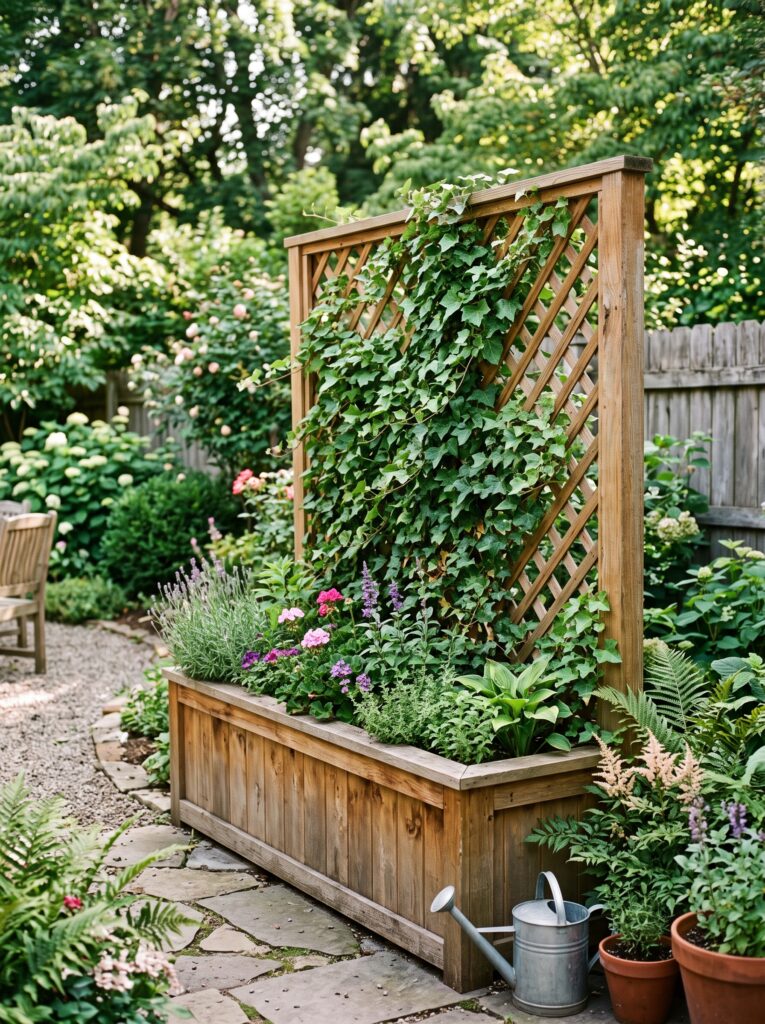
Combining a solid planter base with an upper lattice panel creates layered privacy that works even before plants fully mature, since the lattice itself provides some immediate screening. It’s loved for offering privacy at multiple heights, and it works especially well along patios needing both upper and lower screening, creating a structured, garden-wall mood.
Key Elements:
- A wood planter box base
- An attached lattice panel extending upward
- Climbing ivy or other vining plants
- Quality potting soil with good drainage
- Garden twine for training vine growth
How to Style It:
- Build or purchase a planter box with an attached lattice panel extending at least 3 feet above the box.
- Plant climbing ivy or another vigorous vine at the base of the lattice.
- Train young vine growth onto the lattice using garden twine as needed.
- Allow the lattice itself to provide partial screening while the vine matures.
- Trim and redirect vine growth periodically to maintain even coverage across the lattice.
Idea 10: Raised Garden Bed Privacy Border
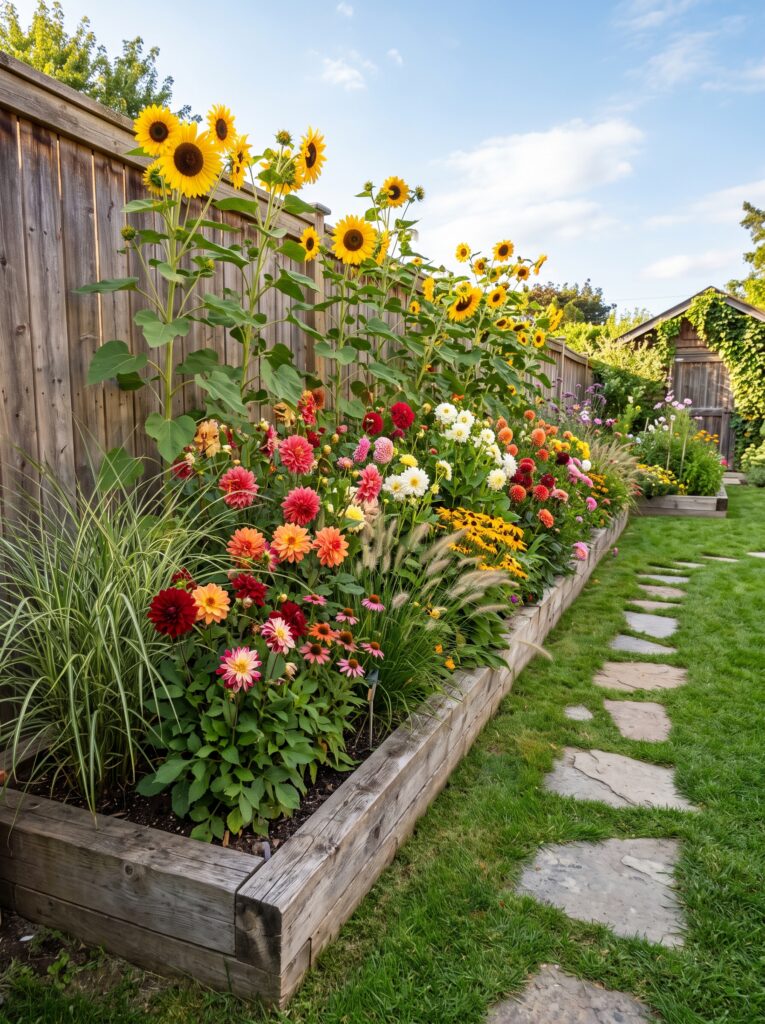
A raised garden bed planted with tall, colorful flowers creates a privacy border that’s as much about beauty as it is about screening. It’s loved for bringing genuine garden charm into the privacy equation, and it works especially well along fence lines, creating a vibrant, cottage-inspired screen.
Key Elements:
- A long raised wood garden bed
- Tall flowers like sunflowers, dahlias, or cosmos
- Ornamental grasses for added height and texture
- Quality garden soil with compost amendments
- Mulch topping for moisture retention
How to Style It:
- Build or install a raised garden bed along your desired privacy line.
- Plant tall flowers toward the back of the bed for maximum height and screening.
- Add ornamental grasses between flower clusters for texture and movement.
- Mulch the bed to retain moisture and suppress weeds.
- Deadhead spent blooms regularly to encourage continued flowering through the season.
- Replant seasonally to keep the border colorful and full year-round.
Idea 11: Hanging Planter Privacy Curtain
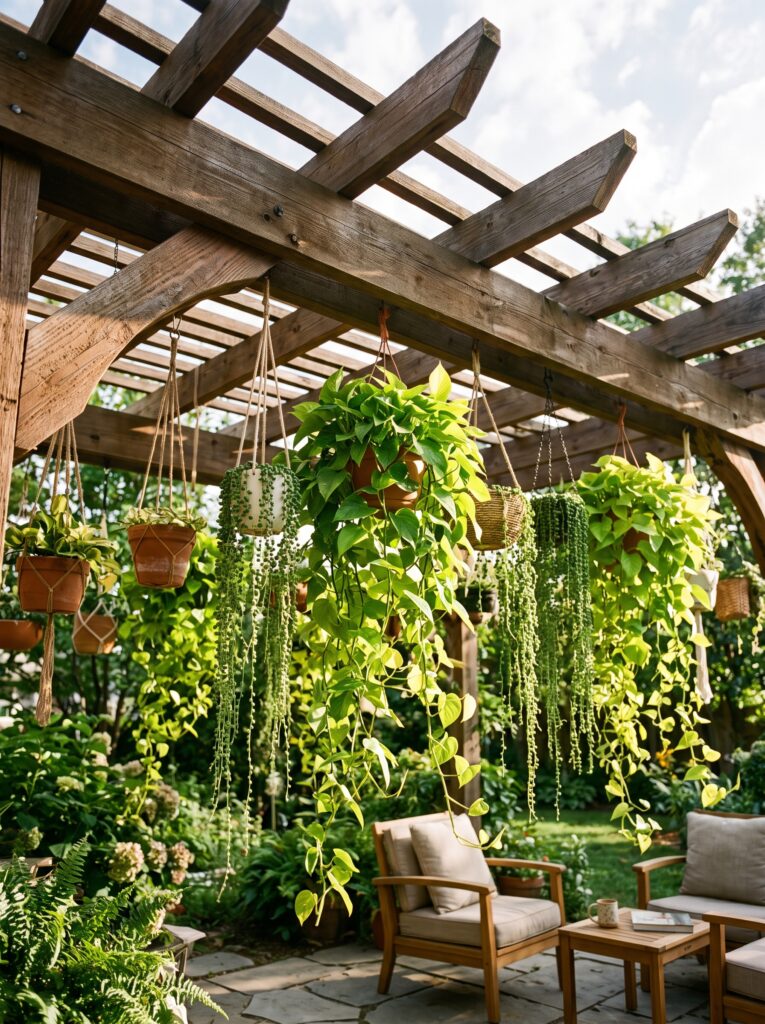
Suspending multiple hanging planters from a pergola or overhead structure creates a unique, curtain-like privacy screen that hangs rather than stands. It’s loved for its soft, whimsical look, and it works especially well under pergolas or covered patios, creating a dreamy, garden-curtain mood.
Key Elements:
- A pergola or overhead beam structure
- Multiple hanging planters
- Trailing plants like pothos, string of pearls, or ivy
- Sturdy hanging hooks rated for planter weight
- A watering can or hose attachment for easy access
How to Style It:
- Install sturdy hooks across your pergola or overhead structure at staggered heights.
- Hang planters with vigorous trailing plants that will grow long and full.
- Space planters closely enough that the trailing growth will eventually overlap.
- Water regularly, checking soil moisture more frequently than ground-level planters since hanging planters dry out faster.
- Trim trailing vines occasionally to maintain a healthy, manageable length.
Idea 12: Concrete Planter Wall
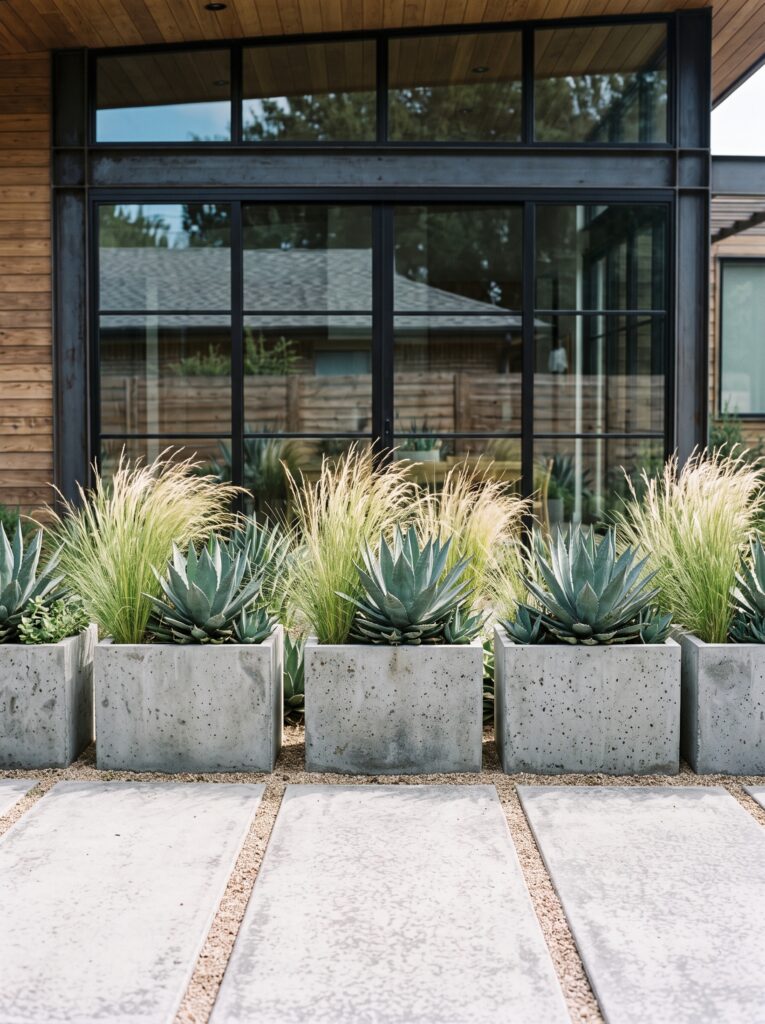
Concrete planters bring an industrial, architectural quality to a privacy wall, especially when paired with structural plants like agave or yucca. It’s loved for its clean, modern permanence, and it works especially well on contemporary patios, creating a sleek, sculptural screen.
Key Elements:
- Concrete planters or concrete-look containers
- Architectural plants like agave, yucca, or ornamental grass
- Well-draining potting mix suited to drought-tolerant plants
- A modern patio or deck setting
- Minimal additional landscaping
How to Style It:
- Choose concrete planters in a size proportional to your desired screening height.
- Select architectural, drought-tolerant plants for a clean, modern aesthetic.
- Position planters in a row or cluster along the area needing privacy.
- Use a well-draining potting mix suited to the specific plants you’ve chosen.
- Water sparingly, since most architectural drought-tolerant plants prefer drier conditions.
Idea 13: Herb Garden Privacy Planters
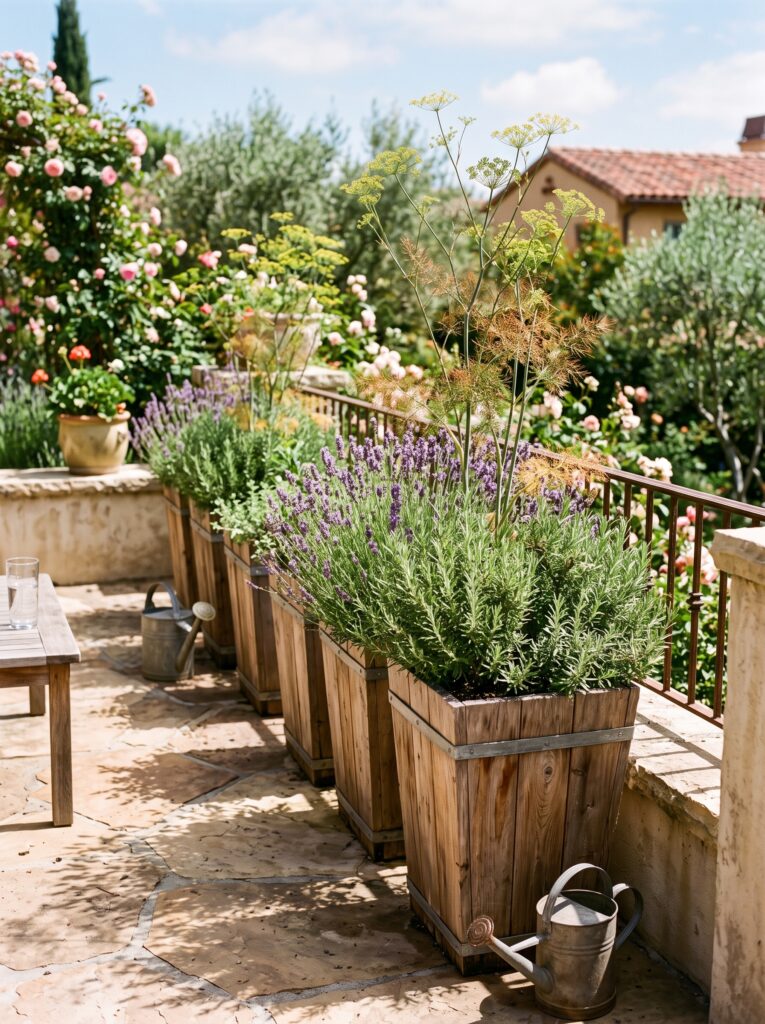
For those who want privacy that’s also genuinely useful, a row of tall herb planters brings fragrance and function into the screening equation. It’s loved for its dual-purpose practicality, and it works especially well in sunny patio areas, creating a fragrant, productive privacy screen.
Key Elements:
- Tall wood planters
- Tall-growing herbs like rosemary, lavender, and fennel
- Well-draining potting mix
- A sunny patio location
- Small plant markers for identification
How to Style It:
- Choose tall-growing herb varieties specifically, since many herbs stay too low for effective screening.
- Plant in tall wood planters positioned in a row along your patio edge.
- Group herbs with similar sun and water needs together.
- Harvest regularly to encourage bushier, fuller growth that improves screening over time.
- Trim and shape plants periodically to maintain consistent height and density.
Idea 14: Two-Tier Stacked Planter Wall
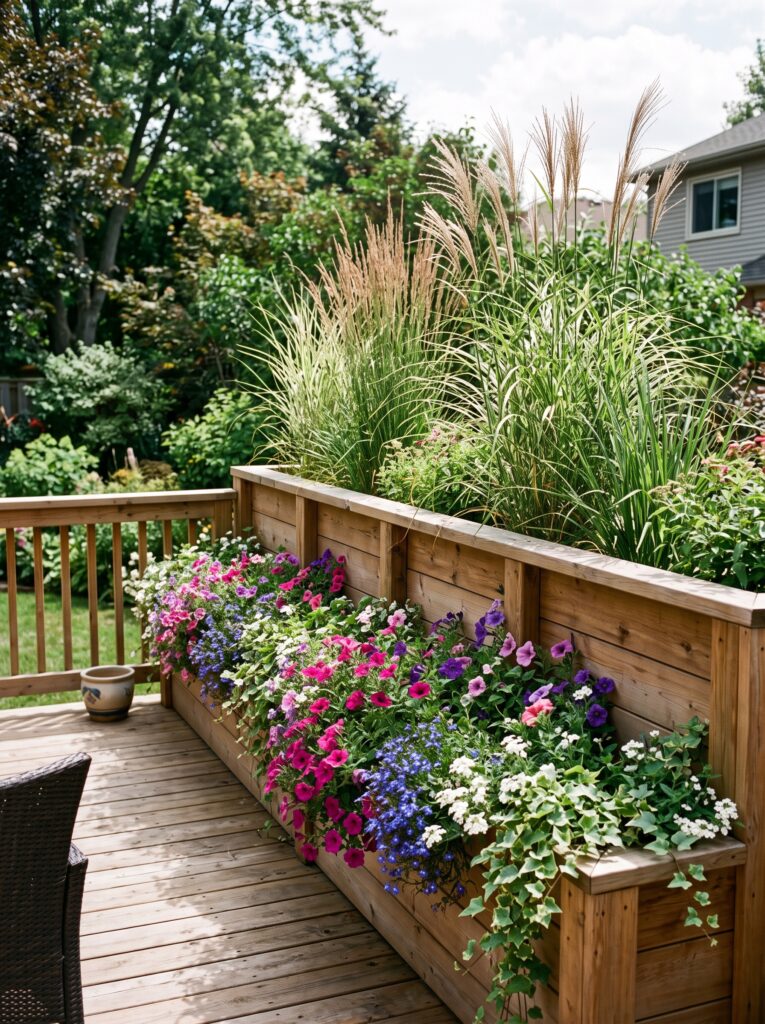
A two-tier stacked planter structure maximizes screening height within a relatively compact footprint, making it ideal for smaller yards or decks. It’s loved for its space-efficient design, and it works especially well along deck railings or narrow side yards, creating a tall, dense privacy wall.
Key Elements:
- A two-tier wood or metal planter structure
- Trailing flowers for the lower tier
- Tall ornamental grasses or shrubs for the upper tier
- Quality potting soil suited to each tier’s plants
- A stable, level base for the structure
How to Style It:
- Build or purchase a two-tier planter structure sized for your available space.
- Plant trailing flowers in the lower tier to soften the structure’s base.
- Plant tall grasses or upright shrubs in the upper tier for maximum height.
- Position along deck railings or narrow side yards where ground space is limited.
- Water each tier according to its specific plants’ needs, checking soil regularly.
I’ve tried two-tier structures like this in narrow side yards before, and the vertical approach genuinely solves the screening problem when there simply isn’t enough horizontal space for traditional planters.
Idea 15: Pool Deck Privacy Planters
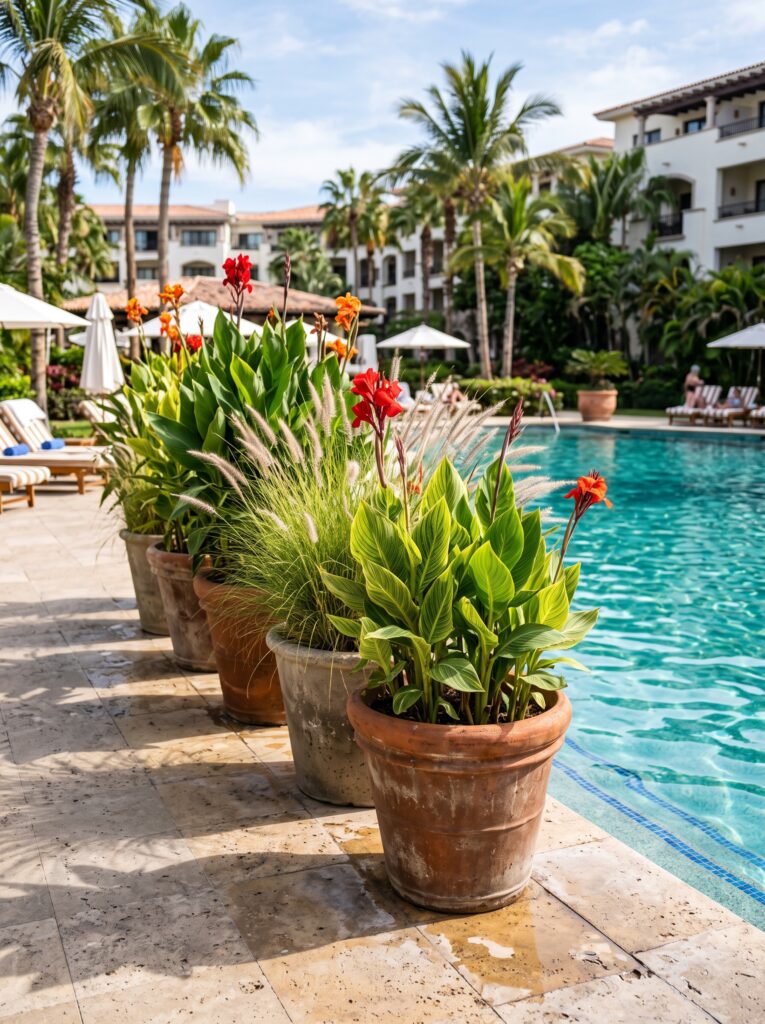
Pool areas benefit enormously from planter privacy walls, both for screening from neighbors and for creating that genuine resort-like seclusion. It’s loved for elevating the entire pool experience, and it works especially well along pool decks or fence lines, creating a tropical, vacation-inspired mood.
Key Elements:
- Large, sturdy planters
- Tropical or tall ornamental plants like canna lilies or grasses
- Well-draining potting mix
- A pool deck or fence line location
- Chlorine-tolerant, hardy plant varieties
How to Style It:
- Choose large, stable planters that won’t tip in wind near open pool areas.
- Select tropical or tall ornamental plants suited to full sun and occasional chlorine splash.
- Position planters along the pool deck’s edge or fence line for maximum screening.
- Water consistently, since pool-adjacent planters often experience more heat and evaporation.
- Rinse foliage occasionally if chlorine splash becomes a concern for sensitive plants.
Idea 16: Small Balcony Privacy Planters
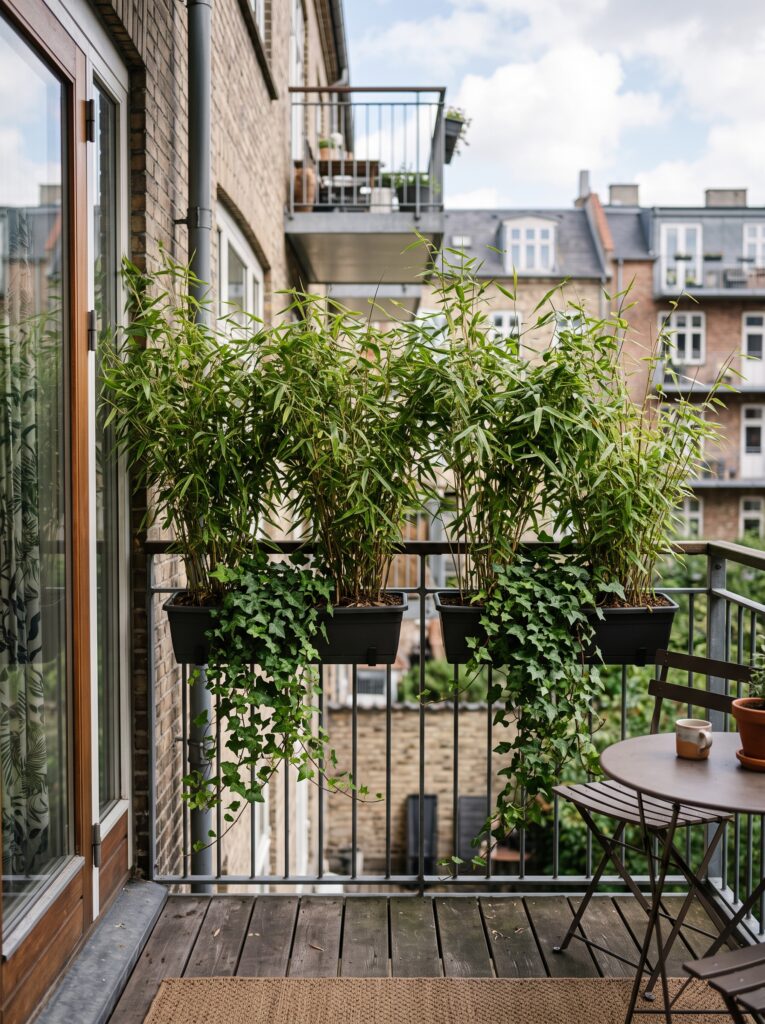
For small balconies where space is at a premium, narrow railing-mounted or compact planters offer privacy without sacrificing valuable floor space. It’s loved by apartment dwellers and renters, and it works especially well on city balconies, creating a green, secluded retreat in a small footprint.
Key Elements:
- Narrow railing-mounted planters
- Compact bamboo or trailing ivy
- Lightweight potting mix
- Secure mounting brackets rated for balcony railings
- Drainage trays to protect the balcony floor
How to Style It:
- Choose narrow planters specifically designed to mount on balcony railings.
- Select compact, container-friendly plants like dwarf bamboo or trailing ivy.
- Use a lightweight potting mix to keep the overall weight manageable for the railing.
- Add drainage trays beneath each planter to protect the balcony surface.
- Water according to each plant’s needs, checking more frequently in hot, exposed balcony conditions.
Idea 17: Seasonal Rotation Privacy Planters
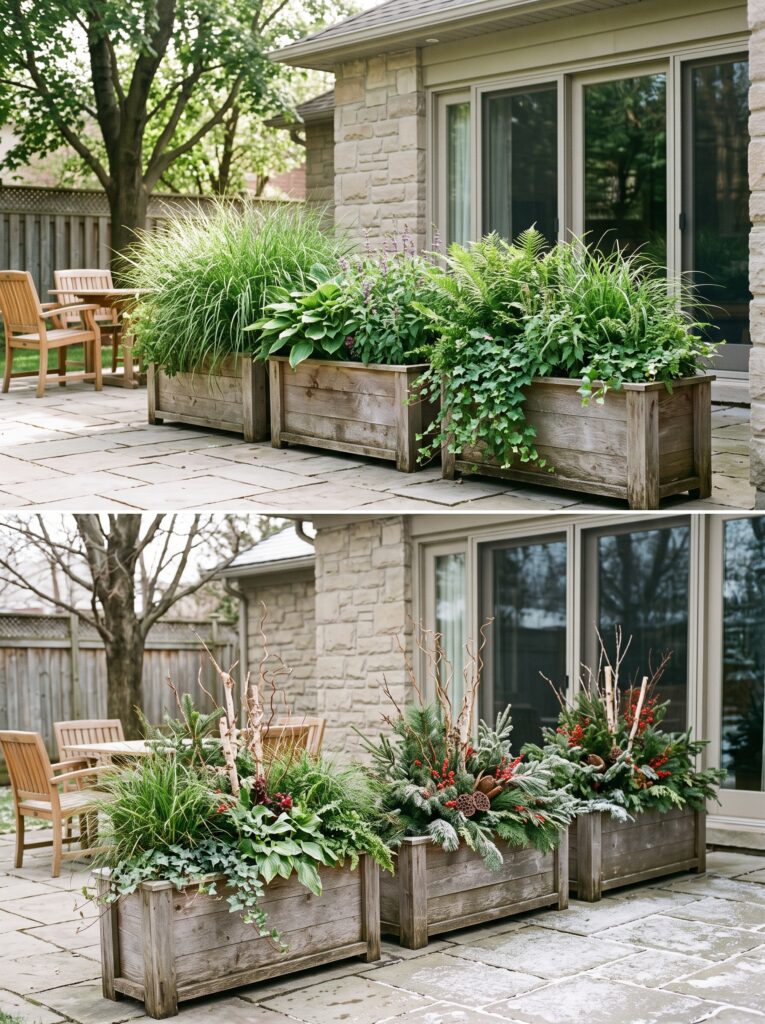
This final idea treats your planter privacy wall as a year-round, evolving feature rather than a single static planting. Swapping seasonal plants keeps your screen looking intentional and fresh, and it works in any location where you’ve already established a planter wall, creating a constantly refreshed privacy solution.
Seasonal Privacy Planter Guide:
| Season | Best Screening Plants | Height Achieved | Notes |
|---|---|---|---|
| Spring | Tall grasses, climbing vines | 3–5 feet | Fast establishing growth |
| Summer | Bamboo, canna lilies, sunflowers | 5–8 feet | Peak density and height |
| Fall | Ornamental grasses, mums | 3–5 feet | Dried texture adds interest |
| Winter | Evergreens, dried branches | 4–6 feet | Maintains year-round structure |
How to Style It:
- Plan your seasonal transitions about two to three weeks before each season change.
- Keep a core of evergreen plants in place year-round for consistent baseline privacy.
- Rotate in seasonal flowering or ornamental plants around the evergreen base.
- Refresh soil and add compost between major seasonal transitions.
- Photograph each seasonal version to track how your privacy wall evolves throughout the year.
Planter Privacy Wall Material and Plant Guide
| Planter Material | Best Plant Pairing | Style Created | Best For |
|---|---|---|---|
| Wood | Bamboo, evergreens, vines | Natural, warm | Patios, fence lines |
| Metal | Ornamental grasses | Modern, sleek | Contemporary patios |
| Concrete | Agave, yucca, succulents | Architectural, clean | Modern minimalist yards |
| Terracotta | Herbs, trailing flowers | Mediterranean, earthy | Sunny patios |
| Woven/Wicker | Mixed annuals | Bohemian, soft | Cottage gardens |
Common Decorating Mistakes to Avoid
- Choosing plants too short for true privacy. Always research a plant’s mature height before relying on it for screening.
- Overcrowding planters. Give root systems room to grow, or plants will struggle and screening will suffer.
- Forgetting drainage. Without proper drainage, container plants can develop root rot quickly.
- Ignoring sun and wind exposure. Match your plant choices to your space’s actual growing conditions for the best results.
- Skipping a watering plan. Container plants dry out faster than in-ground plantings and need more frequent attention.
- Using only one plant type. Mixing heights and textures creates more effective, natural-looking privacy than a single uniform row.
Frequently Asked Questions
How tall do plants need to be for an effective privacy planter wall? Most effective privacy screens reach at least 5 to 6 feet in height, though the right height depends on what you’re trying to block and from which angle.
What are the fastest-growing plants for a planter privacy wall? Bamboo, especially clumping varieties, is among the fastest-growing options, often reaching significant height within one to two growing seasons. Ornamental grasses also establish quickly.
Do planter privacy walls work in small yards or balconies? Yes, narrow planters, tiered structures, and railing-mounted containers are specifically designed for compact spaces, making privacy achievable even on small balconies or patios.
How do I keep container plants from drying out too quickly? Mulching the soil surface, choosing appropriately sized containers, and watering consistently, especially during hot summer months, all help retain moisture in container plantings.
Can I create year-round privacy with a planter wall? Yes, by incorporating evergreen plants as your base layer, your privacy wall maintains screening through every season, even when seasonal flowering plants go dormant.
Are planter privacy walls a good option for renters? Absolutely. Wheeled, railing-mounted, and freestanding planter options require no permanent installation, making them ideal for rental properties where fences or structural changes aren’t allowed.
Final Thoughts
A planter privacy wall proves that you don’t have to choose between privacy and beauty in your outdoor space. Whether you go with a simple row of bamboo or a layered, multi-tiered structure, the right combination of planters and plants can transform an exposed yard into a true private retreat.
I’ve seen how simple decorating changes like these can completely transform how a home feels without requiring a major renovation, and the same is true for outdoor spaces. Start with just one planter or one idea from this list, and watch how much more secluded and intentional your yard begins to feel.
Save this article to your Pinterest board for your next outdoor project, and share it with anyone who’s been dreaming of a more private backyard retreat.

Indy Santos is a passionate interior styling specialist and home living enthusiast with a focus on contemporary decor, smart space planning, and affordable design inspiration. At Inspired Homex, she provides readers with fresh decorating concepts, actionable advice, and professional guidance to create comfortable, elegant, and well-organized homes that reflect their personal style.