
Introduction
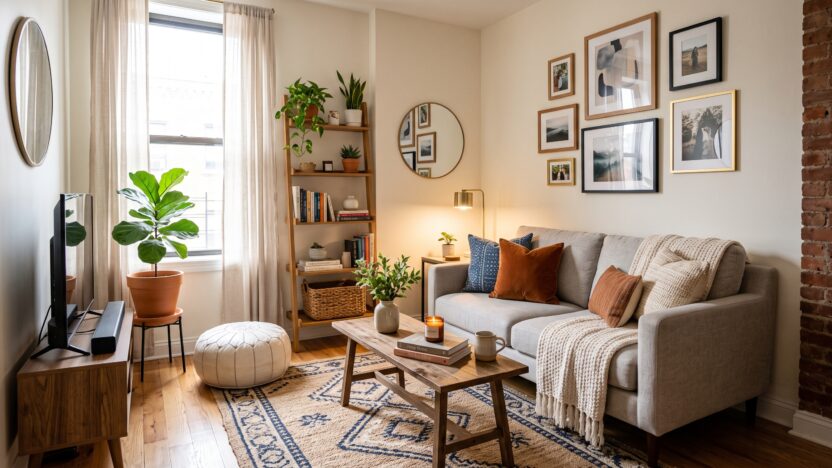
A small living room doesn’t have to feel cramped, cluttered, or like you’re constantly working around its limitations. With the right approach to small living room decor, even a compact space can feel open, airy, and genuinely comfortable to spend time in. It’s less about how many square feet you have and more about how intentionally you use them.
I’ve decorated more tiny living rooms than I can count, and the biggest lesson I’ve learned is that small spaces actually reward thoughtful decorating more than large ones do. Every piece of furniture, every color choice, and every styling decision has more visual weight in a smaller room, which means small, smart changes can make a noticeably bigger impact than they would in a sprawling space.
In this guide, I’m sharing 12 small living room decor ideas that genuinely help your space feel bigger, brighter, and more functional, without requiring a renovation or a complete furniture overhaul.
Key Takeaways
- Light, neutral color palettes help small living rooms feel more open and airy
- Multi-functional furniture saves space while still looking intentional and stylish
- Mirrors reflect light and visually double a room’s depth
- Vertical storage and decor draw the eye upward, making ceilings feel higher
- Furniture with visible legs creates a lighter, less bulky feeling than solid bases
- Limiting your color palette to two or three tones keeps a small room from feeling busy
- Strategic lighting placement eliminates dark corners that make rooms feel smaller
Why These Small Living Room Ideas Work
Small living rooms have a reputation for being difficult to decorate, but in reality, they just require a slightly different approach than larger spaces. Instead of filling the room with as much furniture as possible, the goal is to create breathing room, let light travel freely, and choose pieces that do double duty.
In my experience, the small living rooms that feel the biggest aren’t necessarily the most minimal ones. They’re the ones where every item has been chosen intentionally, with attention to scale, color, and function. A few well-chosen pieces almost always outperform a room packed with furniture that technically fits but visually overwhelms the space.
Idea 1: Light Neutral Color Palette
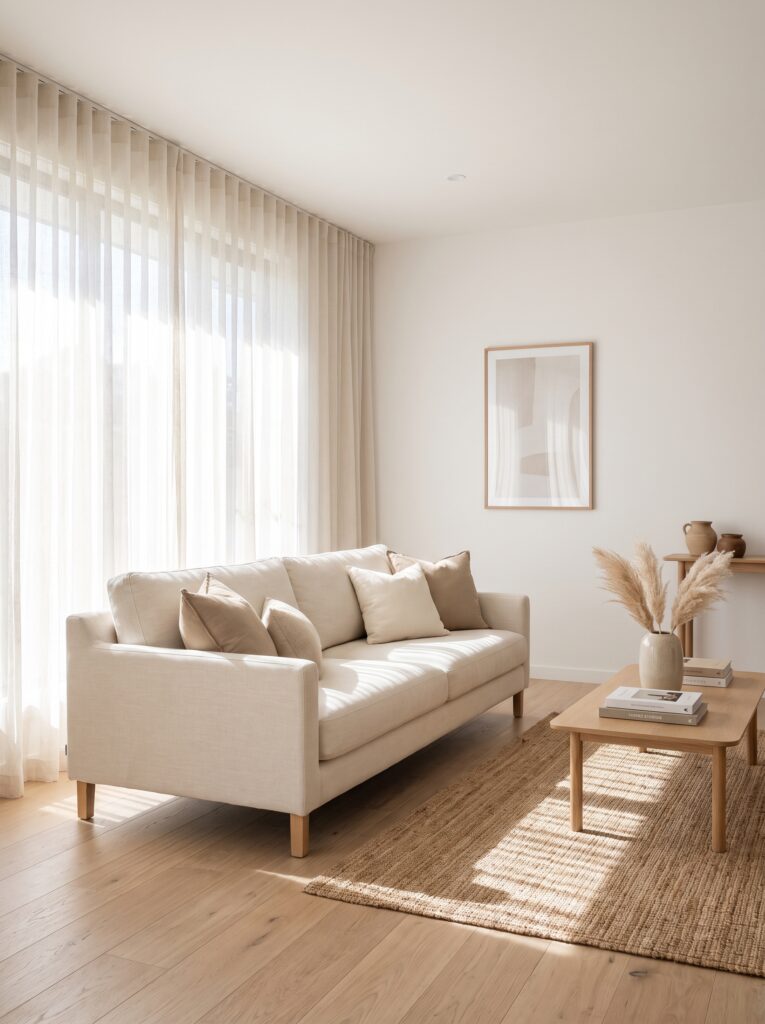
Choosing a light, neutral color palette is one of the simplest and most effective ways to make a small living room feel larger. Homeowners love it because light colors reflect natural light rather than absorbing it, and it works in literally any small space, creating an open, airy mood.
Key Elements:
- Soft white or light neutral wall paint
- A cream or light-colored sofa
- Light wood or light-toned flooring
- Sheer curtains to maximize natural light
- Minimal, tonal decor accessories
- A light-colored area rug
How to Style It:
- Paint walls in a soft white or light neutral tone to reflect maximum natural light.
- Choose a sofa in a light, neutral fabric rather than a bold or dark color.
- Keep flooring light, or add a light-colored area rug if your floors are darker.
- Hang sheer curtains instead of heavy drapes to let light flow freely.
- Limit decor accessories to a tonal palette, avoiding too many competing colors.
- Add one or two small plants for a fresh touch without visual clutter.
Idea 2: Multi-Functional Furniture
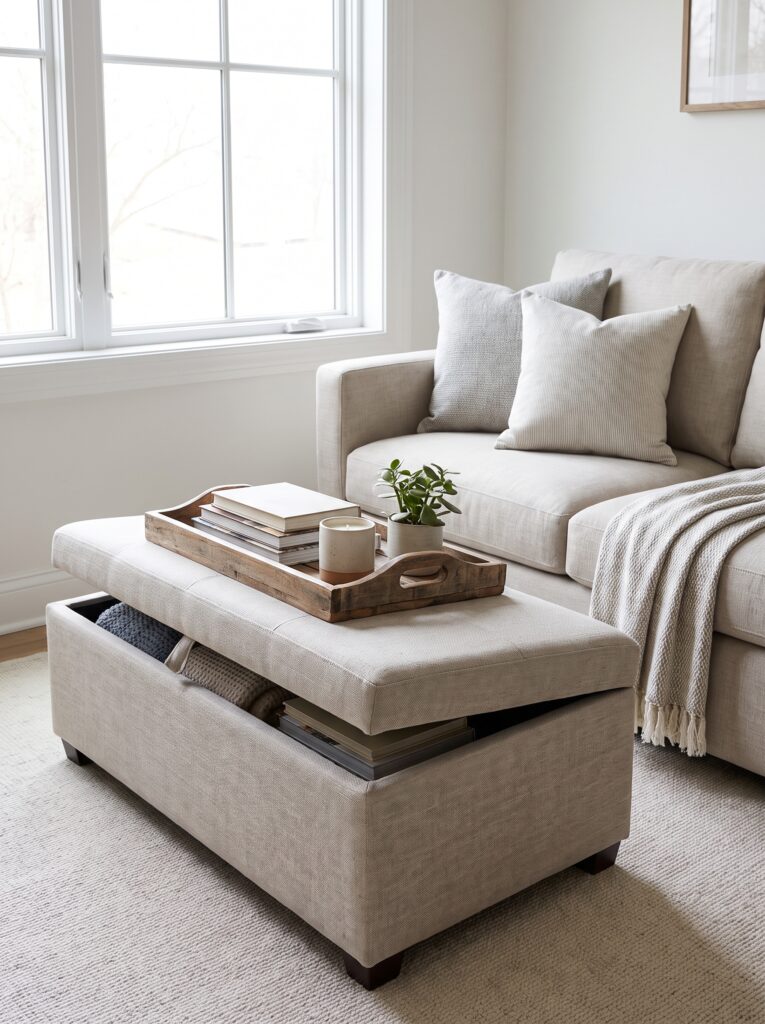
Multi-functional furniture is essential in small living rooms, allowing you to maximize utility without adding visual bulk. It’s loved for solving storage and seating problems simultaneously, and it works in any small space, creating a clean, efficient, and genuinely livable mood.
Key Elements:
- A storage ottoman that doubles as a coffee table
- A sofa bed or daybed for guest flexibility
- Nesting tables that tuck away when not needed
- Wall-mounted or floating shelves instead of bulky bookcases
- A console table with built-in storage
- A tray for styling the ottoman’s surface
How to Style It:
- Choose a storage ottoman sized appropriately for your seating area, used as both coffee table and hidden storage.
- Add a tray on top for styling books, candles, or a small plant.
- Select nesting tables that can separate for extra surface space or tuck together to save room.
- Replace a bulky bookcase with wall-mounted floating shelves.
- Choose a console table with drawers or baskets underneath for additional storage.
Idea 3: Strategic Mirror Placement
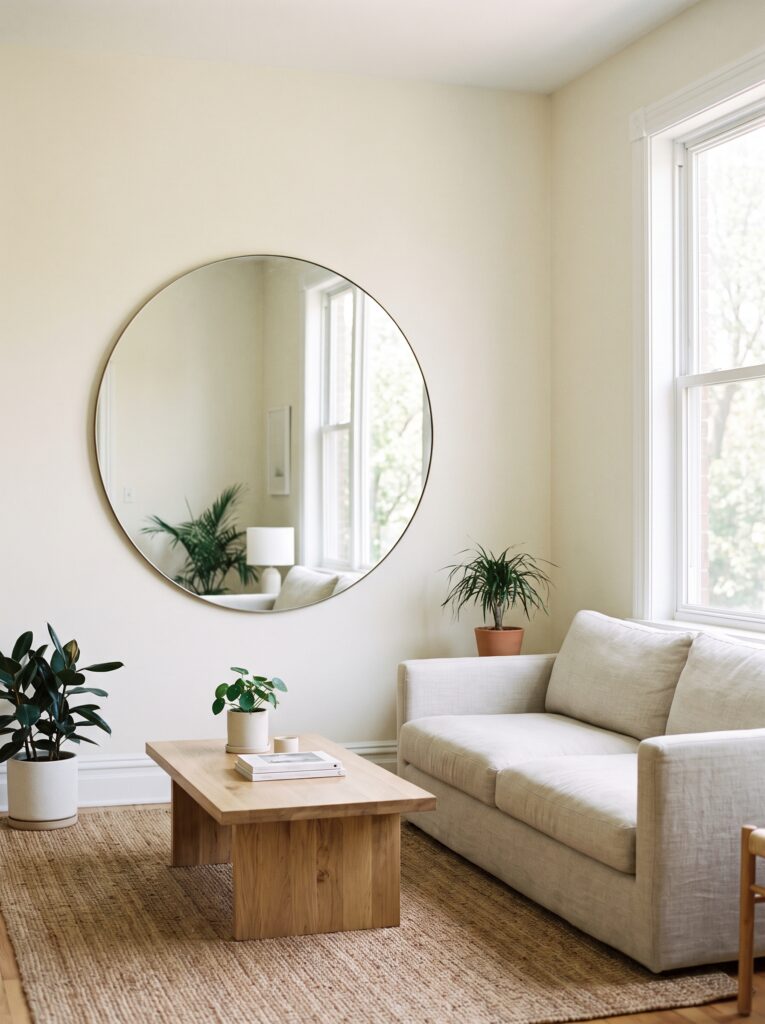
Mirrors are one of the most powerful tools for making a small living room feel larger, since they reflect both light and the room itself, creating the illusion of additional depth. It’s loved for its immediate visual impact, and it works especially well across from windows, creating a brighter, more expansive mood.
Key Elements:
- One large mirror, ideally 3 feet or wider
- A position directly across from or near a window
- A simple frame that complements your existing decor
- Minimal surrounding wall decor to let the mirror stand out
- Proper hanging height at or near eye level
How to Style It:
- Identify your room’s main natural light source, typically a window.
- Hang or lean a large mirror on the wall directly across from that light source.
- Choose a simple frame finish that won’t compete visually with the reflection.
- Keep the wall around the mirror relatively clear to maximize its visual impact.
- Step back and observe how much additional light and depth the mirror adds throughout the day.
A helpful styling trick is to lean an oversized mirror against the wall rather than hanging a smaller one, since the larger reflective surface makes a noticeably bigger difference in small rooms.
Idea 4: Vertical Storage and Decor
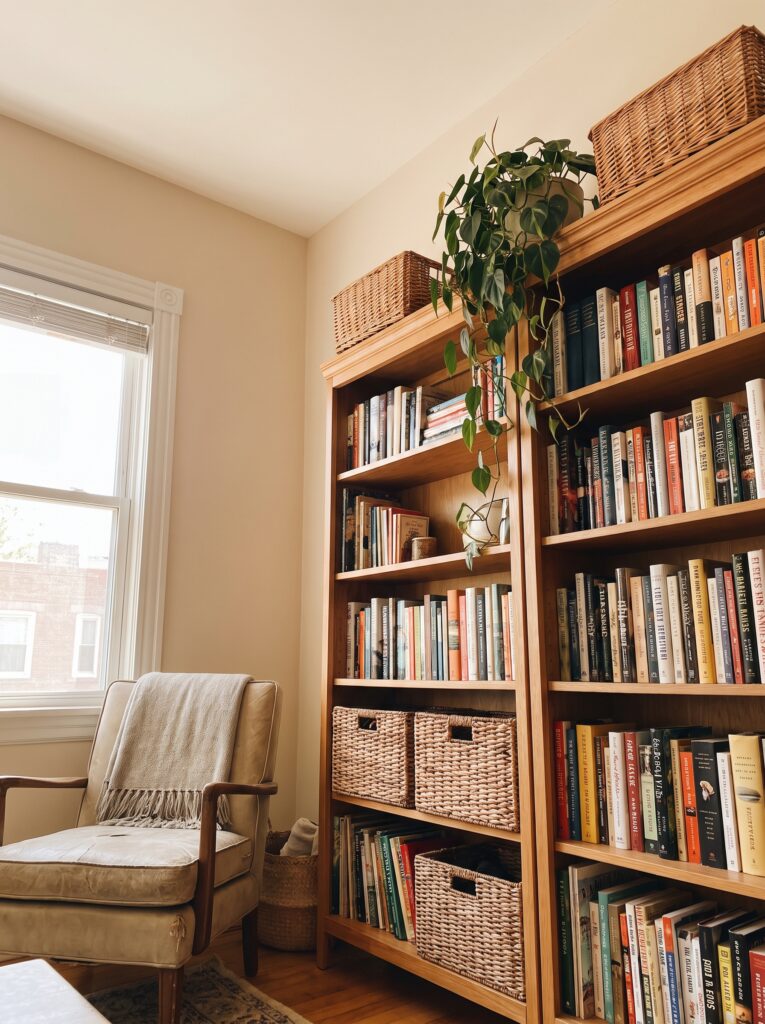
Drawing the eye upward with tall, vertical storage and decor makes ceilings feel higher and rooms feel more spacious, even when floor space is limited. It’s loved for maximizing storage without sacrificing floor area, and it works especially well in rooms with higher ceilings, creating an open, elevated mood.
Key Elements:
- A tall, narrow bookshelf or storage unit
- Vertical wall art or elongated mirrors
- Curtains hung close to the ceiling rather than the window frame
- A trailing plant for the top shelf
- Baskets for organized lower-shelf storage
- Minimal clutter on visible surfaces
How to Style It:
- Choose a tall, narrow bookshelf rather than a wide, low one to maximize vertical space.
- Style the lower shelves with baskets to keep items organized and visually tidy.
- Add a trailing plant to the top shelf to soften the height and draw the eye upward.
- Hang curtains as close to the ceiling as possible, rather than just above the window frame.
- Choose vertical or elongated wall art pieces to reinforce the upward visual movement.
Idea 5: Furniture with Visible Legs
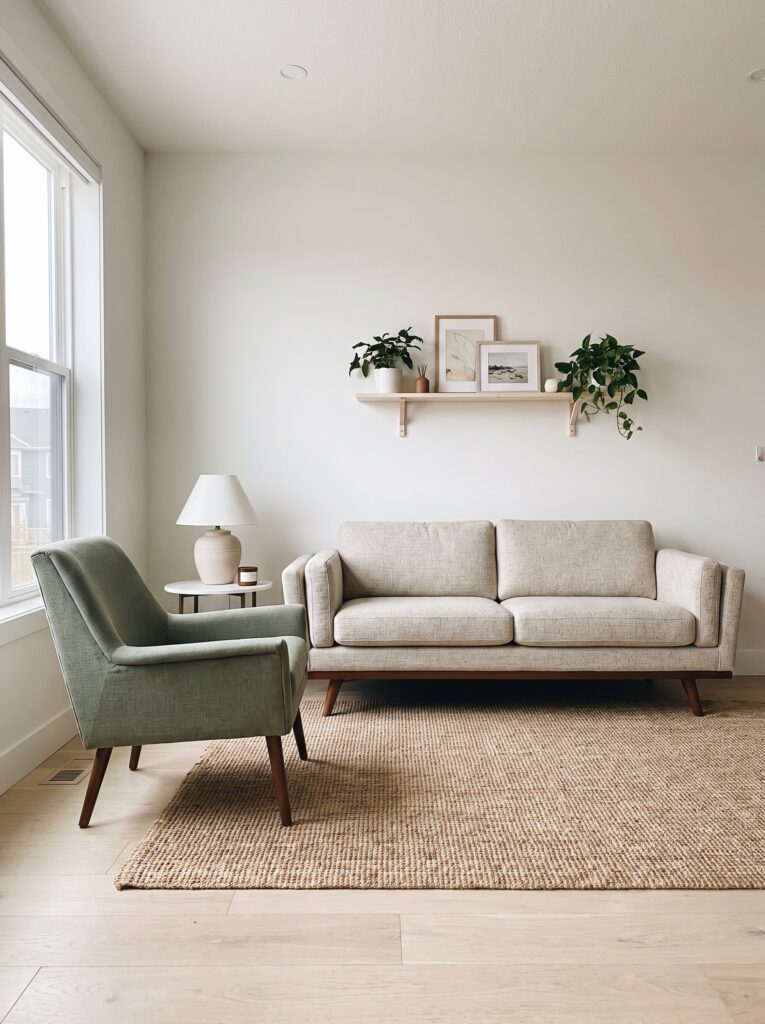
Choosing furniture with visible legs, rather than solid skirted bases, allows light and floor space to flow beneath each piece, creating a lighter, less bulky feeling throughout the room. It’s loved for its subtle but effective visual impact, and it works in any small living room, creating an open, breathable mood.
Key Elements:
- A sofa with slim, visible wood or metal legs
- An accent chair with a similar leggy silhouette
- A coffee table with open, airy legs rather than a solid base
- Light flooring visible beneath furniture
- Minimal under-furniture clutter
How to Style It:
- Choose a sofa with visible wood or metal legs rather than a skirted, floor-length base.
- Select an accent chair with a similarly open, leggy design for consistency.
- Choose a coffee table with slim legs rather than a solid block base.
- Keep the floor space beneath furniture clear and clutter-free.
- Allow your flooring or rug to remain visible beneath each piece for an airier feel.
Idea 6: Floating Shelves Instead of Bulky Furniture
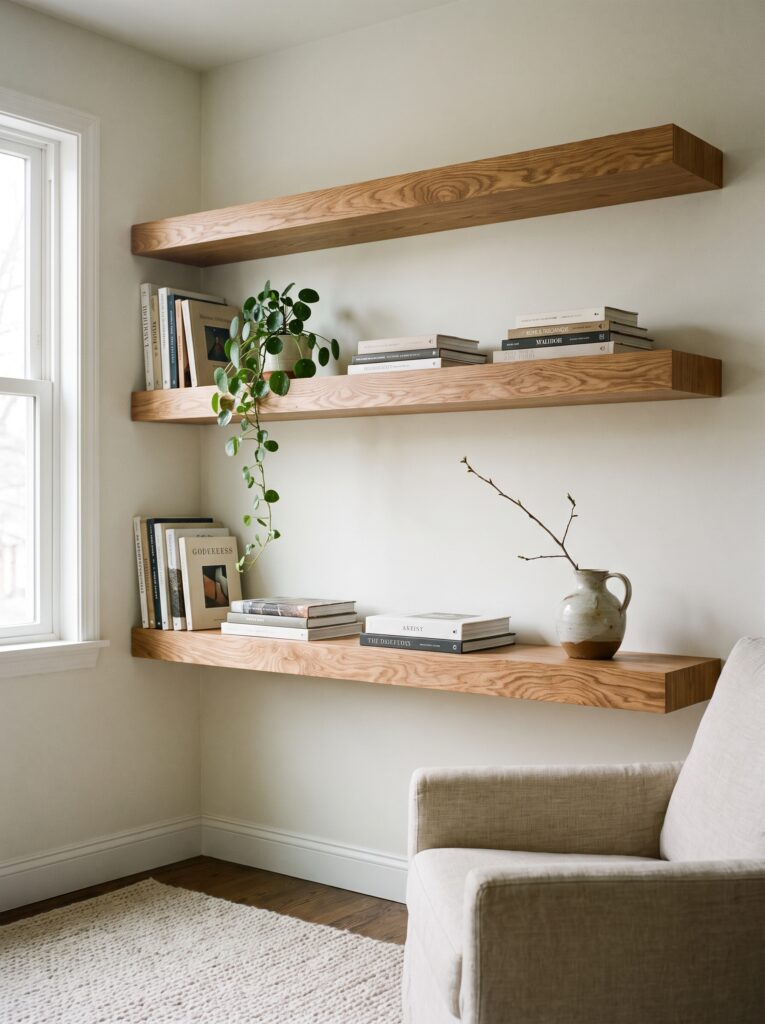
Floating shelves provide storage and display space without the visual bulk of a traditional bookcase or media console, making them ideal for small living rooms. It’s loved for being both functional and decorative, and it works especially well on accent walls, creating a streamlined, open mood.
Key Elements:
- Two or three floating wood shelves
- Books, ceramics, and a small plant for styling
- A neutral wall color as the backdrop
- Minimal items per shelf to avoid visual clutter
- Simple, hidden mounting brackets
How to Style It:
- Install floating shelves at varying heights on an accent wall.
- Style each shelf with two or three items maximum, leaving negative space.
- Mix textures and heights, like a stack of books beside a single ceramic vase.
- Add one small plant for a fresh, natural touch.
- Keep the wall color light to maximize the sense of openness around the shelves.
Idea 7: Limited Color Palette
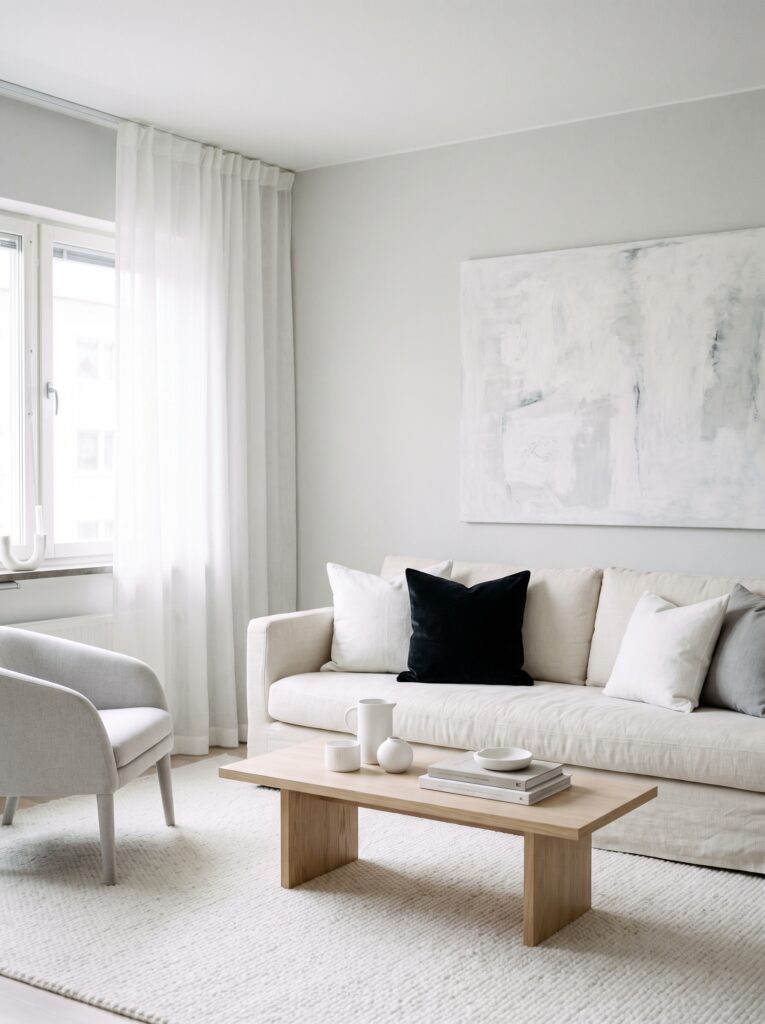
Limiting your color palette to just two or three tones keeps a small living room from feeling visually busy or chaotic. It’s loved for its calm, cohesive effect, and it works in any small space, creating a serene, intentional mood that feels larger than its actual square footage.
Key Elements:
- A base palette of two to three colors
- One small accent color used sparingly
- Consistent tones across furniture, walls, and textiles
- Minimal patterns, if any
- Texture variation to add interest without adding color
How to Style It:
- Choose a base palette of two to three colors, like white, cream, and soft gray.
- Apply this palette consistently across walls, furniture, and major textiles.
- Introduce just one accent color, used sparingly through a single pillow or small object.
- Rely on texture, like nubby linen or chunky knit, to add interest without adding more color.
- Resist the urge to introduce additional colors through smaller accessories.
I’ve tried this approach in several small rentals over the years, and it’s consistently the single biggest factor in making a tiny room feel calm and spacious rather than cluttered.
Idea 8: Layered Lighting Throughout
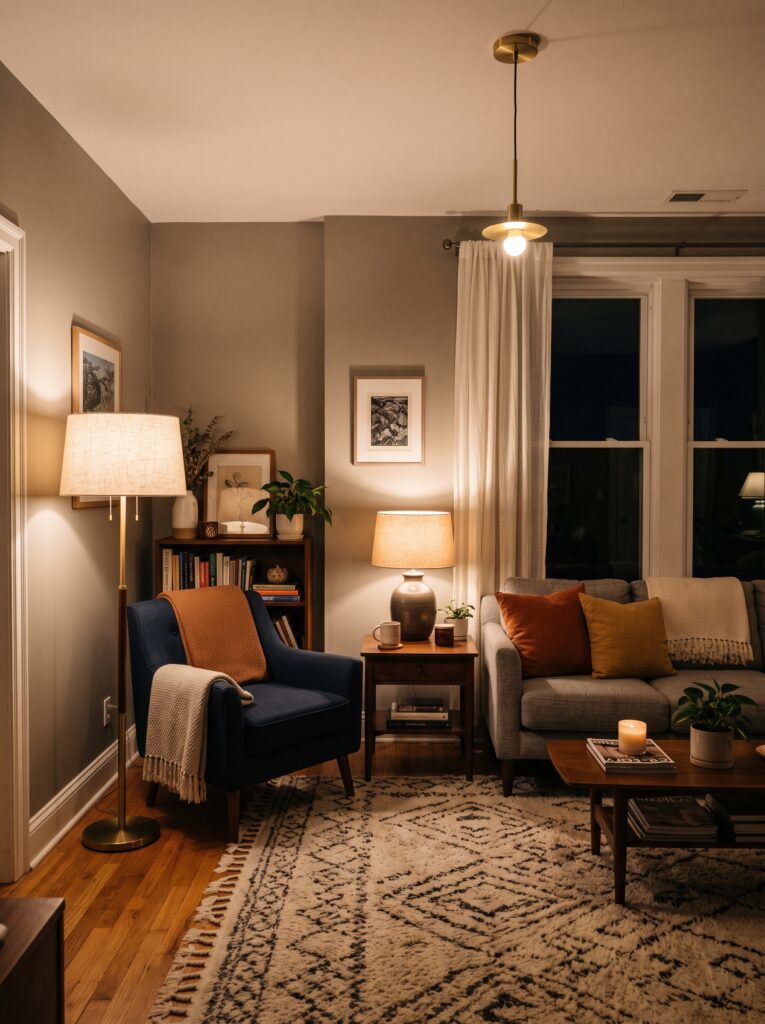
Relying on just one overhead light source leaves small rooms with dark corners that make the space feel smaller and less inviting. Layering multiple light sources eliminates those shadows, and it’s loved for creating a warmer, more dimensional mood, working especially well in rooms without abundant natural light.
Key Elements:
- A floor lamp for one corner
- A table lamp for a side table or console
- A small overhead or ceiling fixture
- Warm-toned light bulbs throughout
- Dimmer switches, if possible, for adjustable ambiance
How to Style It:
- Identify any dark corners in your living room that lack natural light.
- Add a floor lamp to fill in shadowy corners and create ambient light.
- Place a table lamp on a side table or console for a secondary light source.
- Choose warm-toned bulbs throughout to keep the room feeling cozy rather than clinical.
- Add a dimmer switch if possible, allowing you to adjust brightness depending on time of day.
Idea 9: Slim Profile Furniture Scale
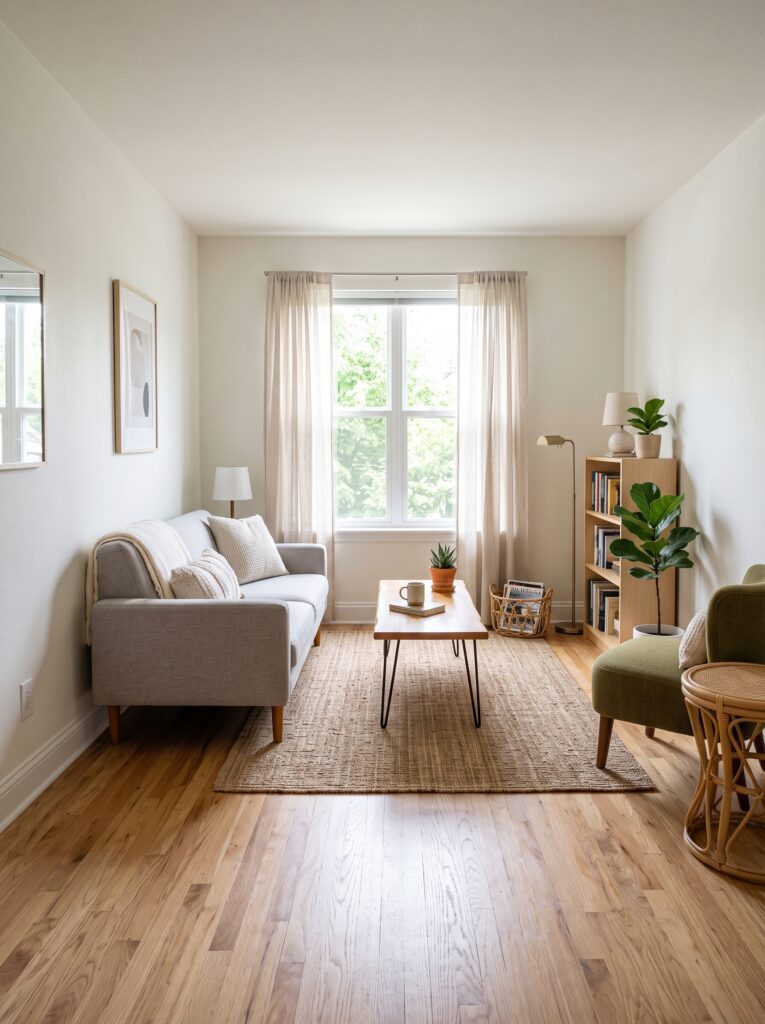
Choosing furniture with a slimmer profile, rather than oversized or deep pieces, ensures your small living room doesn’t feel overwhelmed by its own seating. It’s loved for maintaining proper scale, and it works in any compact space, creating a proportionate, comfortable mood.
Key Elements:
- A slim-depth sofa rather than an oversized sectional
- A narrow coffee table
- Compact accent chairs
- Adequate walking space around each furniture piece
- A rug sized appropriately to define the seating area without overwhelming it
How to Style It:
- Measure your room carefully before choosing furniture, prioritizing slimmer depths over deep, oversized pieces.
- Choose a narrow coffee table that doesn’t overwhelm the seating area.
- Select compact accent chairs rather than large, bulky armchairs.
- Maintain at least 18 inches of walking space around major furniture pieces.
- Choose a rug sized to anchor the seating area without making the room feel crowded.
Idea 10: Statement Rug for Defined Space
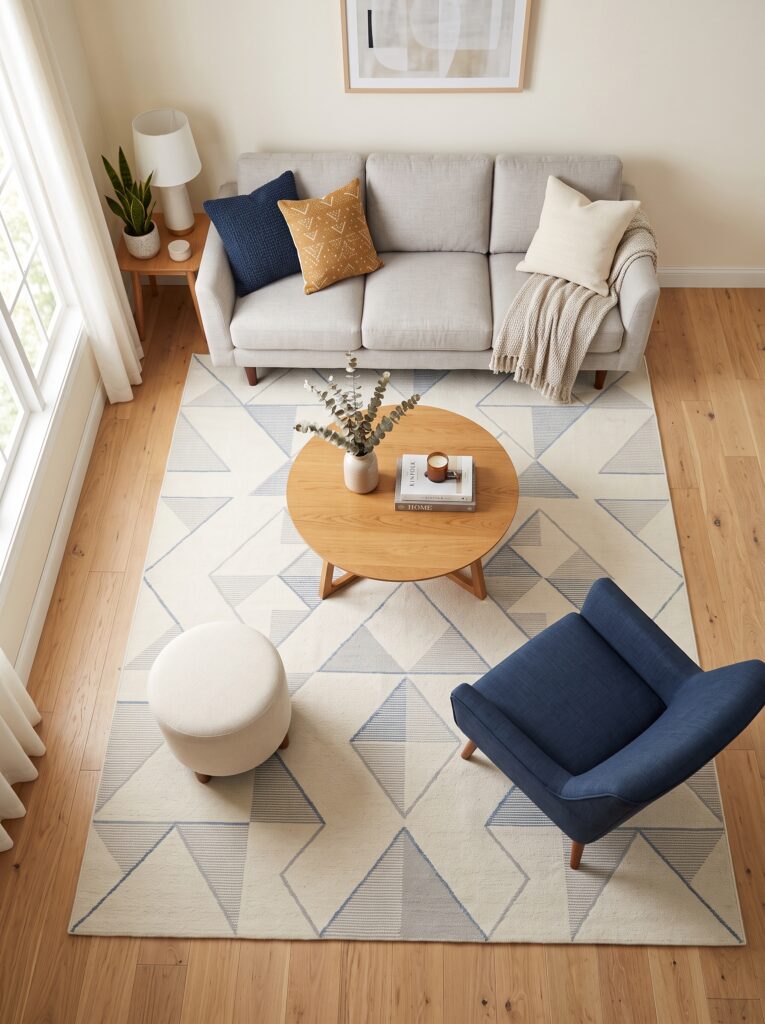
A properly sized statement rug helps define your seating area, making the room feel organized and intentional rather than haphazard. It’s loved for adding personality through pattern without taking up physical space, and it works in any small living room, creating a cohesive, grounded mood.
Key Elements:
- A rug large enough for at least the front legs of all furniture to rest on
- A light or neutral base color with subtle pattern
- Furniture arranged around the rug’s edges
- A pad beneath the rug for comfort and grip
- Minimal additional flooring visible around the rug’s edges
How to Style It:
- Measure your seating area before choosing a rug size, ensuring it’s large enough to anchor the space properly.
- Choose a light or neutral rug with subtle pattern rather than a busy, high-contrast design.
- Arrange furniture so at least the front legs rest on the rug’s edges.
- Add a rug pad underneath for both comfort and to prevent slipping.
- Avoid choosing a rug that’s too small, since an undersized rug makes a room feel more disjointed.
Idea 11: Hidden Storage Solutions
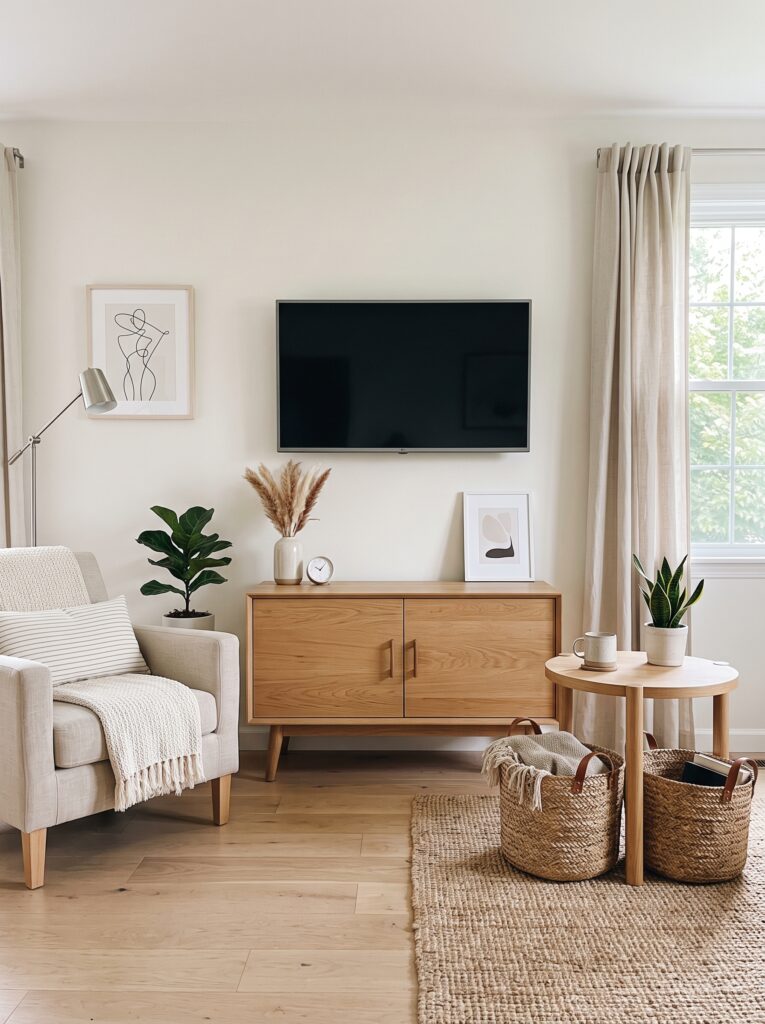
Hidden storage keeps everyday clutter out of sight, which makes an enormous difference in how spacious a small living room feels. It’s loved for combining function with a clean aesthetic, and it works in any small space, creating an organized, breathable mood.
Key Elements:
- A media console with closed cabinet doors
- Woven baskets for blankets, remotes, or toys
- A storage ottoman for additional hidden space
- Drawer organizers for smaller items
- Closed shelving rather than fully open displays
How to Style It:
- Choose a media console with closed doors rather than open shelving for visible clutter control.
- Add woven baskets beneath side tables or consoles for blankets and miscellaneous items.
- Use a storage ottoman to tuck away items that don’t have another home.
- Organize smaller items, like remotes and chargers, in a single drawer or tray.
- Reserve open shelving for a few curated, intentional decor pieces rather than everyday clutter.
Idea 12: Window Treatments That Maximize Light
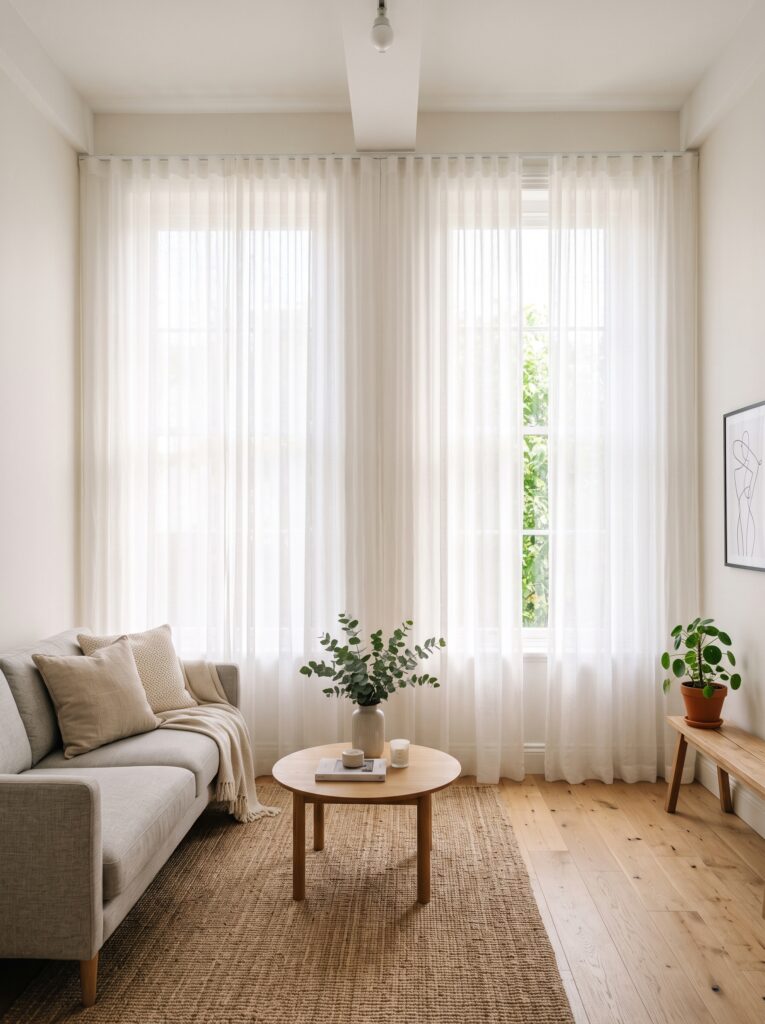
The right window treatments can dramatically affect how much natural light enters a small living room, as well as how tall the walls appear. It’s loved for being a simple, budget-friendly update, and it works in any small space, creating a brighter, taller-feeling mood.
Key Elements:
- Sheer or lightweight curtains
- Curtain rods mounted close to the ceiling
- Curtains that just graze or slightly pool on the floor
- Minimal pattern or solid neutral tones
- A rod extending beyond the window frame for maximum light exposure
How to Style It:
- Choose sheer or lightweight curtain fabric to maximize natural light filtration.
- Mount curtain rods as close to the ceiling as possible, rather than directly above the window frame.
- Extend the rod a few inches beyond the window frame on each side to allow full light exposure when curtains are open.
- Choose curtains long enough to just graze or slightly pool on the floor for an elongated visual effect.
- Stick to solid, neutral tones rather than heavy patterns that can visually shrink the space.
Small Living Room Furniture Sizing Guide
| Furniture Piece | Recommended Size for Small Rooms | Notes |
|---|---|---|
| Sofa | Under 80 inches wide | Choose a slim-depth profile |
| Coffee Table | 36–42 inches long | Keep proportional to sofa size |
| Area Rug | At least 5×7 feet | Furniture legs should rest on edges |
| Accent Chair | Under 30 inches wide | Choose visible-leg designs |
| Console/Media Unit | Under 48 inches wide | Closed storage preferred |
| Bookshelf | Tall and narrow | Maximizes vertical space |
Common Decorating Mistakes to Avoid
- Choosing oversized furniture. Always measure your room before purchasing, prioritizing scale over individual piece size.
- Using too many colors or patterns. A limited palette keeps small rooms feeling calm rather than visually chaotic.
- Pushing all furniture against the walls. Sometimes floating a piece slightly away from the wall creates better flow and proportion.
- Choosing a rug that’s too small. An undersized rug makes a room feel disjointed rather than cohesive.
- Ignoring vertical space. Tall shelving and elevated curtains make ceilings feel higher and rooms feel larger.
- Overcrowding surfaces. Too many small objects on tables and shelves create visual clutter that shrinks the perceived space.
Final Thoughts
These small living room decor ideas prove that limited square footage doesn’t have to mean limited style or comfort. With the right color palette, smart furniture choices, and a few clever styling tricks, even the coziest living room can feel open, bright, and genuinely welcoming.
I’ve seen how simple decorating changes like these can completely transform how a home feels without requiring a major renovation. Start with just one idea from this list, whether that’s adding a large mirror or simplifying your color palette, and notice how much more spacious your living room begins to feel.
Indy Santos is a passionate interior styling specialist and home living enthusiast with a focus on contemporary decor, smart space planning, and affordable design inspiration. At Inspired Homex, she provides readers with fresh decorating concepts, actionable advice, and professional guidance to create comfortable, elegant, and well-organized homes that reflect their personal style.