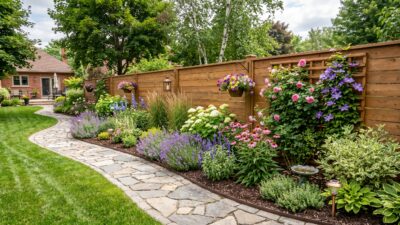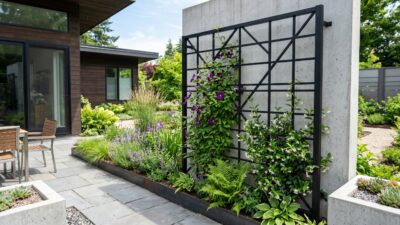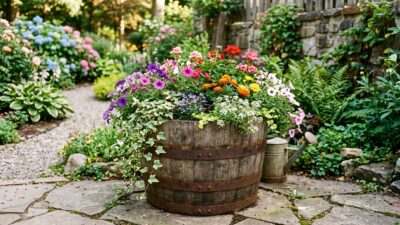

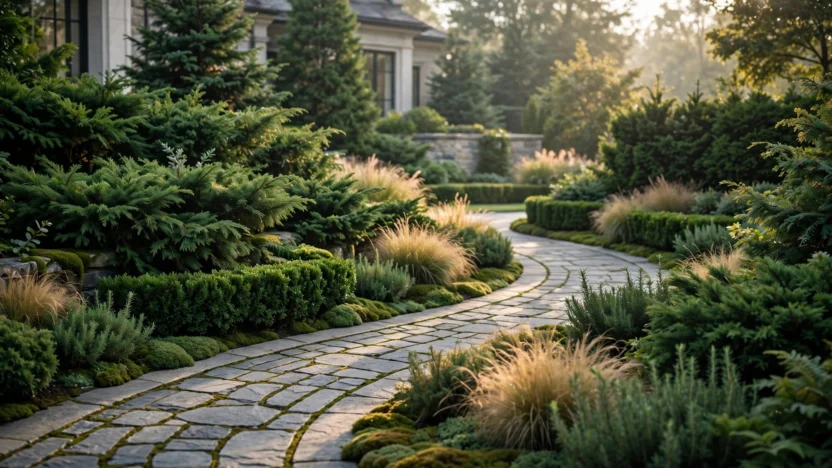
Evergreen front yard ideas can turn the first view of your home into a calm, lush welcome that stays green when everything around it fades. The challenge is variety: choosing shapes, textures, and shades of green so the yard feels rich and layered rather than flat or repetitive. By pairing the structure of clipped hedges, stone, and crisp edging with the soft, organic movement of grasses, ferns, and flowering accents, you can reach a look that feels both tailored and natural. The payoff is a front yard that earns compliments in July and January alike, with less seasonal scrambling. This guide explores various ways to use evergreen front yard ideas to enhance your home effectively.
1. Clipped Boxwood Foundation Border
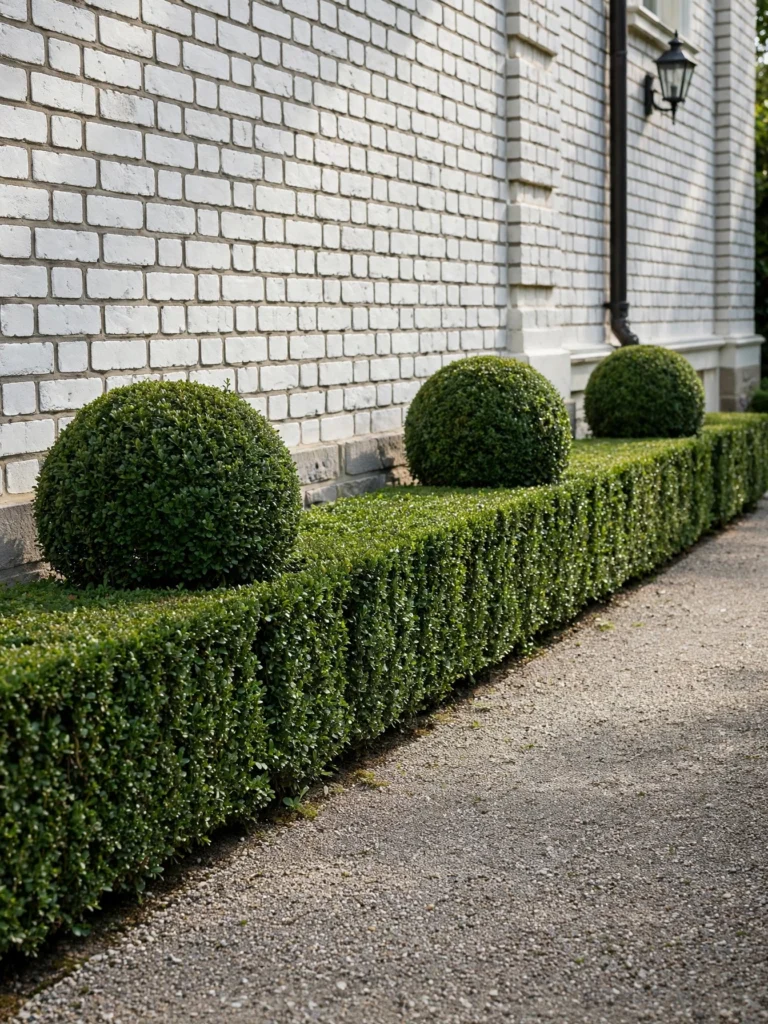
Could one simple hedge give your whole house a tailored look? Clipped boxwood forms a crisp green frame that holds its shape through every season. Repeat small rounded forms at the corners for rhythm. You should shear in late spring and again in midsummer for sharp lines, and ask a local nursery about blight-resistant varieties. The mood is classic, orderly, and quietly elegant.
2. Blue Spruce Focal Point
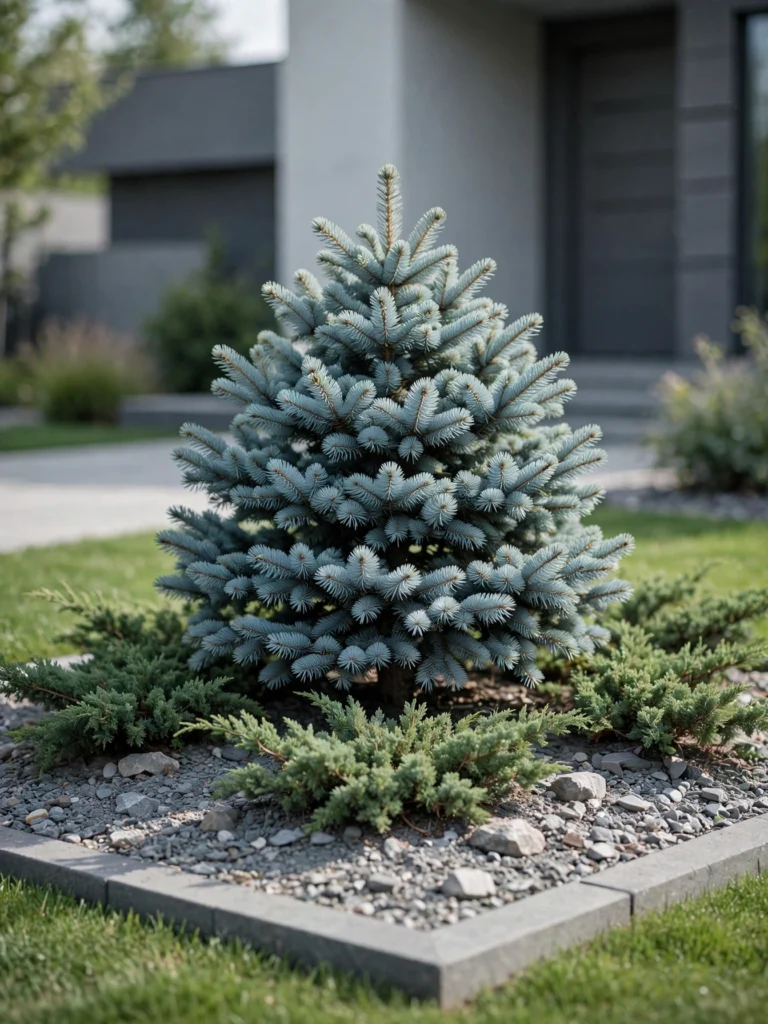
Imagine a silvery-blue tree glowing against a winter sky. A dwarf blue spruce anchors a lawn island bed and gives the yard a strong center of gravity. Its cool tone contrasts beautifully with warm brick and green shrubs. Choose a dwarf variety if your space is modest, since full-size spruces grow very large. The look is crisp, cool, and striking.
3. Mounded Juniper Slope Cover
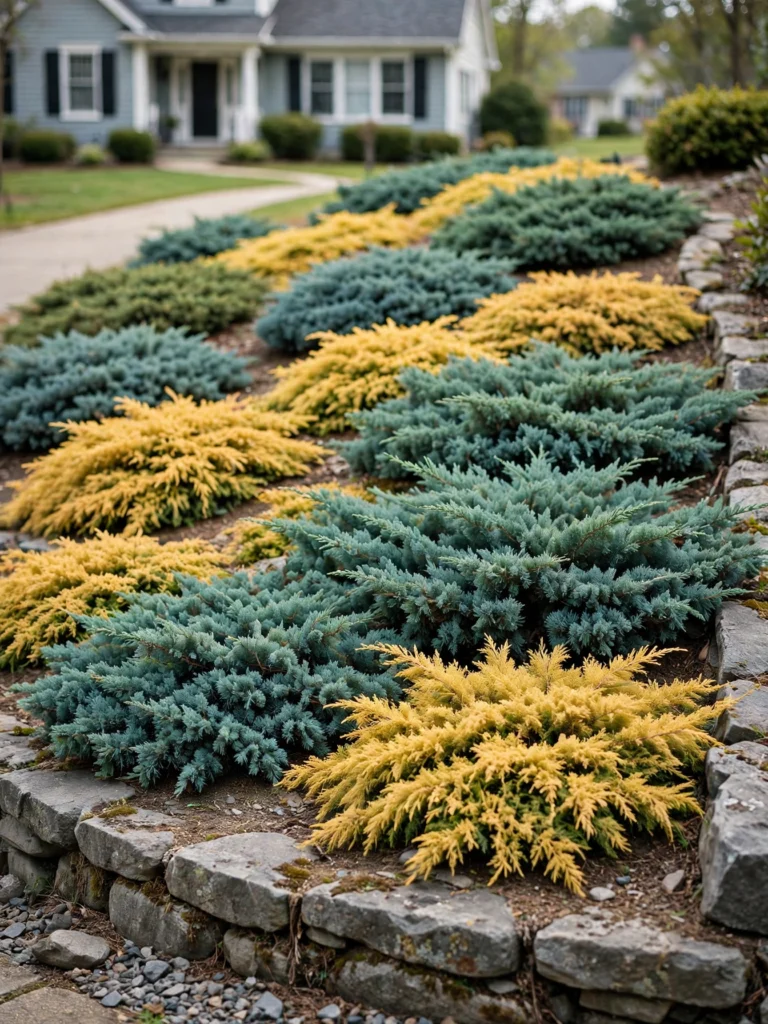
Have you ever struggled to mow a stubborn slope? Creeping junipers blanket the bank, hold the soil, and stay green all year. Mix blue-green and golden varieties for subtle waves of color, and set a few boulders to add natural weight. Plant them with enough spacing to fill in over time, and mulch well in the first years. The effect is flowing, hardy, and wonderfully low effort.
4. Holly and Berry Winter Accent
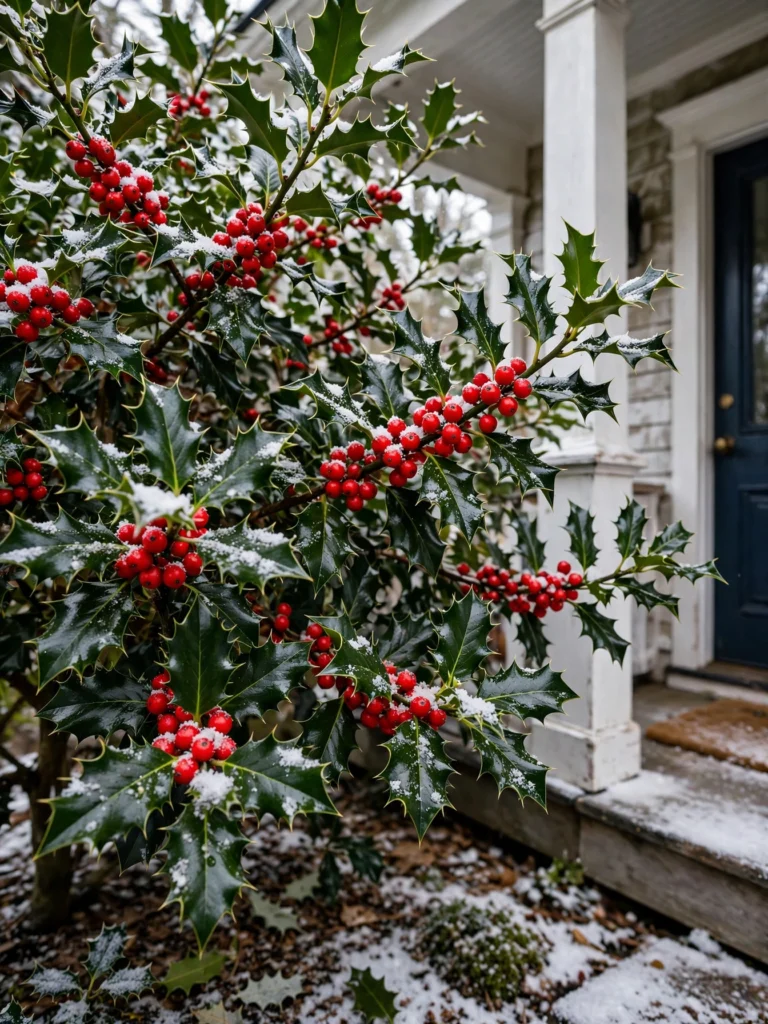
Glossy green leaves with red berries bring cheer when other plants are asleep. Place a holly where you can see it from the window, and birds will likely visit for the fruit. Remember that many hollies need both a male and a female plant to produce berries, so check labels. Wear sturdy gloves when pruning. The look is festive, bold, and richly traditional.
5. Dwarf Conifer Rock Garden
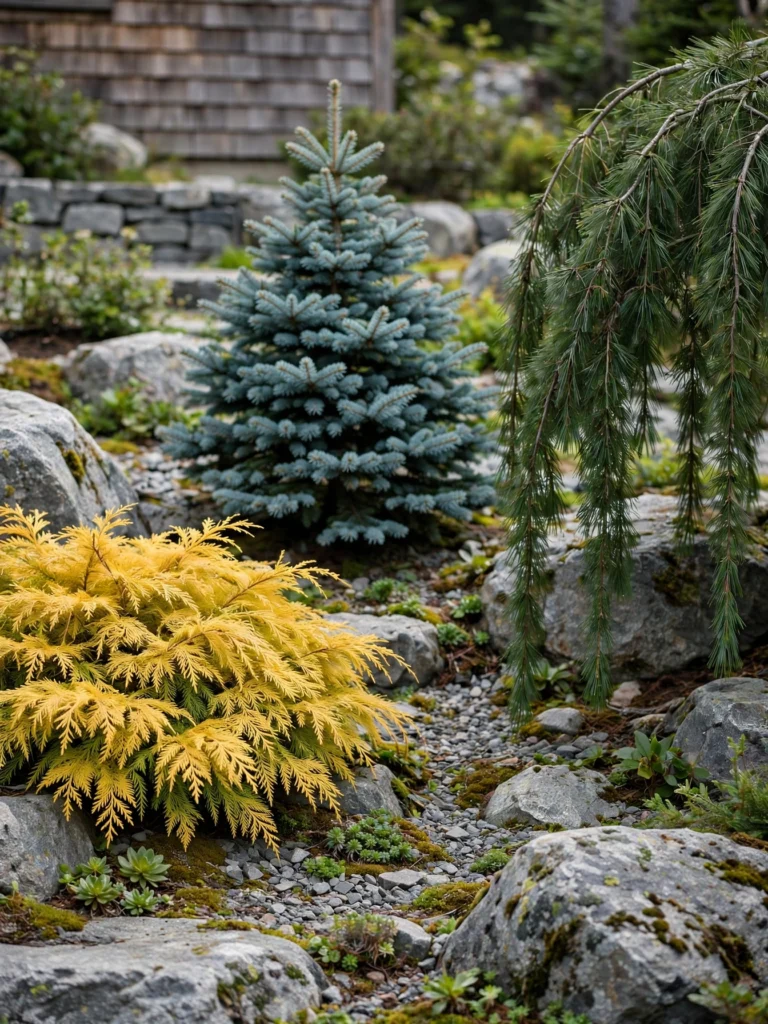
What if your front yard felt like a living sculpture garden? Dwarf conifers come in cones, spheres, and weeping forms, and they stay compact for years. Set them among stones with pea gravel between for drainage and contrast. Consider grouping three to five varieties with different colors and shapes so the bed feels collected. The mood is artistic, sculptural, and endlessly interesting.
6. Evergreen Hedge Privacy Screen
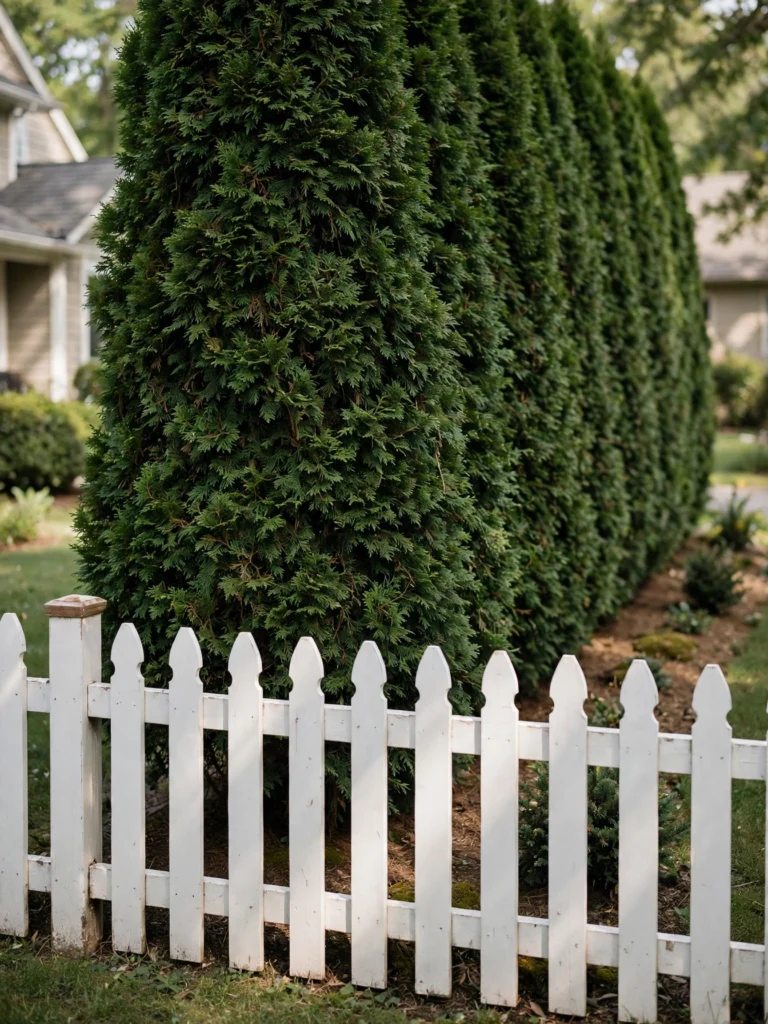
Imagine a living wall that keeps its leaves in every season. A row of arborvitae creates privacy, blocks wind, and frames the yard in deep green. Space plants according to their mature width so the hedge fills in evenly. You should check local rules on hedge height near sidewalks and property lines before planting. The look is private, sheltered, and serene.
7. Sweeping Stone Path with Moss and Thyme
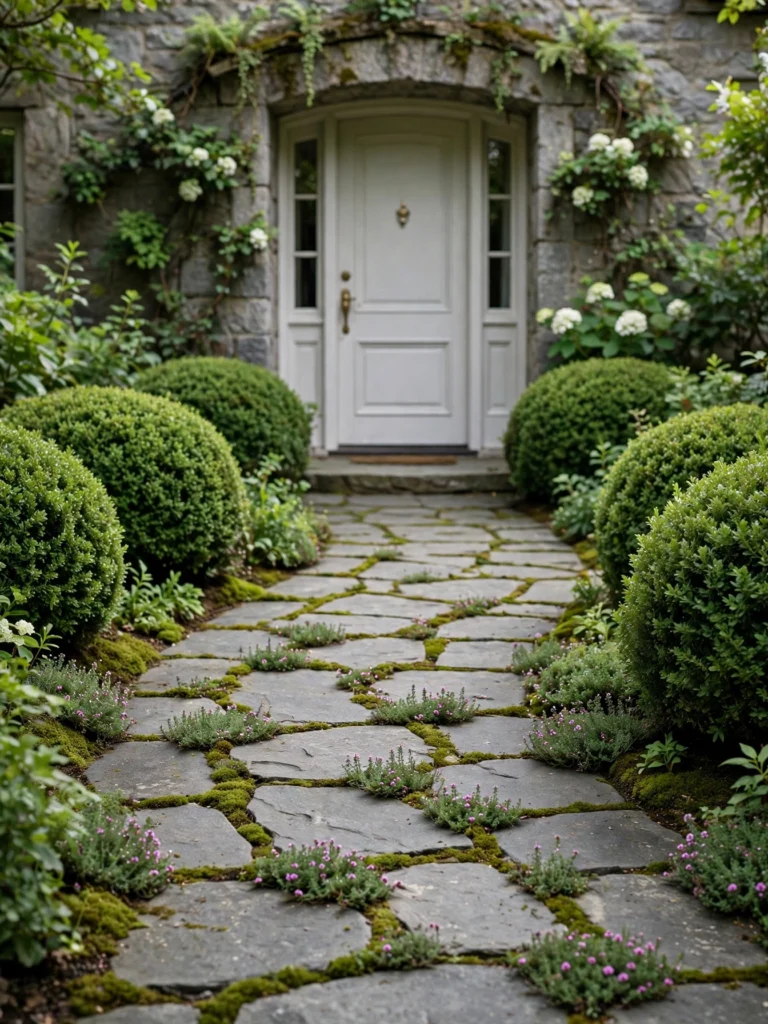
Could a walkway feel like a woodland trail? Fill gaps between flagstones with creeping thyme and moss for a soft green seam that releases fragrance when stepped on. Keep the edges lined with low evergreens so the path feels framed. Choose stones with a flat, stable surface so footing stays safe in all weather. The entry feels enchanted, soft, and welcoming.
8. Layered Evergreen and Grass Border
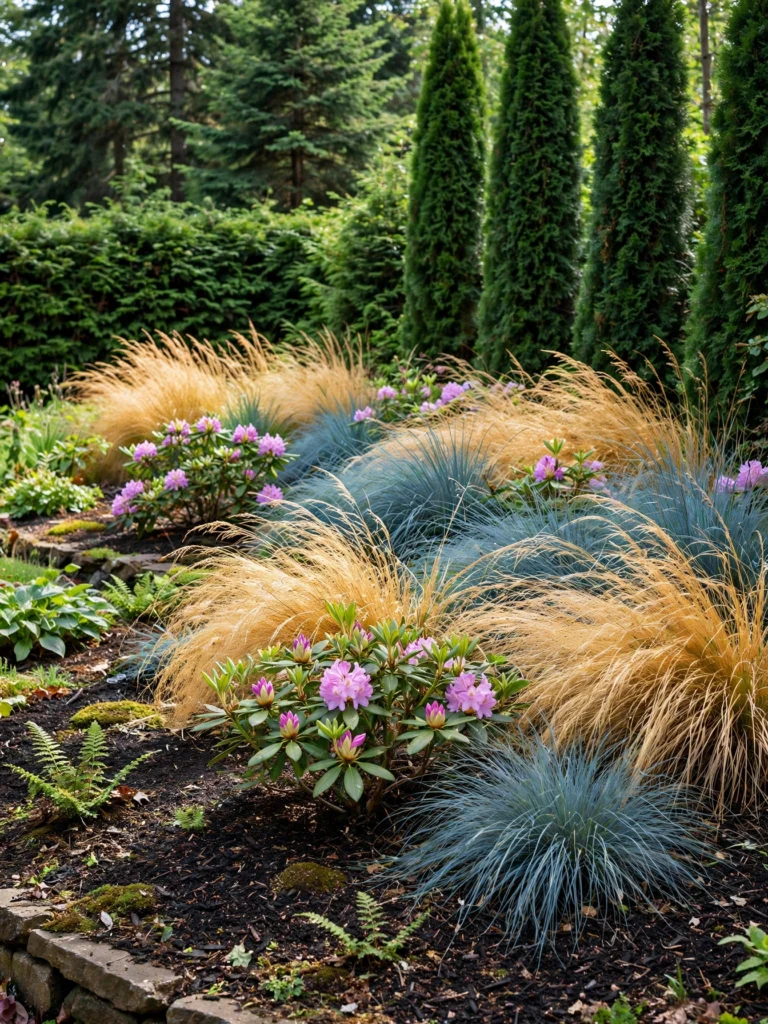
Imagine a border that moves in the breeze but never loses its green. Pair tall evergreens at the back with broad-leaved shrubs in the middle and low evergreen grasses in front. The mix of fine and bold textures keeps the eye traveling. Add plants in groups of three or five so the layers read as drifts. The feeling is lush, dynamic, and full of depth.
9. Rhododendron and Azalea Spring Burst
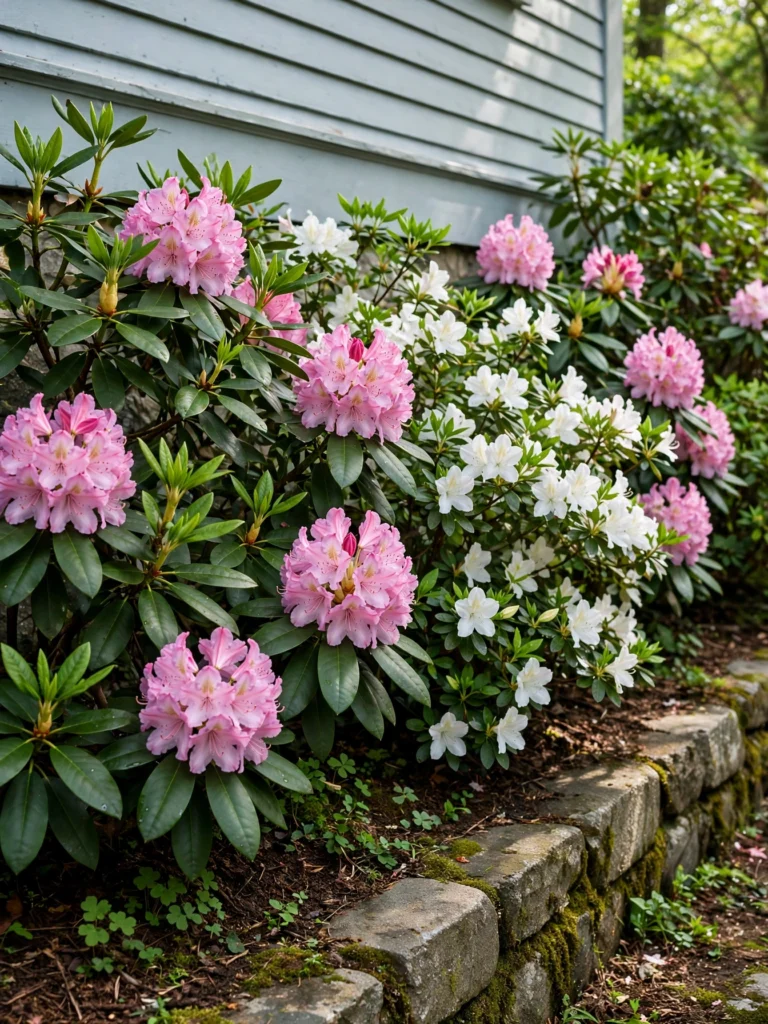
Who says evergreens cannot bloom? Rhododendrons and evergreen azaleas offer glossy leaves all year and a spectacular flush of flowers each spring. Plant them in acidic, well-drained soil with morning sun and afternoon shade. Mulch with pine bark to keep roots cool and moist. The yard feels celebratory, romantic, and joyfully colorful.
10. Low-Maintenance Gravel and Evergreen Bed
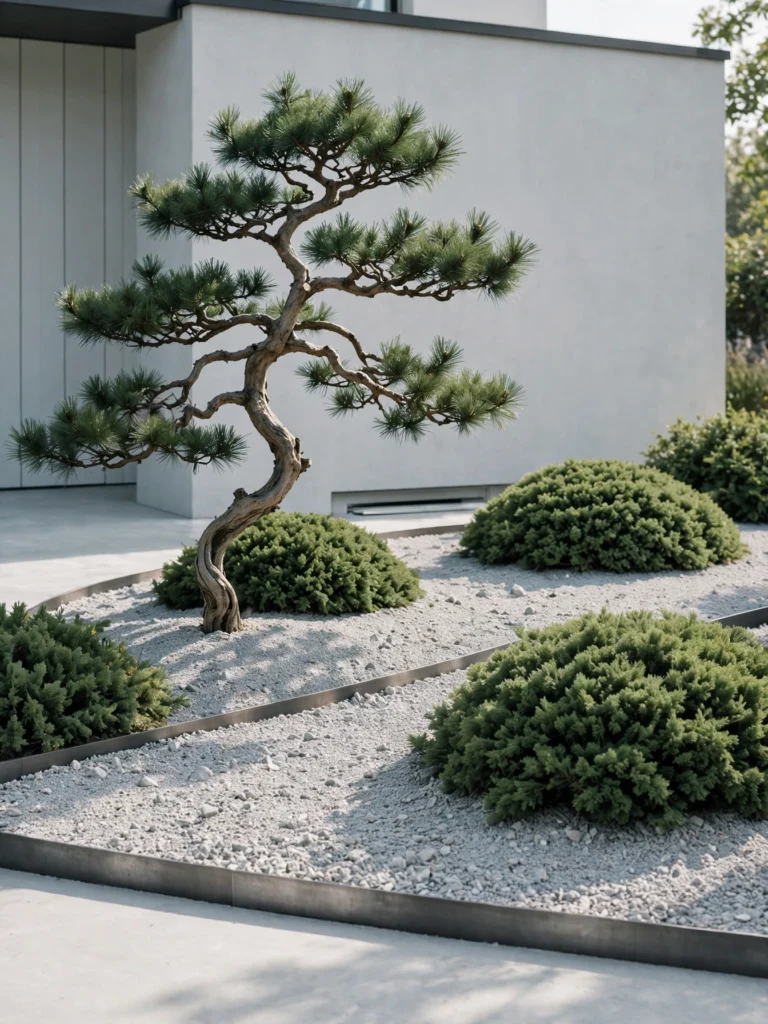
Want a front yard that asks for very little? Combine gravel mulch, steel edging, and a few well-chosen evergreens for a clean, modern bed. Weeds are easier to spot and pull, and there is little to mow. You should lay landscape fabric or a weed barrier beneath the gravel, and choose drought-tolerant plants. The mood is calm, tidy, and effortlessly contemporary.
11. Cottage Evergreen and Perennial Mix
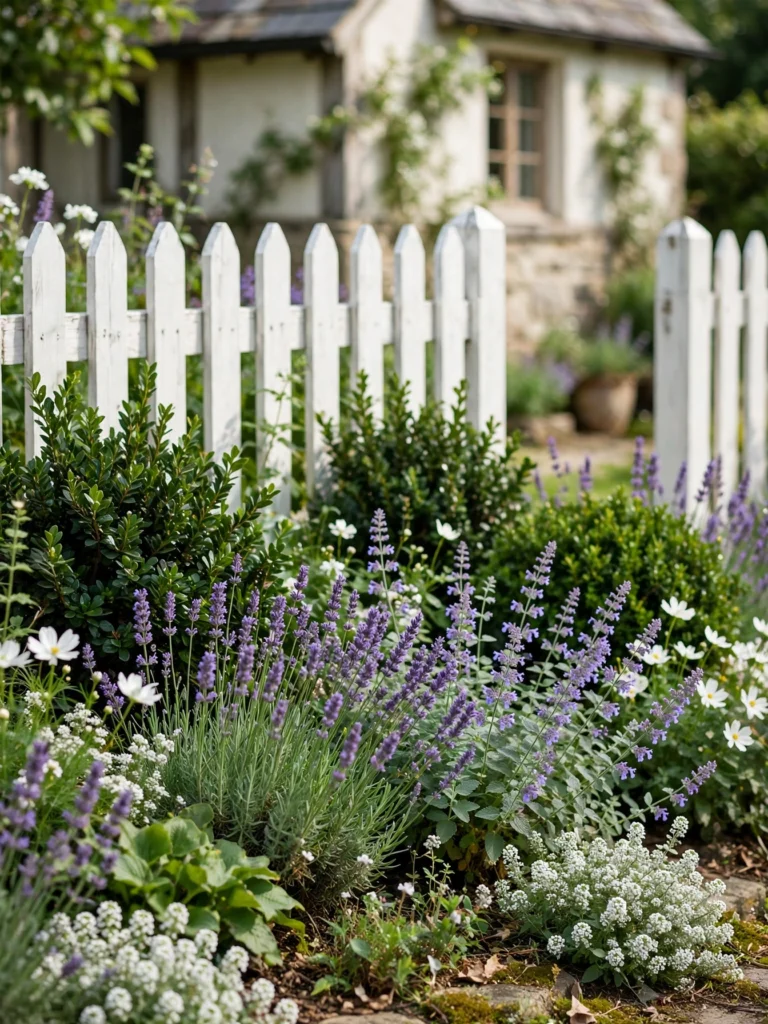
Imagine a cottage garden that still looks good in January. Let evergreen shrubs form the backbone, then weave lavender, catmint, and coneflowers through them for seasonal color. In winter, the evergreens carry the show while the perennials rest. Cut perennials back in late winter so new growth appears neat and fresh. The look is loose, charming, and gently romantic.
12. Weeping Evergreen Statement Tree
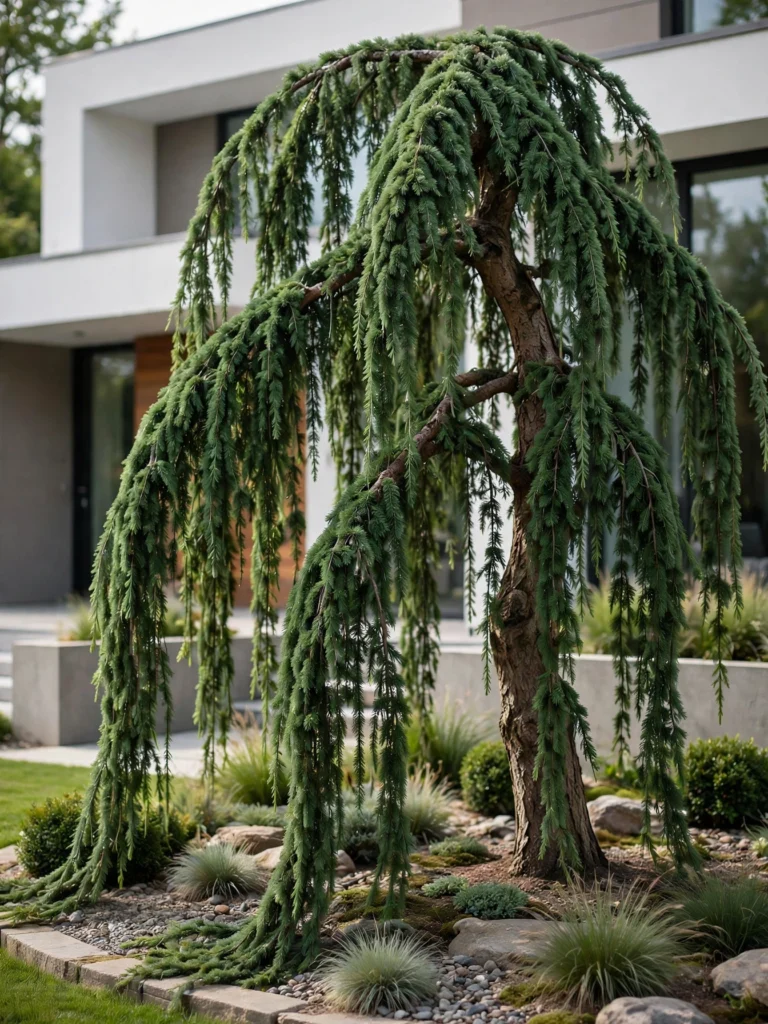
Could a single tree make your yard feel like a painting? A weeping evergreen drapes its branches in graceful curtains, adding movement and drama. Place it where it has space to spread, with a clean mulch ring beneath. Choose a spot visible from the street and your front window. The effect is graceful, sculptural, and quietly dramatic.
13. Evergreen Container Entry
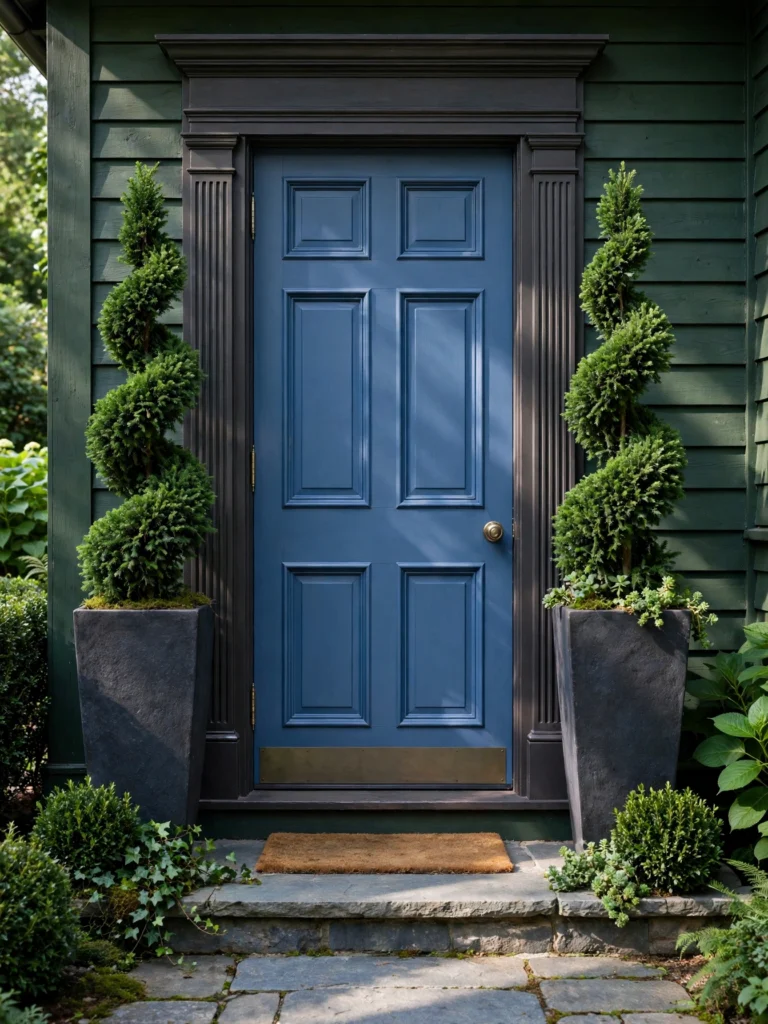
Symmetry can make a front door feel instantly important. Place two tall planters on either side, each holding a spiral topiary or dwarf spruce, and tuck ivy around the base. Seasonal additions like pansies or berries slip in easily. Use frost-proof containers with drainage and water occasionally in dry winter spells. The entry feels formal, polished, and ready for guests.
14. Shade-Loving Fern and Yew Corner
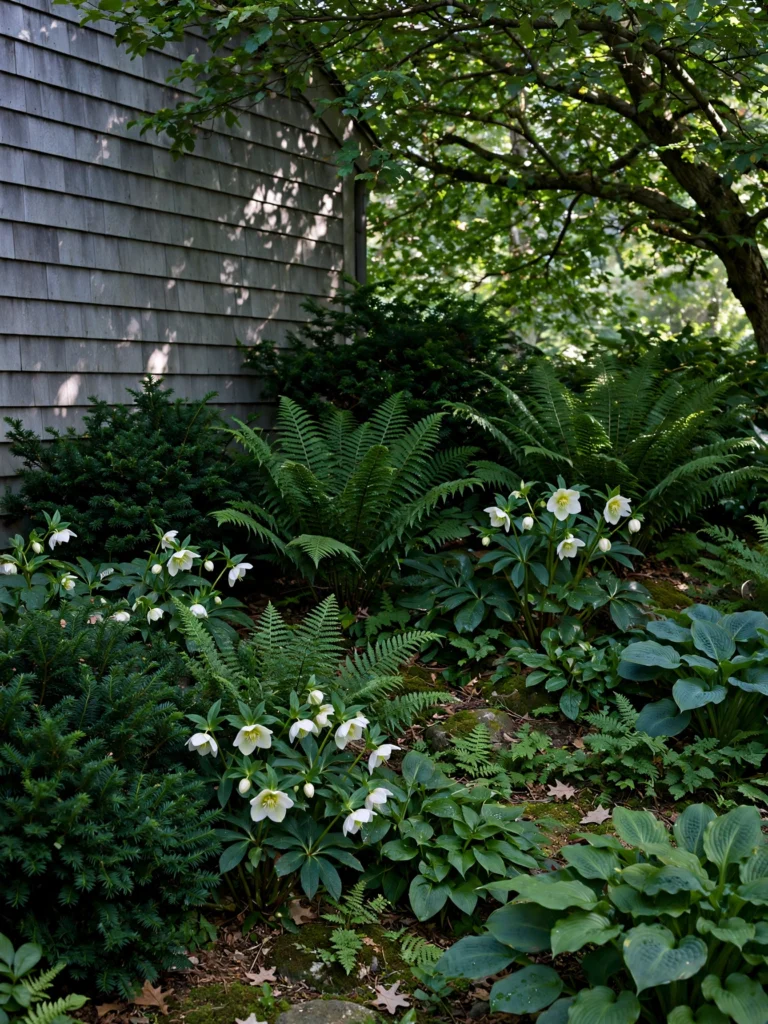
Shade does not have to mean dull. Yew, evergreen ferns, and hellebores thrive in dim corners and keep their leaves through winter. Add mossy stepping stones for a woodland path feel. Water new plants regularly during their first year under tree roots. The corner feels cool, calm, and quietly lush.
15. Golden Evergreen Color Accent
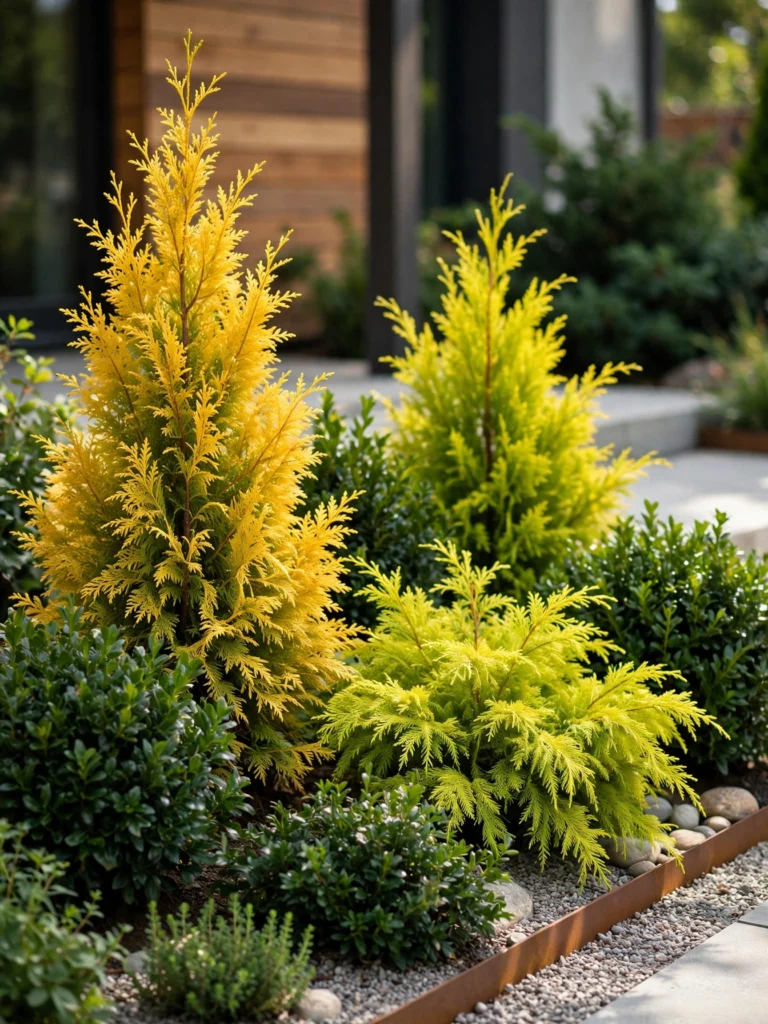
Imagine a yard that glows even on a cloudy day. Golden and chartreuse evergreens light up a planting like sunshine on leaves. Place them against dark green or charcoal backgrounds for the strongest contrast. Add just one or two so they feel like a highlight, not a competition. The mood is cheerful, bright, and refreshingly bold.
16. Boulder and Evergreen Naturalistic Bed
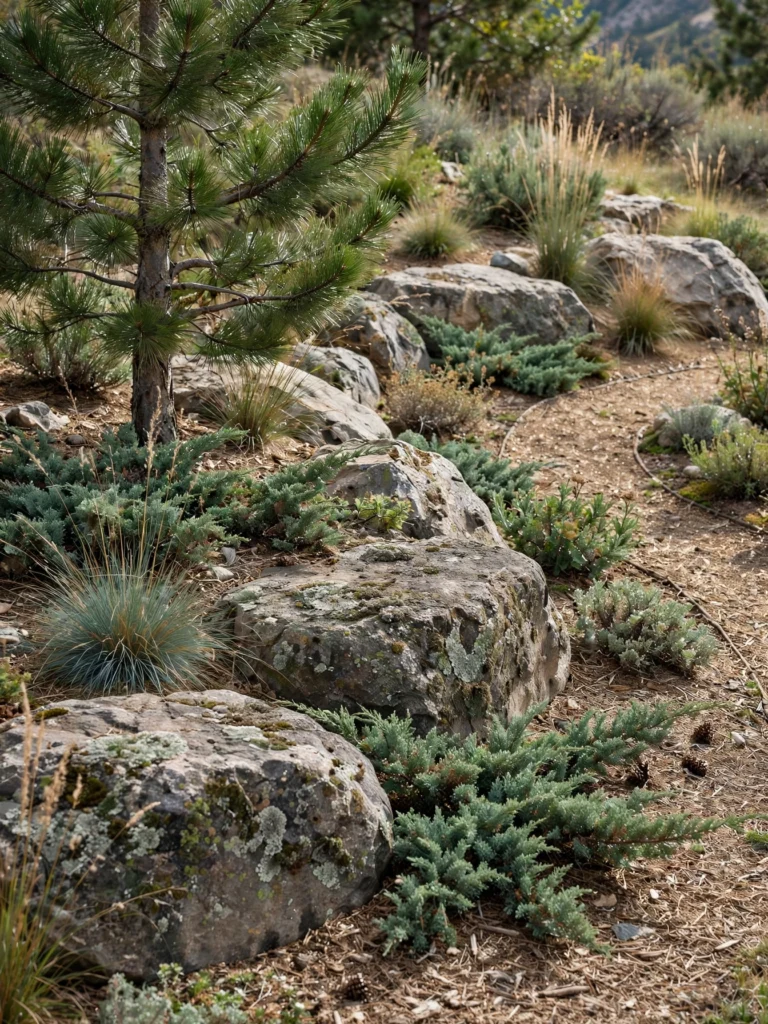
Rocks and evergreens look like they grew together. Set a few large boulders partly buried in the soil so they appear natural, then nestle pines, junipers, and grasses around them. Odd numbers of boulders look most relaxed. Have a professional place very large stones to protect your lawn and back. The scene feels rugged, wild, and beautifully grounded.
17. Evergreen Hedge Lined Driveway
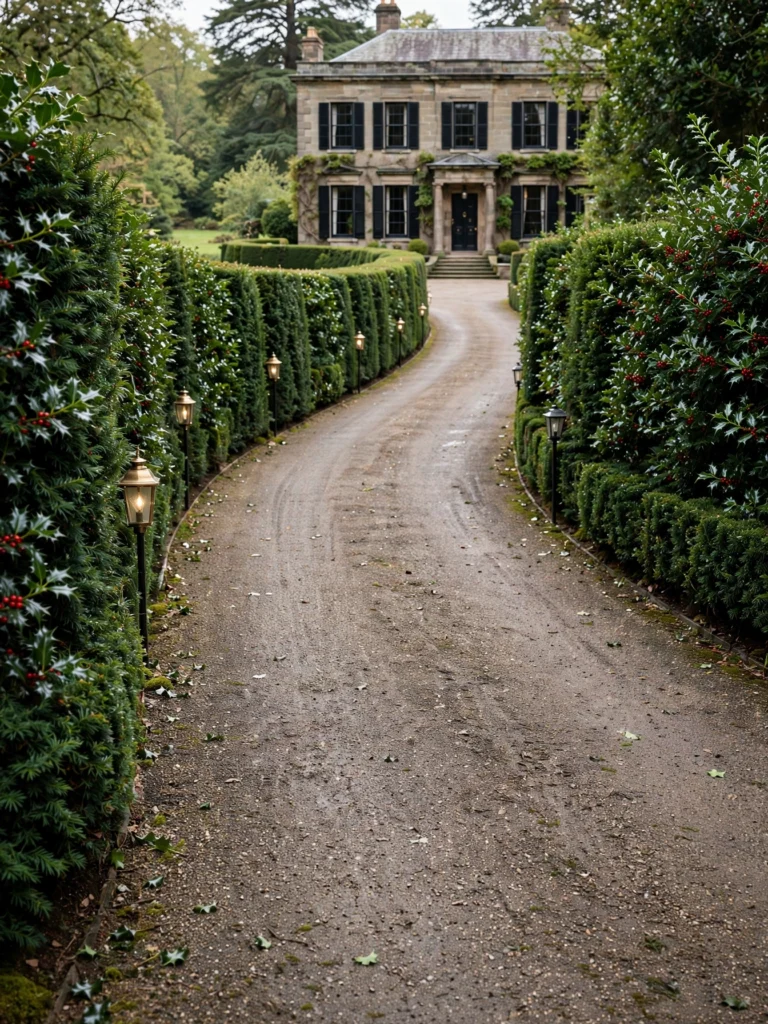
A driveway lined with hedges can feel like an estate entrance. Plant evergreen hedging on both sides to guide the eye toward the house and soften pavement. Add low path lights at intervals for evening glow. Keep hedges trimmed back so vehicles and walkers have clear space. The approach feels stately, welcoming, and graceful.
18. Seasonal Color Layered Over Evergreens
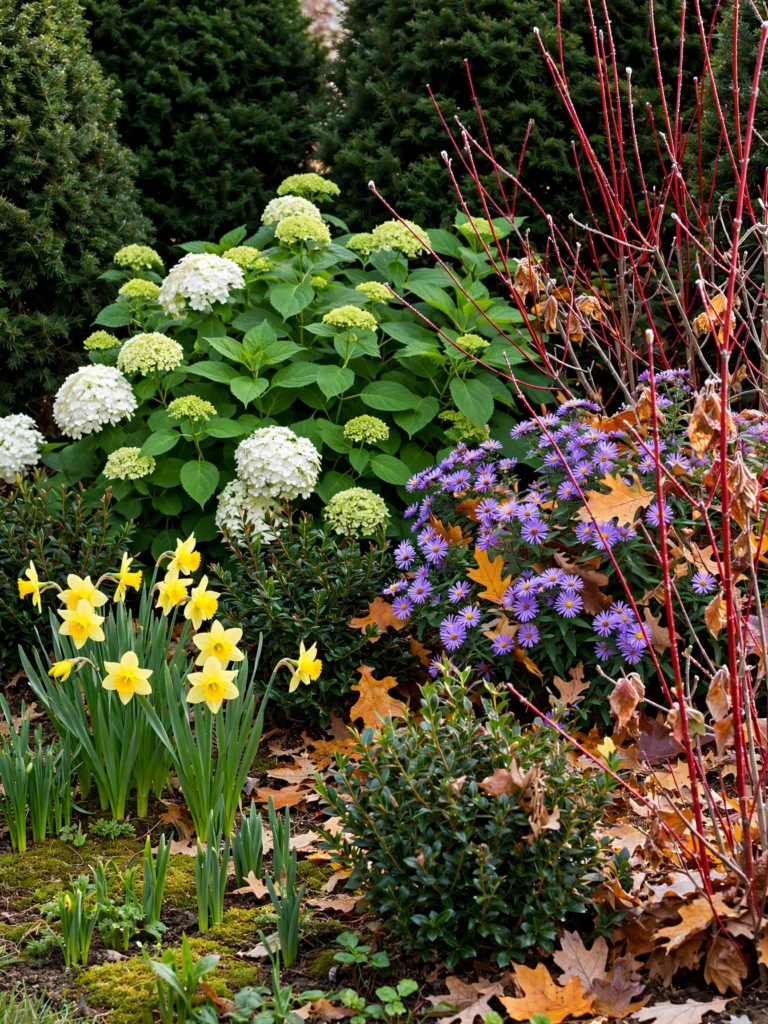
Can an evergreen yard still feel seasonal? Absolutely. Use evergreens as a deep green backdrop, then layer bulbs, hydrangeas, asters, and red-twig dogwood in front so each season has its own moment. Tuck spring bulbs between shrubs in autumn for easy planting. You should map bloom times so something is always in flower. The yard feels dynamic, colorful, and always changing.
19. Night Lit Evergreen Front Yard
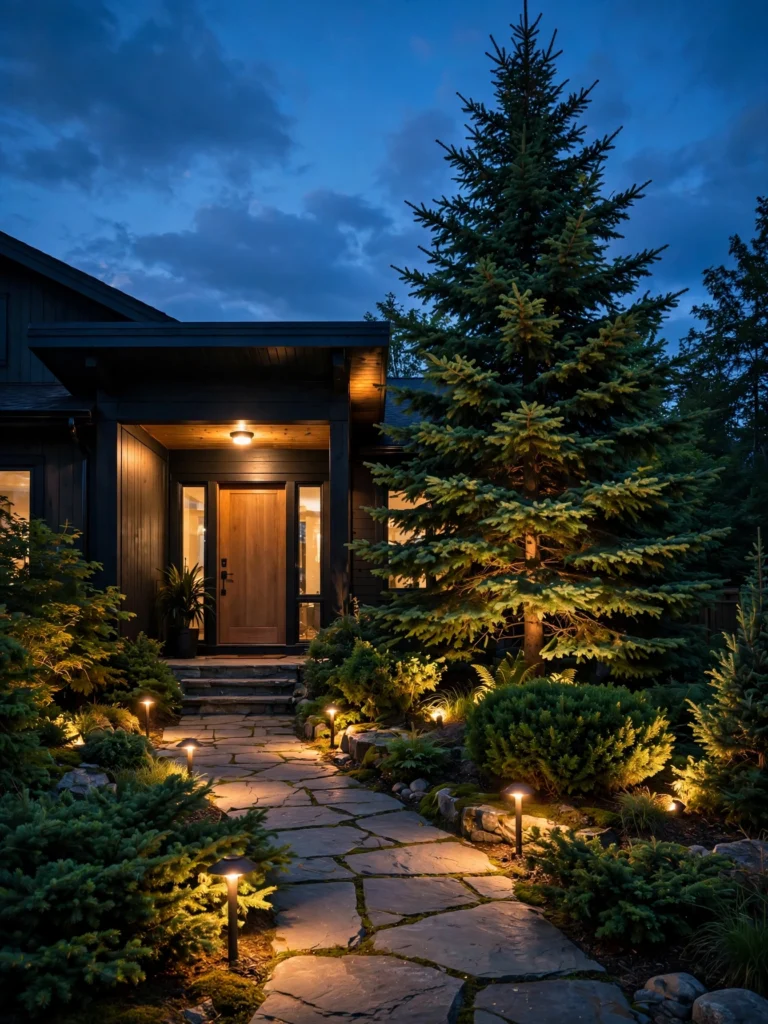
Evergreens look magical after dark. Uplights tucked at the base of a spruce or hedge create glowing shapes, and path lights guide the way. Choose warm white, low-voltage or solar fixtures for soft light and easy installation. Aim lights upward at an angle so glare stays out of eyes. The yard feels cozy, dramatic, and safe.
20. Budget Starter Evergreen Makeover
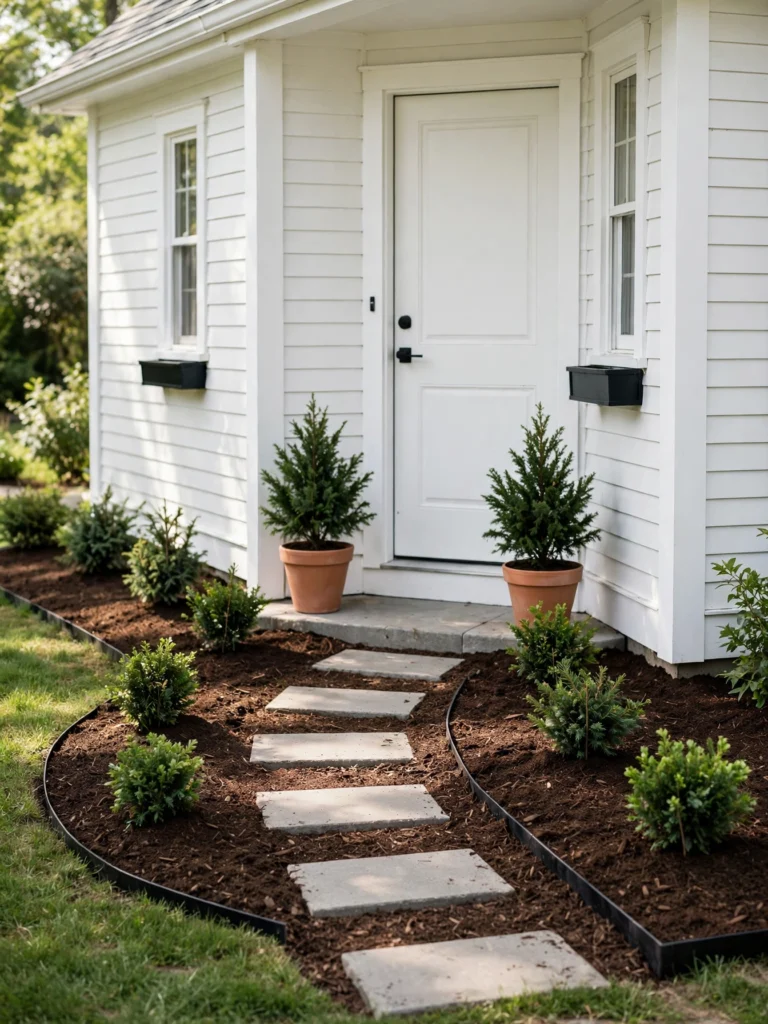
Can a front yard glow up without a huge budget? Start with a few small evergreens, fresh mulch, and crisp edging, then add plants over time as funds allow. Buy smaller plants, which cost less and often catch up quickly in growth. Shop end-of-season sales and plant in early fall or spring for the best establishment. The result is fresh, hopeful, and full of potential.
Quick Tips for Getting This Right
- Plan for mature size: Check each plant’s full height and width, and give it room so you do not need constant pruning or removal.
- Mix shapes and textures: Combine rounded, upright, and spreading evergreens in varied greens, blues, and golds for depth.
- Choose for your zone: Pick varieties suited to your climate and sun, and ask a local nursery which perform well in your area.
- Mulch and water well: Add a few inches of mulch and water deeply during the first year, especially before the ground freezes.
- Protect from winter damage: Wrap tender shrubs in burlap, avoid road salt near plants, and brush heavy snow off branches gently.
Frequently Asked Questions
What are the best evergreen front yard ideas for beginners?
Start with hardy, forgiving plants like boxwood, juniper, and arborvitae, and keep the design simple. Use mulch, edging, and groups of three or five plants. These evergreen front yard ideas give you a tidy, year-round look without demanding advanced pruning or frequent care.
Which evergreens are best for a front yard?
Boxwood, holly, yew, juniper, arborvitae, and dwarf spruce are popular choices. Rhododendrons and azaleas add flowers, while ferns and hellebores suit shade. Best options depend on your climate, soil, and sun, so check hardiness zones and ask a local nursery for recommendations.
How do I make an evergreen yard less boring?
Mix foliage colors, such as blue, gold, and deep green, and combine shapes and textures. Add flowering shrubs, ornamental grasses, bulbs, and berry plants for seasonal highlights. Garden lighting, stone paths, and containers also bring variety and interest through the year.
How far apart should I plant evergreen shrubs?
Spacing depends on the plant’s mature width, which appears on the label. As a general rule, set shrubs so their edges will just touch at maturity for a hedge, or leave extra room for individual specimens. Good spacing improves airflow and reduces disease.
When is the best time to plant evergreens?
Early fall and spring are usually best, since mild temperatures and moist soil help roots establish. Avoid planting during extreme heat or when the ground is frozen. Water deeply after planting and mulch to hold moisture, and keep watering through the first year.
Conclusion
Evergreen front yard ideas are a rewarding way to express your personal style, giving your home a steady, welcoming presence through every season. Whether you love the crisp order of clipped hedges or the relaxed flow of grasses, junipers, and cottage perennials, both approaches work beautifully. These ideas adapt to tiny entry beds and sprawling lawns alike, and many can be built gradually as your budget allows. Over the years, a thoughtfully planted yard adds curb appeal, wildlife habitat, and daily enjoyment that only grows richer with time. Your dream front yard is just a few green choices away.

Indy Santos is a passionate interior styling specialist and home living enthusiast with a focus on contemporary decor, smart space planning, and affordable design inspiration. At Inspired Homex, she provides readers with fresh decorating concepts, actionable advice, and professional guidance to create comfortable, elegant, and well-organized homes that reflect their personal style.