
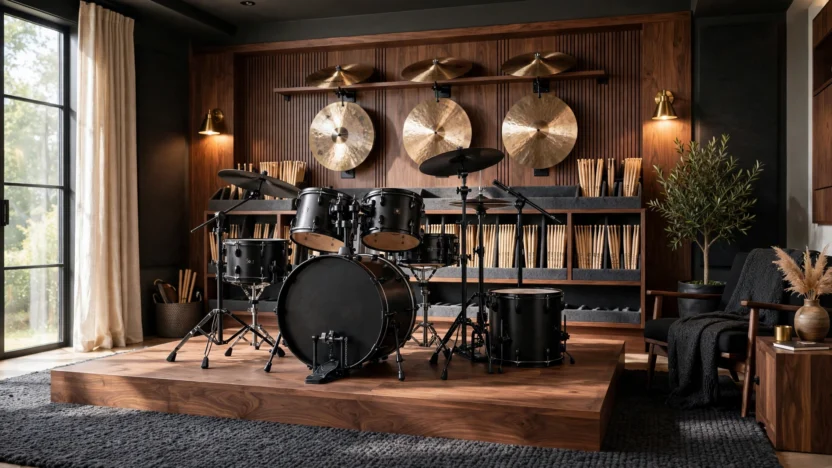
Drum room ideas can turn a spare corner, basement, or garage into a energizing creative hideout where every stick, cymbal, and cable has its place and every practice session feels inspiring. The challenge is balance: giving the kit room to breathe, taming sound, and keeping gear organized so the space never feels cramped. By pairing the structure of sturdy shelving, racks, and acoustic panels with the soft, organic warmth of wood, rugs, and plants, you can reach a look that feels both professional and welcoming. The payoff is a room you want to walk into, where setup takes seconds and playing time grows. This guide explores various ways to use drum room ideas to enhance your music space effectively.
1. Wall-Mounted Stick and Brush Rack
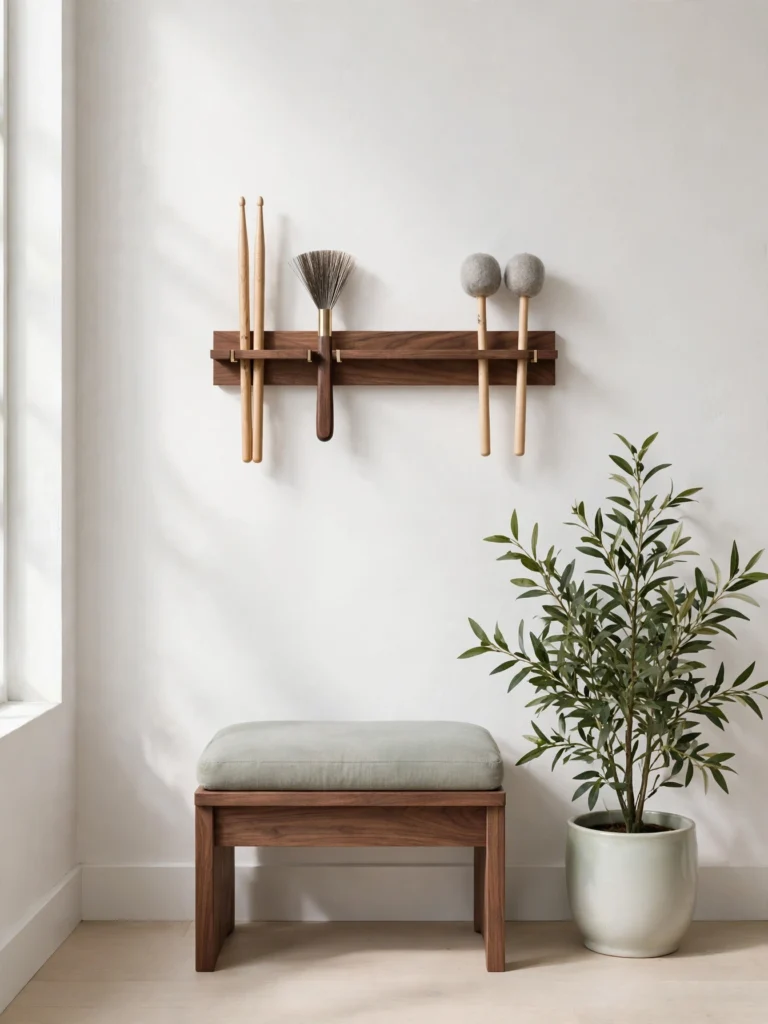
Could the smallest gear deserve the nicest display? A slim wall rack keeps sticks, brushes, and mallets in sight instead of lost in a bag. Mount it within arm’s reach of the throne so you can swap pairs between songs. You should anchor it into wall studs or use heavy-duty anchors so it holds steady. The mood is tidy, quick, and ready to play.
2. Cymbal Shelf and Felt-Lined Storage
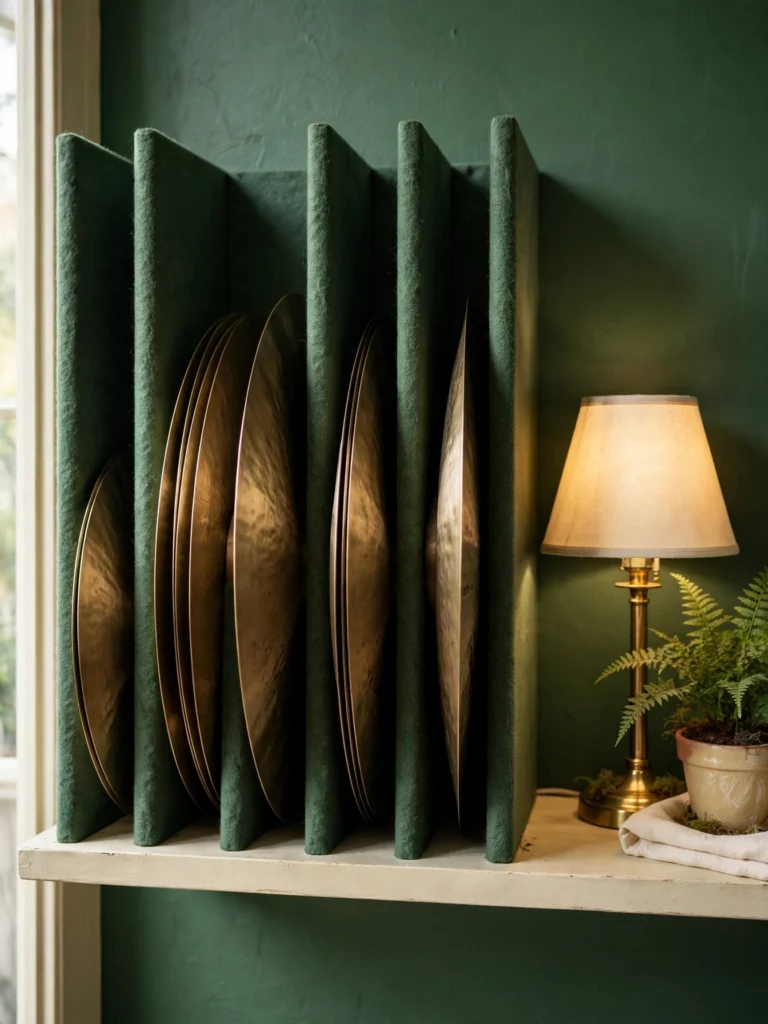
Imagine your cymbals gleaming like gold coins on a shelf. Felt-lined dividers keep metal from touching metal, which helps prevent scratches and cracks. Store them upright rather than stacked so edges stay protected. Consider keeping cymbals away from damp walls and basements with moisture problems. The look is polished, protective, and quietly impressive.
3. Under-Riser Drawer Storage
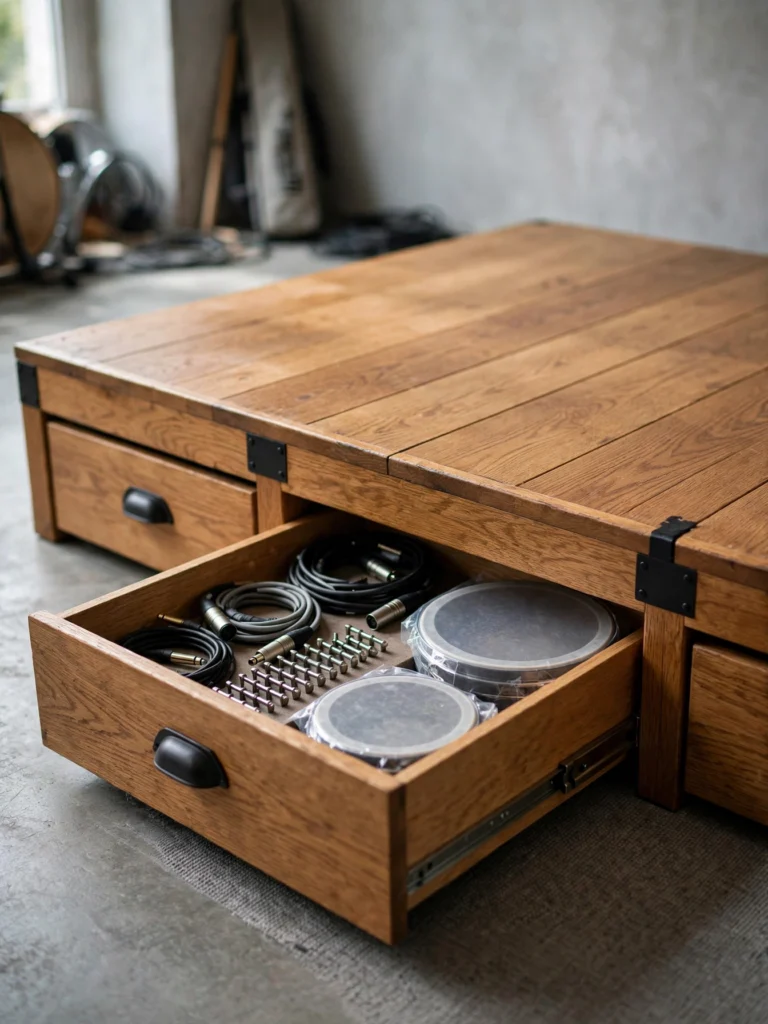
Why waste the space beneath your kit? A sturdy riser with pull-out drawers hides cables, tuning keys, and spare heads while lifting the drums for a stage-like feel. Sand the edges smooth so nothing snags. Build the frame from solid plywood and brace it well so it never flexes under weight. The result is clever, clean, and always organized.
4. Acoustic Panel Wall Art
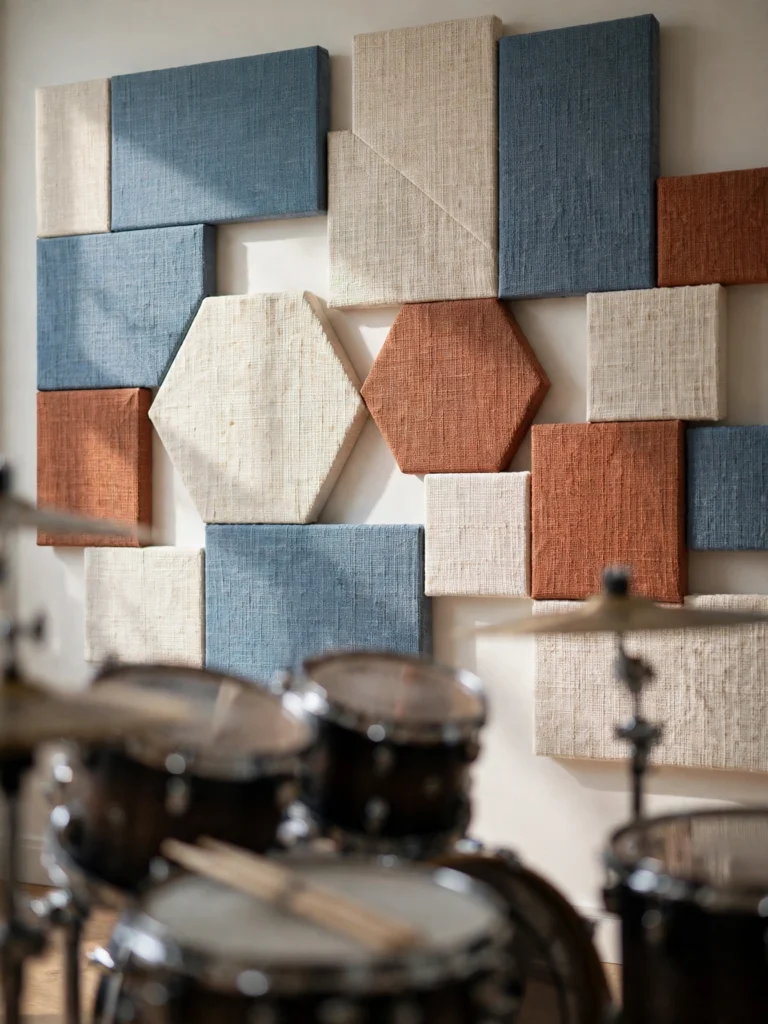
Who says sound control has to look clinical? Fabric-wrapped panels in soft colors work as art while taming harsh reflections. Arrange them in a pattern, and aim for the points where sound bounces most. You should place panels at ear level and behind the kit first for the biggest difference. The room feels creative, calmer, and wonderfully balanced.
5. Thick Rug and Riser Anchor Zone
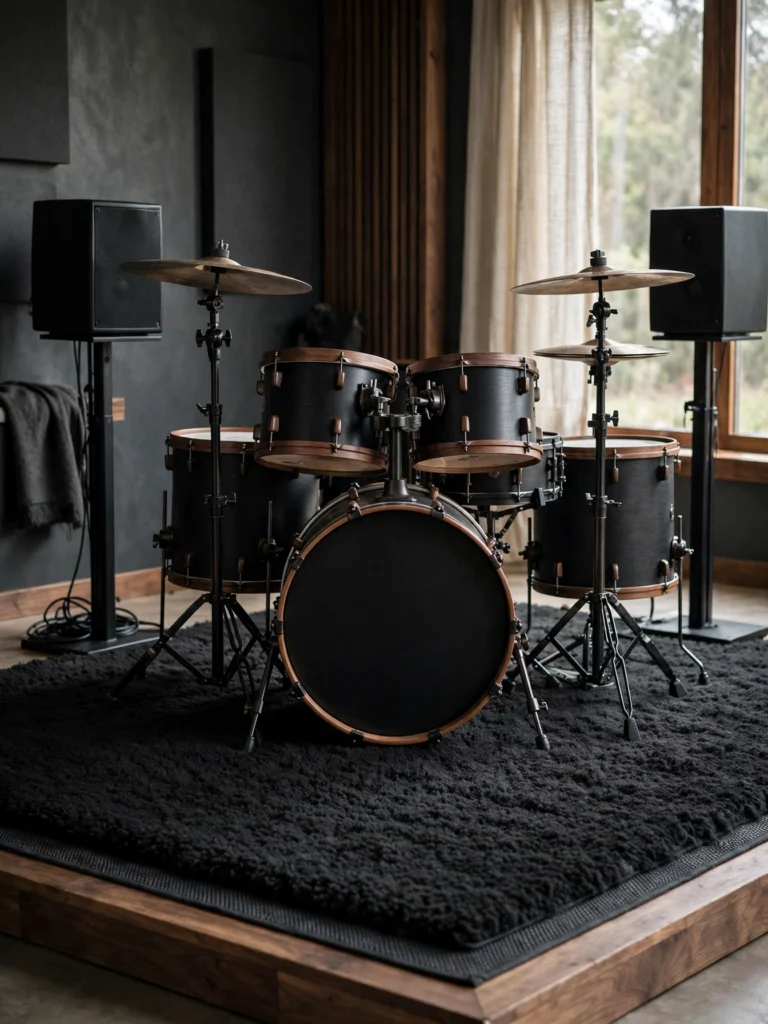
Imagine your kit sitting like a stage on its own island. A thick rug under the drums absorbs vibration, keeps the kit from sliding, and softens the room. Add a non-slip underlay so the pedals stay planted. Choose a rug large enough for the entire kit plus your feet, with a bit of margin around the edges. The mood is steady, grounded, and ready to groove.
6. Slatwall Gear Display
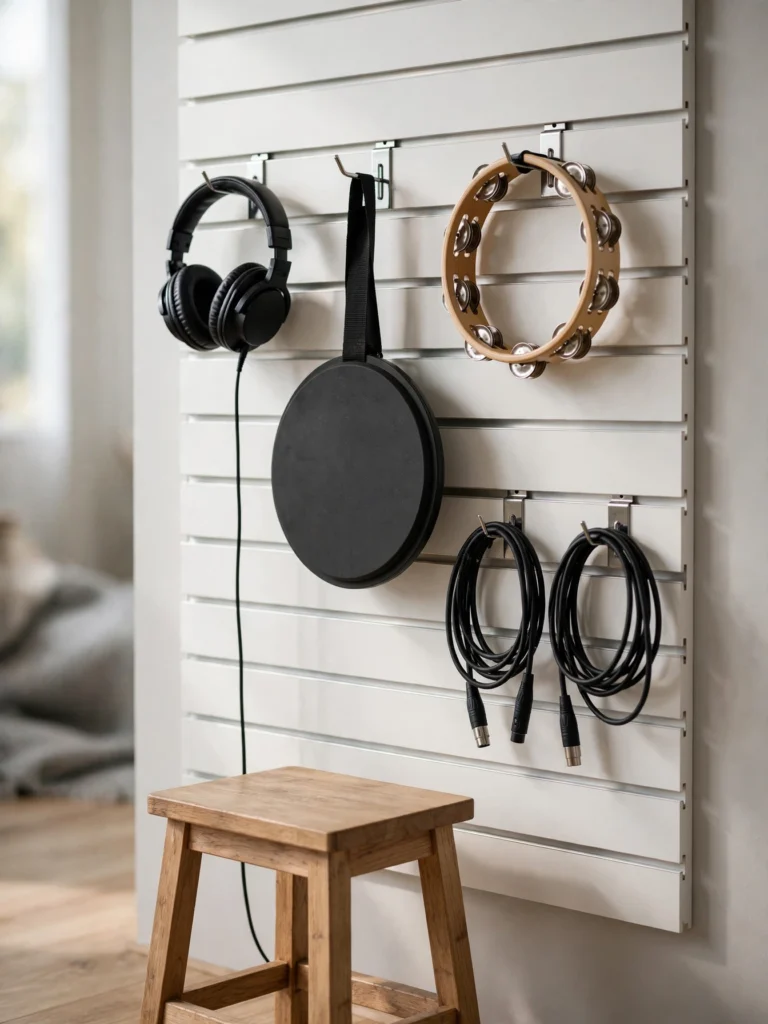
A flexible wall can grow with your collection. Slatwall panels let you move hooks and shelves as your gear changes, so nothing gets stuck in the wrong place. Hang headphones, pads, tambourines, and cables where you can see them. Keep heavier pieces near the bottom for stability. The look is bright, adaptable, and satisfyingly tidy.
7. Built-In Percussion Cubby Wall
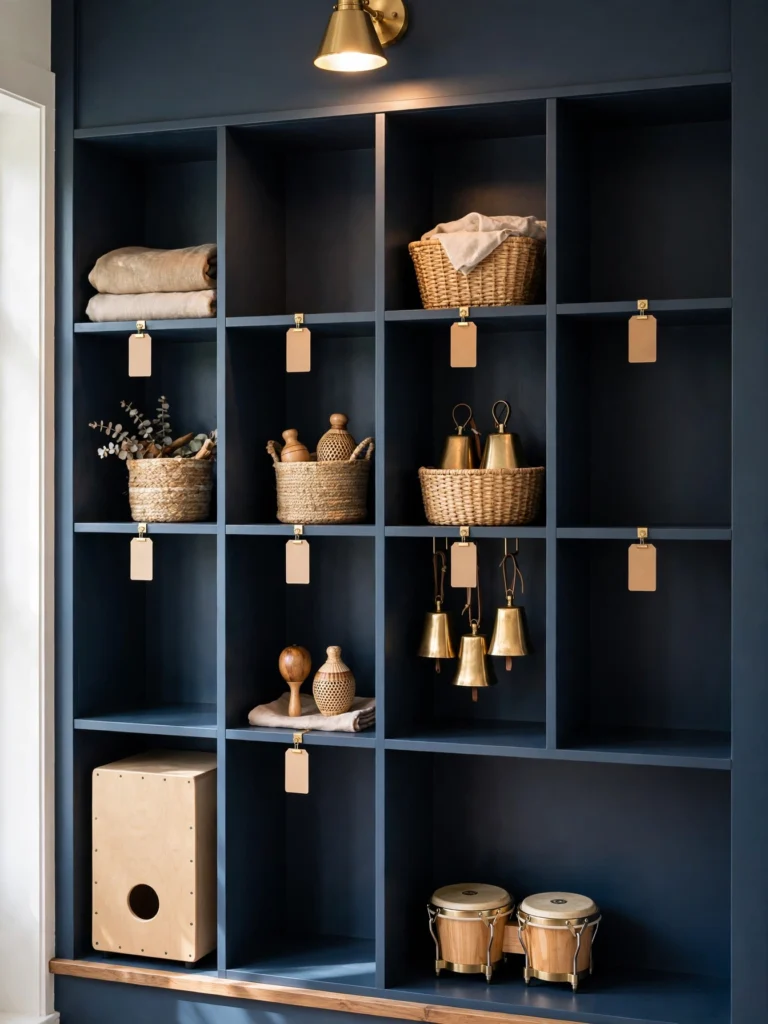
Imagine every shaker and bell tucked into its own little home. Built-in cubbies keep small percussion safe and easy to grab, and the navy paint makes the instruments pop. Size each compartment to the item inside so nothing rattles loose. Consider adding soft liners to protect finishes from scuffs. The wall feels collected, colorful, and neatly curated.
8. Soundproofing Door and Seal Upgrade
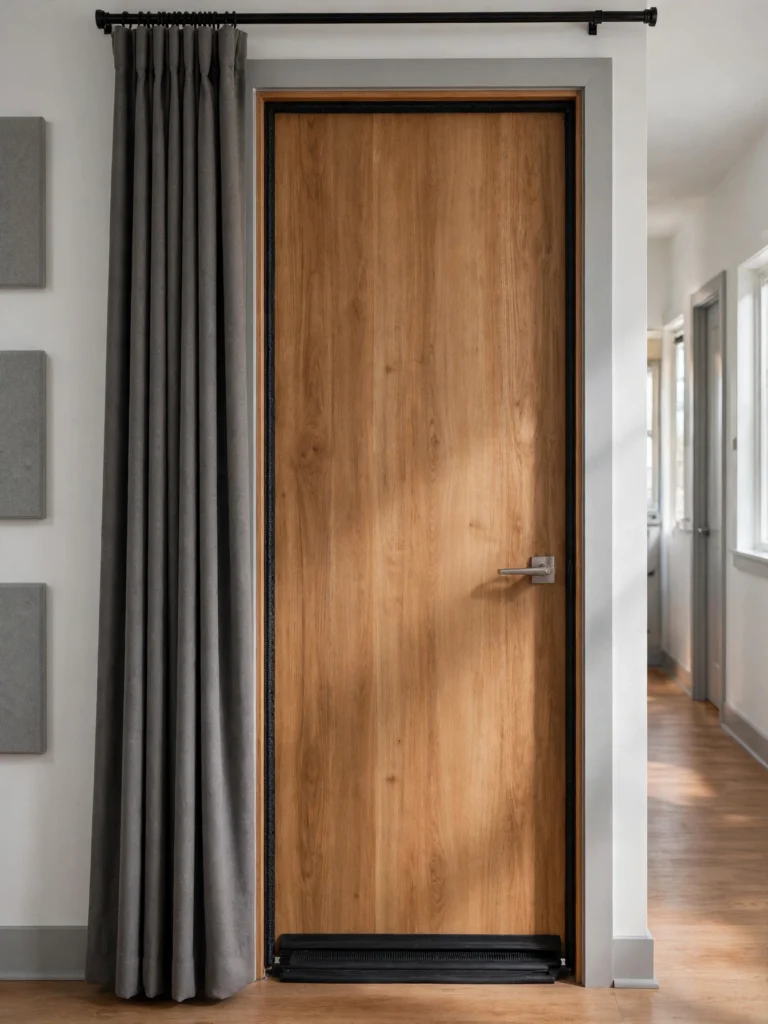
Sound escapes through gaps long before it travels through walls. A solid-core door with weatherstripping and a bottom sweep closes those gaps and keeps the peace with neighbors. Add a heavy curtain for extra dampening. You should check around windows and vents, since small openings let a lot of noise out. The room feels sealed, respectful, and quietly professional.
9. Corner Bass Trap Nook
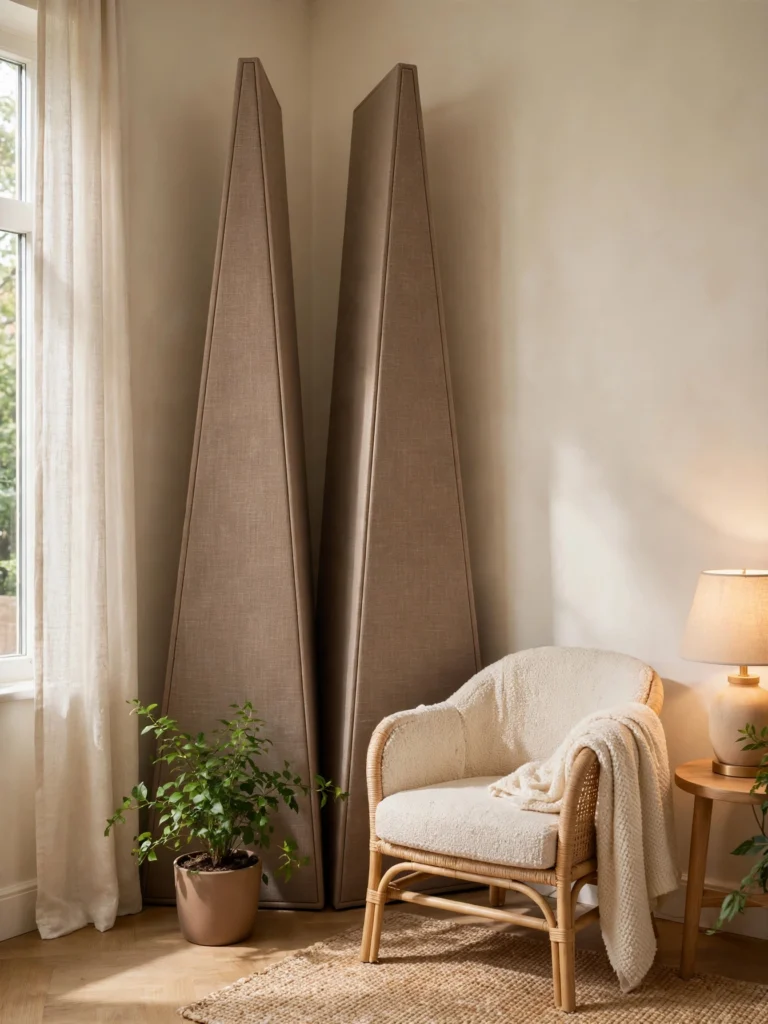
Low notes love to gather in corners. Floor-to-ceiling bass traps in the corners calm that muddy boom and improve how your drums sound. Choose fabric that matches your palette so they blend into the decor. Add a plant or lamp beside them to soften the look. The nook feels clear, balanced, and surprisingly stylish.
10. Electronic Kit Apartment Corner
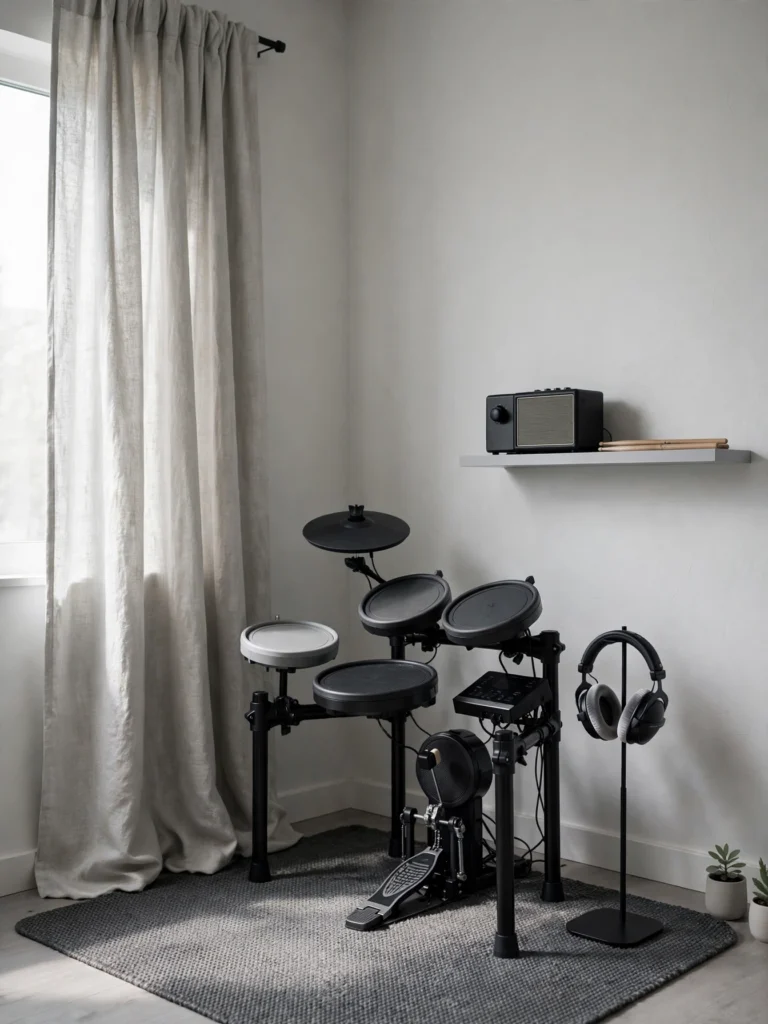
Can a drummer thrive in a tiny apartment? Absolutely, with an electronic kit and a quiet mat to cut vibration. Headphones keep late-night sessions peaceful. Add a slim shelf for sticks, a metronome, and a small amp. Place the kit on a thick mat to protect floors and reduce thumps for neighbors below. The corner feels compact, quiet, and surprisingly complete.
11. Garage Drum Studio Conversion
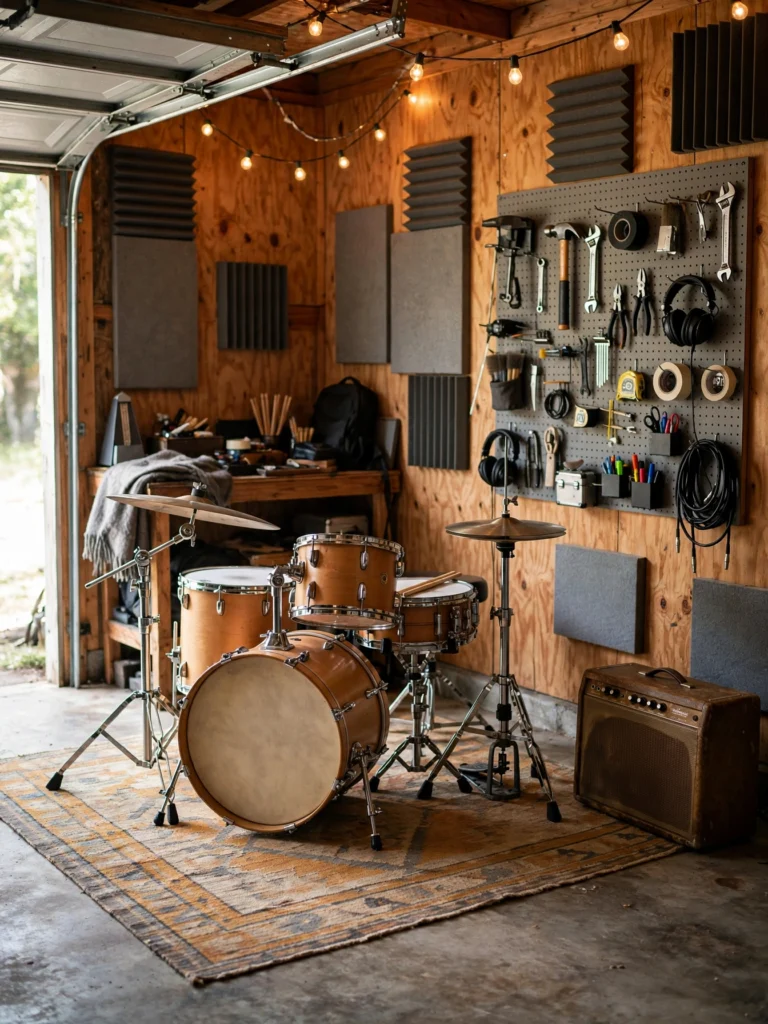
Imagine a messy garage becoming your own rehearsal space. Insulate the walls, add heavy panels, and cover the concrete with a large rug for warmth and sound control. A pegboard keeps tools turned gear in plain sight. Check ventilation and temperature, since garages swing hot and cold and drums dislike extremes. The space feels rugged, creative, and full of energy.
12. Basement Rehearsal Lounge
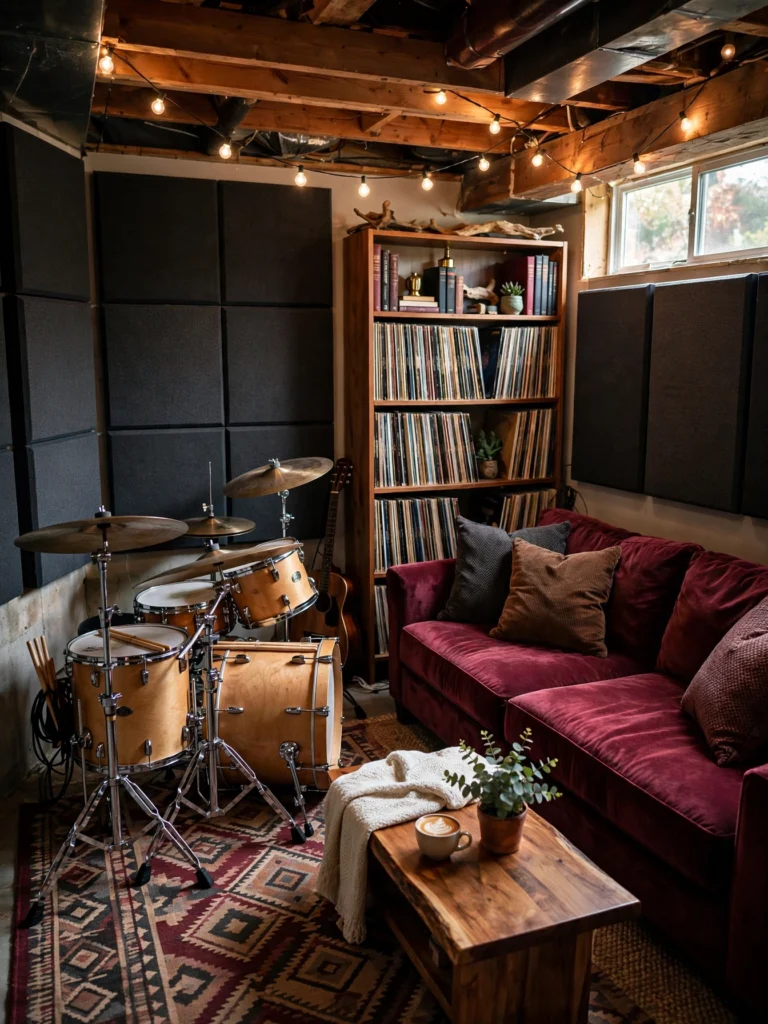
A drum room can be a hangout too. Add a comfy sofa, a record shelf, and soft lighting so bandmates and friends have somewhere to settle between songs. Position seating away from the kit so the sound feels comfortable. Consider a dehumidifier if the basement tends to feel damp. The room feels social, warm, and made for jam nights.
13. Cable Management and Power Station
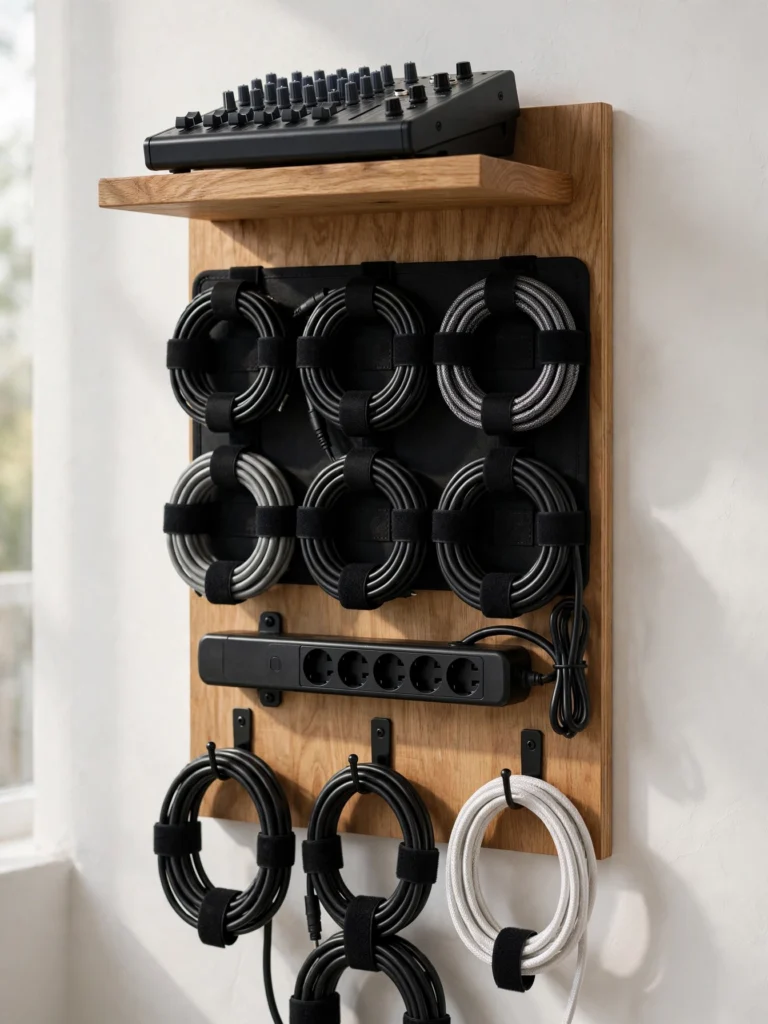
Tangled cables can spoil even the prettiest room. Mount a board with hooks for coils and a surge-protected power strip, then label each cable with a tag. Use velcro ties rather than tape so you can adjust freely. You should keep cables off the floor where feet and pedals travel to prevent tripping. The corner feels clean, safe, and easy to use.
14. Warm Wood Lounge and Practice Nook
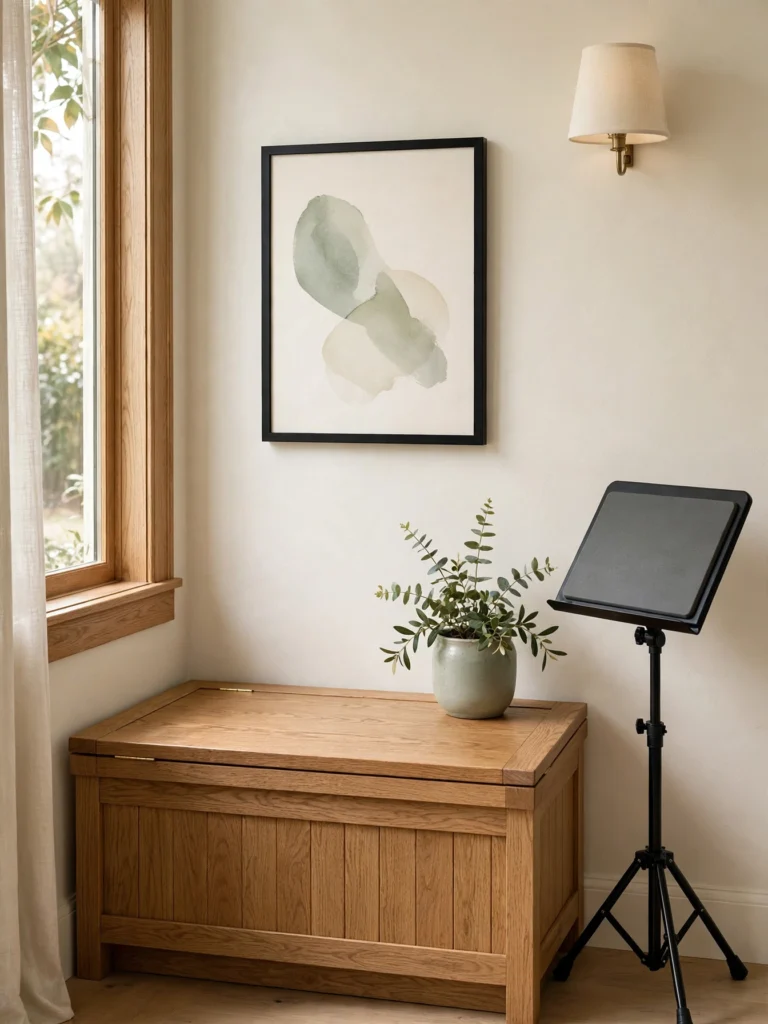
Not every drummer needs a full kit every day. A small practice nook with a pad, a stand, and a lift-top bench keeps skills sharp in a quiet corner. The bench hides sticks, books, and spare gear. Add warm lighting and a plant for a gentle, motivating mood. The nook feels calm, focused, and inviting.
15. Budget DIY Drum Room Refresh
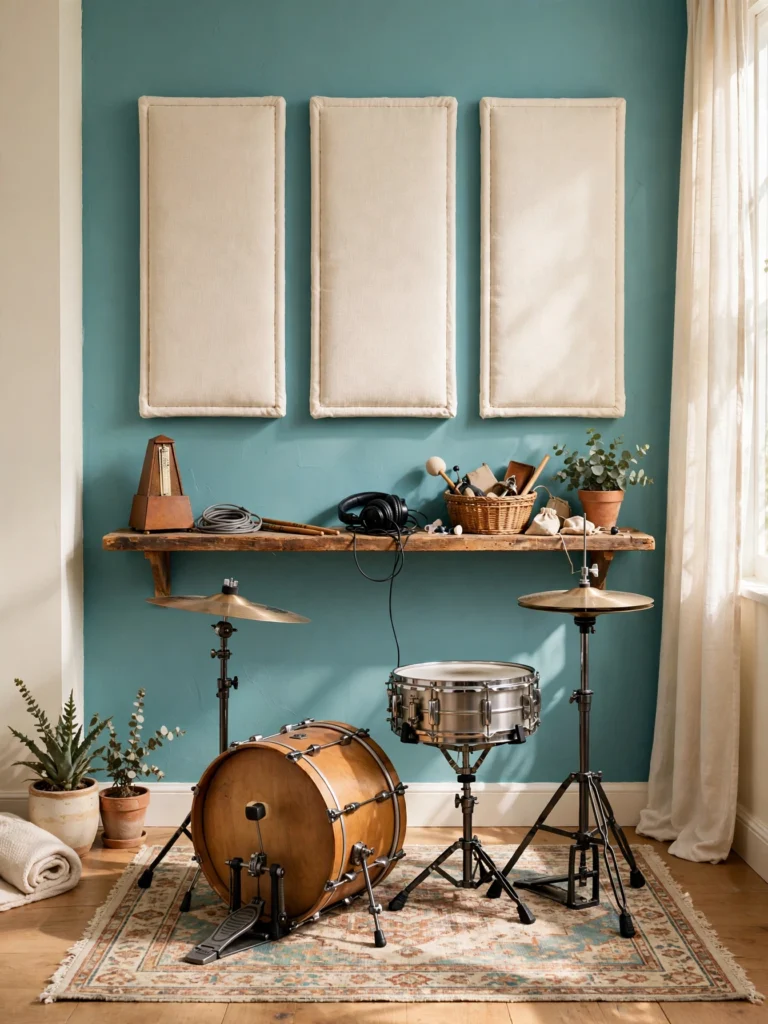
Great sound does not have to cost a fortune. Wrap rigid insulation boards in breathable fabric for homemade panels, then add a secondhand rug and a thrifted shelf for gear. Wear gloves and a mask when handling insulation, and seal edges neatly. Paint one accent wall to make the room feel intentional. The result is thrifty, personal, and full of drive.
Quick Tips for Getting This Right
- Map your layout first: Leave at least 3 feet around the kit and keep the throne, pedals, and storage within easy reach.
- Treat reflections first: Start with panels behind the kit and at the first reflection points on the side walls, then add bass traps in the corners.
- Seal the gaps: Weatherstripping, door sweeps, and heavy curtains reduce noise leaving the room for far less money than new walls.
- Protect your gear: Keep cymbals and drums away from damp walls, direct sun, and big temperature swings, and store extra heads in a dry place.
- Think safety and hearing: Use hearing protection, keep cables off walkways, and check weight limits on shelves and risers before loading them.
Frequently Asked Questions
What are the best drum room ideas for small spaces?
Choose an electronic kit, slim wall shelves, and under-seat storage. Mount sticks, headphones, and cables on the wall to save floor space. Drum room ideas like these keep the area open while still giving you organized storage and a comfortable place to play.
How do I soundproof a drum room on a budget?
Start by sealing gaps with weatherstripping and a door sweep, then add heavy curtains, thick rugs, and DIY panels. Place treatments behind the kit and in corners first. True soundproofing is difficult, so expect to reduce noise rather than remove it entirely.
How much space do I need for a drum room?
A basic acoustic kit needs roughly a 6 by 6 foot area, plus space to move and store gear. Larger rooms sound more open but are harder to treat. Measure your kit with the throne and cymbal arms extended before choosing a spot.
What should I store in a drum room?
Keep sticks, brushes, spare heads, tuning keys, cymbal felts, cables, headphones, and a metronome close. Add shelves or drawers for small percussion and a bin for tape and repair items. Organized storage makes setup faster and protects expensive gear from damage.
Should I put acoustic foam or panels in my drum room?
Dense panels and bass traps are usually more effective than thin foam, which mainly tames high frequencies. Combine them with rugs, curtains, and bookshelves for a balanced result. Aim for even coverage rather than covering every inch, since too much absorption can make a room sound dull.
Conclusion
Drum room ideas are a rewarding way to express your personal style, turning a plain space into a place that sounds good, looks inspiring, and keeps your gear safe. Whether you prefer a sleek, panel-lined studio or a relaxed, cozy corner with a bench and a few shelves, both approaches work beautifully. These ideas adapt to apartments, basements, and garages alike, and many can be built with secondhand finds and simple DIY panels. Over time, an organized drum room saves setup time, protects your equipment, and keeps you playing more often. Your dream rehearsal space is just a few smart storage choices away.

Indy Santos is a passionate interior styling specialist and home living enthusiast with a focus on contemporary decor, smart space planning, and affordable design inspiration. At Inspired Homex, she provides readers with fresh decorating concepts, actionable advice, and professional guidance to create comfortable, elegant, and well-organized homes that reflect their personal style.