
Introduction
If you’ve been dreaming of a backyard that looks like it belongs on a Pinterest board, a well-chosen trellis might be the single most transformative thing you can add. Garden trellis ideas have come a long way from the plain white lattice panels of decades past — today’s options are architectural, artistic, and genuinely beautiful. Whether you have a sprawling yard or a tiny patio, the right trellis creates instant vertical interest, adds privacy, and gives climbing plants a place to truly shine.
I’ve spent a lot of time experimenting with outdoor structures in my own garden, and I can honestly say nothing else does as much visual work for so little investment. A trellis pulls your whole backyard together, frames your outdoor space, and makes even a modest garden feel intentional and designed.
In this guide, you’ll find 12 modern trellis ideas ranging from sleek steel panels to charming arched wood tunnels — each one packed with practical styling tips you can use right away.
Key Takeaways
- Vertical gardening with a trellis maximizes small outdoor spaces beautifully
- The right trellis material — wood, metal, or vinyl — changes the entire feel of your backyard
- Climbing plants like clematis, roses, and jasmine pair perfectly with modern trellis styles
- Trellises double as privacy screens, focal points, and garden art
- You don’t need a big budget to create a high-impact trellis display
- Mixing trellis styles with planters, string lights, and outdoor furniture creates a cohesive outdoor room
Black Steel Panel Trellis
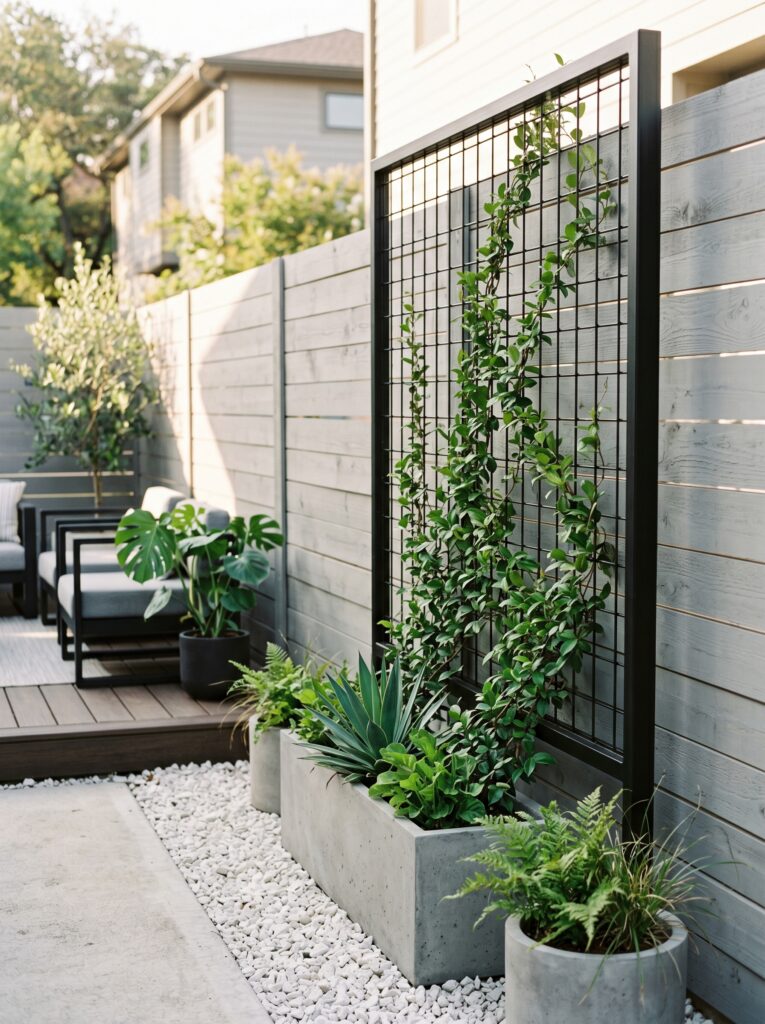
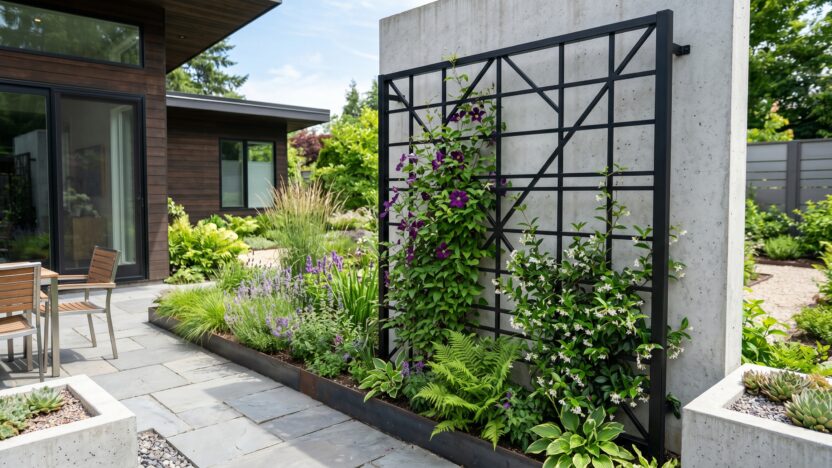
There’s something about a matte black steel trellis that feels effortlessly sophisticated. This style has taken over modern and contemporary backyards because it pairs beautifully with almost every architectural style — from industrial to minimalist to coastal. The bold grid pattern acts like a piece of outdoor wall art even before a single plant starts climbing.
Key Elements
- Powder-coated black steel grid panels (available at most home improvement stores)
- Climbing roses, black-eyed Susan vine, or clematis for contrast
- White gravel or concrete pavers at the base
- Concrete or terracotta planters flanking the sides
- Outdoor string lights woven through the grid for evening ambiance
- Clean, simple furniture nearby to complement the modern aesthetic
How to Style It
- Mount the steel panel flush against a fence or freestanding in the ground using anchor stakes.
- Choose one statement climbing plant in a bold color — deep purple clematis against black steel is stunning.
- Add a pair of matching concrete planters at the base planted with ornamental grasses or lavender.
- Weave warm-toned string lights through the grid for a beautiful nighttime effect.
- Keep surrounding furniture minimal — clean lines in teak or powder-coated metal work best.
- Leave part of the grid bare to let the structure itself read as a design feature.
- Mulch or gravel the surrounding ground in a light neutral to make the dark trellis pop.
In my experience, a matte black steel trellis photographs beautifully in golden hour light — it’s one of those outdoor features that looks even better in person than it does online.
Arched Garden Tunnel
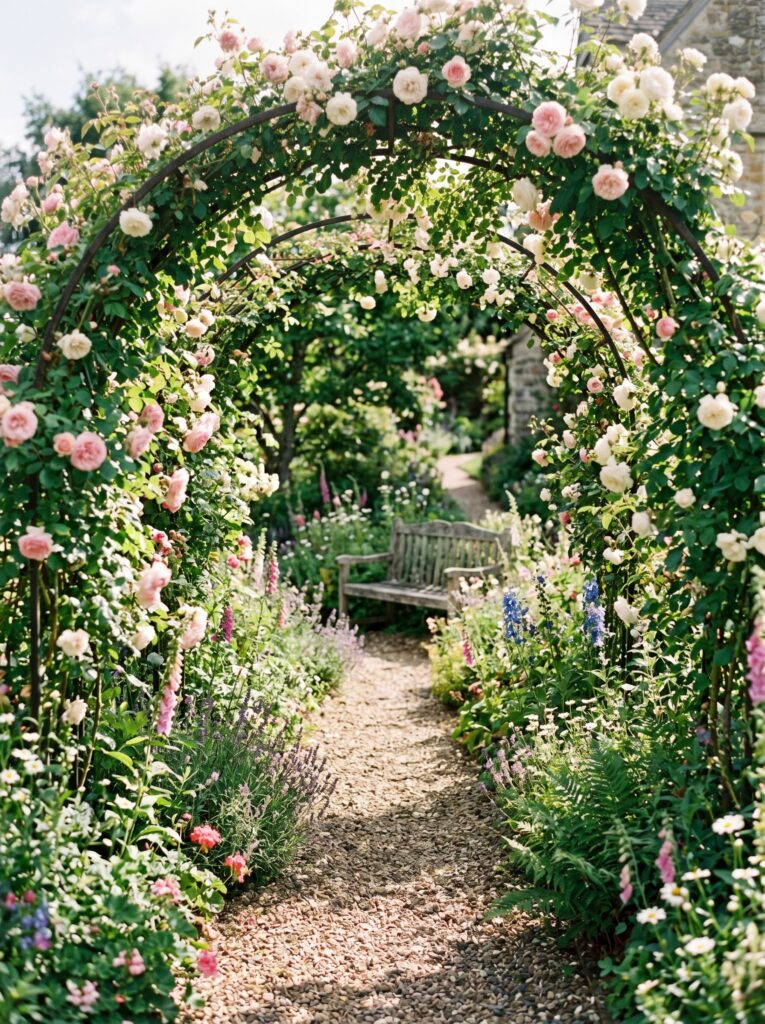
Walking through a flower-draped garden arch is one of life’s genuine little pleasures, and creating that experience in your own backyard is more achievable than you’d think. An arched trellis tunnel creates a romantic, storybook feeling while also serving as a natural divider between different areas of your garden.
Key Elements
- Steel or wrought iron arch frames (available individually or as tunnel sets)
- Climbing roses, wisteria, or star jasmine for fragrance and color
- Gravel or stepping stone path running beneath
- Cottage-style perennial plantings along each side
- Solar lanterns or hanging glass orbs for evening charm
- Low edging plants like boxwood or lavender to frame the base
How to Style It
- Position the arch along a natural path to create a destination feeling — lead it toward a seating area or focal point.
- Plant two matching climbers at the base of each arch leg, one on each side.
- Train the plants gently as they grow, using soft garden ties to guide them upward and over.
- Add a gravel path with gentle edging to anchor the arch within the landscape.
- Place a weathered bench or bistro table at the far end to give the tunnel visual purpose.
- Underplant with shade-tolerant ground covers like sweet woodruff or creeping thyme.
- Hang small solar lanterns from the arch for a magical evening look.
Rustic Cedar Wood Trellis
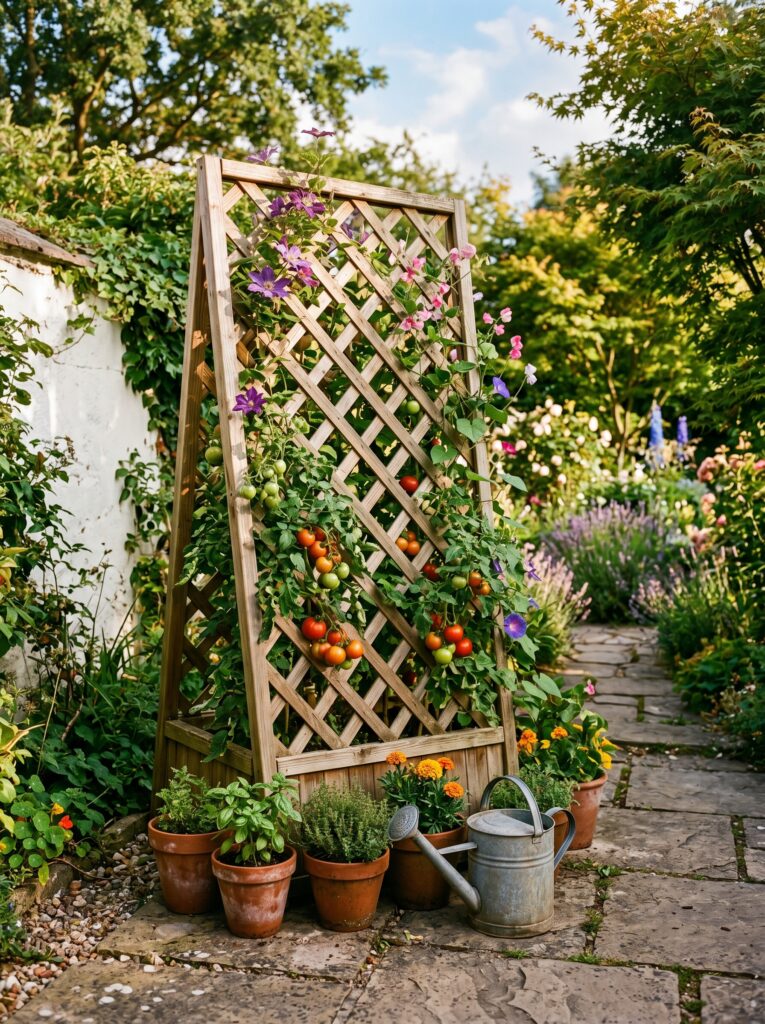
Cedar wood trellises have a warmth and character that manufactured materials simply can’t replicate. The natural grain, the honey-brown tones, and the way cedar weathers beautifully over time all make it a timeless choice for traditional, farmhouse, and cottage garden styles. It also happens to be one of the most beginner-friendly trellis options available.
Key Elements
- Natural cedar or redwood lattice panels
- Heirloom tomatoes, cucumbers, or pole beans for a functional kitchen garden look
- Terracotta planters clustered at the base
- Vintage-style garden accessories like watering cans or hand tools
- Trailing nasturtiums or sweet peas for soft color
- A simple coat of linseed oil annually to maintain the wood’s beauty
How to Style It
- Lean the cedar trellis at a slight angle against a fence or wall, or secure it freestanding with posts.
- Pair it with terracotta pots in varying sizes for an organic, collected look.
- Plant edible climbers alongside flowering vines to make the trellis both beautiful and functional.
- Let some plants trail loosely rather than training everything neatly — it reads more natural.
- Add a small wooden bench or stool nearby to reinforce the garden cottage feel.
- Treat the cedar annually to preserve the warm color; left untreated, it fades to a beautiful silver-grey that works equally well.
Minimalist White Vinyl Trellis
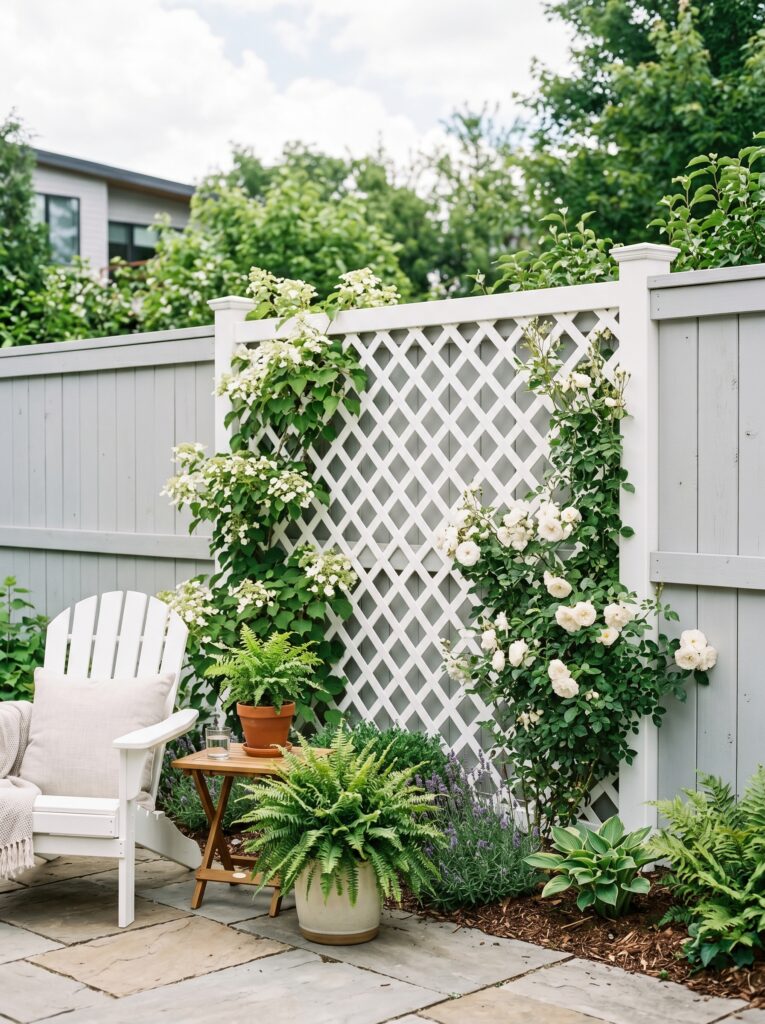
Sometimes simple is exactly right. A white vinyl trellis is clean, low-maintenance, and endlessly versatile — it suits traditional gardens, coastal cottages, and even contemporary spaces when paired thoughtfully. Unlike wood, vinyl never needs painting or sealing, making it an especially practical choice for busy homeowners who still want a polished outdoor look.
Key Elements
- White vinyl lattice panels in classic or diagonal patterns
- Climbing hydrangeas, white roses, or sweet autumn clematis
- Crisp white outdoor furniture for a cohesive palette
- Blue or green accent planters for fresh contrast
- Coastal or cottage-style accessories like rope lanterns or wicker baskets
- Low ground-cover plantings in muted greens
How to Style It
- Mount white vinyl panels flush with an existing fence to extend privacy while adding decorative texture.
- Choose plants in soft colors — white, blush, lavender — to keep the look serene and cohesive.
- Pair with white painted furniture for a polished, unified aesthetic.
- Add blue or navy accessories as accent color — coastal style works beautifully with white trellis structures.
- Edge the base planting bed with clean border stones or metal edging for a tidy finish.
- Keep surrounding decor minimal — vinyl trellises shine in clean, uncluttered settings.
Bamboo Privacy Screen Trellis
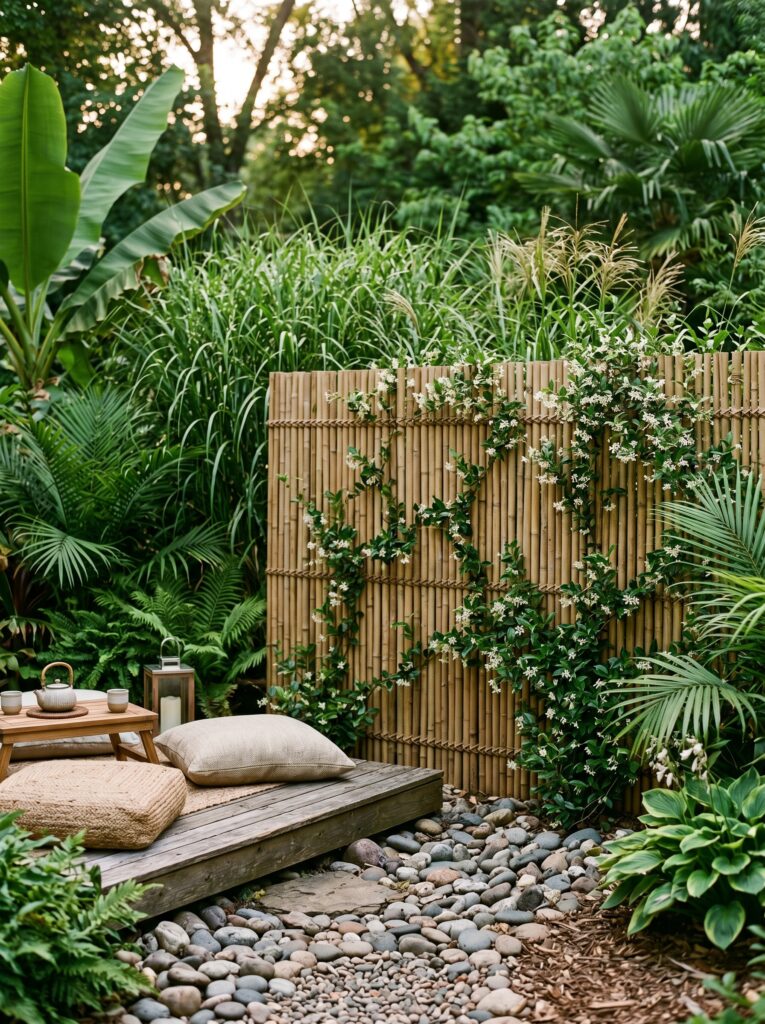
Bamboo brings an immediate sense of calm and natural beauty to any outdoor space. As a trellis material, it’s lightweight, sustainable, fast-growing (making it eco-friendly), and gives any garden a serene, spa-like quality. I’ve seen this work beautifully in small urban backyards where both privacy and atmosphere are priorities.
Key Elements
- Bamboo reed fence panels or handcrafted bamboo lattice
- Climbing jasmine, morning glory, or bougainvillea
- Ornamental grasses and tropical foliage at the base
- River rocks or smooth stone mulch
- Floor-level seating with linen cushions
- Teak or bamboo outdoor furniture for cohesion
How to Style It
- Install bamboo panels along one or two sides of your outdoor space to create an intimate, enclosed feeling.
- Plant climbing jasmine at the base for fragrance — it grows quickly and fills in beautifully within one season.
- Layer ornamental grasses, elephant ear plants, or tropical palms in front to add depth.
- Lay river stone or gravel along the base to suppress weeds and add a clean zen aesthetic.
- Add a low platform deck or large floor cushions for a relaxed, lounge-style seating area.
- Hang small bamboo wind chimes nearby to complete the sensory experience.
Fan-Shaped Wall Trellis
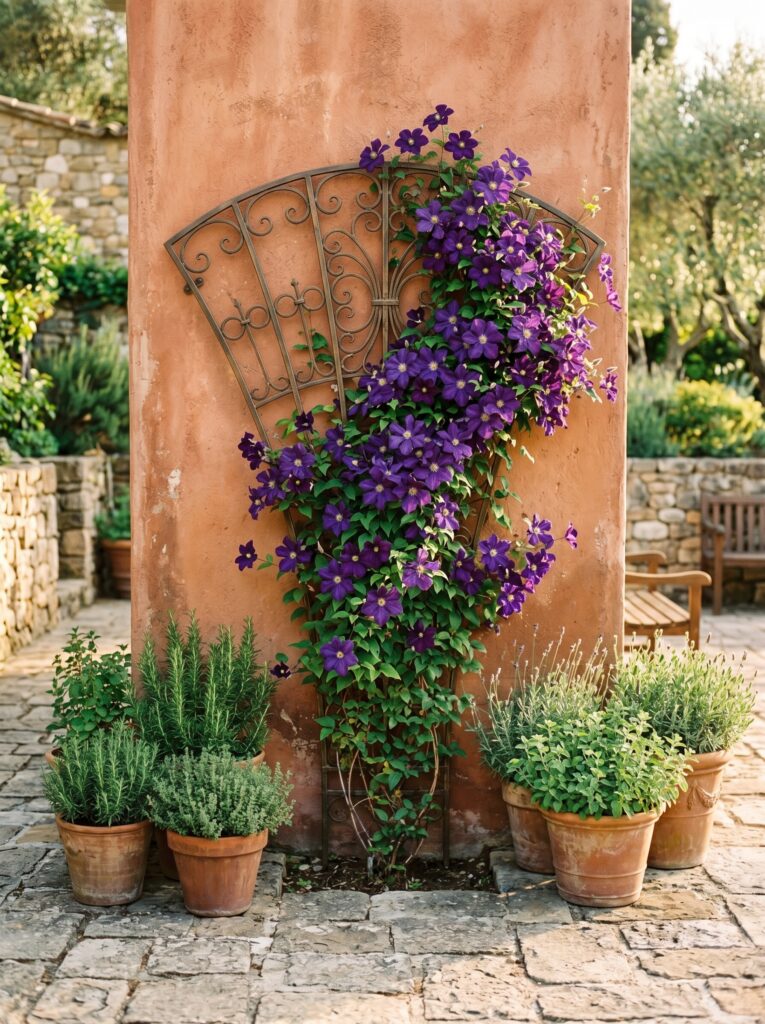
Fan trellises are one of those design-forward choices that make a single wall look utterly intentional. They’re compact, sculptural, and work beautifully on small walls, beside doorways, or in narrow side garden spaces where there isn’t room for a large structure. The shape itself guides climbing plants into a dramatic, eye-catching display.
Key Elements
- Bronze, antique copper, or matte black wall-mounted fan trellis
- Deep-colored clematis, climbing roses, or trained fruit trees (espalier)
- Warm terracotta or stone wall behind the trellis
- Terracotta pots with Mediterranean herbs below
- Decorative wall sconces flanking the trellis
- Stone or tile paving at the base
How to Style It
- Choose a wall with visual significance — beside a door, at the end of a path, or as a focal point from a seating area.
- Mount the fan trellis at a height that allows the plant to spread both upward and outward evenly.
- Plant one strong climber — clematis or a climbing rose — and train it along each arm of the fan.
- Arrange terracotta pots with rosemary, thyme, or lavender below for a layered, Mediterranean feel.
- Add wall-mounted lanterns or sconces on each side to frame the display.
- Let the trellis double as art in the off-season — the structure itself is beautiful when bare.
Freestanding Pergola Trellis
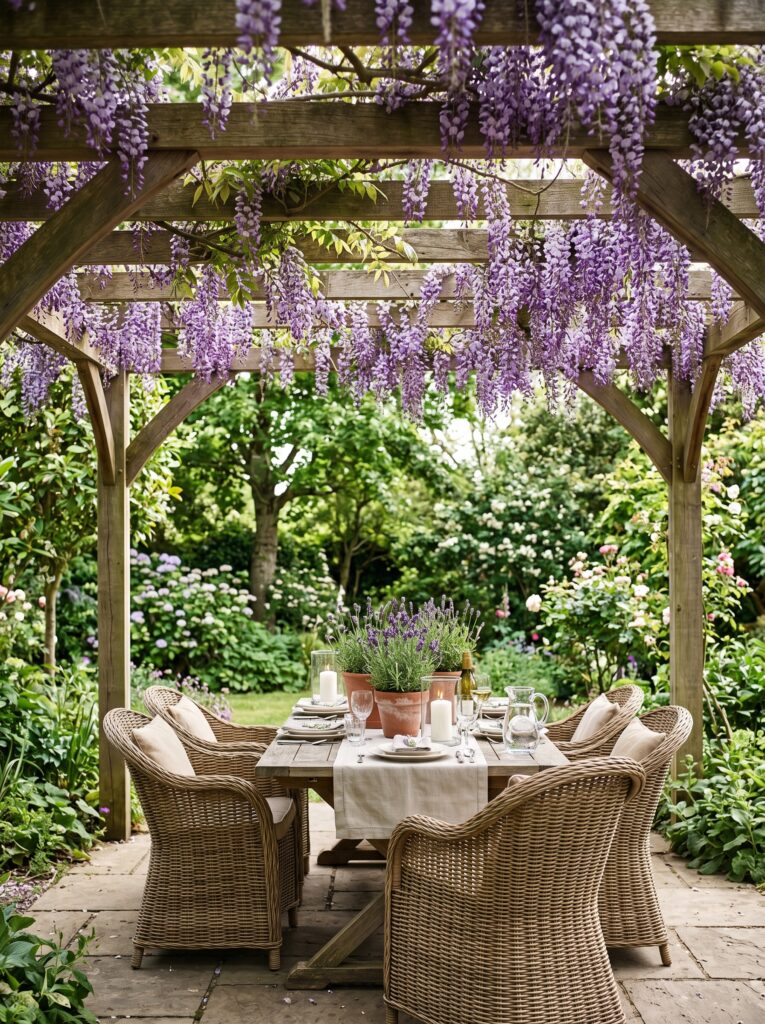
A pergola trellis is the ultimate backyard upgrade — it’s a structure and a garden feature in one, and once it’s dressed with climbing plants, it creates the kind of outdoor dining or lounging experience that makes every guest stop and say wow. Wisteria, roses, and grapevines are classic choices that turn a simple pergola into a living canopy.
Key Elements
- Cedar, pine, or powder-coated steel pergola frame
- Wisteria, climbing roses, grapevines, or passionflower
- Outdoor dining or lounge furniture below
- String lights or Edison bulb strands woven through the rafters
- Potted plants placed at each post base
- Outdoor rugs, cushions, and candles for ambiance
How to Style It
- Position the pergola as the central gathering point of your yard — over a dining table or lounging area.
- Plant one or two strong climbers at each post and train them upward using garden wire guides.
- String warm-toned Edison bulbs or market lights through the rafters for an enchanting evening effect.
- Add an outdoor rug below to define the space as a true outdoor room.
- Place matching planters with tall ornamental grasses or climbing roses at each post base.
- Style the dining table beneath with weather-resistant cushions, pillar candles, and simple dinnerware for effortless outdoor entertaining.
- In cooler months, drape flowing outdoor curtains from the posts to add warmth and privacy.
Geometric Metal Trellis Screen
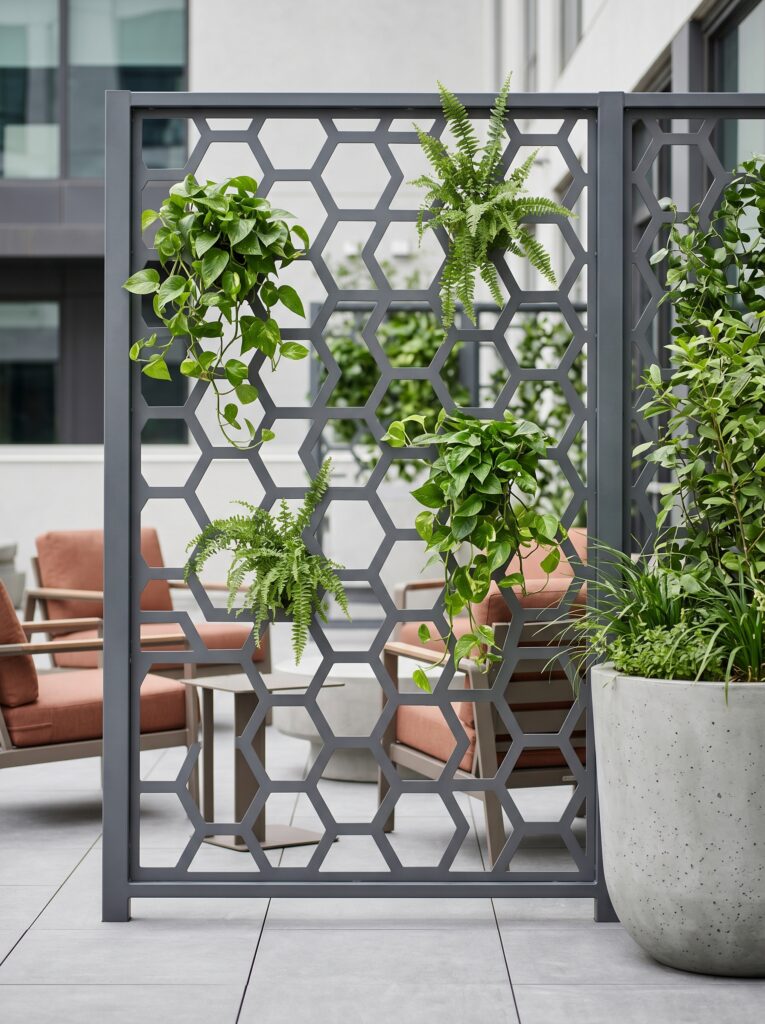
Geometric trellis panels are where garden structure meets modern art. These statement pieces work beautifully as privacy screens, garden dividers, or decorative backdrops — and they look just as stunning bare as they do planted up. The bold pattern creates visual interest that no flat fence ever could.
Key Elements
- Laser-cut or powder-coated metal panels in geometric patterns
- Trailing or climbing plants in lush green tones (pothos, ferns, climbing hydrangeas)
- Concrete or stone planters at the base
- Contemporary outdoor furniture in warm terracotta, burnt orange, or cream
- Gravel or dark mulch ground cover
- Minimal decor accessories to keep the focus on the panel
How to Style It
- Install the geometric panel as a freestanding room divider or anchor it to existing fence posts.
- Choose plants that contrast with the panel pattern — loose, flowing foliage against a rigid geometric grid creates beautiful visual tension.
- Place one large concrete statement planter at the base rather than several small pots.
- Let some of the panel remain plant-free to showcase the geometric design.
- Echo the panel’s shape in nearby decor — hexagonal side tables or geometric planters work wonderfully.
- Use warm ambient lighting at night to cast beautiful shadow patterns through the metalwork.
Espalier Fruit Tree Trellis
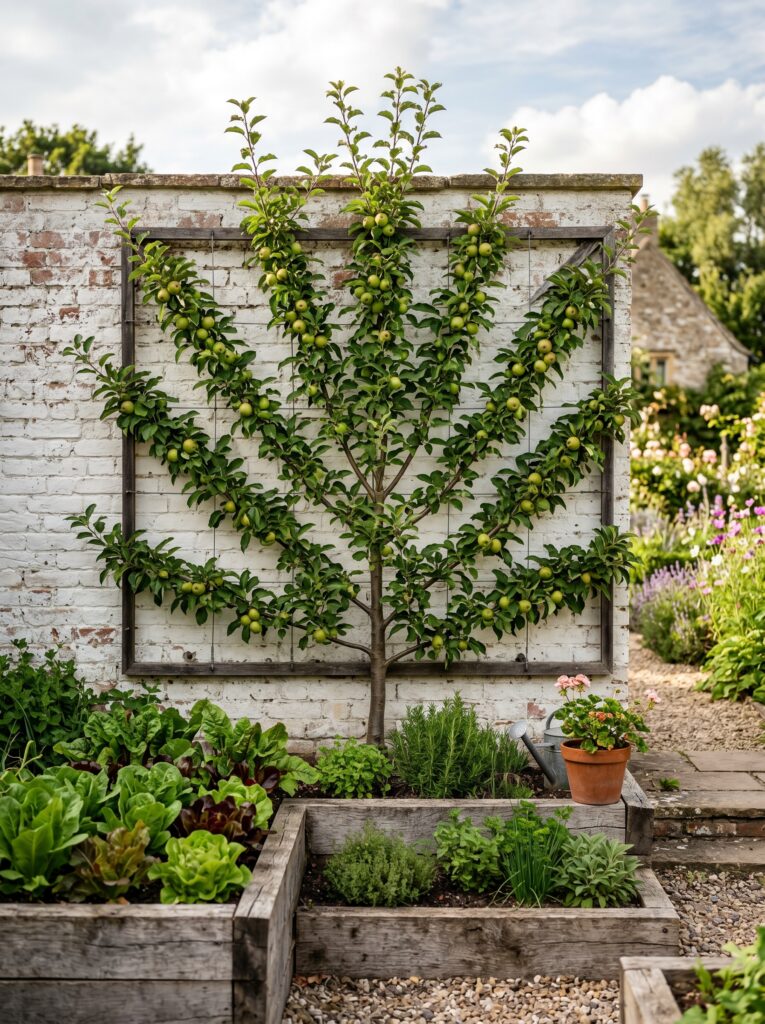
Espalier is one of the most beautiful and practical garden trellis techniques there is — the art of training a fruit tree flat against a wall or wire framework to create a living, edible, architectural feature. It’s more approachable than it sounds, and the result is genuinely spectacular. I’ve tried this with apple trees and the result was one of my favorite garden moments.
Key Elements
- Galvanized wire attached to wall anchors (spaced 18 inches apart) or a wooden frame
- Dwarf or semi-dwarf apple, pear, peach, or fig trees
- Raised planting beds below with herbs or salad greens
- Whitewashed or brick wall as a backdrop
- Simple wooden or stone edging for beds
- A water timer or drip irrigation for consistent moisture
How to Style It
- Attach horizontal guide wires to a wall or fence at even intervals starting about 18 inches from the ground.
- Plant your chosen fruit tree 6–8 inches from the wall and select two strong lateral branches to train outward first.
- Gently tie branches to the wires using soft garden ties, adjusting as they grow.
- Prune annually in late winter to maintain the flat form and encourage fruiting spurs.
- Underplant with productive herbs like thyme, chives, or basil to maximize the kitchen garden aesthetic.
- Paint the wall white or cream to make the tree silhouette pop dramatically against the surface.
A helpful styling trick is to train the first horizontal tier lower than you think — it gives the tree more wall space to grow into beautifully over time.
Copper Pipe Trellis
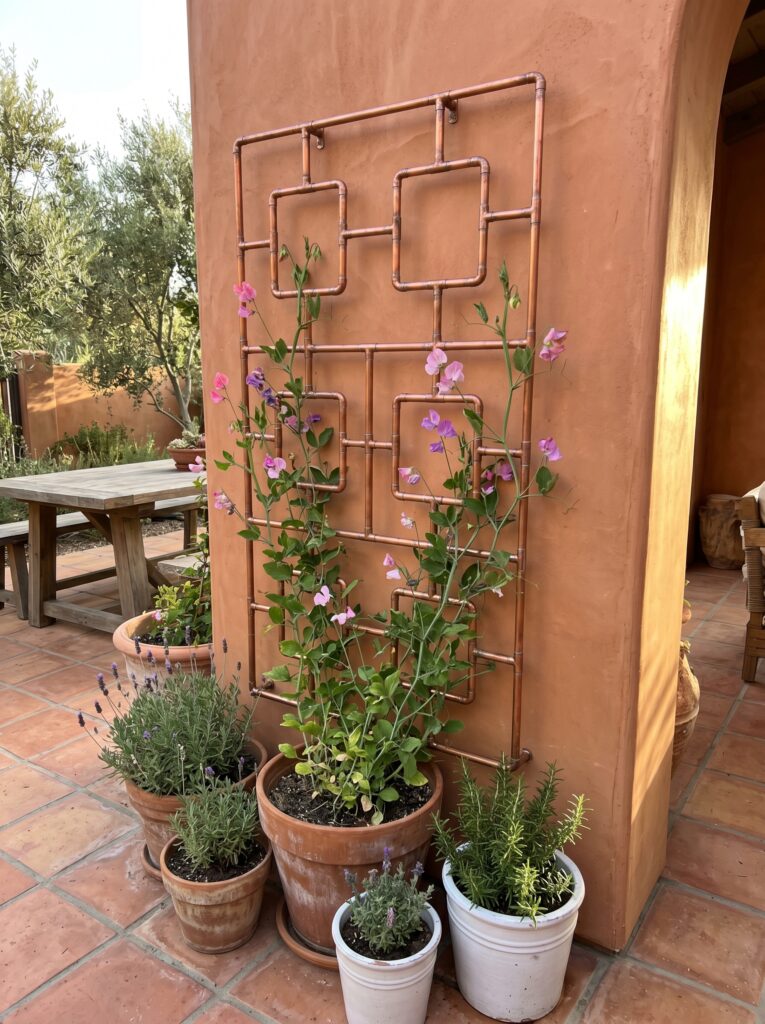
Copper pipe trellises are one of those DIY projects that look far more expensive and impressive than they cost to make. The warm, burnished tones of copper complement almost every garden style — Mediterranean, bohemian, traditional, or contemporary — and the material develops a gorgeous natural patina over time that only gets more beautiful with age.
Key Elements
- 3/4-inch or 1-inch copper pipe (from plumbing suppliers)
- Copper T-joints, elbows, and end caps
- Sweet peas, climbing nasturtiums, or passion flower
- Terracotta or aged clay pots
- Mediterranean-style accessories — mosaic tiles, colorful ceramics
- Warm-colored gravel or crushed terracotta at the base
How to Style It
- Design your trellis shape on paper first — simple grids, ladders, or geometric frames all work well.
- Cut copper pipes to size and connect with push-fit fittings (no soldering required for garden use).
- Anchor to a wall with copper pipe clips or drive vertical pipes directly into the ground.
- Plant climbing sweet peas or nasturtiums at the base — they grow fast and fill in within weeks.
- Let the copper develop its natural green patina for a beautiful aged look, or seal with clear lacquer to preserve the bright tone.
- Cluster terracotta pots of varying sizes at the base for a warm, artisan feel.
Trellis Planter Box Combo
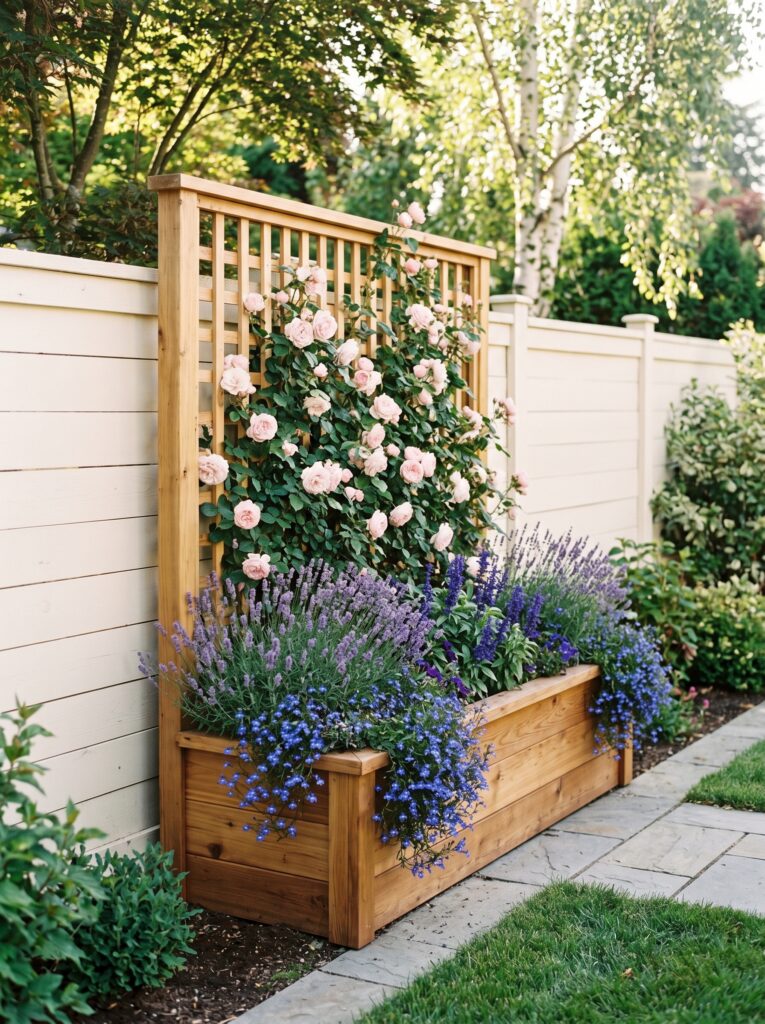
Combining a planter box with an integrated trellis is genuinely one of the smartest garden design moves you can make — it gives climbing plants the root space they need, creates a defined planting bed, and looks completely intentional and designed. This combination works in small backyards, along fence lines, or as a property dividing feature.
Key Elements
- Cedar or composite wood planter box (at least 18 inches deep for climbers)
- Attached lattice or grid trellis panel rising from the back of the planter
- Climbing roses, sweet peas, or annual vines
- Trailing plants for the front of the box — lobelia, trailing petunias, or bacopa
- Coordinating fence or wall color behind
- Drip irrigation line for consistent plant health
How to Style It
- Build or purchase a planter box with an attached or insertable back trellis panel.
- Fill the planter with quality potting mix enriched with compost for strong climber growth.
- Plant one or two climbers at the center-back of the box and train them upward immediately.
- Fill the front third of the planter with trailing plants to create a layered, overflowing look.
- Paint or stain the planter to complement your fence or home exterior color.
- Add a drip irrigation emitter to keep moisture consistent — climbers in planter boxes dry out faster than in-ground plants.
Living Wall Trellis Frame
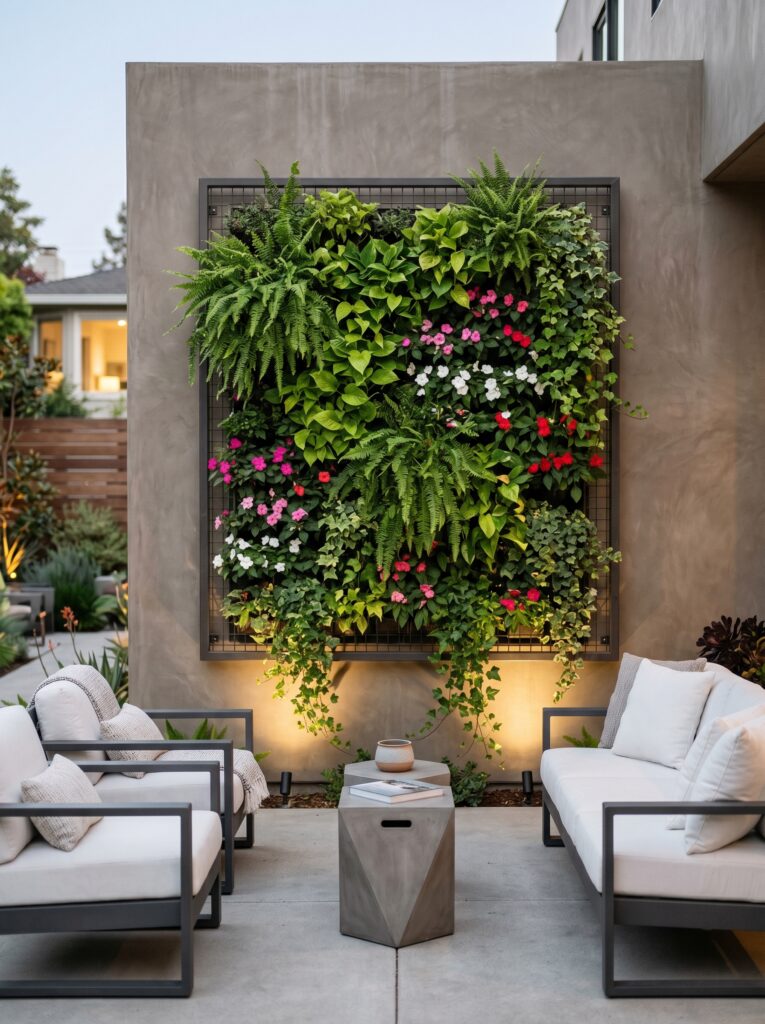
A living wall trellis frame takes the concept of vertical gardening to its most dramatic, lush conclusion. Rather than training a single climbing plant, this approach layers dozens of different plants across a grid frame to create a full, textured, living wall effect. The result is genuinely breathtaking — and far more achievable than most people expect.
Key Elements
- Heavy-duty wire grid or modular living wall planting pockets
- Mix of ferns, pothos, ivy, impatiens, and succulents
- Drip irrigation line or self-watering insert
- Sleek contemporary framing — powder-coated steel border
- Spotlights or uplights at the base for dramatic evening effect
- Contemporary furniture nearby to let the living wall be the focal point
How to Style It
- Start with a pre-made modular living wall system — these come with built-in planting pockets that make installation much simpler.
- Plan your plant arrangement before installing — alternate textures and heights for a lush, varied look.
- Include at least three different plant types: a trailing variety, an upright variety, and a flowering variety.
- Install a drip irrigation system before mounting — maintaining moisture is the key to living wall success.
- Place uplighting at the base to create dramatic shadows and make the wall a true evening focal point.
- Choose a spot with indirect or filtered light for best plant health — most living wall species prefer shade to partial sun.
Helpful Trellis Comparison Table
| Trellis Style | Best For | Maintenance Level | Approximate Cost | Best Plants |
|---|---|---|---|---|
| Black Steel Panel | Modern/Contemporary | Low | $50–$200 | Clematis, climbing roses |
| Arched Garden Tunnel | Romantic/Cottage | Medium | $80–$300 | Roses, wisteria, jasmine |
| Rustic Cedar Wood | Farmhouse/Traditional | Medium | $30–$150 | Tomatoes, cucumbers, sweet peas |
| White Vinyl | Low-maintenance/Coastal | Very Low | $25–$100 | Climbing hydrangeas, roses |
| Bamboo Screen | Zen/Tropical | Low | $20–$80 | Jasmine, morning glory |
| Fan Wall Trellis | Small Space/Accent | Low | $20–$60 | Clematis, espalier fruit |
| Pergola Trellis | Outdoor Dining | Medium | $300–$2000+ | Wisteria, grapevine, roses |
| Geometric Metal | Contemporary/Art | Low | $100–$400 | Ferns, climbing hydrangeas |
| Espalier Fruit Tree | Kitchen Garden | High | $50–$200 | Apple, pear, peach, fig |
| Copper Pipe DIY | Bohemian/Artisan | Low | $30–$80 | Sweet peas, nasturtiums |
| Trellis Planter Combo | Small Yard/Borders | Medium | $80–$250 | Climbing roses, lobelia |
| Living Wall Frame | Statement Feature | High | $150–$600 | Ferns, pothos, impatiens |
Common Trellis Styling Mistakes to Avoid
Even the most beautiful trellis ideas can fall flat without the right approach. Here are the most common mistakes I’ve noticed — and how to sidestep them:
- Choosing the wrong plant for the structure. A heavy wisteria on a lightweight wire trellis will eventually collapse it. Always match plant weight and vigor to structure strength.
- Planting too close to the trellis. Plant roots need space — keep climbers at least 8–12 inches from the wall or fence the trellis is attached to so they get proper drainage and airflow.
- Ignoring maintenance in the design plan. Some trellis plants like wisteria need regular pruning to stay attractive. If you prefer low effort, choose annual climbers or self-clinging varieties.
- Overcrowding the area. A trellis needs breathing room visually. Resist the urge to surround it with too many accessories or competing garden features.
- Skipping proper anchoring. A trellis loaded with mature climbing plants can be surprisingly heavy. Always anchor freestanding trellises securely in the ground, especially in regions with wind.
Conclusion
Whether you’re working with a sprawling suburban backyard or a compact urban patio, the right garden trellis can completely transform how your outdoor space looks and feels. From the clean lines of a black steel panel to the romance of a wisteria-draped pergola, these garden trellis ideas prove that vertical gardening is one of the most rewarding investments you can make in your outdoor space.
I’ve seen how one well-placed trellis changes the entire energy of a garden — it adds purpose, privacy, beauty, and life in a way that few other outdoor features can. Start with one idea that speaks to your style, and let the space evolve naturally from there. Don’t forget to save this to your Pinterest boards and share it with anyone who loves their garden as much as you do!
Found this helpful? Pin it, share it, and start planning your dream trellis garden today.

Indy Santos is a passionate interior styling specialist and home living enthusiast with a focus on contemporary decor, smart space planning, and affordable design inspiration. At Inspired Homex, she provides readers with fresh decorating concepts, actionable advice, and professional guidance to create comfortable, elegant, and well-organized homes that reflect their personal style.