
Introduction
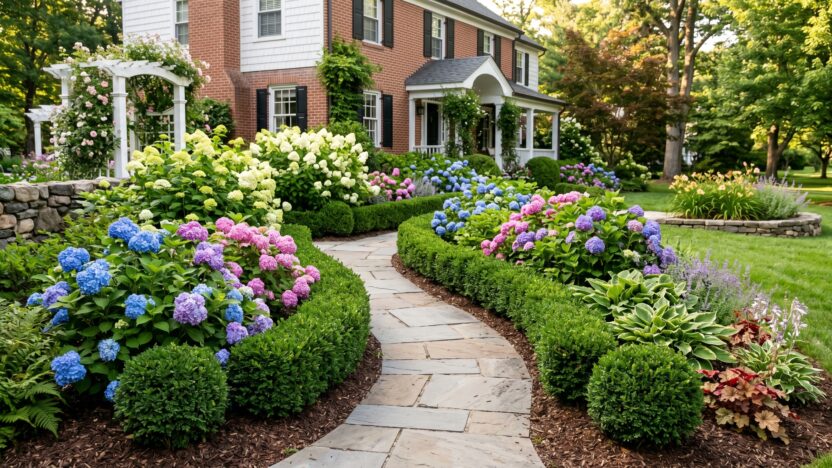
Some plant combinations just work, and hydrangeas paired with boxwoods are proof of that. One brings the soft, romantic color. The other brings the clean, structured lines. Together, hydrangea and boxwood landscaping creates one of the most timeless looks in American front yards, and it’s a combination that genuinely never seems to go out of style.
What makes this pairing so special is the contrast. Boxwoods are evergreen, tidy, and disciplined. Hydrangeas are big, blousy, and a little wild when they bloom. When you put them together, you get structure and softness in the same garden bed, which is exactly the kind of balance that makes a landscape feel intentional instead of accidental.
In this guide, I’m sharing 10 beautiful ways to use hydrangeas and boxwoods together around your yard, from classic foundation plantings to creative ideas you might not have considered yet.
Key Takeaways
- Boxwoods provide year-round structure while hydrangeas bring seasonal color and drama
- This combination works in formal, cottage, and modern landscape styles alike
- Boxwood hedges look best with consistent trimming two to three times per growing season
- Hydrangea bloom color can be influenced by soil pH, especially with bigleaf varieties
- Pairing different hydrangea types extends the blooming season significantly
- Proper spacing prevents overcrowding as both plants mature over time
- This pairing works beautifully in foundation beds, walkways, and entry gardens
Why Hydrangea and Boxwood Landscaping Works So Well
This combination has been a staple of classic American landscaping for generations, and it’s easy to see why once you understand the design logic behind it. Boxwoods are evergreen, so they hold their shape and color through every season, giving a garden bed structure even in winter when hydrangeas are dormant.
In my experience, this pairing is especially forgiving for beginner gardeners. The boxwoods do most of the “structural” work automatically, simply by holding their shape, which means the hydrangeas can be a little looser and more natural without the overall bed looking messy. It’s a low-stress way to get a polished look.
Idea 1: Classic Foundation Border
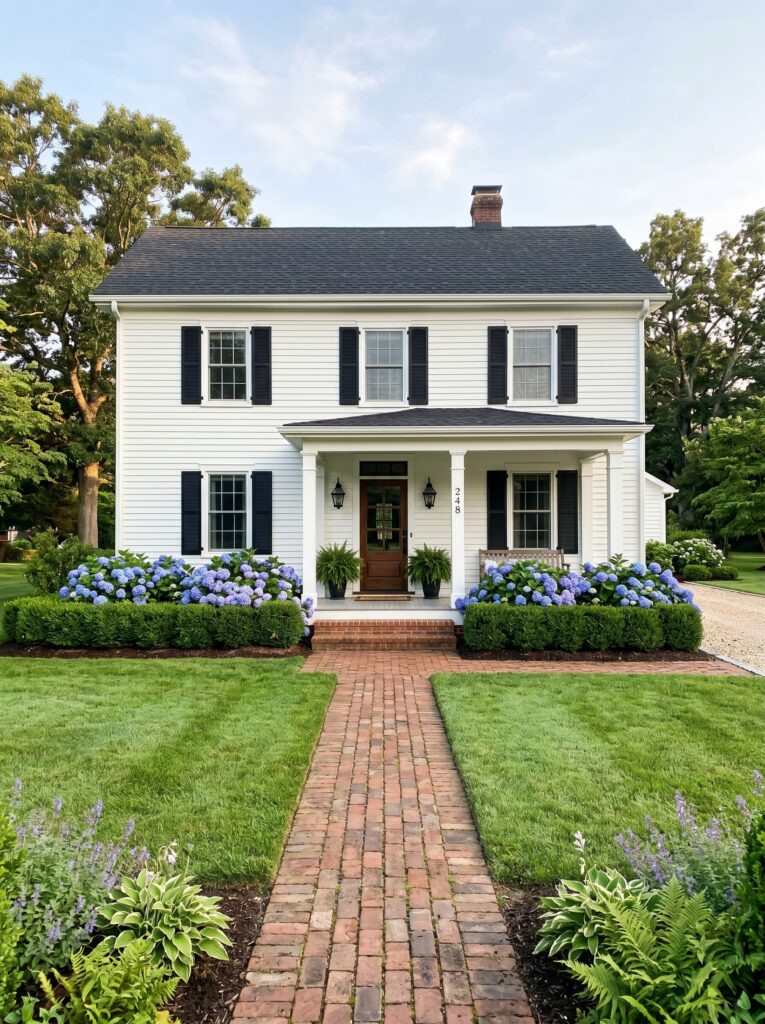
A foundation border is the most classic way to use this pairing, lining the base of your home with structure and color. Homeowners love it because it instantly boosts curb appeal and softens hard architectural lines. It works beautifully along porches, walkways, and home exteriors, creating a polished, welcoming mood.
Key Elements:
- Dwarf boxwood shrubs for a tidy, low hedge
- Bigleaf or panicle hydrangeas for color
- Mulch in a natural brown or dark tone
- A defined bed edge along the foundation
- Consistent spacing between plants
- Optional edging stones or brick border
How to Style It:
- Plant boxwoods in a continuous line along the foundation, spacing them based on mature width.
- Place hydrangeas at intervals between or just in front of the boxwood line for color breaks.
- Mulch the entire bed for a clean, finished look and moisture retention.
- Trim boxwoods two to three times during the growing season to maintain a tidy shape.
- Deadhead spent hydrangea blooms to encourage continued flowering through the season.
- Water hydrangeas more frequently than boxwoods, as they tend to be thirstier plants.
Idea 2: Boxwood Hedge with Hydrangea Backdrop
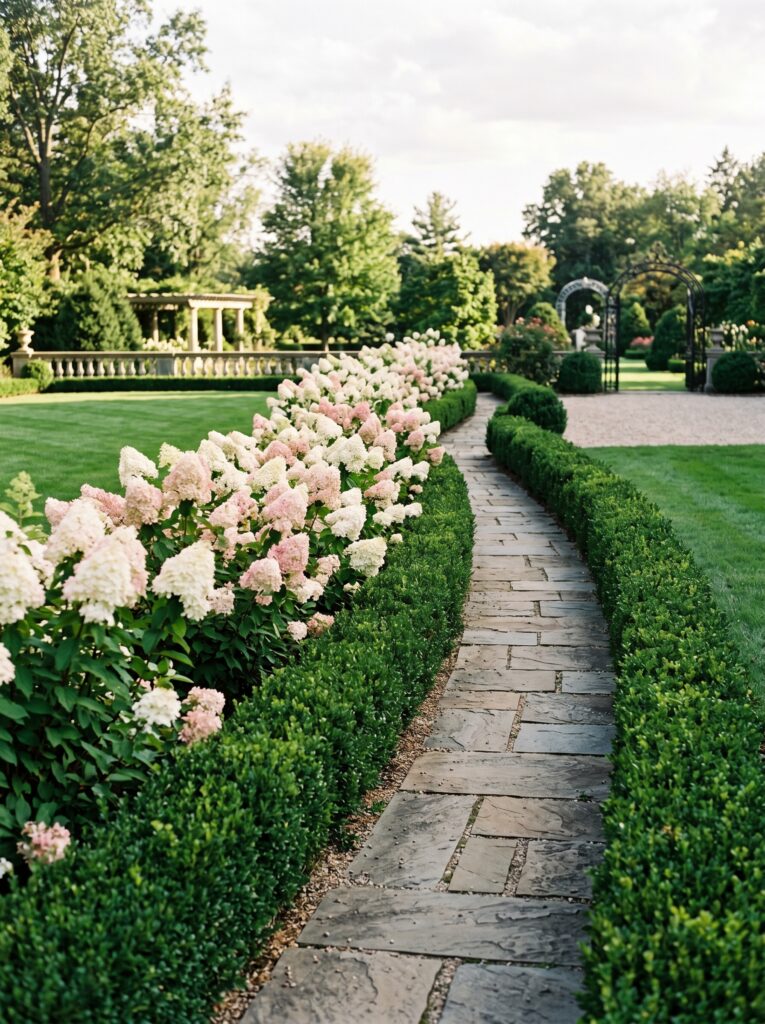
This layered approach uses boxwoods as a crisp, low border while letting hydrangeas rise up behind them as a soft, blooming backdrop. It’s loved for the elegant depth it creates, and it works beautifully along garden pathways or fence lines, creating a refined, layered mood.
Key Elements:
- A low, tightly clipped boxwood hedge
- Tall panicle or bigleaf hydrangeas planted behind
- A defined pathway or walkway
- Mulch or groundcover beneath the hydrangeas
- Consistent hedge height for a formal look
How to Style It:
- Plant your boxwood hedge first, spacing plants closely for a continuous green line.
- Place hydrangeas about 18 to 24 inches behind the hedge, giving them room to mature.
- Trim the boxwood hedge to a consistent, low height throughout the season.
- Let hydrangeas grow naturally without heavy pruning, since their blooms are the visual star here.
- Mulch the area behind the hedge to retain moisture for the thirstier hydrangeas.
- Walk the path occasionally to check sightlines — the hedge should frame, not block, the blooms.
Idea 3: Boxwood Spheres with Hydrangea Clusters
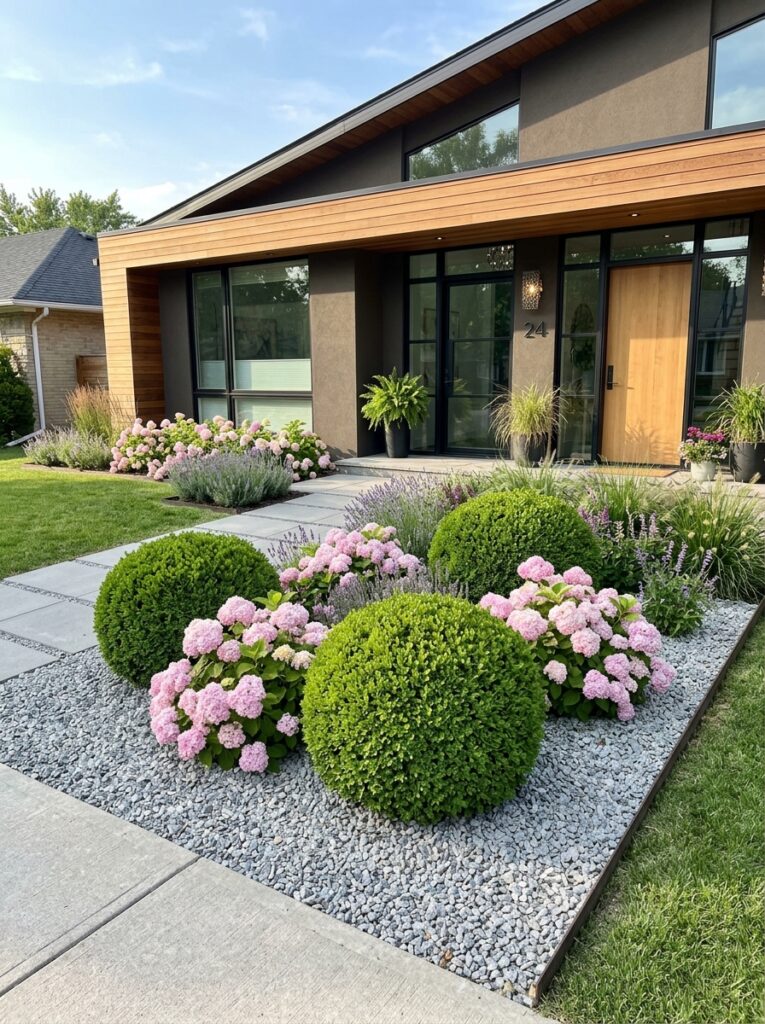
For a more modern, sculptural take on this pairing, shaped boxwood spheres add a clean architectural element while hydrangea clusters soften the geometry. It’s loved in contemporary and transitional landscape designs, and it works beautifully near entryways or modern home exteriors, creating a polished, sculptural mood.
Key Elements:
- Boxwood shrubs shaped into spheres (or pre-shaped topiary boxwoods)
- Hydrangea varieties in soft pastel tones
- Gravel, mulch, or low groundcover
- A modern or transitional home exterior
- Consistent spacing in a geometric pattern
How to Style It:
- Choose boxwood varieties that hold a rounded shape well, like Buxus sempervirens.
- Plant spheres in a deliberate pattern — a triangle, row, or symmetrical cluster.
- Trim regularly to maintain the rounded shape, ideally every six to eight weeks during growing season.
- Plant hydrangea clusters around or between the spheres for color contrast.
- Use gravel or light mulch to keep the look clean and modern.
- Step back periodically to check that the spheres remain visually balanced with the hydrangea clusters.
Idea 4: Cottage Garden Pathway
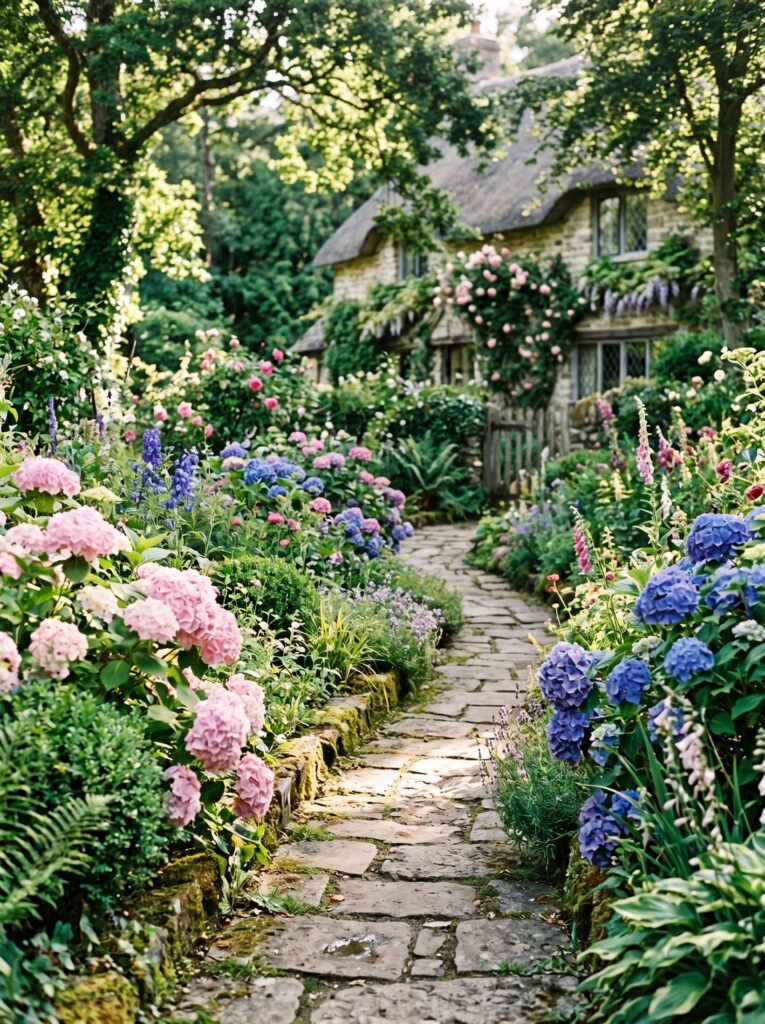
This idea embraces a looser, more romantic version of the classic pairing, letting hydrangeas spill generously over a softer boxwood border. It’s loved for its relaxed, English cottage garden feel, and it works beautifully along winding pathways or garden gates, creating a dreamy, abundant mood.
Key Elements:
- Loosely shaped boxwood clumps, not tightly clipped
- Hydrangeas in mixed colors for a layered, abundant look
- A curved stone or gravel pathway
- Wildflowers or cottage perennials tucked between plantings
- Natural, slightly overgrown spacing for an informal feel
How to Style It:
- Plant boxwoods in loose, irregular clusters rather than a perfectly straight hedge line.
- Add hydrangeas generously along the path, letting blooms spill toward the walkway.
- Tuck in cottage perennials like foxglove or salvia between the larger shrubs.
- Trim boxwoods lightly just to maintain shape, avoiding overly formal lines.
- Let hydrangeas grow fuller and wilder than you would in a formal design.
- Walk the path regularly to trim back anything blocking foot traffic.
A helpful styling trick is to let just a few hydrangea blooms touch the pathway edge — it creates that romantic, “just wandered through a cottage garden” feeling people love in photos.
Idea 5: Symmetrical Entry Garden
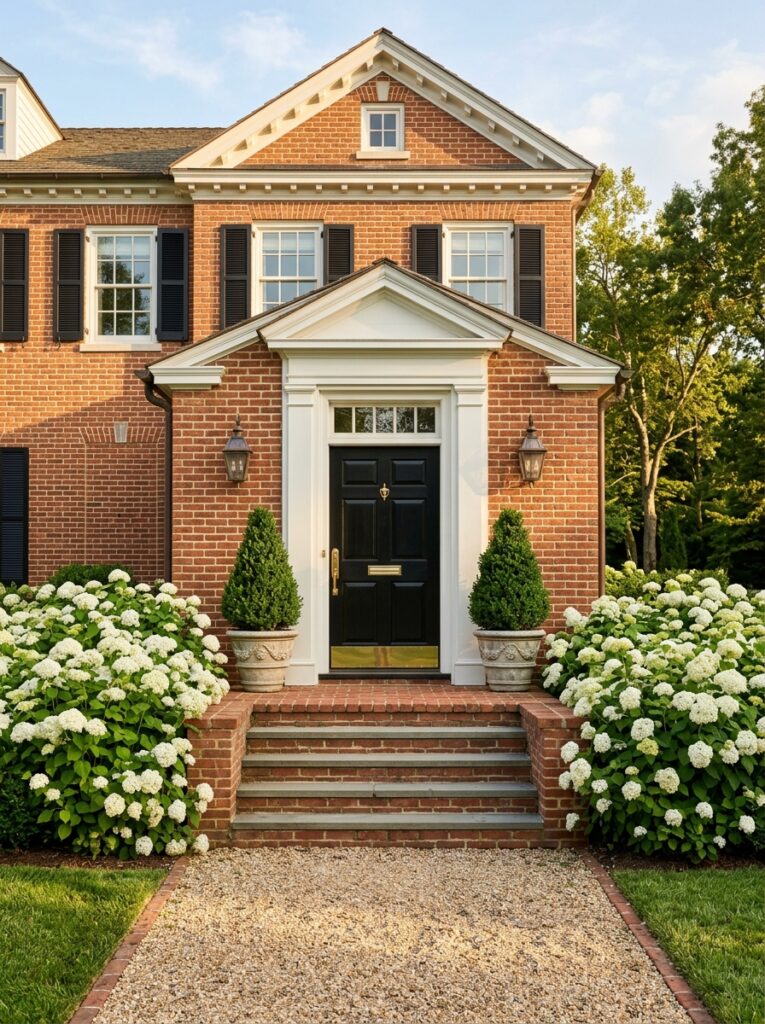
A symmetrical entry garden uses matching boxwood shapes on either side of your front door, paired with mirrored hydrangea plantings for a grand, polished first impression. It’s loved for the instant elegance it brings, and it works beautifully at front entrances or formal home exteriors, creating a refined, welcoming mood.
Key Elements:
- Two matching boxwood shapes (pyramids, spheres, or columns)
- Symmetrical hydrangea beds on either side
- A defined entry pathway or steps
- Consistent mulch or groundcover on both sides
- White or pale hydrangea varieties for a classic, elegant look
How to Style It:
- Choose one boxwood shape and plant identical pairs on either side of your entrance.
- Mirror your hydrangea plantings exactly, matching variety, color, and spacing on both sides.
- Keep mulch color and depth consistent across both beds.
- Trim boxwoods on a regular schedule to maintain identical shapes over time.
- Deadhead hydrangeas evenly on both sides to keep the symmetry intact through the season.
- Step back from the street periodically to check the overall balance of your entry garden.
Idea 6: Boxwood Knot Garden with Hydrangea Accents
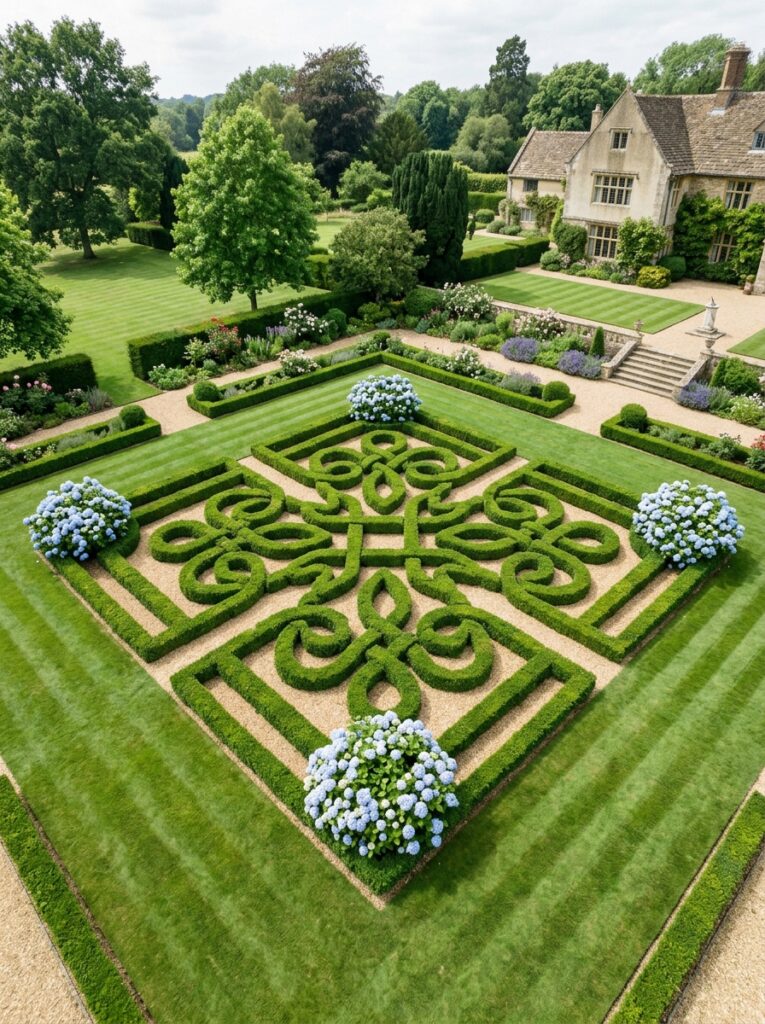
For garden enthusiasts who want something truly showstopping, a boxwood knot garden with hydrangea accents creates an intricate, almost artistic landscape feature. It’s loved by formal garden lovers, and it works best as a backyard centerpiece or estate-style front yard feature, creating a dramatic, traditional mood.
Key Elements:
- Boxwood shrubs trimmed into an interlocking knot or geometric pattern
- Hydrangea shrubs placed at corners or focal points within the design
- A flat, open area with good visibility from above or a nearby window
- Consistent, frequent trimming schedule
- Mulch or gravel filling the pattern’s negative space
How to Style It:
- Plan your knot pattern on paper first, considering mature boxwood width.
- Plant boxwoods closely along your planned pattern lines for a continuous design.
- Place hydrangea shrubs at the pattern’s corners or center as color focal points.
- Trim the boxwood pattern every four to six weeks to keep lines crisp and legible.
- Fill negative space within the pattern with mulch or fine gravel.
- View the design from an upper window or balcony occasionally to check the pattern’s clarity.
Idea 7: Layered Mixed Border
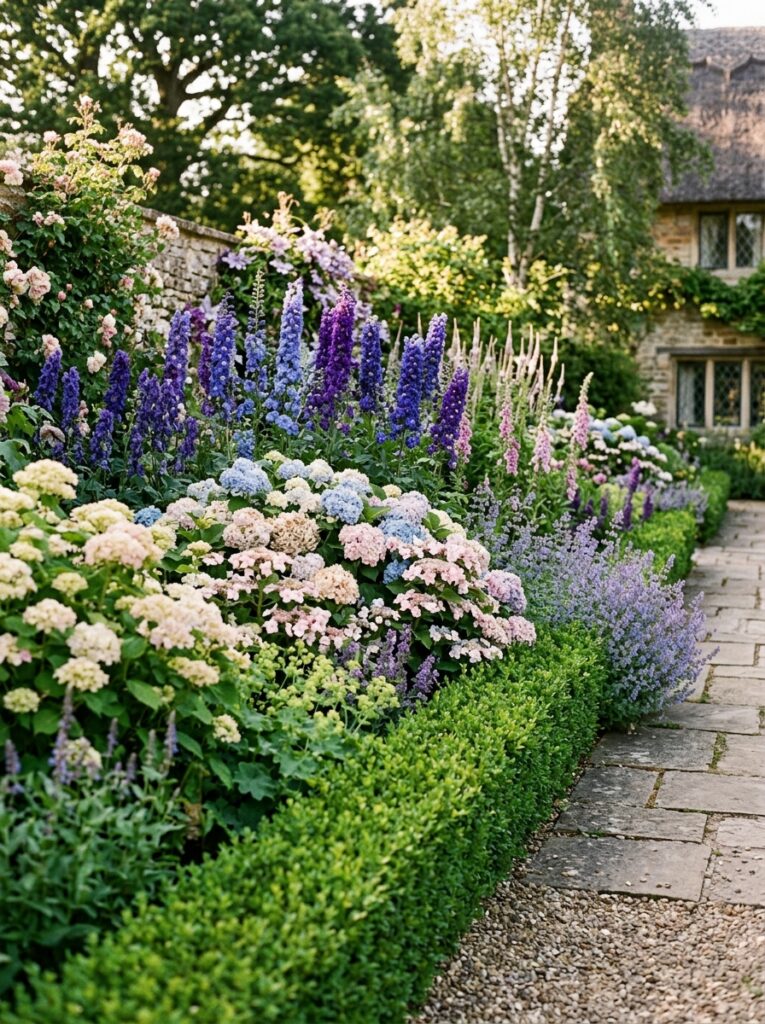
This idea treats hydrangeas and boxwoods as just two layers within a fuller mixed border, adding height and seasonal variety with additional perennials behind the hydrangeas. It’s loved for its depth and visual richness, and it works beautifully along fence lines or deep garden beds, creating a lush, layered mood.
Key Elements:
- A low boxwood hedge along the front edge
- Mid-height hydrangeas as the border’s second layer
- Tall perennials like delphinium, foxglove, or hollyhock behind
- Mulch beneath all layers for consistency
- A border at least four to six feet deep for proper layering
How to Style It:
- Plant your boxwood hedge along the very front edge of the border.
- Add hydrangeas about two feet behind the hedge as your middle layer.
- Plant taller perennials behind the hydrangeas for additional height and color.
- Group plants in odd numbers within each layer for a more natural look.
- Trim the boxwood hedge regularly while allowing the back layers to grow more freely.
- Stagger bloom times among your perennials and hydrangeas to extend seasonal color.
Idea 8: Boxwood Planters with Potted Hydrangeas
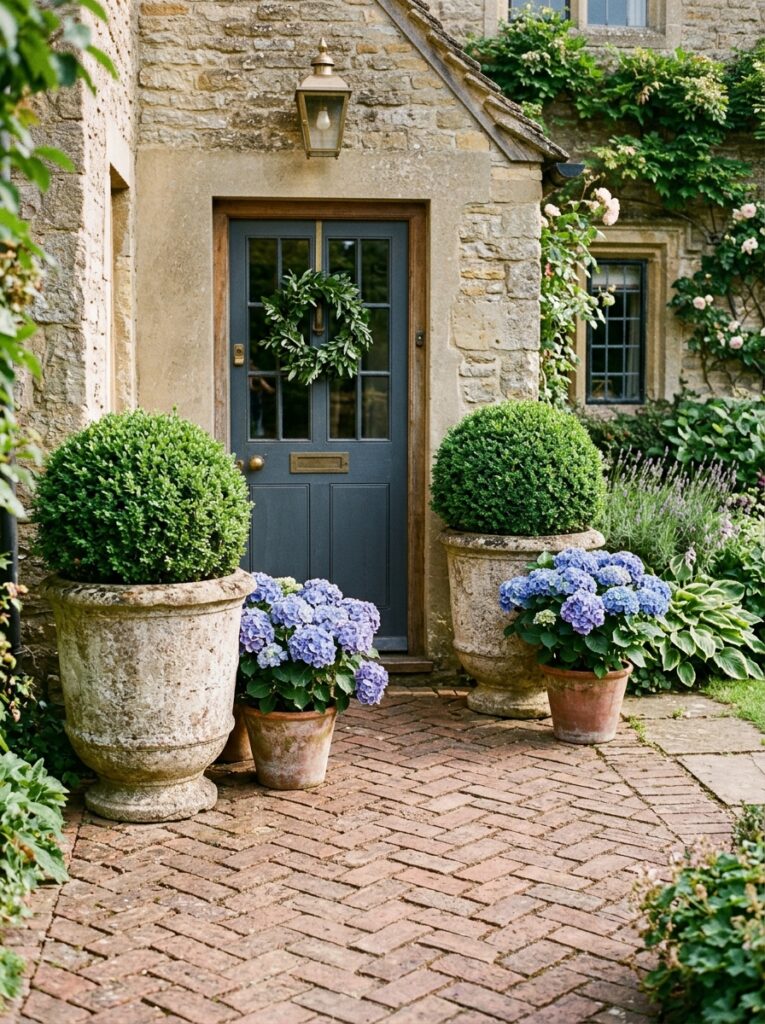
For smaller spaces, patios, or rental homes where in-ground planting isn’t possible, container gardening brings this same classic pairing into pots. It’s loved for its flexibility and portability, and it works beautifully on patios, porches, or balconies, creating a polished, container-garden mood.
Key Elements:
- Large stone, concrete, or ceramic planters for boxwoods
- Smaller terracotta or ceramic pots for hydrangeas
- Quality potting soil with good drainage
- A patio, porch, or balcony location
- Consistent watering schedule, since potted plants dry out faster
How to Style It:
- Choose a boxwood variety suited to container growth, like dwarf English boxwood.
- Plant boxwoods in large, weighty planters to prevent tipping in wind.
- Pot hydrangeas separately in slightly smaller containers nearby.
- Group pots together for visual impact rather than spacing them too far apart.
- Water hydrangea pots more frequently than boxwood planters, checking soil daily in summer heat.
- Bring potted boxwoods to a sheltered area in harsh winter climates to protect roots.
Idea 9: Color-Themed Hydrangea and Boxwood Bed
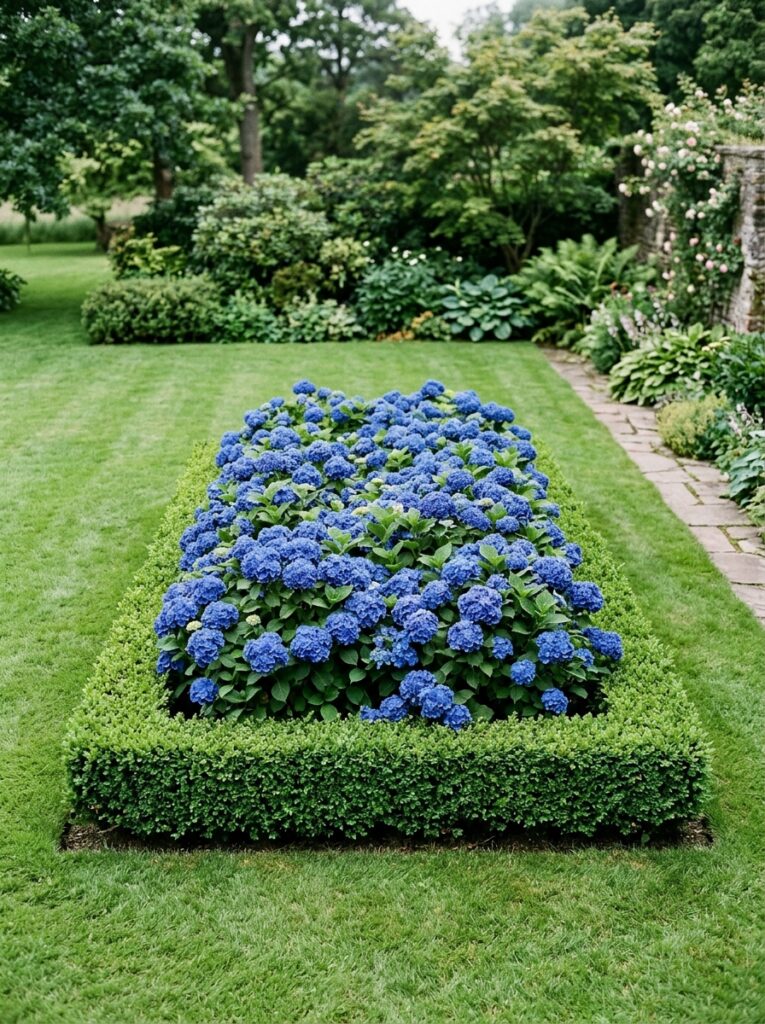
Choosing a single hydrangea color and sticking with it creates a wonderfully cohesive, intentional-looking garden bed. This idea is loved for its calm, curated feel, and it works beautifully as a standalone garden feature or alongside a patio, creating a serene, monochromatic mood.
Key Elements:
- A single hydrangea color theme: blue, pink, white, or purple
- A consistent boxwood border framing the bed
- Soil amendments to influence bloom color, if using bigleaf hydrangeas
- Mulch in a tone that complements the chosen color theme
- Minimal additional plant varieties to keep the palette clean
How to Style It:
- Choose one hydrangea color family and select varieties known for true color consistency.
- For bigleaf hydrangeas, test and adjust soil pH if you want to influence blue or pink tones.
- Plant your boxwood border first to frame the bed clearly.
- Fill the interior space generously with your chosen hydrangea color.
- Mulch in a neutral tone that won’t compete with the bloom color.
- Maintain consistent watering and fertilizing to support uniform blooming across the bed.
Idea 10: Seasonal Interest Garden Bed
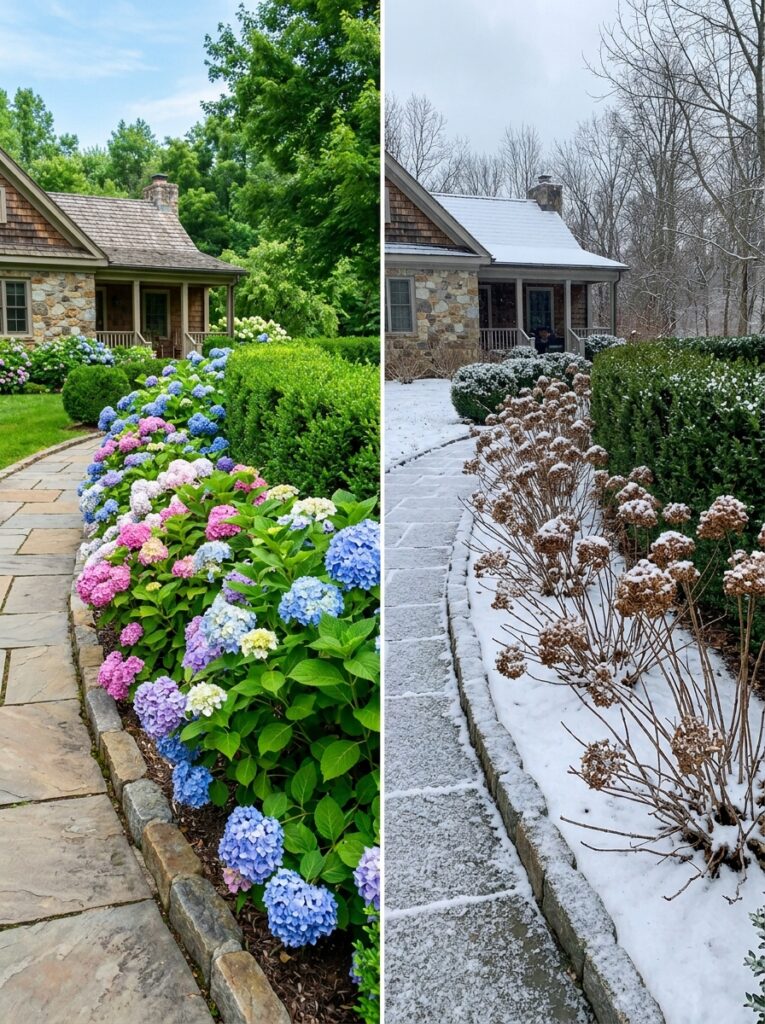
This final idea is about appreciating how this plant pairing changes throughout the year. While hydrangeas put on a dramatic seasonal show, boxwoods quietly hold the garden’s structure together through every season, including winter when most other plants have gone dormant.
Seasonal Guide for Hydrangea and Boxwood Beds:
| Season | What’s Happening | Maintenance Focus |
|---|---|---|
| Spring | New hydrangea growth begins; boxwoods push new leaves | Light boxwood trim, fertilize hydrangeas |
| Summer | Peak hydrangea blooming; boxwoods need regular shaping | Deadhead spent blooms, water consistently |
| Fall | Hydrangea blooms fade to dried, papery tones; boxwoods slow growth | Light trim, leave dried blooms for texture |
| Winter | Boxwoods stay evergreen; hydrangea stems go dormant | Minimal pruning, protect from heavy snow load |
How to Style It:
- Leave dried hydrangea blooms on the plant through fall and into winter for natural texture and visual interest.
- Avoid heavy pruning of hydrangeas in fall, since many varieties bloom on old wood.
- Trim boxwoods lightly in early spring and again in midsummer for a tidy shape year-round.
- Brush heavy snow off boxwoods promptly to prevent branches from bending or breaking.
- Photograph your bed each season — it’s a genuinely rewarding way to see the transformation over a full year.
Hydrangea Variety Quick Guide
| Hydrangea Type | Bloom Time | Best Paired Boxwood Style | Notes |
|---|---|---|---|
| Bigleaf (Hydrangea macrophylla) | Early summer to fall | Low, tidy hedge | Bloom color affected by soil pH |
| Panicle (Hydrangea paniculata) | Mid to late summer | Taller hedge or backdrop | Most cold-hardy variety |
| Smooth (Hydrangea arborescens) | Early to mid summer | Sphere or cluster planting | Reliable white blooms |
| Oakleaf (Hydrangea quercifolia) | Early summer | Mixed border | Excellent fall foliage color |
Common Decorating Mistakes to Avoid
- Planting too close together. Both boxwoods and hydrangeas need room to mature; overcrowding leads to poor air circulation and disease.
- Skipping regular boxwood trimming. Without consistent shaping, boxwoods quickly lose the crisp structure that makes this pairing work.
- Ignoring soil pH for bigleaf hydrangeas. If you want a specific bloom color, test your soil and amend accordingly.
- Overwatering or underwatering. Hydrangeas need consistent moisture, while established boxwoods prefer slightly drier conditions.
- Pruning hydrangeas at the wrong time. Many varieties bloom on old wood, so improper fall or spring pruning can remove next season’s flowers.
- Choosing the wrong hydrangea variety for your climate. Always check cold hardiness zones before planting.
Final Thoughts
Hydrangea and boxwood landscaping has earned its place as a timeless American garden classic for good reason. The structure and softness work together in a way that feels both polished and genuinely alive, season after season.
I’ve seen how simple decorating changes like these can completely transform how a home feels without requiring a major renovation, and the same is absolutely true in the garden. Start with just one bed or one idea from this list, whether that’s a classic foundation border or a pair of boxwood spheres with hydrangea clusters, and watch how much character it brings to your yard.
Save this article to your Pinterest board for your next planting season, and share it with anyone dreaming up their perfect front yard.

Indy Santos is a passionate interior styling specialist and home living enthusiast with a focus on contemporary decor, smart space planning, and affordable design inspiration. At Inspired Homex, she provides readers with fresh decorating concepts, actionable advice, and professional guidance to create comfortable, elegant, and well-organized homes that reflect their personal style.