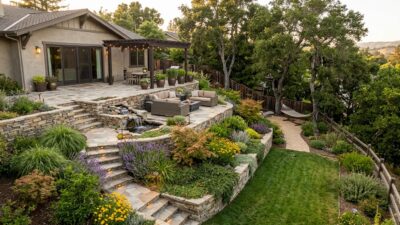


Introduction
There’s a certain magic to a garden that looks like it’s grown a little wild on purpose. French cottage garden ideas capture that effortless, romantic feeling, roses tumbling over an arbor, lavender spilling across a gravel path, and a weathered iron bench tucked beneath the shade of a tree.
This style has never really gone out of fashion, and it’s easy to see why. It blends structure with softness, formal touches like clipped boxwood or a stone fountain sit comfortably alongside loose, billowy perennials and climbing vines. The result feels collected and lived-in rather than perfectly manicured, which makes it approachable for almost any backyard, whether you’re working with a full quarter acre or a modest city lot.
This roundup covers 20 different ways to bring French cottage charm into your own backyard, from classic rose arbors to vintage garden furniture and fragrant herb borders, so you can find the ideas that fit your space and your climate.
Key Takeaways
- French cottage gardens combine structured elements, like gravel paths or clipped hedges, with loose, romantic plantings such as roses, lavender, and climbing vines.
- Weathered and aged materials, like reclaimed stone, wrought iron, and vintage terracotta, help a garden feel established rather than newly planted.
- Fragrant plants like lavender, roses, and herbs are a signature of this style, since scent is as much a part of the experience as the visuals.
- Even small backyards can capture this look using container gardening, a single arbor, or a compact gravel seating area.
- Layering different plant heights, from climbing vines to low border plants, gives the garden the slightly wild, romantic depth this style is known for.
Climbing Rose Arbor

A climbing rose arbor is one of the most recognizable features of a French cottage garden, framing an entryway or path with cascading blooms. This idea works especially well positioned at the transition between two garden areas, like a lawn and a seating patio, since it creates a natural, fragrant threshold to walk through.
How to Get the Look
- A wood or wrought iron arbor structure, sturdy enough to support mature climbing roses
- Climbing rose varieties suited to your local climate zone
- A gravel or stone path running beneath the arbor
- Lavender or catmint planted along the path’s edges
- A wrought iron or weathered wood bench nearby for a resting spot
Styling Tips
- Choose a rose variety recommended for your specific hardiness zone, since some climbers handle cold winters better than others.
- Prune roses in late winter or early spring to encourage healthy new growth and better blooms the following season.
- A common mistake is placing the arbor somewhere with limited airflow, which can make roses more prone to fungal issues like powdery mildew.
Gravel Garden Pathways

Gravel pathways give a French cottage garden its characteristic sense of movement, winding through planting beds rather than cutting straight lines across the yard. The pale stone contrasts beautifully with lush greenery and colorful blooms, and it’s a practical, low-maintenance surface that stays walkable even after rain.
How to Get the Look
- Pale pea gravel or crushed limestone for the path surface
- Landscape edging, like brick or steel, to keep the gravel contained
- Mixed perennial borders along both sides of the path
- A small stone or concrete garden ornament, like a birdbath, as a focal point
- Landscape fabric beneath the gravel to reduce weed growth
Styling Tips
- Curve the path gently rather than running it in a straight line, since curves feel more natural and encourage slower, more exploratory movement through the garden.
- Keep the gravel path at least two feet wide for comfortable walking, especially where plants may spill slightly over the edges.
In practical spaces, it helps to top off gravel paths every year or two, since foot traffic and weather can gradually thin the surface.
Lavender Border Rows

Rows of lavender along a garden bed or path edge bring both color and fragrance into a French cottage garden. The silvery-green foliage and purple blooms create a soft, structured border that still feels relaxed, and lavender’s drought tolerance makes it a practical choice for sunny, well-drained garden edges.
How to Get the Look
- Lavender planted in even rows or a gentle border line
- Low stone or brick edging to define the bed
- Well-draining soil, since lavender struggles in consistently wet conditions
- A gravel or stone pathway running parallel to the border
- Minimal additional plantings nearby, letting the lavender’s texture stand out
Styling Tips
- Space lavender plants with enough room to mature, since overcrowding can lead to poor airflow and fungal problems.
- Trim lavender back after its first bloom cycle to encourage a fuller second flush later in the season.
This works particularly well in sunny, well-drained spots, since lavender genuinely struggles in shaded or consistently damp garden areas.
Weathered Stone Fountain

A small stone fountain brings gentle sound and movement into a French cottage garden, acting as a natural focal point that draws the eye toward the center of the space. The trickling water also attracts birds, adding another layer of life to the garden beyond the plants themselves.
How to Get the Look
- A small tiered or single-basin stone fountain, sized appropriately for the garden’s scale
- A gravel or stone surround to keep the base area tidy
- Roses, catmint, or other soft perennials planted nearby
- A simple electrical or solar pump system for water circulation
- Moss or lichen allowed to develop naturally on the stone over time
Styling Tips
- Position the fountain where it’s visible from a main seating area or window, so its sound and movement can be enjoyed regularly.
- Choose a fountain scale appropriate to the garden size; an oversized fountain can overwhelm a small backyard.
A common mistake is placing a fountain too close to overhanging trees, since falling leaves and debris can clog the pump and require frequent cleaning.
Iron Bistro Seating Nook

A small wrought iron bistro set tucked into a garden corner creates an inviting spot for morning coffee or afternoon tea. This idea works especially well surrounded by fragrant plants like roses or lavender, since the seating area becomes a sensory experience rather than just a place to sit.
How to Get the Look
- A wrought iron bistro table and two matching chairs
- A gravel or paver circle beneath the seating area
- Climbing roses or lavender planted around the perimeter
- A linen tablecloth or runner for a softer, styled touch
- Dappled shade from a nearby tree or a simple umbrella
Styling Tips
- Choose furniture with a weather-resistant powder coating, since wrought iron can rust if left untreated outdoors.
- Keep the seating area small and enclosed by plantings, so it feels like a private nook rather than an open, exposed spot.
Boxwood Hedge Borders

Clipped boxwood hedges add a structured, formal element that balances the looser, more romantic plantings typical of a French cottage garden. This combination of tidy hedging and billowy flowers is a hallmark of the style, giving the garden both order and softness at the same time.
How to Get the Look
- Boxwood shrubs, trimmed into low, even hedge lines
- Loose perennial plantings, like roses or delphiniums, just behind the hedge
- A gravel or stone path running alongside the hedge border
- A wrought iron gate or arch as a transition point
- Regular pruning to maintain the hedge’s clean lines
Styling Tips
- Trim boxwood hedges once or twice a year to maintain their shape without over-pruning, which can stress the plant.
- Let plantings behind the hedge grow slightly looser and taller, creating contrast between the structured hedge and the relaxed blooms.
For a more balanced look, keep hedge height low enough that it frames the garden bed without hiding the flowers growing behind it.
Climbing Wisteria Pergola

A pergola covered in flowering wisteria creates a shaded, fragrant outdoor room that feels like something out of the French countryside. The cascading purple blooms in spring give way to lush green coverage through summer, making the pergola a functional shade structure as well as a dramatic visual feature.
How to Get the Look
- A sturdy wood or metal pergola structure built to support mature wisteria vines
- Wisteria planted at the base of one or two pergola posts
- A stone or gravel patio beneath the structure
- A wood outdoor dining table and chairs
- String lights woven through the beams for evening ambiance
Styling Tips
- Choose a pergola built with strong, well-anchored posts, since mature wisteria vines become quite heavy over time.
- Prune wisteria regularly to control its spread and encourage better blooming, since unchecked vines can quickly overtake a structure.
Vintage Terracotta Pot Collection

A grouped collection of weathered terracotta pots brings instant French cottage charm to a patio, balcony, or garden corner. Mixing pot sizes and planting a variety of herbs, flowers, and trailing plants gives the arrangement a collected, layered look that feels effortless rather than overly matched.
How to Get the Look
- A mix of terracotta pots in varying sizes and slightly different ages or finishes
- Herbs like rosemary and thyme planted in smaller pots
- Geraniums or other flowering plants for color in medium pots
- Trailing ivy or vinca in larger pots for a cascading effect
- A simple wrought iron plant stand to add height variation
Styling Tips
- Group pots in odd numbers, like three or five, for a more visually balanced arrangement.
- Let terracotta age naturally rather than sealing it, since the weathered patina is part of the aesthetic.
- This works particularly well as a small-space solution, since container gardening allows the look to work on a patio or balcony without a full garden bed.
Cutting Garden Beds

A dedicated cutting garden bed gives you a steady supply of fresh flowers for the table while keeping the main ornamental garden beds undisturbed. Filled with easy-to-grow blooms like zinnias, cosmos, and dahlias, this bed also introduces a burst of color that changes with the seasons.
How to Get the Look
- A defined rectangular bed with a simple wood picket or low fence border
- Rows of easy-care cutting flowers suited to your climate
- A gravel path alongside for easy access during harvesting
- A wicker basket and garden shears kept nearby for cutting
- Support stakes or netting for taller varieties like dahlias
Styling Tips
- Choose a mix of flower heights and bloom times so the bed stays productive throughout the growing season.
- Cut flowers regularly, since consistent harvesting actually encourages most cutting garden varieties to produce more blooms.
Espaliered Fruit Trees

Espaliered fruit trees, trained flat against a wall or fence, bring a distinctly French garden tradition into a backyard while saving significant space. This technique works especially well against a sunny wall, turning what would otherwise be blank vertical space into a productive, sculptural garden feature.
How to Get the Look
- A young fruit tree variety suited to espalier training, such as apple or pear
- A sunny wall or sturdy fence for support
- Horizontal wire or trellis framework to guide branch growth
- Regular pruning to maintain the flat, symmetrical pattern
- A narrow planting bed at the base for support and irrigation
Styling Tips
- Start training a tree while it’s young, since establishing the espalier shape becomes much harder with mature branches.
- Choose a south or west-facing wall when possible, since most fruit trees need substantial sun exposure to produce well.
I’ve noticed that espaliered trees tend to work particularly well in narrow side yards, where a traditional round tree canopy simply wouldn’t fit.
Rustic Potting Shed Corner

A small potting shed gives a French cottage garden both function and visual charm, offering a dedicated space for tools and supplies while adding a storybook-like structure to the landscape. Letting roses or climbing vines grow up the exterior helps the shed blend naturally into the garden rather than standing apart from it.
How to Get the Look
- A small wood shed with a weathered or painted exterior finish
- Interior shelving for pots, tools, and gardening supplies
- Climbing roses or clematis trained up one exterior wall
- A gravel path leading to the shed’s entrance
- A simple window box or hanging planter near the door
Styling Tips
- Choose a shed size proportional to your actual storage needs rather than the largest option available, since an oversized structure can dominate a small garden.
- Let climbing plants establish gradually rather than overplanting immediately, giving the structure time to be visible before it’s fully covered.
Wildflower Meadow Patch

A wildflower meadow patch brings a looser, more untamed element into a French cottage garden, contrasting nicely with more structured beds elsewhere in the yard. This idea suits backyards with an underused corner or edge, turning a low-maintenance area into a colorful, pollinator-friendly feature.
How to Get the Look
- A wildflower seed mix suited to your regional climate
- A mowed grass path cut through the meadow for walking access
- A simple wood bench positioned at the meadow’s edge
- Minimal maintenance beyond an annual cutback in late fall
- A defined border, like a low fence, separating the meadow from more manicured lawn areas
Styling Tips
- Choose a regionally appropriate wildflower mix, since native species tend to establish more successfully and support local pollinators.
- Keep a mowed path through the meadow so the space still feels walkable and intentional rather than simply unkempt.
Herb Garden Kitchen Border

Planting a dedicated herb border near the kitchen door combines beauty with everyday usefulness, letting you step outside for fresh rosemary or thyme while cooking. This idea suits any backyard with direct kitchen access, and the mix of textures and soft greens gives the border visual interest even without flowers.
How to Get the Look
- A mix of culinary herbs like rosemary, thyme, sage, and parsley
- A low stone or brick border defining the bed
- Placement near a kitchen door or window for convenient access
- A small wood or metal garden marker for a decorative touch
- Well-draining soil, since most Mediterranean herbs prefer drier conditions
Styling Tips
- Group herbs by water needs, keeping drought-tolerant varieties like rosemary separate from thirstier plants like basil.
- Harvest herbs regularly, since most varieties respond well to consistent trimming with fuller, bushier growth.
Vintage Iron Gate Entrance

A vintage-style iron gate marks a clear, charming entrance into a French cottage garden, creating a sense of arrival before you even step inside. Paired with climbing roses trained along the frame, the gate becomes a focal point that sets the tone for the rest of the garden.
How to Get the Look
- A wrought iron gate, new or reclaimed, set into a low wall or fence line
- Climbing roses or clematis trained along the gate’s frame
- A gravel or stone path continuing through the entrance
- Lavender or catmint planted along both sides of the path
- A simple latch or hardware detail in an aged black or bronze finish
Styling Tips
- Choose a gate width that comfortably fits garden equipment like a wheelbarrow, in addition to foot traffic.
- Let climbing plants grow gradually along the gate rather than forcing full coverage immediately, since a partially visible gate often looks more intentional.
Climbing Clematis Trellis

A trellis covered in flowering clematis adds vertical color and softness to an otherwise blank wall or fence section. Clematis blooms in a range of colors and patterns, which makes this idea easy to customize while still capturing the layered, romantic feel typical of French cottage gardens.
How to Get the Look
- A simple wood or metal trellis mounted securely against a wall or fence
- A clematis variety suited to your climate zone and the trellis’s sun exposure
- A gravel path or planting bed at the trellis’s base
- Potted lavender or other low plantings nearby for added texture
- Regular watering at the root zone, since clematis prefers cool, moist roots with sunny top growth
Styling Tips
- Keep the base of the clematis shaded with a low plant or mulch, since this variety typically prefers “cool feet and sunny heads.”
- Choose a trellis pattern with enough openings for the vine to weave through naturally as it climbs.
Stone Garden Wall

A low stone wall adds structure and a sense of history to a French cottage garden, especially when used to create a raised bed or define different garden areas. The slightly irregular, dry-stacked look feels more authentic to the style than a perfectly uniform block wall.
How to Get the Look
- Natural, irregular fieldstone for a dry-stacked or lightly mortared wall
- A raised bed created behind the wall for roses or perennial plantings
- A gravel path running alongside the wall’s base
- Plants allowed to spill slightly over the wall’s edge
- Moss or lichen allowed to develop naturally over time
Styling Tips
- Choose stones with varied sizes and shapes for a more natural, less uniform appearance.
- Let a few plants trail over the wall’s edge, since this softens the hard line between the wall and the surrounding lawn.
Antique Watering Can Display

Displaying a small collection of vintage watering cans turns everyday garden tools into decorative features. Arranged on a shelf, ledge, or garden table, the weathered metal finishes add texture and a sense of history, and the cans remain fully functional whenever you actually need to water the garden.
How to Get the Look
- A collection of two to four vintage or vintage-style metal watering cans
- A stone ledge, wood shelf, or small garden table for display
- Potted geraniums or trailing ivy placed nearby
- A stone or brick wall as a simple backdrop
- Cans arranged by size for a naturally balanced display
Styling Tips
- Keep the display functional as well as decorative, using the cans occasionally so they don’t feel purely staged.
- Group cans in odd numbers and vary their heights slightly for a more natural, collected arrangement.
Rose-Covered Cottage Fence

A simple picket fence transforms completely once climbing roses take over its surface, turning a basic boundary into one of the garden’s most romantic features. This idea works well along a property line or to separate different areas of the yard, softening what would otherwise be a purely functional structure.
How to Get the Look
- A wood picket fence as the base structure
- Climbing rose varieties trained along the fence’s length
- Lavender or catmint planted at the fence’s base
- A simple wood gate as a focal entry point
- Wire or twine support to help train roses along the fence in their early growth
Styling Tips
- Train roses gradually along the fence using soft ties, checking periodically that ties aren’t cutting into growing stems.
- Choose a repeat-blooming rose variety if you want color through more of the growing season rather than just one spring flush.
A common mistake is choosing an overly vigorous rose variety for a modest fence, which can require significant pruning to keep manageable.
Shaded Reading Nook Under Trees

A shaded nook beneath a mature tree offers a quiet retreat within the garden, perfect for reading or simply sitting outside on a warm afternoon. Shade-loving plants like ferns and hostas fill in around the seating area, creating a cool, green backdrop that feels distinctly different from the sunnier parts of the garden.
How to Get the Look
- A weathered wood bench positioned beneath a mature tree’s canopy
- A cushion or seat pad in a durable outdoor fabric
- A small side table for books, tea, or a drink
- Shade-tolerant plants like ferns, hostas, or astilbe surrounding the seating area
- A layer of mulch or gravel beneath the bench to keep the ground tidy
Styling Tips
- Choose plants suited to dry or moist shade depending on your specific tree and soil conditions, since shade gardens vary quite a bit in moisture needs.
- Keep the seating area simple, letting the surrounding greenery provide most of the visual interest.
Container Garden Courtyard

For backyards or courtyards with little to no in-ground planting space, a fully container-based garden can still capture French cottage charm. Grouping pots at different heights and filling them with a mix of roses, herbs, and trailing plants creates the same layered, romantic feel as a traditional garden bed.
How to Get the Look
- A mix of terracotta and stone planters in varying sizes and heights
- Compact or patio rose varieties suited to container growing
- Herbs and trailing geraniums for texture and fragrance
- A single wrought iron chair or small bench tucked into the space
- A paved or gravel courtyard surface for easy maintenance
Styling Tips
- Choose planters with good drainage, since container plants are more susceptible to root rot than those in open ground.
- Vary container heights using plant stands or upturned crates, since height variation is what gives a container garden its layered, established look.
This works particularly well as a small-space solution, proving that a full backyard isn’t required to bring French cottage garden style into an outdoor space.
French Cottage Garden Material Guide
| Material | Look | Maintenance | Best For |
|---|---|---|---|
| Weathered wood | Rustic, soft | Low to moderate, may need resealing | Arbors, sheds, fences |
| Wrought iron | Romantic, timeless | Low, occasional rust treatment | Gates, furniture, trellises |
| Natural stone | Established, textural | Very low | Paths, walls, edging |
| Pea gravel | Casual, walkable | Low, occasional topping up | Pathways, seating areas |
| Terracotta | Warm, classic | Low, may crack in hard freezes | Container gardens, pots |
Frequently Asked Questions
What plants are essential to a French cottage garden? Climbing roses, lavender, and mixed perennials like foxglove or delphiniums are considered signature plants for this style, along with herbs like rosemary and thyme for fragrance and everyday use.
Can I create a French cottage garden in a small backyard? Yes. Container gardening, a single arbor or trellis, and a compact seating nook can all capture the look on a smaller scale, without needing extensive garden beds.
How much maintenance does a French cottage garden require? More than a purely minimalist landscape, since roses and perennials generally need regular pruning, deadheading, and seasonal care. Choosing hardy, well-suited plants for your climate can help reduce ongoing upkeep.
What is the difference between a French cottage garden and an English cottage garden? The two styles overlap significantly, but French cottage gardens often lean slightly more structured, with clipped hedges, gravel paths, and symmetrical elements like espaliered trees, balanced against the same loose, romantic plantings found in English versions.
Do I need a lot of sun for a French cottage garden? Many signature plants, like roses and lavender, need substantial sun to thrive, though shaded corners can still be incorporated using ferns, hostas, and a quiet seating nook for contrast.
Conclusion
A French cottage garden has a way of feeling like it’s always been there, even on the very first day it’s planted. Sometimes the smallest addition, like a single climbing rose or a weathered terracotta pot, can completely shift how a backyard feels. Whether you’re working with a sprawling yard or a modest courtyard, these French cottage garden ideas offer realistic, achievable ways to bring that romantic charm home. Save your favorites, start with the one that speaks to you most, and let your garden grow into its own dreamy retreat.

Indy Santos is a passionate interior styling specialist and home living enthusiast with a focus on contemporary decor, smart space planning, and affordable design inspiration. At Inspired Homex, she provides readers with fresh decorating concepts, actionable advice, and professional guidance to create comfortable, elegant, and well-organized homes that reflect their personal style.