
Introduction
A sloping yard can become one of the most beautiful parts of a home when its natural levels are treated as an advantage rather than an obstacle. The right backyard design can turn an awkward incline into a series of inviting garden terraces, comfortable seating areas, winding paths, or dramatic planting zones.
The key is to work with the existing grade instead of trying to make everything perfectly flat. Different levels can give the landscape depth, create natural destinations, and make even a challenging yard feel intentionally designed. Some approaches are simple planting solutions, while others involve retaining structures, patios, stairs, or drainage planning.
Whether your slope is gentle or noticeably steep, these ideas will help you picture what the finished space could look like—and, more importantly, help you decide which direction makes sense for your property, lifestyle, and budget.
Key Takeaways
- Use terraces and retaining structures to create more usable levels where appropriate.
- Let pathways and steps become part of the landscape rather than an afterthought.
- Choose plants according to sunlight, moisture, climate, and slope conditions.
- Give drainage and soil stability the same attention as appearance.
- Combine practical features with comfortable outdoor spaces for a finished look.
1. Terraced Garden Levels
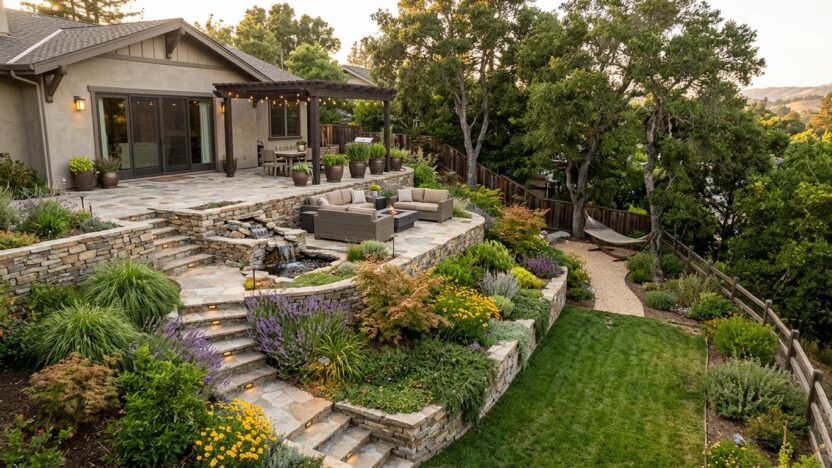
Terracing is one of the most visually effective ways to organize a sloped yard. Instead of seeing one continuous incline, you create several distinct levels that can each have a purpose. One terrace might hold flowers, another could become a small lawn, and the lowest level could provide space for seating.
The stepped arrangement also creates strong horizontal lines, which can make the landscape feel more structured and intentional. It works particularly well when the walls, paving, and planting share a consistent material palette.
How to Get the Look
- Divide the slope into practical levels rather than creating unnecessary tiers.
- Use natural stone, concrete block, brick, or another suitable retaining material.
- Give each terrace a clear purpose.
- Repeat plants across different levels for visual continuity.
- Add steps or a pathway that connects the terraces naturally.
Styling Tips
- Keep retaining-wall materials consistent throughout the yard.
- Use taller plants toward the upper levels and lower planting near paths.
- Avoid filling every terrace with the same plant combination.
2. Stone Retaining Walls
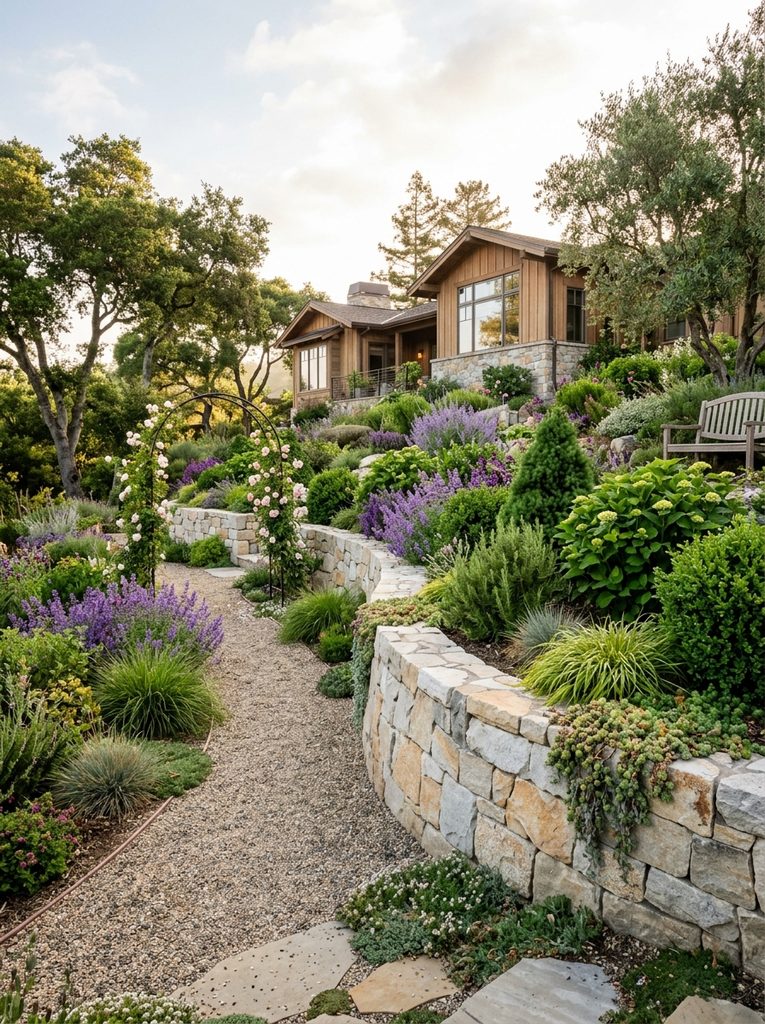
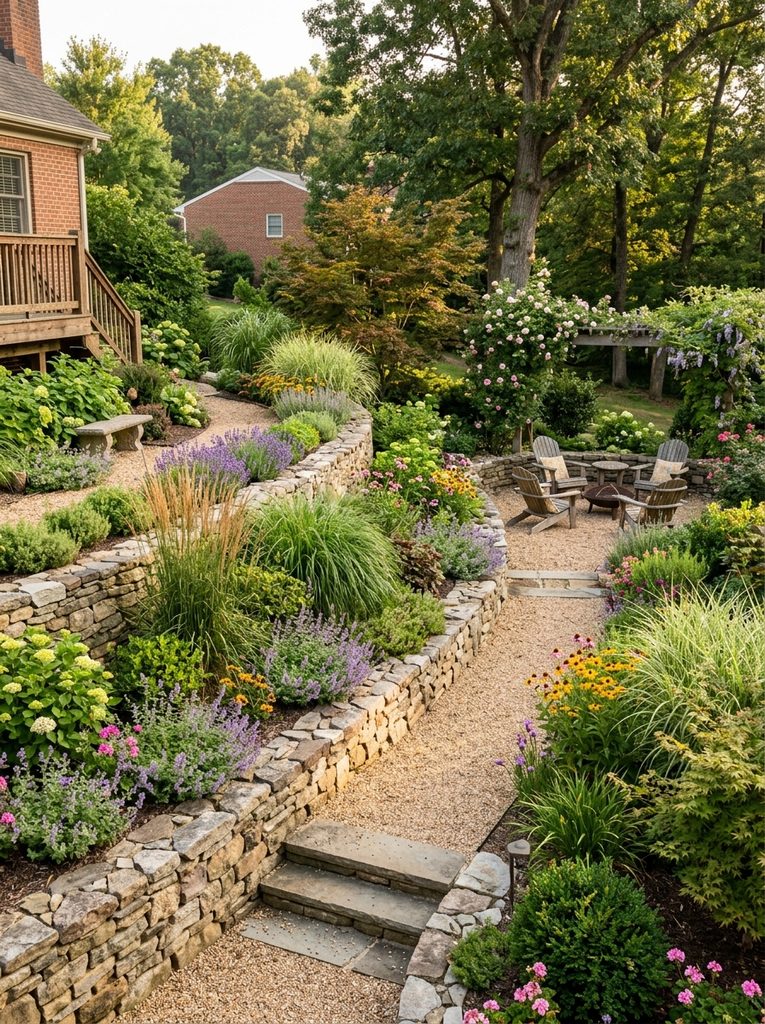
A stone retaining wall can make a structural feature feel like a natural part of the landscape. Rather than hiding the slope, the wall gives it definition while providing a strong visual boundary between levels.
Natural stone is especially effective in cottage, rustic, Mediterranean, and organic-modern gardens. The irregular shapes introduce texture, while greenery planted around the wall softens harder edges.
For substantial retaining work, drainage, soil pressure, wall height, and local requirements need to be considered before choosing a design. A decorative appearance should never replace proper structural planning.
How to Get the Look
- Choose stone tones that complement the home exterior.
- Keep the wall shape slightly organic for a natural garden.
- Add plants along the top and base.
- Use gravel or stepping stones nearby.
- Repeat the stone elsewhere for cohesion.
Styling Tips
- Avoid surrounding the entire wall with tiny plants.
- Mix foliage shapes to create visual depth.
- Let some greenery spill naturally over the wall.
3. Modern Sloped Patio
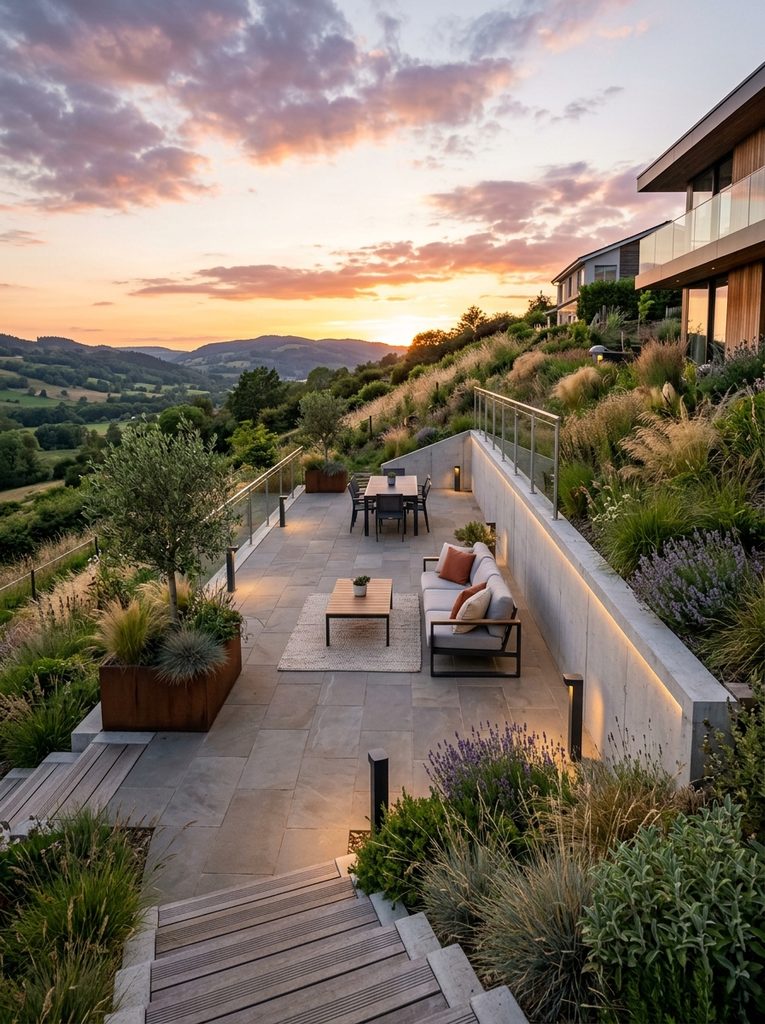
A patio gives a difficult slope a clear purpose. Instead of trying to place furniture directly on uneven ground, a level platform can become the main outdoor living zone.
This approach works beautifully for homeowners who want an outdoor dining area, lounge, fire feature, or entertaining space. The contrast between crisp paving and softer hillside planting also creates an attractive modern landscape.
The important detail is sequence: the structural foundation and drainage should be properly resolved before the finished patio surface is installed.
How to Get the Look
- Position the patio where it will be genuinely useful.
- Use large-format pavers for a contemporary appearance.
- Choose weather-appropriate outdoor furniture.
- Keep furniture layouts open enough for comfortable movement.
- Add planting around the patio edges.
Styling Tips
- Repeat one wood or metal finish across furniture and accessories.
- Use cushions in two or three coordinated tones.
- Keep the slope planting softer than the patio architecture.
4. Curved Garden Path
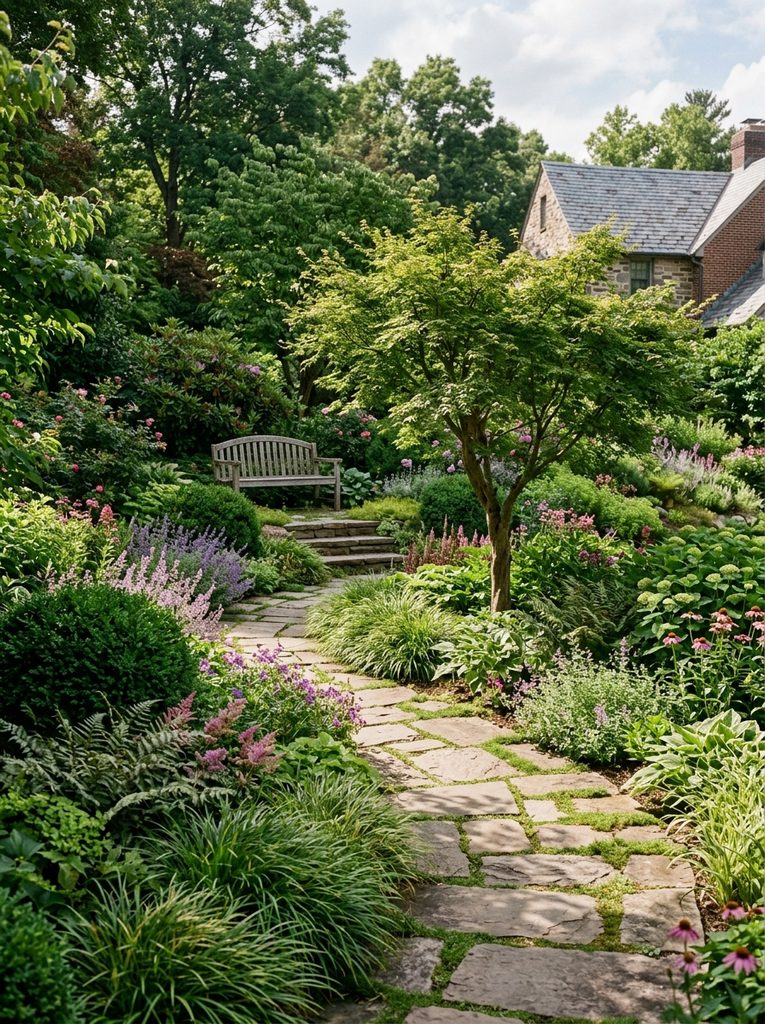
A straight path can make a slope feel rigid, while a gently curved route can turn the entire garden into a visual journey. The path can lead from the house to a seating area, garden bed, fire pit, or secluded corner.
This idea is especially useful when the yard has several changes in elevation. Instead of making the grade feel like something to overcome, the pathway makes movement through the garden part of the experience.
How to Get the Look
- Choose a route that follows the natural shape of the yard.
- Use stone, gravel, brick, or suitable outdoor pavers.
- Create comfortable landing areas where the direction changes.
- Border the route with low-growing plants.
- Add lighting where the path is used after dark.
Styling Tips
- Avoid placing tall plants directly beside narrow walking areas.
- Use repeated edging materials to make the route feel intentional.
- Create a destination at the end of the path.
5. Tiered Flower Beds
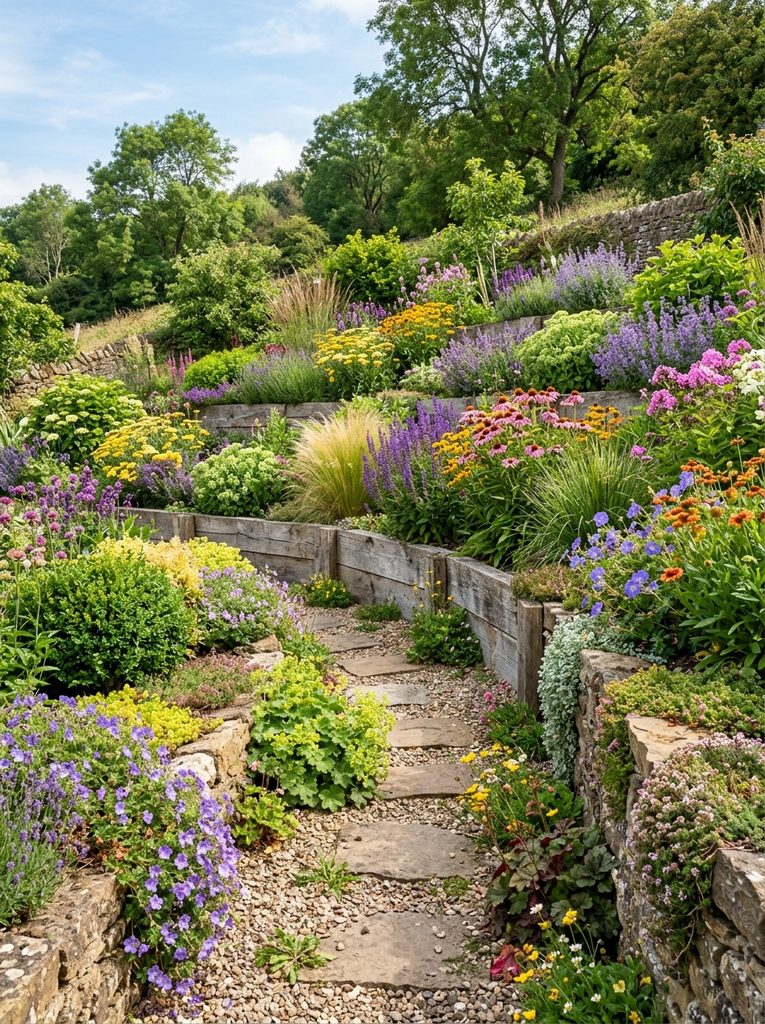
If you love flowers, a slope can become a wonderful opportunity for layered planting. Tiered beds allow plants at different heights to remain visible rather than disappearing behind one another on a single incline.
This approach can work with many garden styles, from relaxed cottage planting to cleaner contemporary borders. The most successful versions mix foliage, flowers, texture, and seasonal interest instead of relying on one plant variety.
Choose plants according to your local growing conditions rather than simply copying a photograph.
How to Get the Look
- Combine ground covers, perennials, grasses, and shrubs.
- Place taller plants toward the rear of each level.
- Use repeating plant groups to create rhythm.
- Add mulch or suitable ground cover between plants.
- Keep maintenance access in mind.
Styling Tips
- Repeat a few favorite plants instead of using dozens of unrelated varieties.
- Use foliage to maintain interest when flowers are not blooming.
- Leave enough space for plants to mature.
6. Split-Level Outdoor Lounge
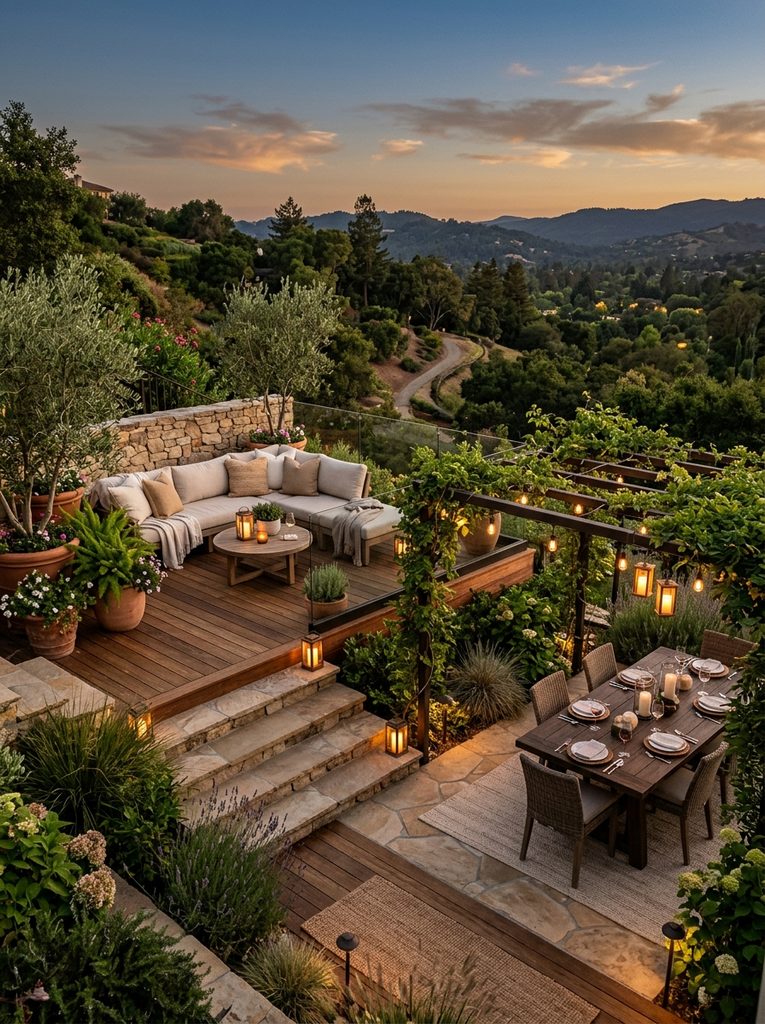
A split-level layout can make a large slope feel like several outdoor rooms. Rather than putting every activity on one platform, separate spaces according to how you use them.
The upper level could become a quiet lounge while the lower area handles dining or entertaining. This creates visual separation without requiring solid walls or fences.
It is particularly effective in yards where the elevation change is large enough to create natural zones but not so steep that every area needs heavy structural intervention.
How to Get the Look
- Give each level a specific function.
- Connect areas with comfortable steps or a suitable path.
- Repeat the same furniture finish between levels.
- Use planters to soften transitions.
- Add low outdoor lighting along circulation areas.
Styling Tips
- Keep one consistent color palette across both levels.
- Avoid oversized furniture that overwhelms narrow terraces.
- Place the most attractive view-facing seating where possible.
7. Boulder Garden Slope
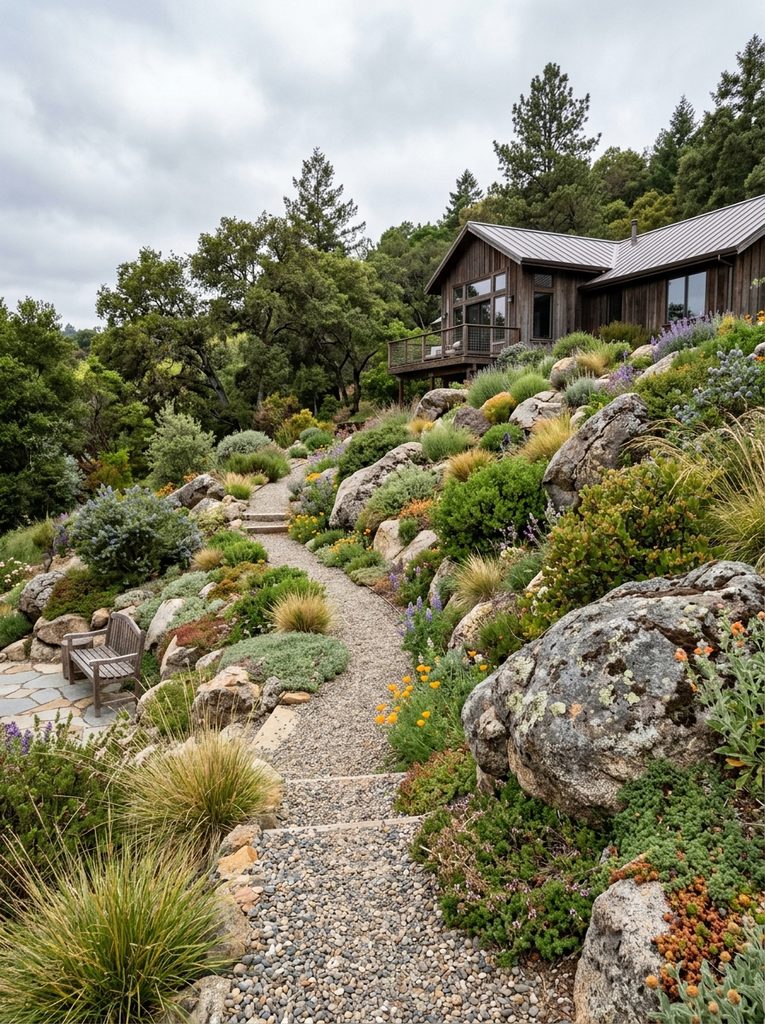
For a more natural landscape, work with the slope instead of trying to make it look perfectly formal. Large rocks and boulders can visually anchor planting while creating a rugged, established feeling.
This style suits rustic, woodland, mountain, and naturalistic gardens particularly well. It can also reduce the need for large expanses of lawn on difficult terrain.
The goal is not to scatter rocks randomly. Their placement should feel intentional, with different sizes and partial burial helping them appear integrated into the landscape.
How to Get the Look
- Use several boulder sizes rather than identical stones.
- Partially embed larger rocks for a natural appearance.
- Surround stones with compatible plants.
- Use gravel in selected areas.
- Create a simple route through the planting.
Styling Tips
- Keep the palette restrained.
- Repeat stone tones elsewhere in the yard.
- Allow some plants to soften the edges of larger boulders.
8. Timber Retaining Tiers
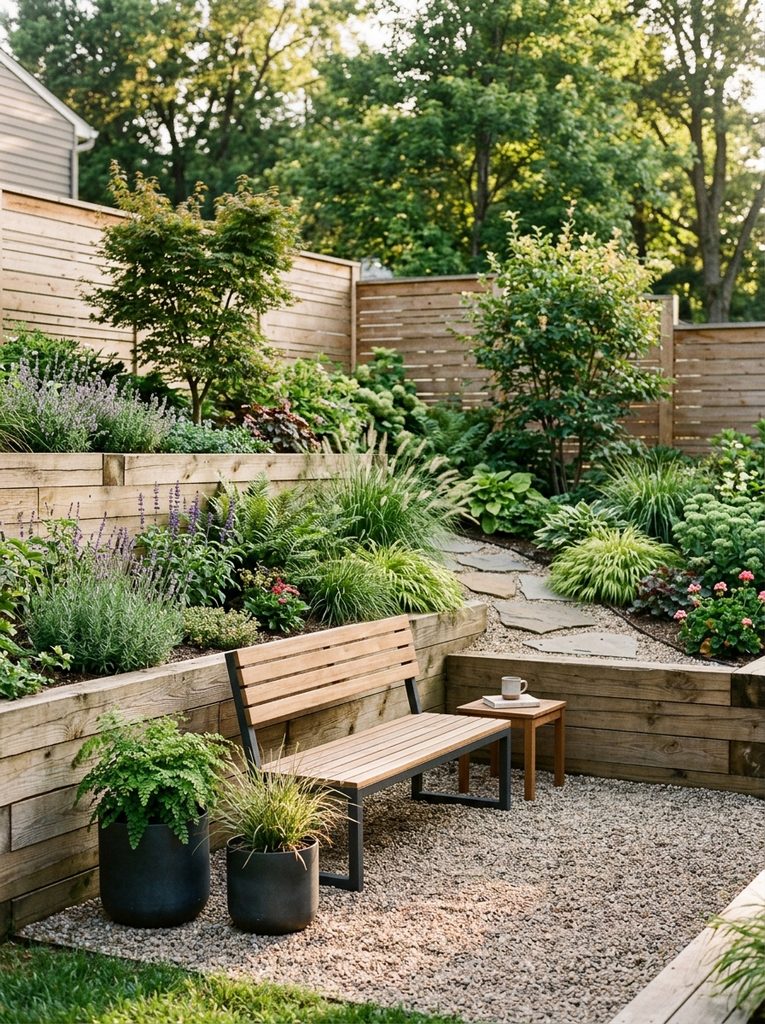
Timber can give a sloped garden a warmer and more casual character than masonry. Horizontal boards or landscape timbers can emphasize the natural direction of the landscape while creating defined planting levels.
The look works particularly well with modern rustic, cottage, and relaxed contemporary gardens. Because outdoor timber is exposed to moisture and weather, material suitability and installation details matter.
Think of the retaining tiers as part of the garden composition rather than simply a barrier between soil levels.
How to Get the Look
- Choose outdoor-rated materials appropriate to the climate.
- Repeat the timber tone in benches or garden structures.
- Keep planting informal around the edges.
- Use gravel or mulch between planting groups.
- Include suitable drainage behind structural retaining elements.
Styling Tips
- Avoid too many different wood tones.
- Soften straight timber lines with rounded shrubs.
- Use dark planters for a more contemporary contrast.
9. Fire Pit Terrace
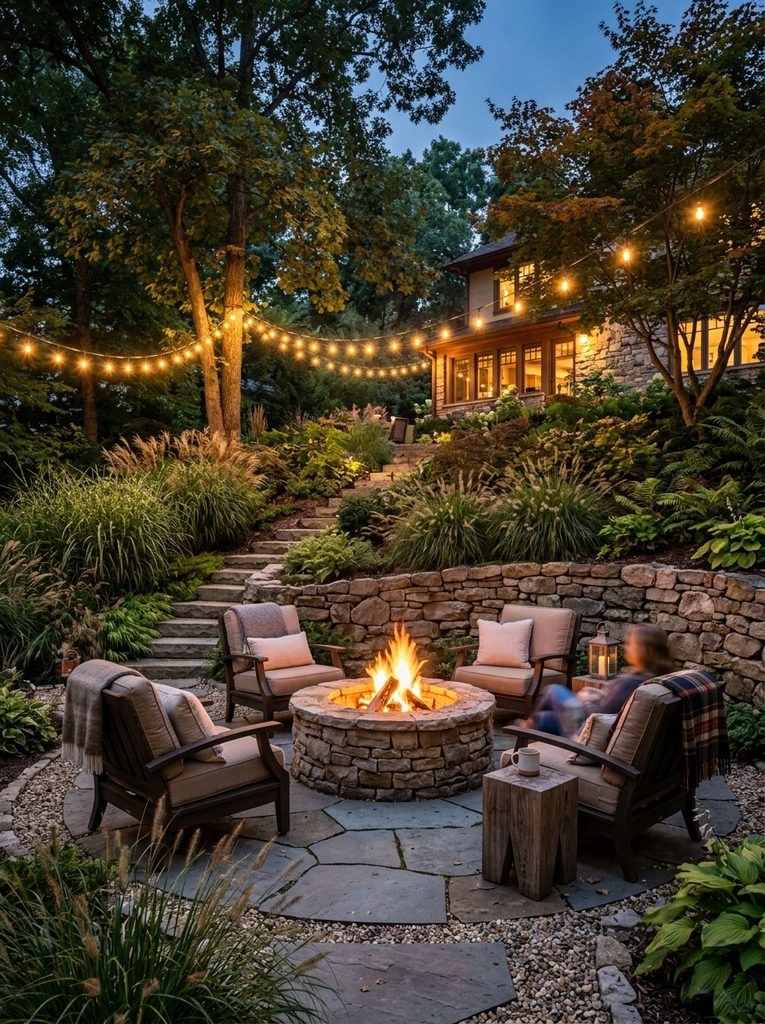
A lower terrace can become a memorable destination when it is designed around one clear activity. A fire pit is an appealing option because seating can naturally face inward while the surrounding slope provides a sense of enclosure.
Keep the design practical and check local fire regulations before installing any permanent feature. Outdoor seating should also have enough circulation space so guests are not constantly navigating around furniture.
How to Get the Look
- Create a stable, level surface for the seating zone.
- Use weather-resistant chairs or built-in seating.
- Choose suitable noncombustible surfaces around the fire feature.
- Add low landscape lighting.
- Plant the surrounding slope with resilient greenery.
Styling Tips
- Keep the furniture arrangement conversational.
- Use outdoor cushions in warm neutral tones.
- Avoid placing combustible decorations too close to the fire feature.
10. Outdoor Stair Garden
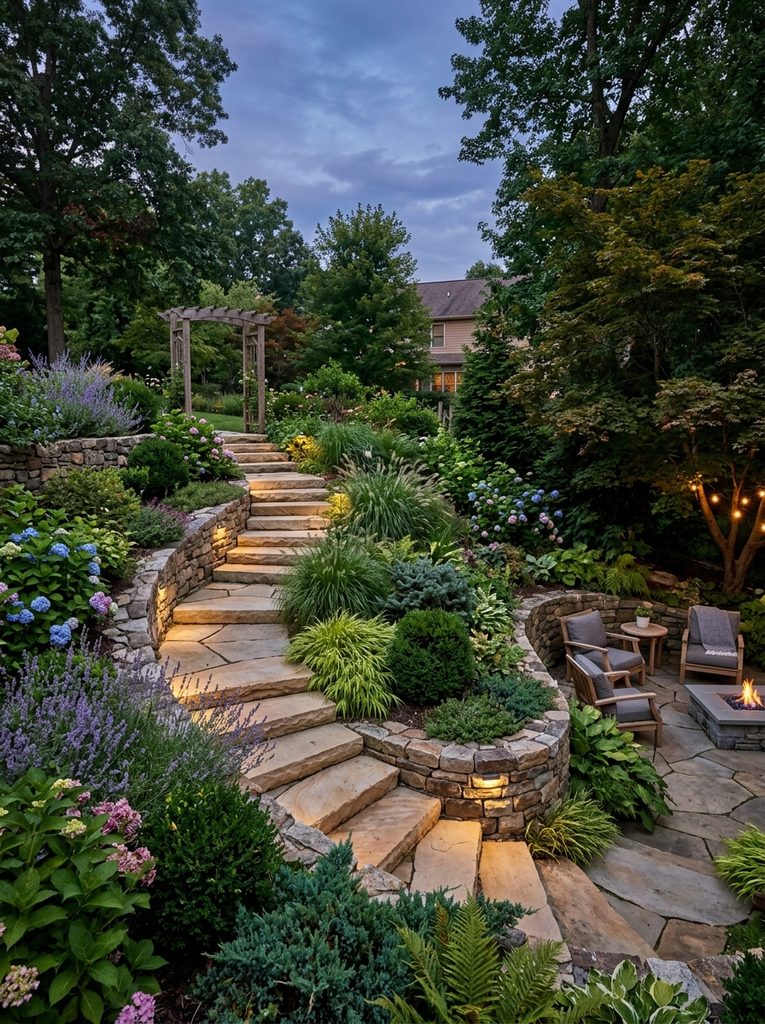
Stairs do more than solve a change in elevation. When thoughtfully integrated, they can become one of the strongest visual features in a hillside garden.
Wide steps framed by planting can make the transition feel graceful, while smaller landings provide natural pauses. The exact configuration should respond to the site’s grade and local safety requirements rather than following an arbitrary visual formula.
Lighting is particularly helpful because changes in elevation should remain easy to see after sunset.
How to Get the Look
- Choose durable outdoor stair materials.
- Include appropriate handrails where required.
- Add planting beside, rather than directly across, walking surfaces.
- Create landings where the slope demands them.
- Use subtle step or pathway lighting.
Styling Tips
- Repeat the stair material elsewhere.
- Keep plants low near the walking line.
- Use contrasting edge materials where visibility needs improvement.
11. Gravel Terrace Retreat
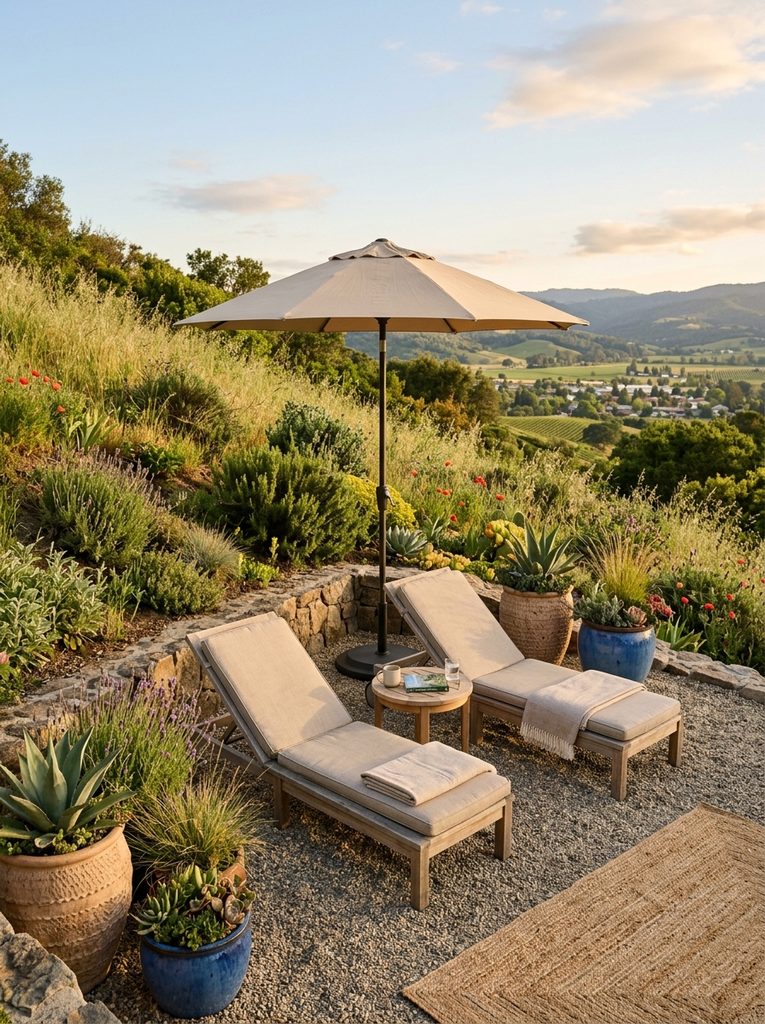
A gravel terrace can provide a simpler alternative to a fully paved outdoor room. It has a relaxed character and works particularly well for small seating areas where you want a destination without creating a visually heavy structure.
The surrounding planting can remain relatively informal, helping the terrace blend into the slope. Choose the aggregate carefully and make sure the base and edging are suitable for the intended use.
How to Get the Look
- Create a properly prepared, stable base.
- Use appropriate landscape edging.
- Choose gravel that is comfortable and practical for the space.
- Add compact outdoor furniture.
- Frame the terrace with planting.
Styling Tips
- Keep furniture lightweight enough to reposition when needed.
- Use larger planters as visual anchors.
- Avoid mixing too many gravel colors.
Choosing the Right Approach for Your Slope
The best direction depends on what the yard needs to accomplish. A family that wants outdoor entertaining may benefit from a patio or deck, while a gardening enthusiast may prefer several planted terraces. A smaller slope may only need thoughtful planting and a pathway.
| Yard Goal | Design Direction | Main Benefit |
|---|---|---|
| Create usable levels | Terraces | Separates the slope into purposeful zones |
| Add outdoor living | Patio or deck | Creates a stable furniture area |
| Emphasize natural character | Boulders and planting | Blends the slope into the landscape |
| Improve movement | Steps or curved path | Makes elevation changes easier to navigate |
| Reduce lawn maintenance | Planted hillside | Uses the existing grade creatively |
| Create a gathering spot | Fire pit or dining terrace | Gives the yard a clear destination |
Before building walls, stairs, decks, or major terraces, check local regulations and site conditions. Retaining structures need appropriate foundations and drainage, and taller or structurally significant walls may require professional engineering or permits depending on location. Drainage is especially important because poorly managed water can contribute to erosion and place pressure on retaining structures.
A Few Practical Mistakes to Avoid
Trying to flatten everything.
A slope can provide natural character and different levels. Flattening the entire yard may create unnecessary excavation and construction.
Ignoring water movement.
Watch where rainwater naturally travels before deciding where to put patios, planting beds, or retaining structures.
Using one plant everywhere.
Repeated planting creates cohesion, but mixing heights, textures, and seasonal interest keeps the landscape from feeling monotonous.
Making paths too complicated.
A pathway should make the yard easier to use, not turn every few feet into another obstacle.
Choosing materials in isolation.
Stone, timber, brick, paving, fencing, and the home’s exterior should feel connected rather than randomly assembled.
Forgetting maintenance access.
Even beautiful hillside planting needs pruning, watering, cleaning, or seasonal care. Leave practical routes wherever maintenance will be required.
Conclusion
A sloped yard does not have to feel like wasted outdoor space. With the right layout, the change in elevation can create terraces, garden rooms, pathways, planting layers, and cozy destinations that would be difficult to achieve on completely flat ground.
The most successful backyard design ideas balance beauty with stability, drainage, comfortable movement, maintenance, and the way you actually use the space. Start by studying the slope, sunlight, water flow, and views, then choose one area to transform first.
Save this article to Pinterest so you can return to your favorite ideas when planning your outdoor space. Whether you choose a simple planted hillside or a complete terraced retreat, one thoughtful change can make the whole yard feel more intentional.

Indy Santos is a passionate interior styling specialist and home living enthusiast with a focus on contemporary decor, smart space planning, and affordable design inspiration. At Inspired Homex, she provides readers with fresh decorating concepts, actionable advice, and professional guidance to create comfortable, elegant, and well-organized homes that reflect their personal style.