
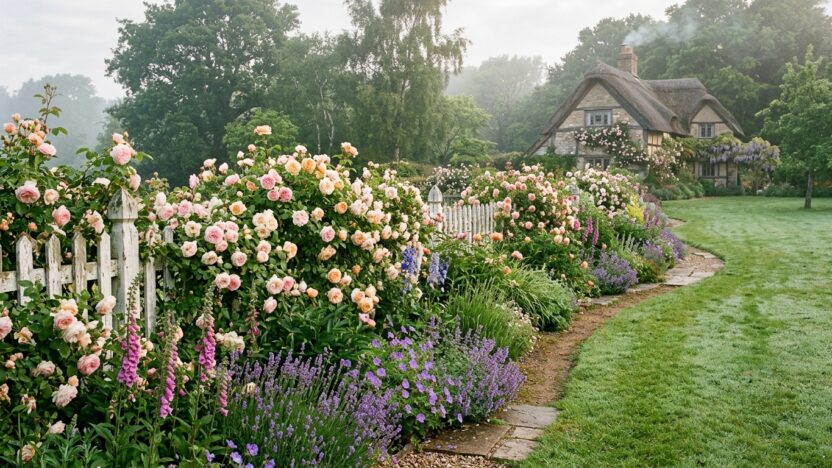
A cottage rose border can turn an ordinary garden edge into a dreamy ribbon of scent, color, and softly tumbling blooms that feels pulled straight from a storybook. The real challenge is balance: choosing heights, bloom times, and companion plants so the border looks lush and effortless rather than crowded or chaotic. By pairing structural elements like fences, walls, and clipped hedges with the loose, romantic habit of old-fashioned roses, you can reach that beloved English-country look in almost any yard. The payoff is a garden that greets you with fragrance, hums with bees, and keeps you lingering outside long after your coffee has gone cold. This guide explores various ways to use cottage rose borders to enhance your garden effectively.
1. Picket Fence Cottage Rose Border
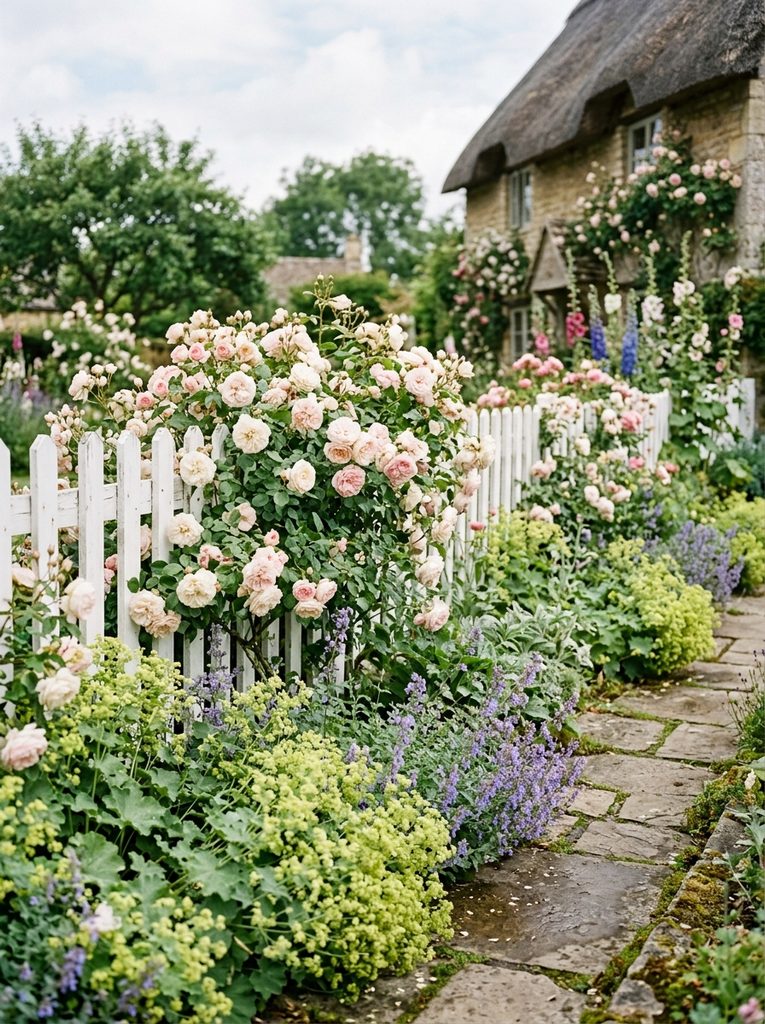
Could anything say “home” more sweetly than roses leaning over a white picket fence? Plant repeating shrub roses in blush and cream tones a little in front of the pickets, then soften the ground level with catmint and lady’s mantle. The crisp paint against ruffled petals, still damp with morning dew, is a contrast that never gets old. You should leave about 18 to 24 inches between fence and rose stems so air can circulate and you can still repaint the pickets. The result is a nostalgic, welcoming border that feels lived in and loved.
2. Lavender-Edged Pathway Roses
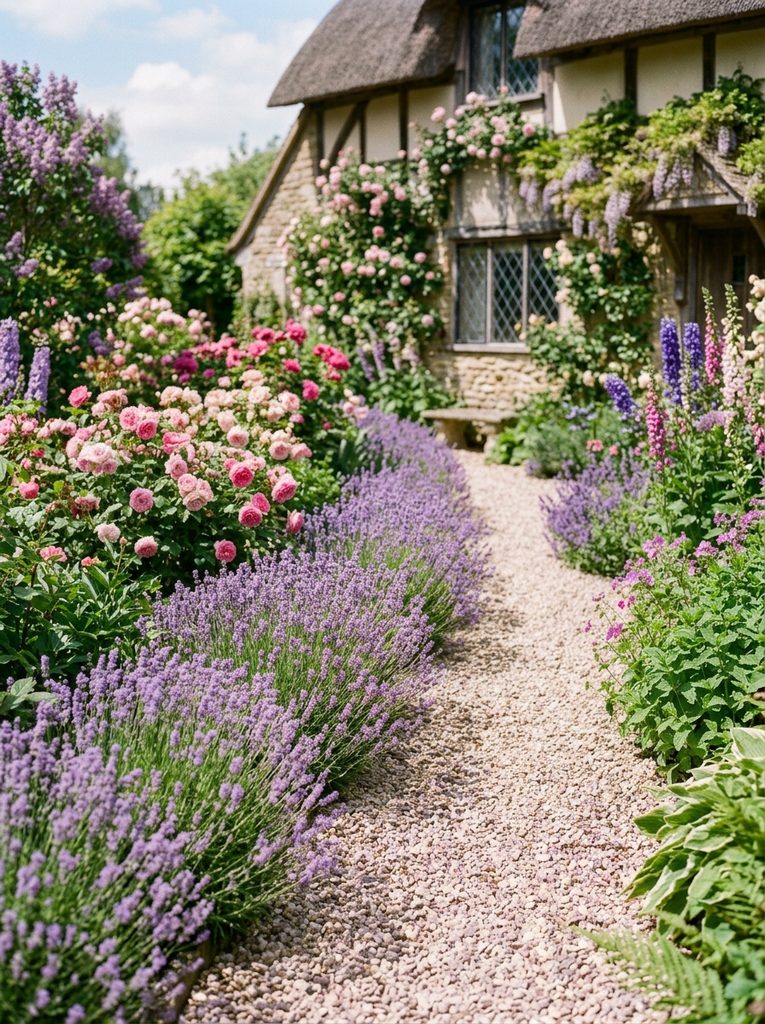
Imagine brushing past lavender and releasing a cloud of calming scent with every step. Run a low lavender line along the path edge and set your roses one row back, so the purple spikes frame the pink blooms like a ruffled border on a skirt. Bees will treat this pairing like a five-star buffet all summer. Choose a spot with full sun and sharp drainage, and mix a little grit into the soil for the lavender’s sake. Trim the lavender lightly after flowering to keep it neat and the whole walk feeling serene.
3. Pastel English Shrub Drift
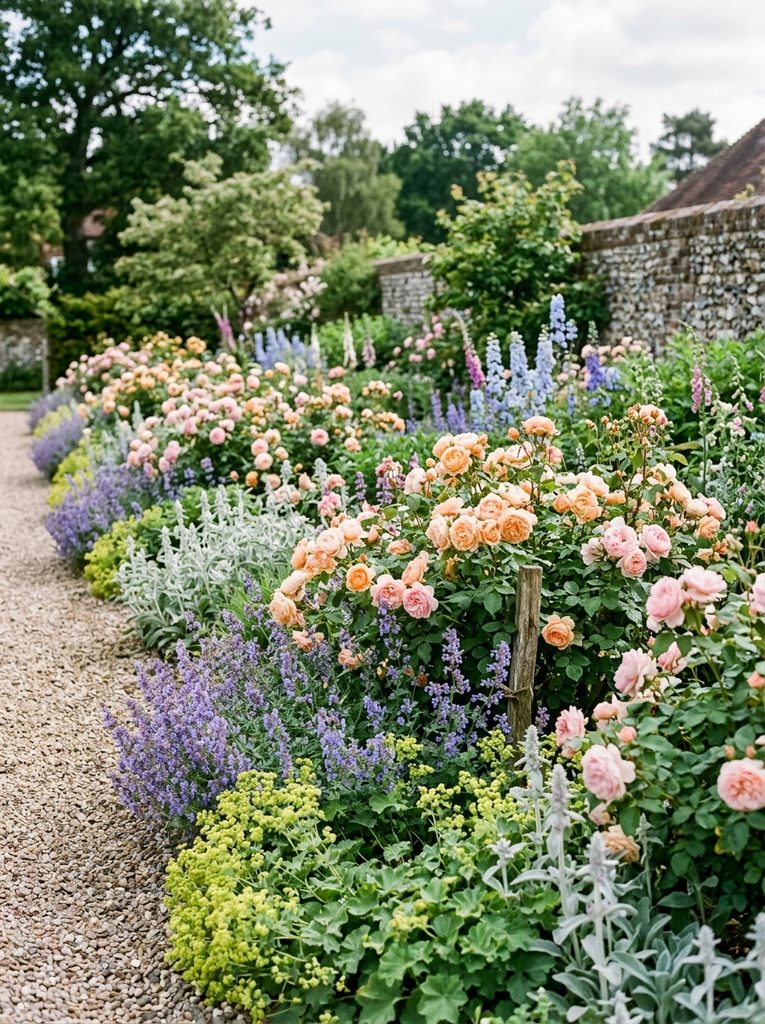
What if your border felt like one continuous watercolor wash? Instead of dotting single roses here and there, plant the same variety in groups so each color flows into the next, from peach to apricot to shell pink. Echo those tones with drifts of soft-blue nepeta, and the whole planting will look painted rather than planted. Plant in odd numbers, such as three or five, and space each rose at its mature width so the drifts knit together without crowding. It is a gentle, harmonious look that soothes the eye.
4. Stone Wall Rose Cascade
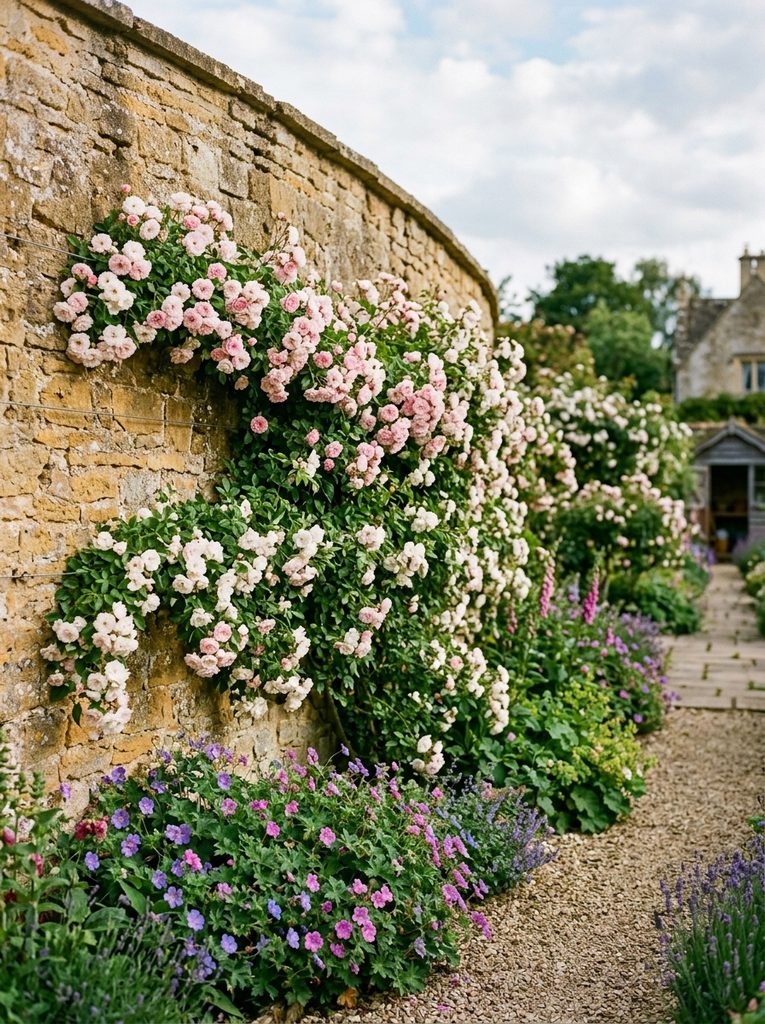
Weathered stone and rambling roses are natural partners, each making the other look more beautiful. Fix horizontal wires to the wall about a foot apart and tie the canes along them, since sideways stems produce flowers along their entire length. Underplant with hardy geraniums to hide bare rose ankles and keep the base blooming. Set roses 12 to 18 inches from the wall, because soil right against masonry tends to be dry. In warm evening light the stone glows, and the whole scene feels timeless.
5. Foxglove and Delphinium Backdrop
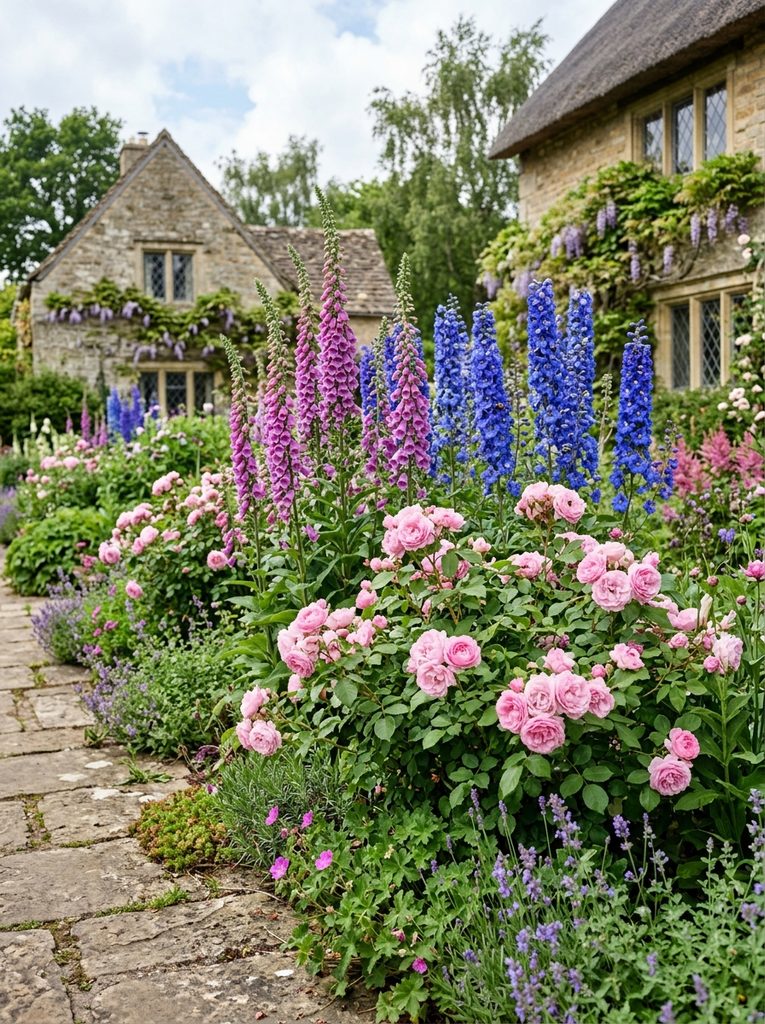
Want your roses to look even more romantic? Give them a backdrop of tall spires. Set foxgloves and delphiniums at the back of the bed so their vertical lines contrast beautifully with the round, ruffled roses in front, like a theater set with the tallest actors in the back row. Stake delphiniums early, before wind gets a chance to flatten them. Consider that foxgloves are toxic if eaten, so think twice before planting them where small children or curious pets play. The layered depth makes the border feel full and enchanted.
6. Clipped Boxwood Rose Frame
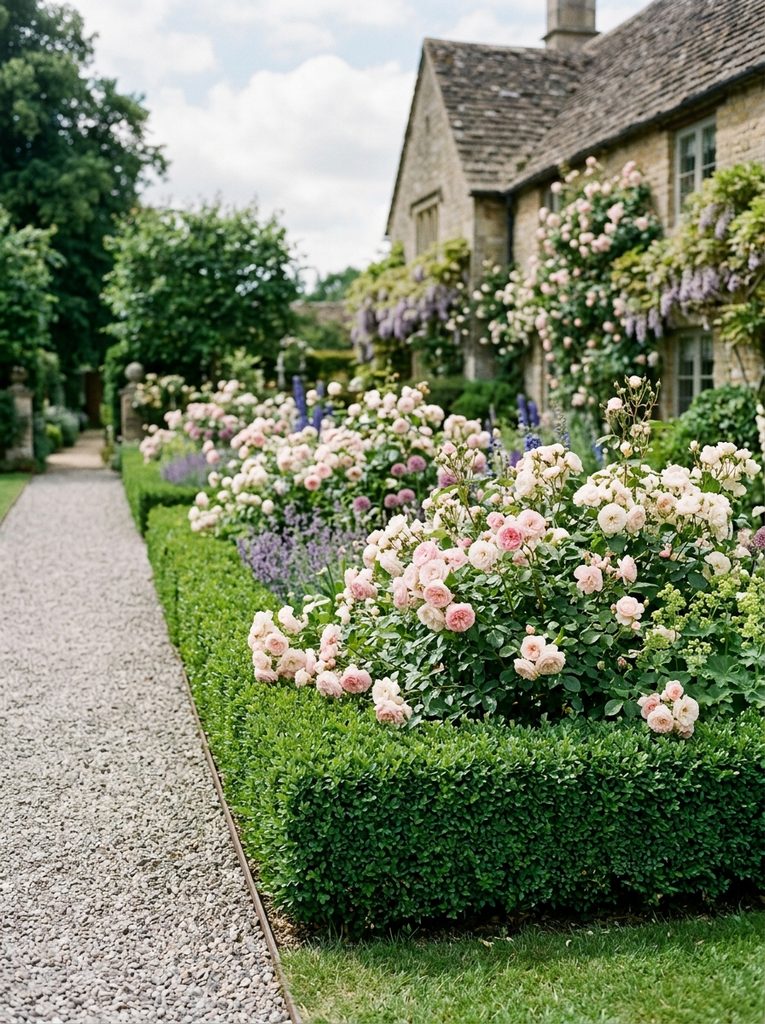
Order and romance make surprisingly good partners. A low, clipped hedge along the front of the bed gives you a crisp green frame, while the roses behind it are allowed to spill over the top in a graceful tumble. Even in winter, when the roses are bare, the hedge keeps the border looking intentional. Clip in late spring and again in midsummer for sharp lines. If boxwood blight is a concern in your area, ask a local nursery about dwarf yew or holly alternatives. The overall feeling is refined but never stiff.
7. Wild Meadow Rose Border
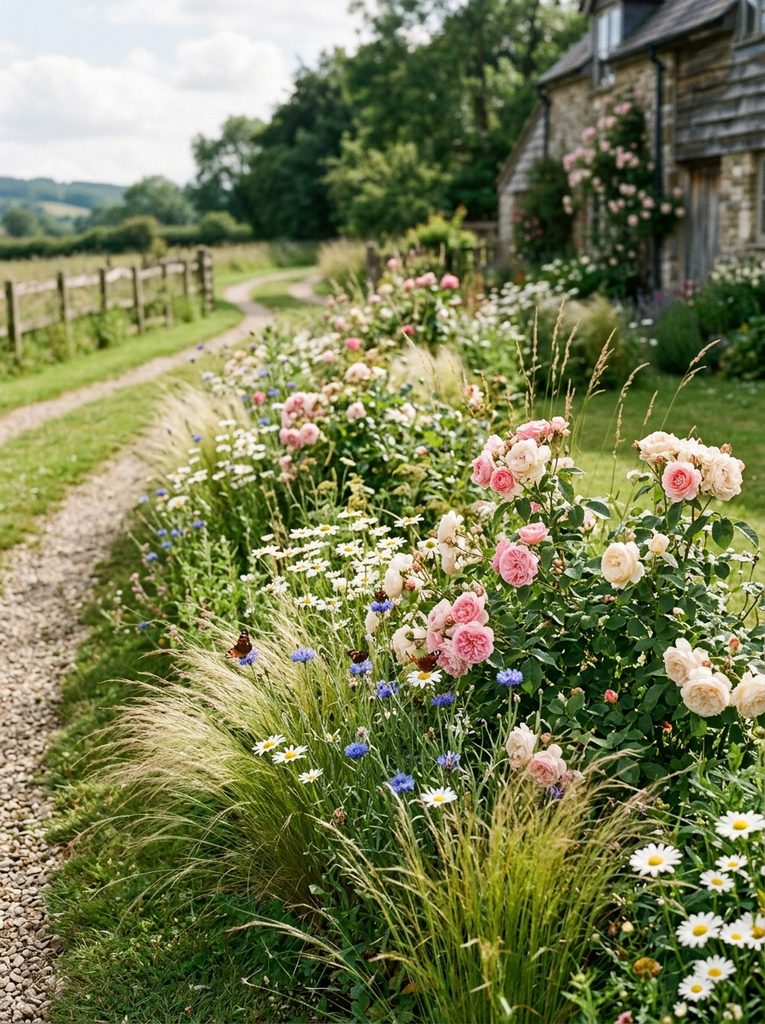
Who says a border needs tidy edges? Scatter roses through a loose tapestry of ornamental grasses, ox-eye daisies, and cornflowers, and let a few self-seeders wander where they please. The grasses whisper in the breeze, and butterflies drift from bloom to bloom. Pick disease-resistant roses for this look, since dense planting reduces airflow. Cut the grasses back in late winter and thin any self-seeders that get too enthusiastic. It is a free-spirited, sun-warmed style that makes the whole garden feel a little wild in the best way.
8. Moonlit White Cottage Rose Border
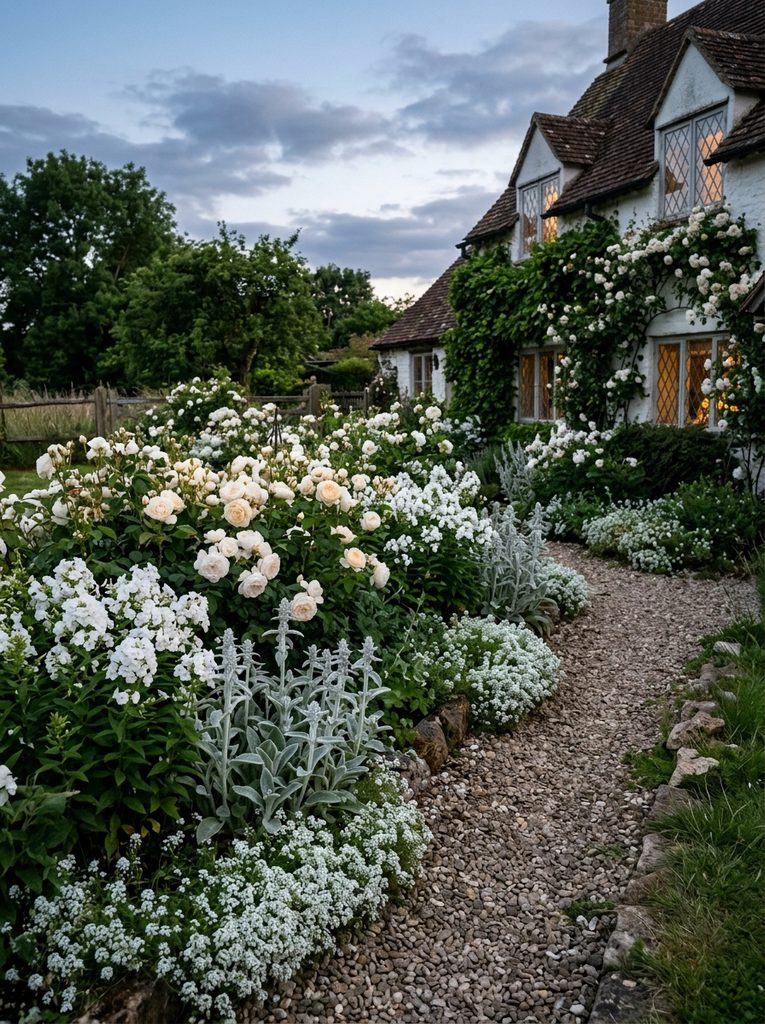
White roses seem to glow as dusk settles, catching the last light long after other colors fade. Combine white and cream roses with silver foliage like lamb’s ear and artemisia, then add white phlox and sweet alyssum for fragrance. Place this border near a patio or window so you can enjoy it from indoors on summer evenings. Deadhead faithfully, because browning white petals show up quickly, and consider a few solar path lights for after-dark shimmer. The mood is serene, elegant, and quietly magical.
9. Doorstep Rose Welcome Border
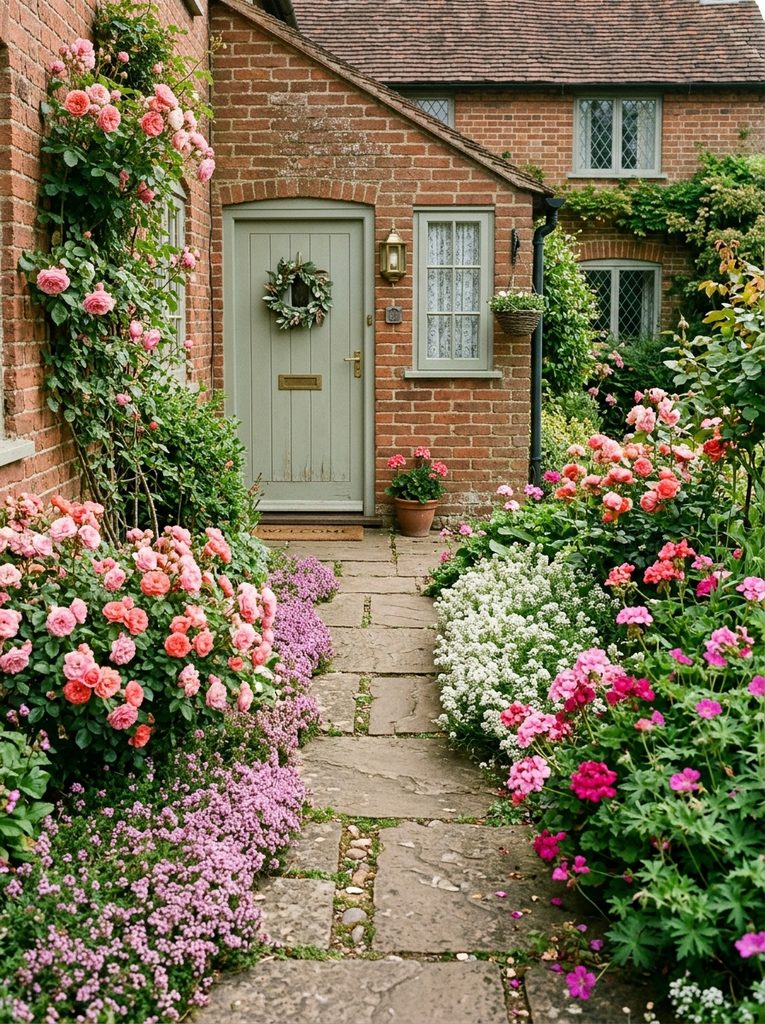
Why not let your roses greet visitors before you do? A narrow border along the front walk, filled with compact, repeat-flowering, fragrant roses, gives every arrival a scented hello. Weave in creeping thyme, alyssum, and low geraniums for a tidy, layered edge. Keep the thorniest varieties at the back and set the roses at least a foot from the walkway so sleeves and shopping bags stay safe. The effect is warm, hospitable, and full of curb appeal.
10. Velvet Burgundy Rose Drama
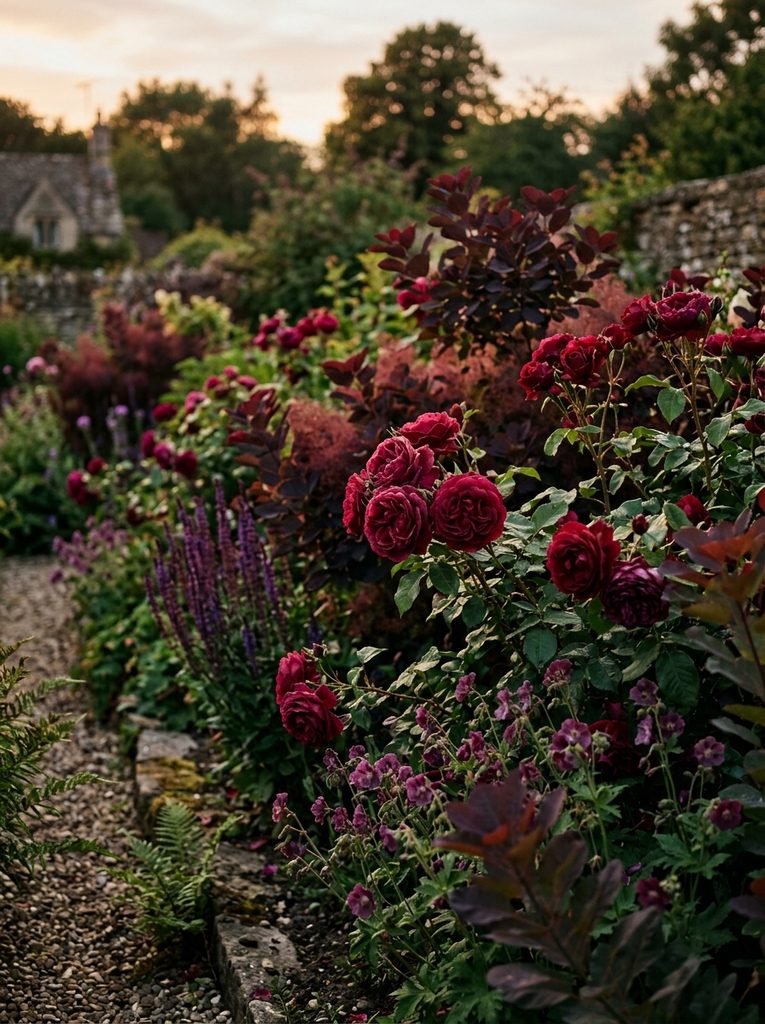
Deep crimson and wine-red roses bring a moody glamour that pastels can’t match. Pair them with purple-leaved smoke bush, plum salvia, and dusky cranesbill so the whole border reads as rich and velvety. Their petals look almost lit from within at sunset. Consider a spot with some afternoon shade in hot climates, since very dark blooms can scorch or fade in intense sun. The mood is intimate, dramatic, and a little bit mysterious.
11. Terracotta Pot Rose Border
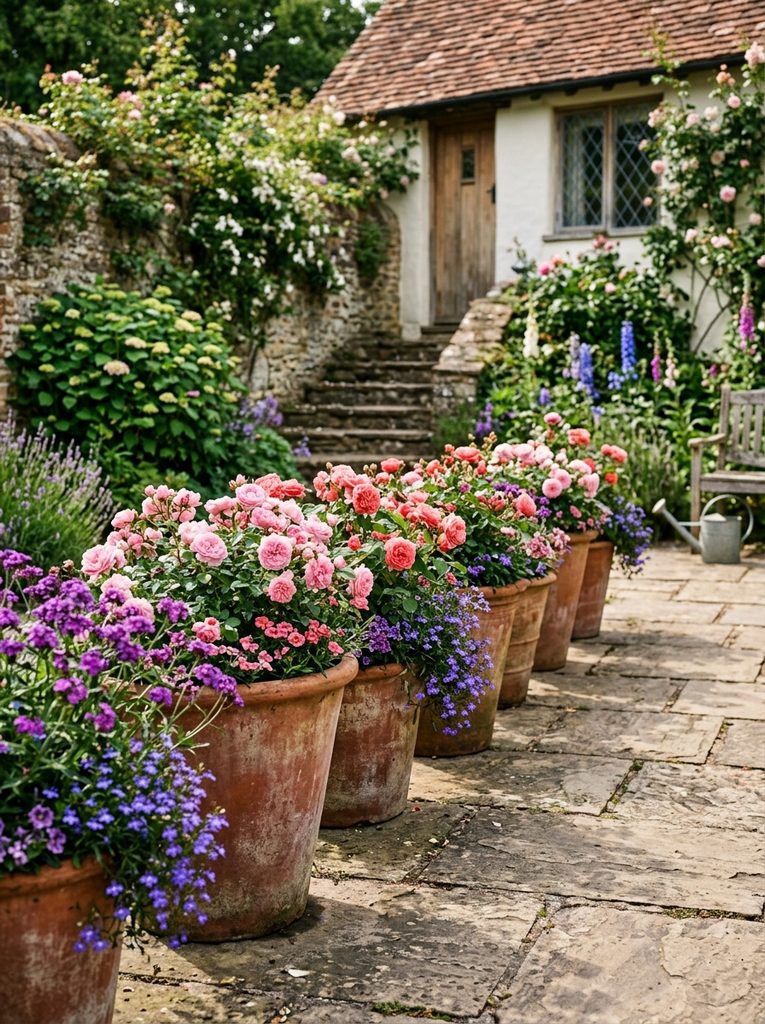
No soil, no problem? A row of large terracotta pots along a patio edge or up a set of steps creates a movable rose border in even the smallest space. Fill each pot with a compact rose and tuck trailing verbena or lobelia around the rim for a spilling, cottage-style finish. Choose pots at least 16 to 18 inches wide with drainage holes, and expect to water and feed more often than you would in a bed. Cozy, flexible, and easy to rearrange, this is a border you can take with you.
12. Herb and Rose Kitchen Border
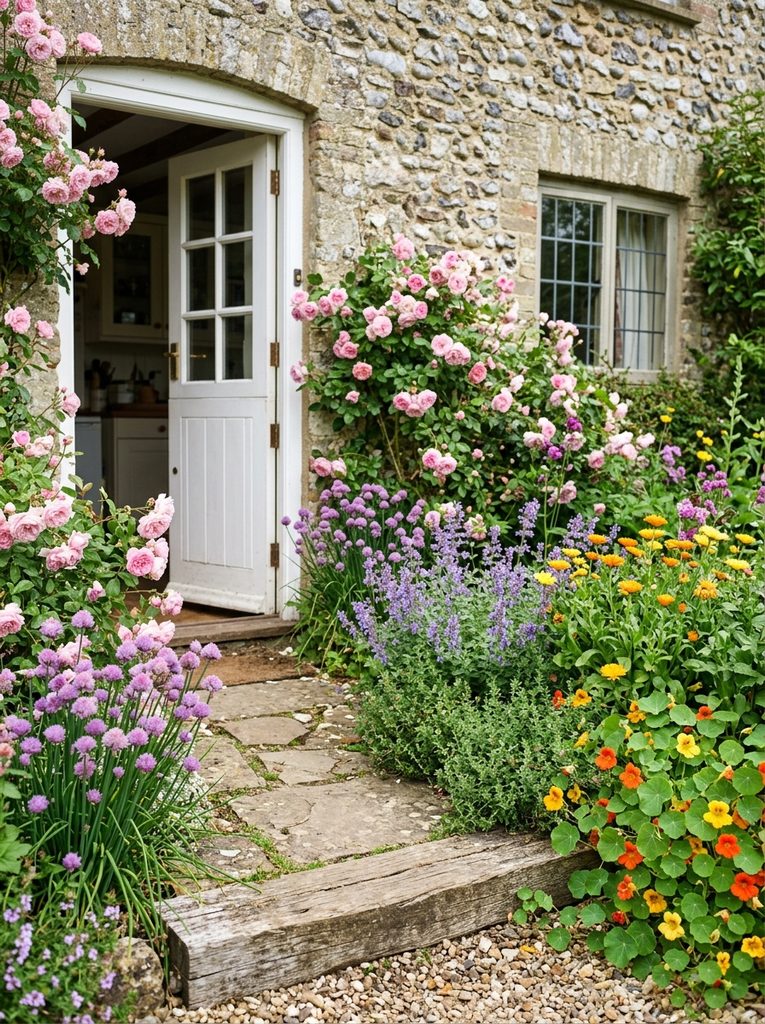
A border can be beautiful and useful at the same time. Plant roses alongside chives, thyme, sage, calendula, and nasturtiums near the kitchen door, so a handful of herbs is always a step away. Herbs like thyme and sage prefer leaner, gritty soil, so put them at the sunny front edge and give the roses the richer soil behind. Avoid chemical sprays here, and eat rose petals only if you are certain they have never been treated. The border feels homely, generous, and wonderfully fragrant.
13. Arch and Trellis Rose Rhythm
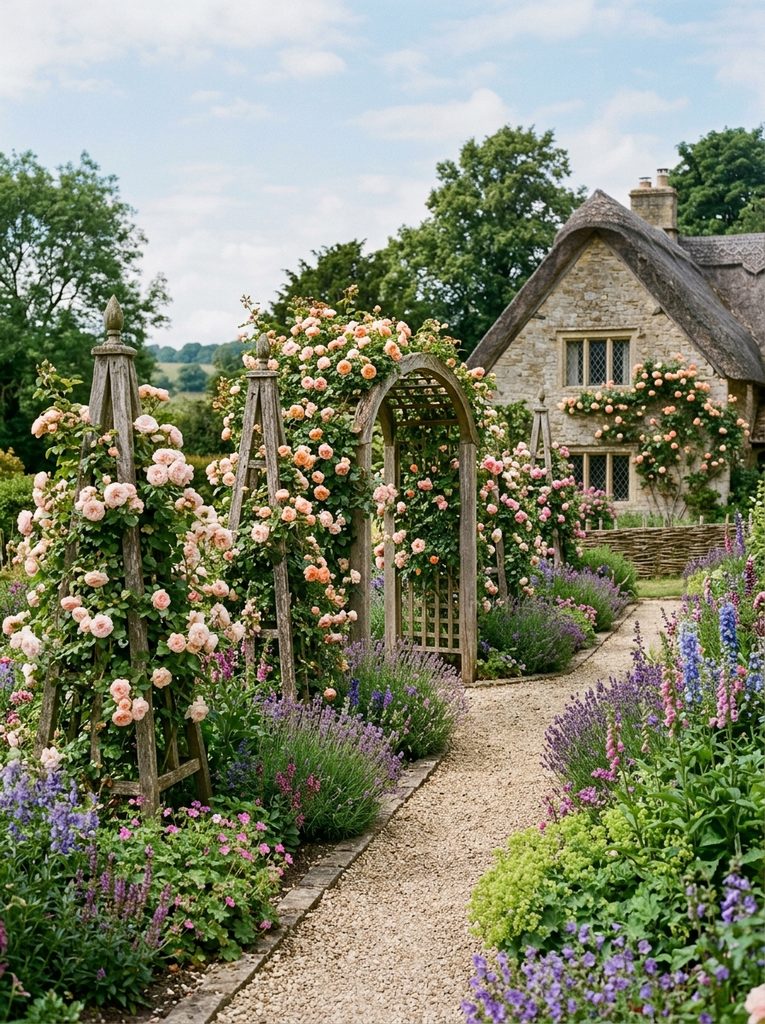
How do you add height without adding heaviness? Place wooden obelisks or slim trellises every six to eight feet through the border and train climbing roses up each one, creating a rhythm your eye can follow. Lower perennials fill the spaces between, keeping the whole planting airy. Sink posts at least 18 to 24 inches into the ground so they stay firm through summer storms, and guide stems outward and downward for more flowers. The look is playful, vertical, and straight out of a fairy tale.
14. Budget Bare-Root Rose Border
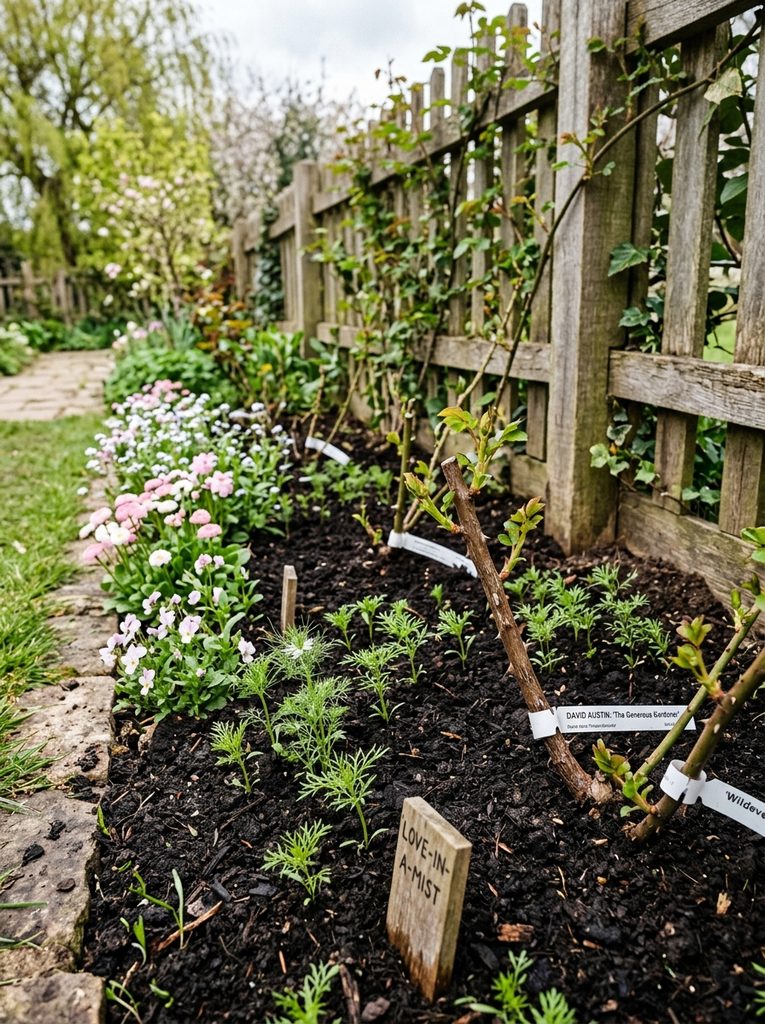
Big romance doesn’t require a big budget. Bare-root roses, sold dormant in late winter or early spring, usually cost less than potted ones, and they establish well. Fill the gaps between them with annuals grown from seed, like cosmos and love-in-a-mist, so the border looks full while the roses mature. Soak the roots in water for a few hours before planting, then mulch generously. It takes patience, but watching bare sticks turn into a blooming border is deeply rewarding.
15. Year-Round Cottage Rose Border
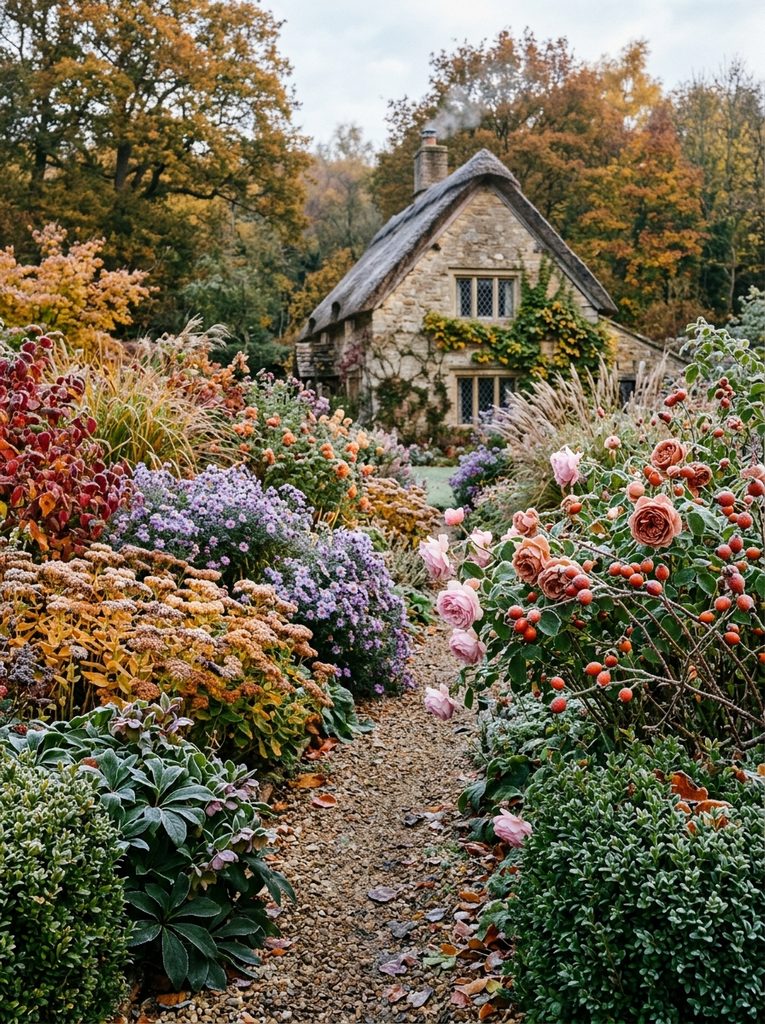
Can a rose border look good in January? It can, if you plan for every season. Layer spring bulbs, summer roses, and autumn asters and sedum, then add evergreen hellebores and let a few late roses form bright hips for winter color. Skip deadheading in the last weeks of fall so hips can develop, and do your main pruning in late winter or early spring. The border keeps telling a story, and there is always something worth stepping outside to see.
Quick Tips for Getting This Right
- Give roses sun: Aim for at least six hours of direct light a day for strong growth and better flowering.
- Prep the soil: Dig in compost before planting, and add a two- to three-inch layer of mulch each spring to hold moisture and suppress weeds.
- Mind the spacing: Check each plant’s mature width, and leave enough room for airflow to reduce mildew and black spot.
- Choose tough roses: Look for repeat-flowering, disease-resistant varieties recommended by nurseries in your area.
- Time your planting: Set bare-root roses in while dormant, and plant container roses in spring or early fall, watering deeply after planting.
Frequently Asked Questions
What is a cottage rose border?
A cottage rose border is a relaxed, layered garden edge where fragrant roses grow alongside perennials, herbs, and self-seeding flowers. Instead of rigid rows, plants mingle in soft drifts, spilling over paths and fences. The result feels abundant, romantic, and slightly wild, much like traditional English cottage gardens.
Which roses are best for a cottage border?
Look for repeat-flowering shrub roses, old-fashioned garden roses, and compact climbers with strong fragrance and good disease resistance. Soft pinks, creams, peaches, and apricots feel classic, while a few deep reds add drama. Ask your local nursery which varieties thrive in your climate, since performance varies from region to region.
How far apart should I plant roses in a border?
Spacing depends on the variety’s mature width, so check the plant tag first. Compact shrub roses usually need about two to three feet, while larger shrub roses may need four feet or more. Good airflow lowers the risk of mildew and black spot, and leaving room lets each rose develop its natural shape.
What plants look good with roses in a border?
Catmint, lavender, hardy geraniums, foxgloves, delphiniums, alliums, and lady’s mantle all pair beautifully with roses. They soften bare rose stems, extend the bloom season, and attract pollinators. Choose companions with similar sun and watering needs so nothing competes too aggressively for space or moisture.
When is the best time to plant a rose border?
Plant bare-root roses while they are dormant, usually late winter to early spring, or in late autumn in mild climates. Container roses can go in during spring or early fall when soil is workable and temperatures are moderate. Water deeply after planting, and add mulch to protect roots.
Conclusion
A cottage rose border is one of the most rewarding ways to express your personal style, blending scent, color, and a little storybook charm into your everyday view. Whether you love the crisp lines of a clipped hedge or the free-spirited sway of a meadow planting, both approaches work beautifully with roses. The ideas here adapt to fences, walls, patios, and pots, and they can be built slowly on almost any budget. Over the years, a thriving border adds curb appeal, attracts pollinators, and gives you a place to slow down and breathe. Your dream garden is just a few roses away.

Indy Santos is a passionate interior styling specialist and home living enthusiast with a focus on contemporary decor, smart space planning, and affordable design inspiration. At Inspired Homex, she provides readers with fresh decorating concepts, actionable advice, and professional guidance to create comfortable, elegant, and well-organized homes that reflect their personal style.