

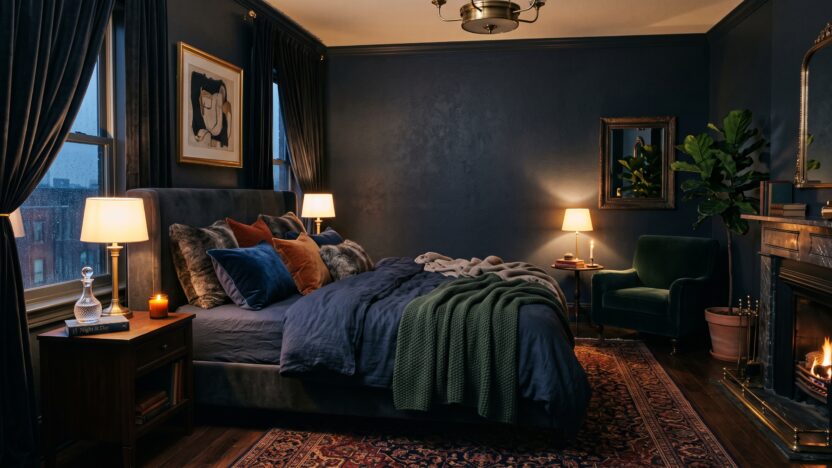
Introduction
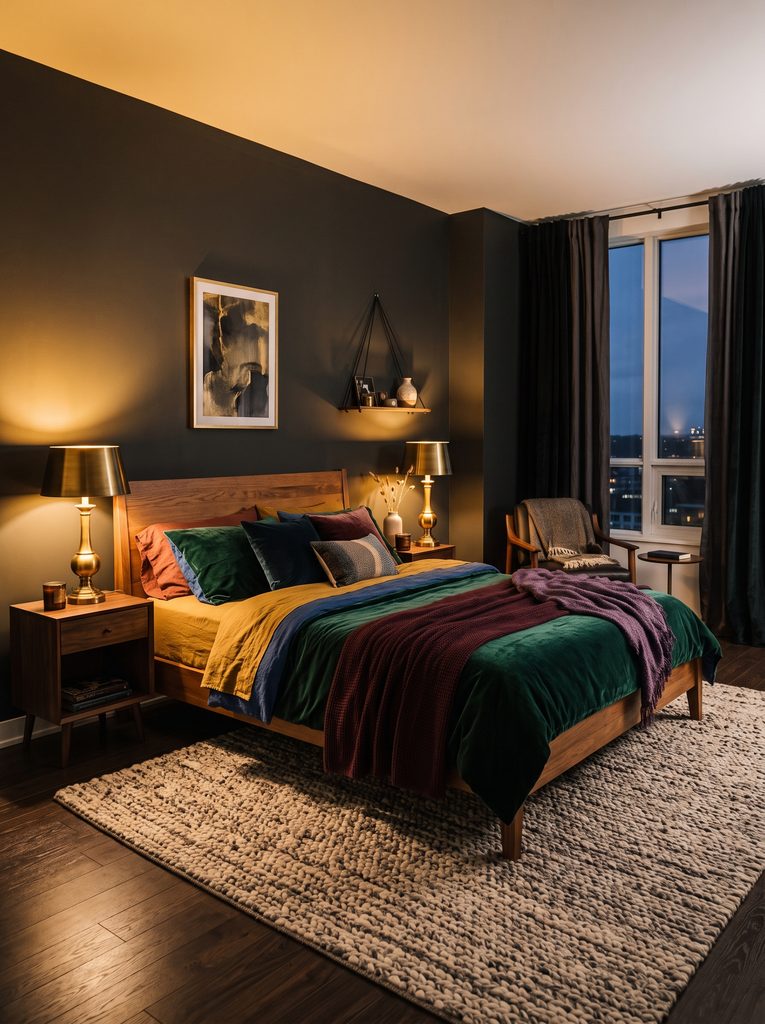
There’s a reason deep, saturated bedrooms photograph so beautifully at night, warm lamp light glowing against dark walls, layered textures catching every shadow. A moody bedroom trades bright and airy for rich and enveloping, creating a space that feels like a genuine retreat rather than just another room to sleep in.
This style intimidates a lot of people, mostly because dark colors have a reputation for making rooms feel smaller or heavier. Done thoughtfully, though, a moody bedroom can feel luxurious and calming rather than closed in. It comes down to balancing deep color with the right materials, texture, and lighting. This guide walks through exactly how to build that balance, step by step, so the final result feels rich and cozy rather than dark and flat.
What You’ll Need
Depending on the extent of your project, you may want to gather:
- Deep, saturated paint in charcoal, forest green, navy, or aubergine
- A quality paint roller and brush, plus painter’s tape
- Warm-toned bedding in velvet, linen, or a heavier weave
- Brass, bronze, or matte black hardware and light fixtures
- A mix of table lamps and a dimmable overhead fixture
- A textured area rug in a deep or warm neutral tone
- Layered curtains in a heavier fabric
- Artwork, mirrors, or decorative objects in warm metal finishes
- Optional: wallpaper, wood paneling, or a headboard upholstery kit
Only bring in what your specific room and budget actually require. A moody bedroom doesn’t need every item on this list to feel complete.
Step-by-Step Instructions
Step 1: Choose Your Deep Color Foundation
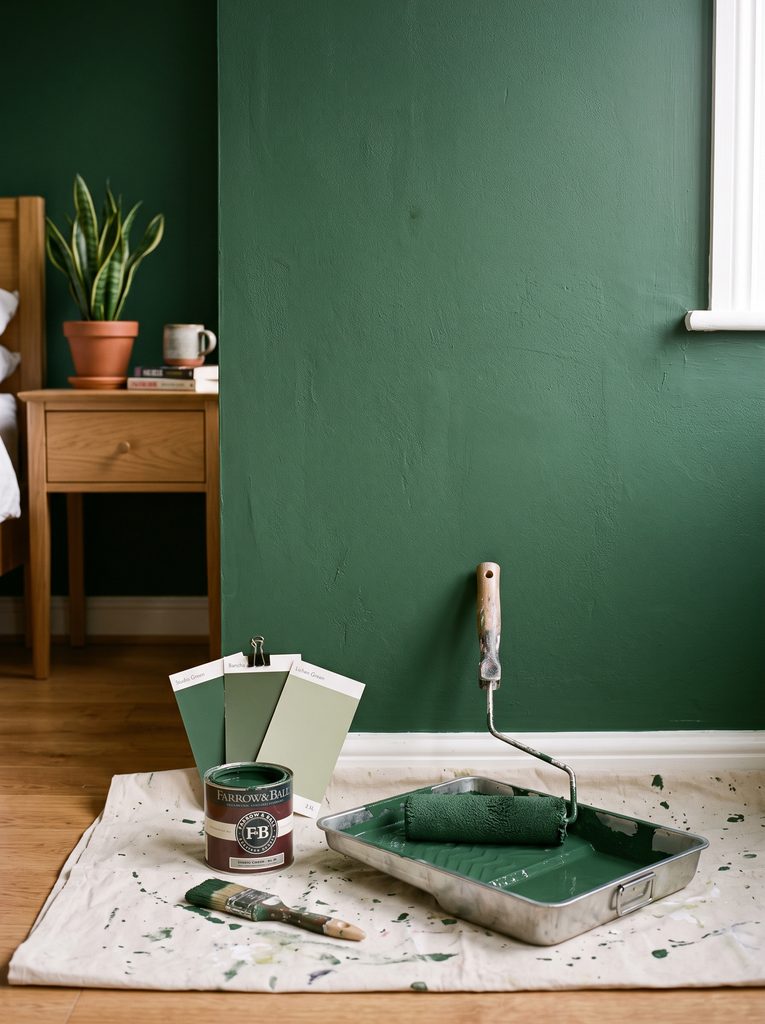
Start by selecting the dominant color for your walls, since this decision drives everything else in the room. Charcoal, deep forest green, navy, and aubergine are all popular choices because they read as rich rather than harsh, especially under warm lighting.
Test paint samples on your actual walls and observe them at different times of day, since a color that looks perfect in daylight can shift dramatically under evening lamp light. A helpful decorating trick is choosing a color with some warmth in its undertone, since a true cool-toned black or grey can feel more stark than cozy.
Step 2: Decide How Much of the Room to Commit to Color
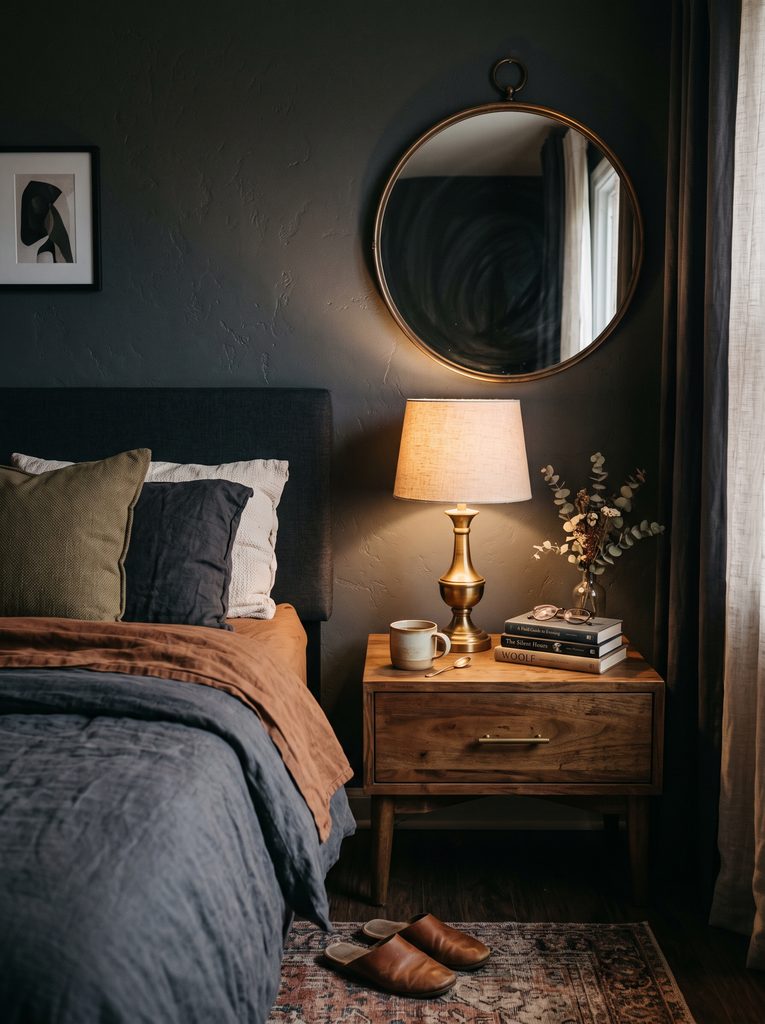
You don’t need to paint every wall to achieve a moody feel. A single accent wall behind the headboard, a fully painted room, or even just a deep-colored ceiling can all create the effect, depending on how bold you want the final look.
In smaller bedrooms, this approach can make the space feel more open, since keeping three walls lighter while committing to one dark wall avoids the fully enclosed feeling that some readers worry about with darker palettes.
Step 3: Layer in Warm Wood and Metal Tones
Once your wall color is settled, bring in warm materials to keep the room from feeling cold or flat. A wood bed frame, brass or bronze lighting fixtures, and warm metal picture frames all add richness that pairs naturally with deep wall colors.
Avoid pairing dark walls with cool-toned silver or chrome finishes, since this combination can feel sterile rather than luxe. A common mistake is sticking with whatever hardware or fixtures were already in the room, when a small swap to brass or matte black can meaningfully shift the mood.
Step 4: Build Your Bedding With Texture in Mind
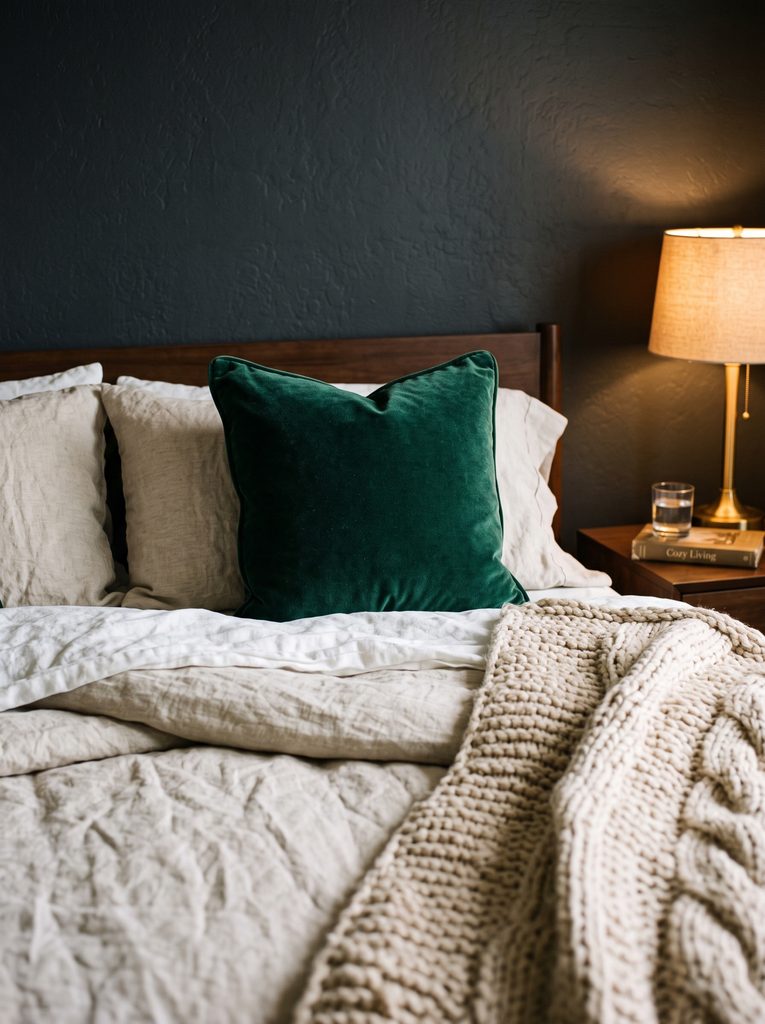
Bedding does a lot of the heavy lifting in a moody bedroom, since texture reads more clearly against dark walls than it does against light ones. Layer a heavier duvet or quilted coverlet with velvet or linen throw pillows, and add a knit or textured throw blanket at the foot of the bed.
Use at least three different textures, such as smooth linen sheets, a velvet pillow, and a chunky knit throw, to prevent the bedding from looking flat against the deep wall color. For a more balanced look, keep bedding in warm neutral or jewel tones rather than stark white, since bright white can feel visually jarring against darker walls.
Step 5: Add a Textured Rug
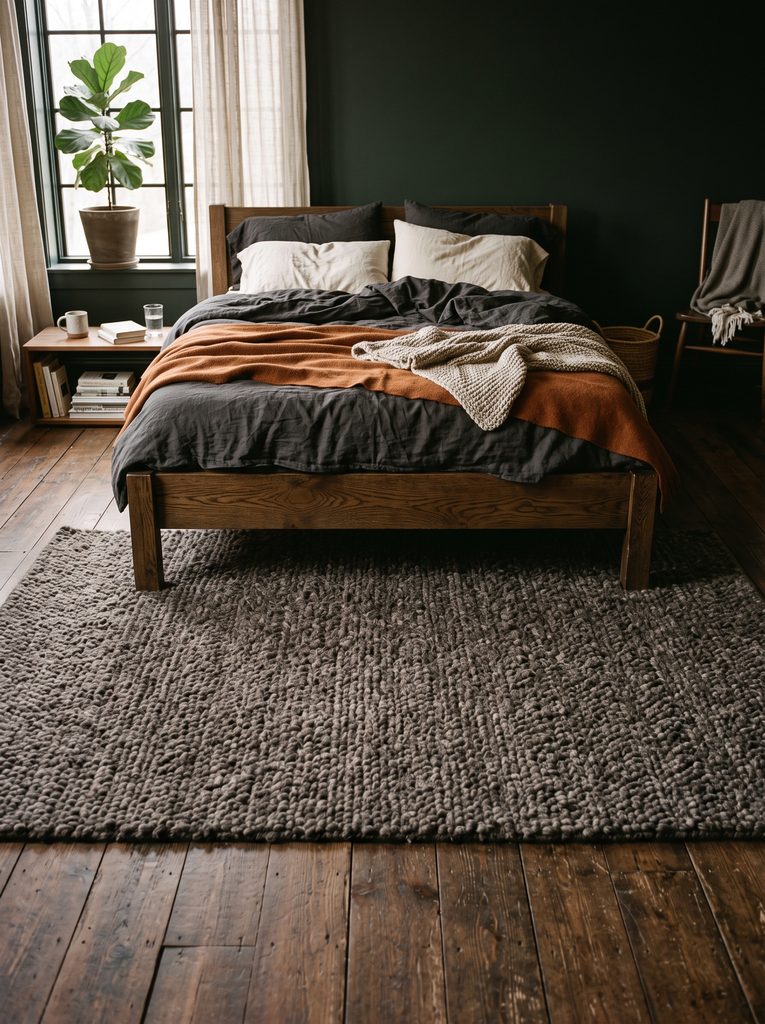
A rug adds warmth underfoot and helps ground the room visually, especially important in a space with darker walls where the floor can otherwise feel like an afterthought. Choose a deep neutral or richly colored rug with some texture, like a wool or textured weave, rather than a flat, low-pile option.
Size the rug so it extends a comfortable distance beyond the sides of the bed, since a rug that’s too small can make the whole room feel disconnected rather than cohesive.
Step 6: Layer Your Lighting Carefully
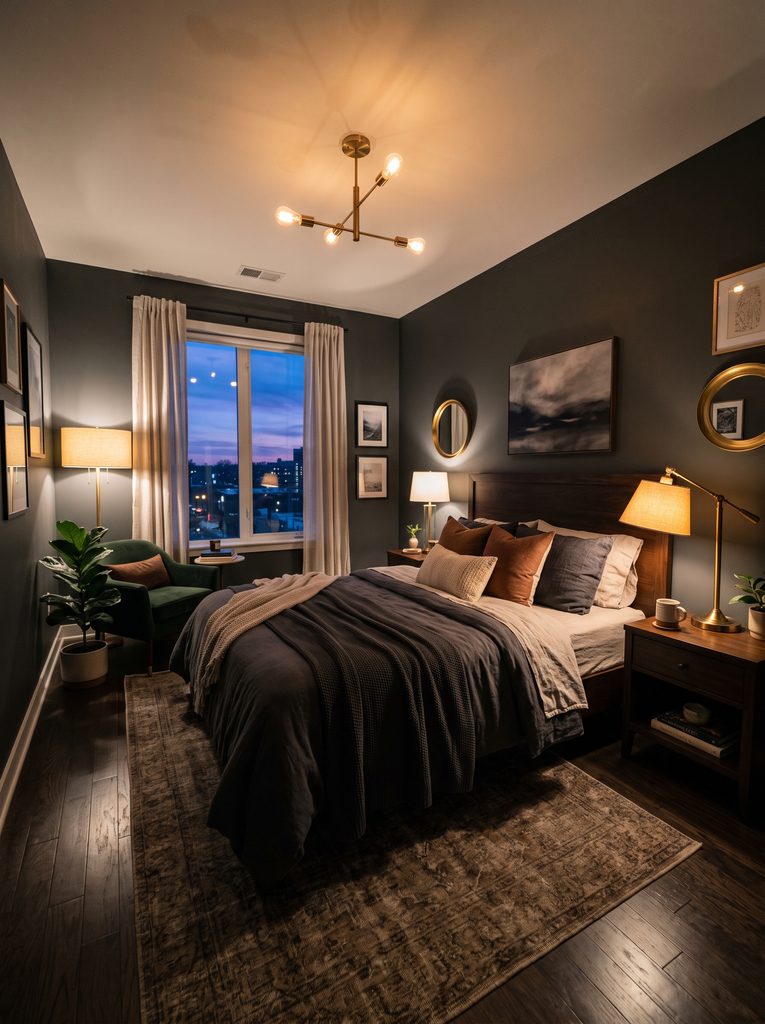
Lighting matters more in a moody bedroom than almost any other design element, since deep colors absorb light rather than reflecting it. Combine a dimmable overhead fixture with at least one or two table lamps, and consider a floor lamp in a reading corner if space allows.
Choose warm-toned bulbs exclusively, since cool white lighting can make dark walls look flat and uninviting rather than rich. This works particularly well when paired with a dimmer switch, since it lets you shift from bright, functional light during the day to a softer glow in the evening.
Step 7: Introduce Jewel Tones or Warm Accents
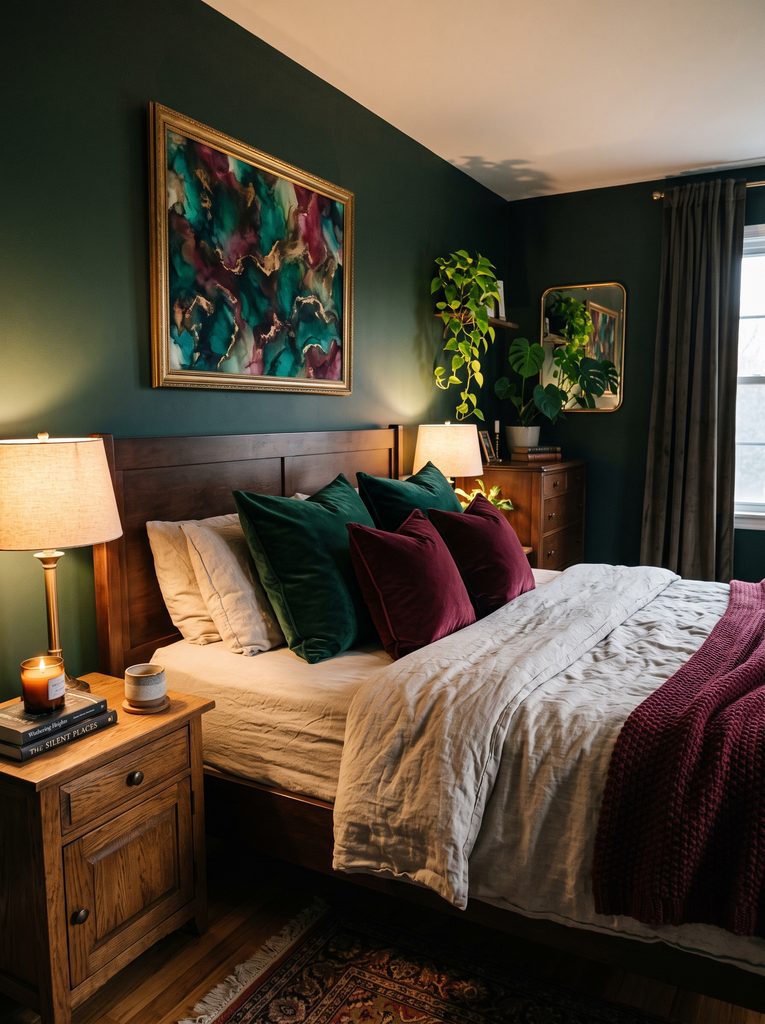
Once your foundation is in place, bring in one or two accent colors through pillows, artwork, or a decorative object. Deep emerald, burgundy, or mustard all pair beautifully with charcoal or navy walls, adding richness without competing with the wall color.
Keep accent colors to two at most, since introducing too many competing tones can make a moody room feel busy rather than intentional. A helpful decorating trick is repeating your chosen accent color in at least two spots, like a pillow and a piece of art, for visual consistency.
Step 8: Finish With Art, Mirrors, and Final Details
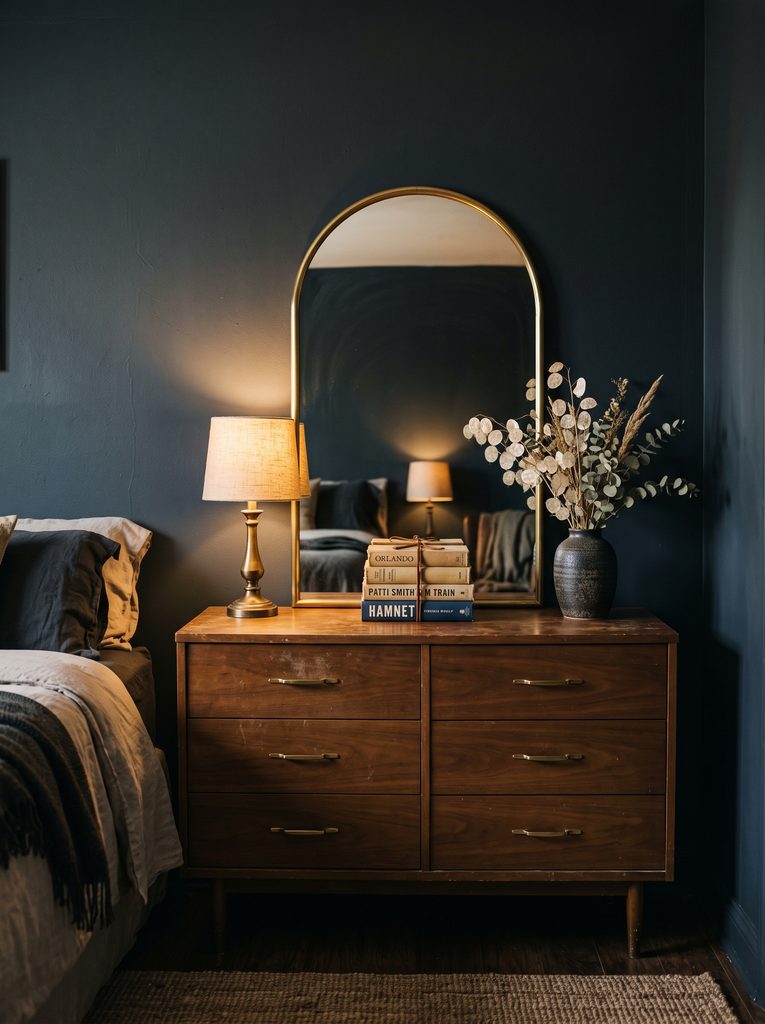
The last step is layering in the smaller details that make the room feel complete. A large piece of art in warm or jewel tones, a mirror with a brass or wood frame, and a few personal objects on the dresser all add the finishing touches.
Leave some negative space rather than filling every surface, since a moody room with too many small objects can start to feel cluttered rather than curated. A mirror is especially useful here, since it reflects light back into the room and helps counterbalance the visual weight of darker walls.
Tips for Best Results
- Test paint colors on a large sample board rather than a small swatch, since darker colors can look different across a bigger surface area.
- Keep the ceiling a lighter shade if you’re worried about the room feeling too enclosed, since this maintains a sense of height even with dark walls.
- I’ve noticed that warm brass lighting is especially helpful in moody bedrooms, since it prevents deep colors from reading as flat or cold in the evening.
- A budget-saving trick is starting with one accent wall before committing to a fully painted room, since this lets you test the mood at a lower cost.
Common Mistakes to Avoid
Skipping warm lighting. Cool white bulbs can make dark walls look harsh and unfinished rather than rich and cozy.
Using too many accent colors. More than two accent colors on top of a dark wall can quickly start to feel chaotic rather than intentional.
Ignoring texture. A moody room built entirely from smooth, flat surfaces can feel visually dull, regardless of how good the color choice is.
Choosing the wrong undertone. A cool-toned charcoal or navy can feel stark, while warmer versions of the same colors tend to feel richer and more inviting.
Forgetting the ceiling. A dark wall color combined with a low, dark ceiling can make a room feel smaller than intended, especially in bedrooms with limited natural light.
Overcrowding surfaces. Filling every dresser top and nightstand with decor can make a moody room feel cluttered instead of luxurious.
Variations
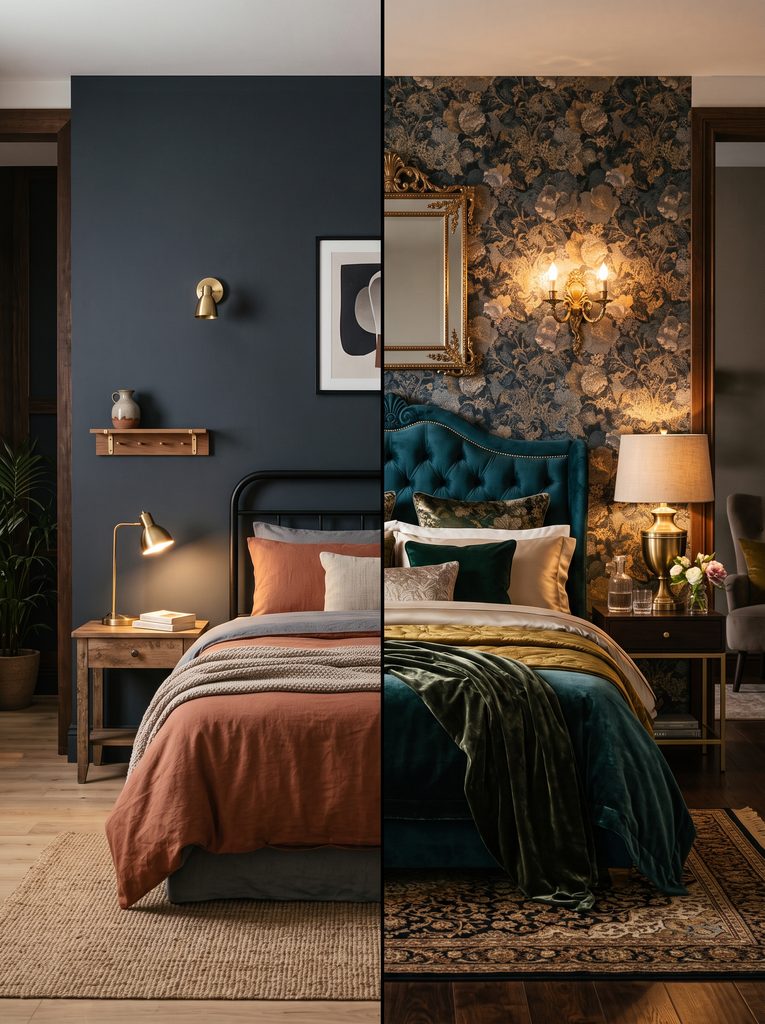
Budget version: Focus on one accent wall, warm-toned bedding, and a swap to brass hardware rather than a full room repaint.
Luxury version: Add velvet upholstery on the headboard, layered wallpaper, and a statement light fixture for a more elevated finish.
Small-space version: Use a single dark accent wall and keep the remaining walls lighter to avoid an overly enclosed feeling.
Rental-friendly version: Rely on bedding, curtains, and removable wallpaper rather than paint, since these elements move with you.
Color alternative: Swap deep charcoal or navy for a warm terracotta or deep clay tone for a moody look with a slightly warmer, more earthy feel.
Maintenance and Longevity
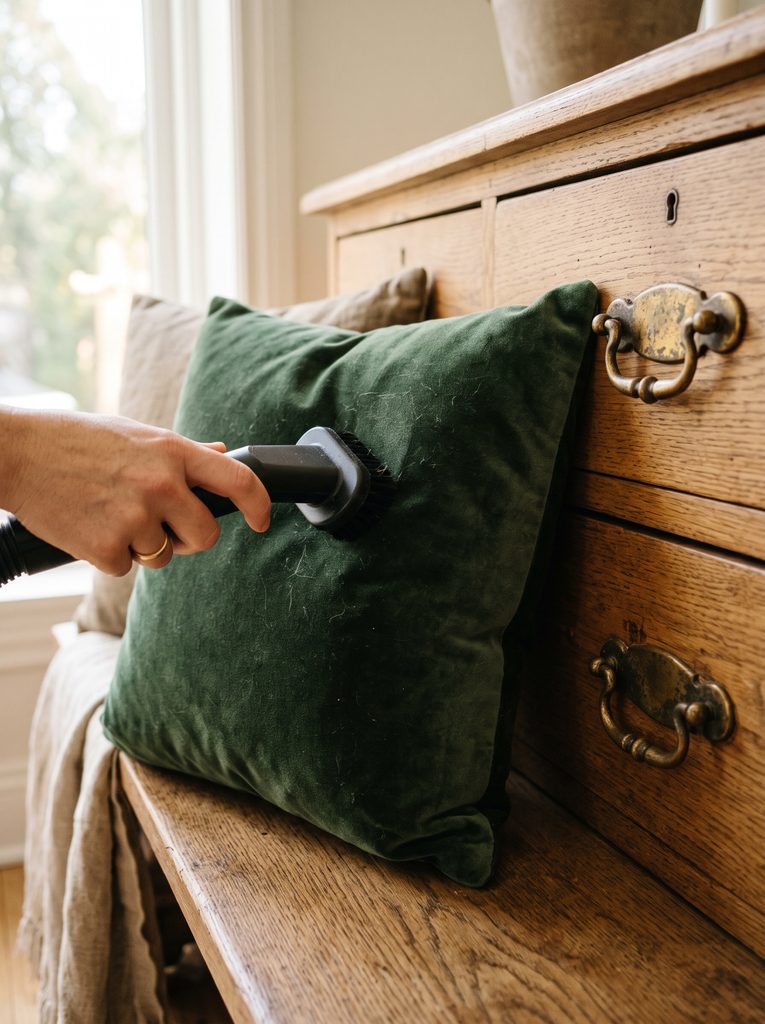
A moody bedroom generally requires the same maintenance as any other color scheme, though a few details are worth keeping in mind. Darker paint finishes, especially matte options, can show scuffs more visibly than lighter colors, so choosing an eggshell or satin finish in high-touch areas can make cleaning easier.
Velvet and heavier textiles benefit from regular vacuuming with an upholstery attachment to keep them looking fresh. Brass and bronze hardware may develop a natural patina over time, which most homeowners find complements the room’s overall richness rather than detracting from it. If you ever want to lighten the space again, a deep wall color can typically be painted over with a lighter shade using a quality primer, so the choice isn’t as permanent as it might feel.
Frequently Asked Questions
Will a dark bedroom feel too small?
Not necessarily. Keeping the ceiling lighter, adding warm lighting, and using a mirror to reflect light can all help a dark bedroom feel enveloping rather than cramped.
What colors work best for a moody bedroom?
Charcoal, deep forest green, navy, and aubergine are popular choices, especially in warmer undertones that avoid feeling too stark or cold.
Do I have to paint the whole room to get a moody look?
No. A single accent wall, dark bedding, or even just a deep-colored ceiling can create a similar effect without a full room commitment.
How do I keep a moody bedroom from feeling too dark at night?
Layered lighting is key. Combining a dimmable overhead fixture with table lamps and warm bulbs keeps the room feeling cozy rather than dim and flat.
Is a moody bedroom a good choice for a small room?
Yes, with some adjustments. Using one accent wall instead of painting the entire room, along with a lighter ceiling and good lighting, helps a small space handle darker color without feeling closed in.
Moody Bedroom Color and Material Guide
| Element | Option | Visual Effect | Best For |
|---|---|---|---|
| Wall color | Charcoal or navy | Rich, grounded | Accent walls or full rooms |
| Hardware | Brass or bronze | Warm, luxe | Lighting, drawer pulls |
| Bedding | Velvet or linen | Textured, cozy | Layered comfort |
| Rug | Wool, deep tone | Warm, grounding | Underfoot texture |
| Lighting | Warm-toned bulbs | Soft, inviting | All fixtures |
Conclusion
A moody bedroom rewards a little planning, but the payoff is a room that feels genuinely luxurious every time you walk into it. Sometimes the smallest change, like swapping in brass hardware or adding a velvet throw pillow, can completely shift how rich and cozy the space feels. Whether you commit to one accent wall or go all in on a fully painted room, these steps offer a realistic path toward a moody bedroom that feels both dramatic and truly restful. Save this guide, and let your bedroom become the retreat it’s meant to be.

Indy Santos is a passionate interior styling specialist and home living enthusiast with a focus on contemporary decor, smart space planning, and affordable design inspiration. At Inspired Homex, she provides readers with fresh decorating concepts, actionable advice, and professional guidance to create comfortable, elegant, and well-organized homes that reflect their personal style.