
A shared bedroom should feel like the one room in the house that’s just for the two of you — calm, comfortable, and a little indulgent after a long day. These master bedrooms decor ideas focus on creating that shared retreat feeling, with warm color palettes, layered textiles, and furniture arrangements that work for two people sharing one space, closet, and nightstand routine.
Designing for a couple means balancing two sets of preferences while keeping the room functional for everyday life — enough nightstand space, a workable path around the bed, and lighting that suits both an early riser and a late reader. The seven ideas below cover a range of styles and budgets, so there’s a starting point no matter your current bedroom setup.
Key Takeaways
- Symmetrical furniture arrangements, like matching nightstands and lamps, help a shared bedroom feel balanced and considerate of both people using the space.
- Warm, layered lighting works better for couples than a single overhead fixture, since it accommodates different bedtime routines.
- Soft, muted color palettes tend to suit shared spaces better than bold statement colors that only reflect one person’s taste.
- Adequate walking space on both sides of the bed matters more in a shared room than in a single sleeper’s space.
Symmetrical Matching Nightstands
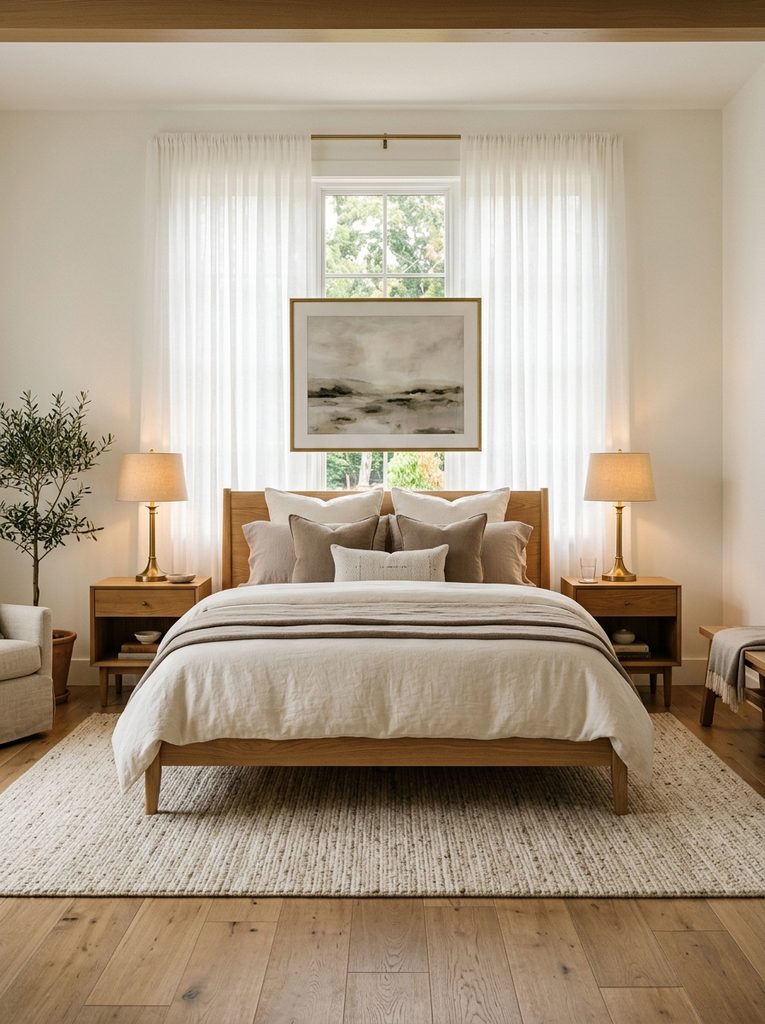
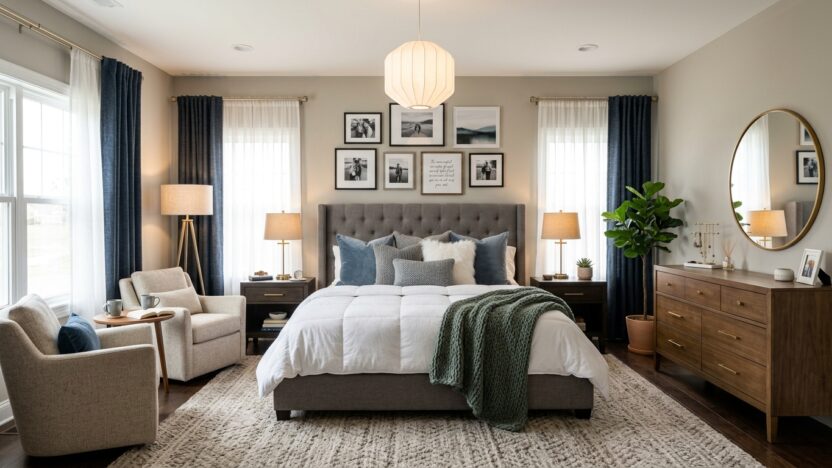
Matching nightstands and lamps on either side of the bed create a balanced, considerate layout that treats both partners equally. This symmetrical setup is one of the simplest ways to make a shared bedroom feel intentional, and it works in nearly any style, from modern to traditional.
How to Get the Look
- Two matching wood or upholstered nightstands
- Identical table lamps on each side
- A wood or upholstered platform bed frame
- Layered cream and taupe bedding
- A woven area rug beneath the bed
Styling Tips
Give each nightstand at least a small charging spot and a place for a book or glasses, so the symmetry stays functional. Repeat the same wood tone across both nightstands and the bed frame for visual consistency.
Layered Neutral Textile Palette
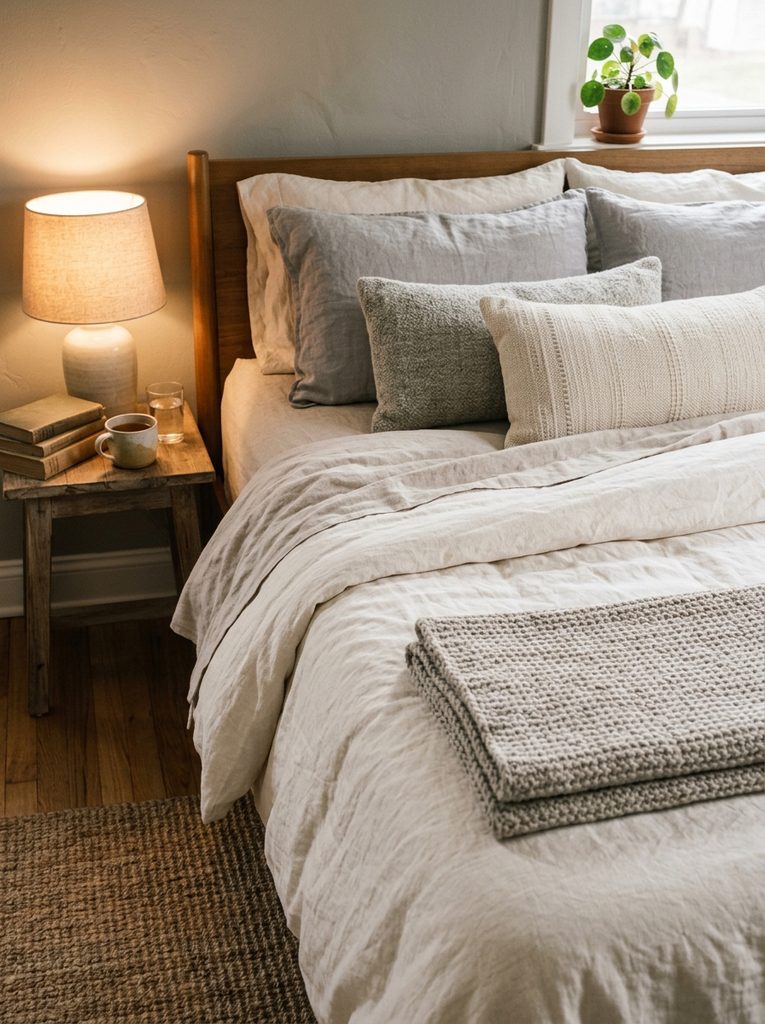
Layering several neutral tones and textures on the bed creates a soft, calming look that suits shared taste better than a single bold color. Mixing linen, knit, and cotton textures adds visual interest without needing pattern, which makes this approach easy to update seasonally.
How to Get the Look
- A linen duvet cover in ivory or oatmeal
- A chunky knit throw folded at the foot of the bed
- Two or three textured lumbar pillows
- Soft gray or taupe accent pillows
- Warm bedside lighting to enhance the palette
Styling Tips
Use no more than three neutral tones so the layering feels intentional rather than mismatched. A helpful decorating trick is mixing matte and slightly textured fabrics, like linen and boucle, to keep an all-neutral bed from feeling flat.
Warm Wood Headboard Wall
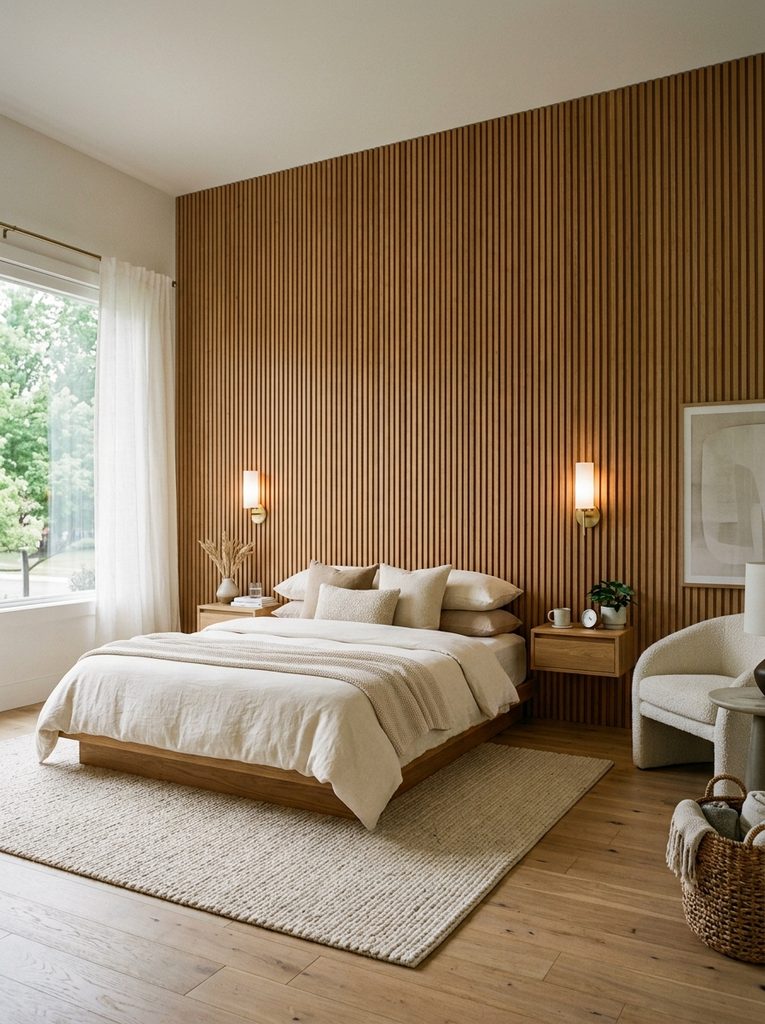
A floor-to-ceiling wood slat headboard wall creates a warm architectural focal point that anchors the entire room. The wood tone brings natural texture without needing much other decor, and wall-mounted sconces on either side keep bedside tables clear for personal items.
How to Get the Look
- A wide wood slat accent wall behind the bed
- A low platform bed frame
- Wall-mounted sconces flanking the headboard
- Simple cream or ivory bedding
- Minimal additional wall decor
Styling Tips
This works particularly well in rooms with higher ceilings, since the vertical slats draw the eye upward. Keep the rest of the room simple so the wood wall remains the standout feature.
Soft Sage and Cream Palette
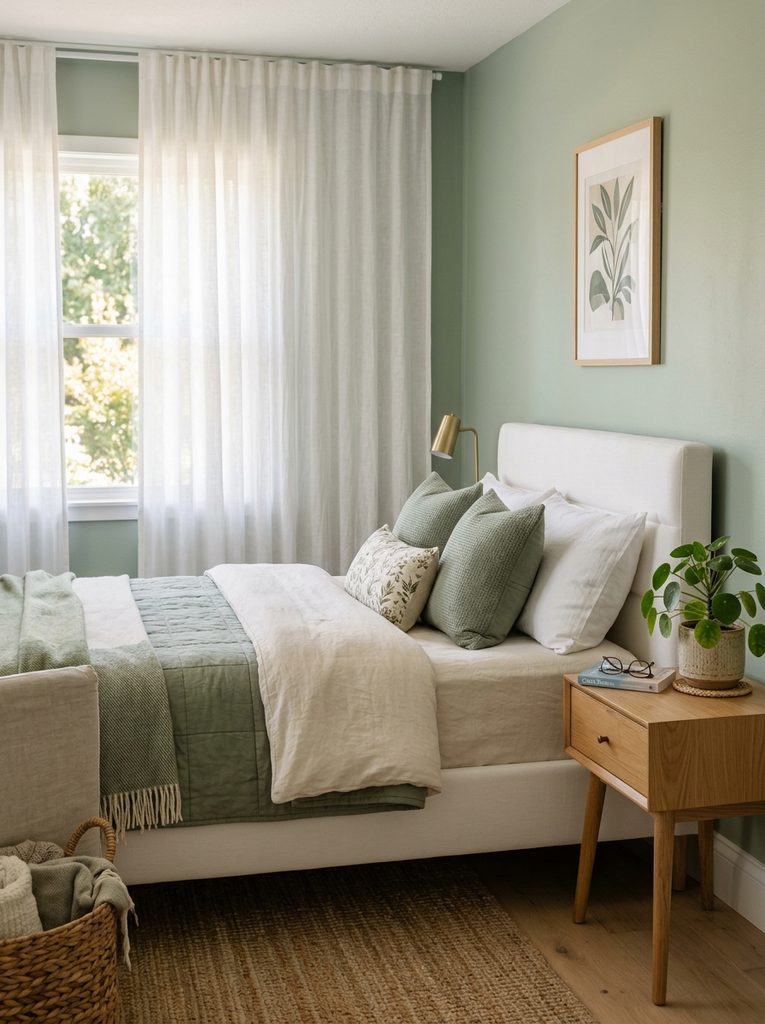
A soft sage green and cream palette brings a calm, nature-inspired feeling to a shared bedroom without leaning into a bold or trendy color. This muted green pairs easily with both warm and cool wood tones, making it a flexible choice for couples with different style preferences.
How to Get the Look
- Soft sage green wall paint
- A white or cream upholstered bed frame
- Layered cream and sage bedding
- A light oak nightstand
- One easy-care plant for a natural accent
Styling Tips
For a more balanced look, keep large furniture pieces neutral and let the sage tone live mainly on the walls and in smaller textiles. This approach works particularly well in bedrooms with good natural light, which brings out the softness of the green.
Cozy Reading Bench Nook
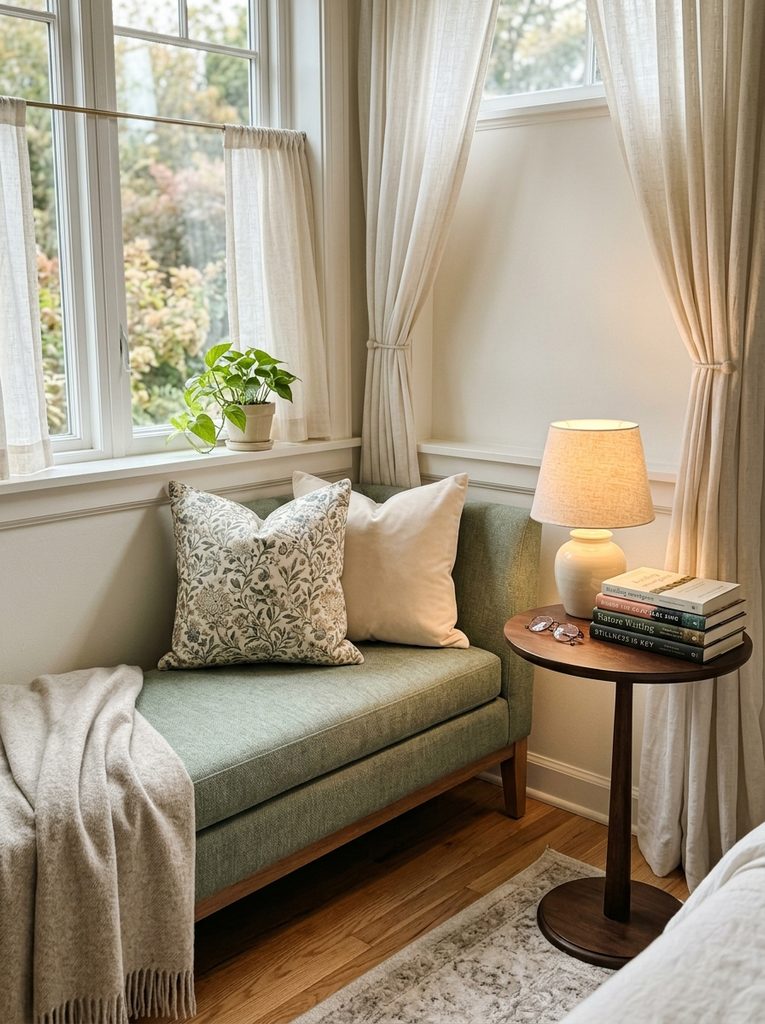
A small bench seat near a window gives a couple a shared spot beyond the bed to sit, read, or have a quiet conversation. This dual-seat setup respects the fact that two people are sharing the room, offering a second gathering point that doesn’t require leaving the space.
How to Get the Look
- An upholstered bench sized for two people
- Two coordinating cushions
- A small round side table
- A table lamp for evening reading
- Sheer curtains to soften the window light
Styling Tips
Position the bench so it doesn’t block the window or create a tight walking path. A common mistake is choosing a bench too large for the space, which can crowd the room rather than add function.
Warm Layered Lighting Scheme
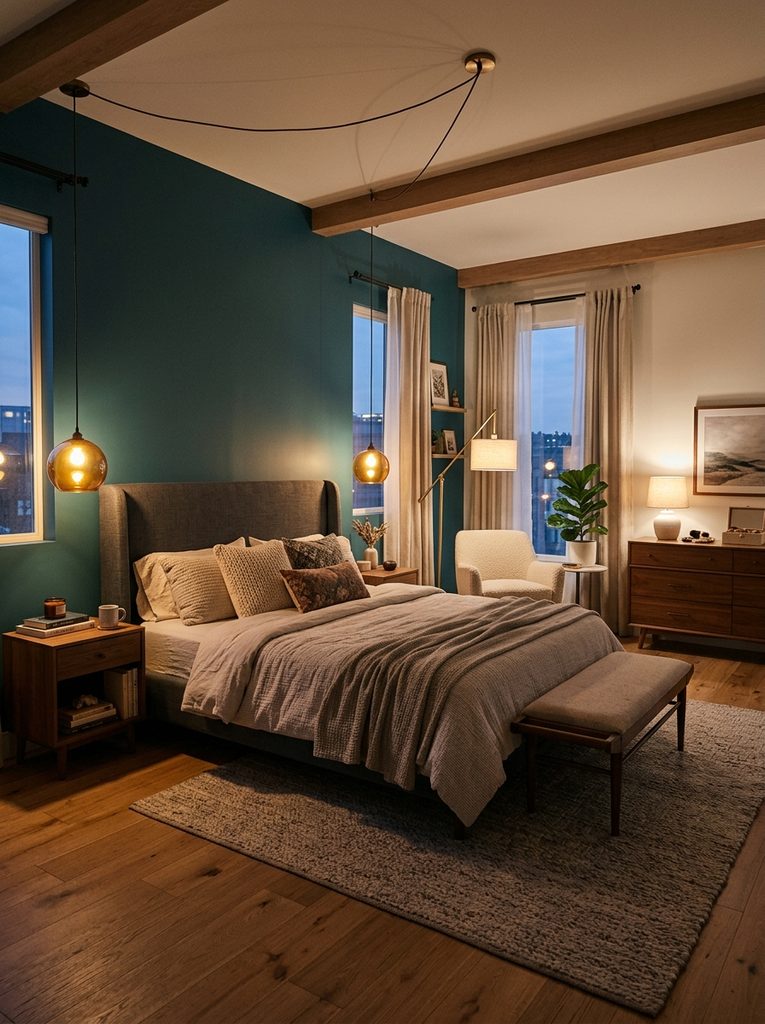
Layering multiple light sources instead of relying on one overhead fixture gives each partner control over their own lighting needs. Pendant lights over each side of the bed free up nightstand space, while a floor lamp and dresser lamp add ambient warmth for evenings spent together in the room.
How to Get the Look
- A pendant light on each side of the bed instead of table lamps
- A floor lamp in an unused corner
- A small table lamp on a dresser or shelf
- Warm-white bulbs (around 2700K) throughout
- A dimmer switch, if the room’s wiring allows
Styling Tips
Give each partner independent control over their own bedside light, whether through separate switches or pull chains. In practical spaces, it helps to have at least one light source that doesn’t require getting out of bed to turn off.
Shared Vanity and Dressing Corner
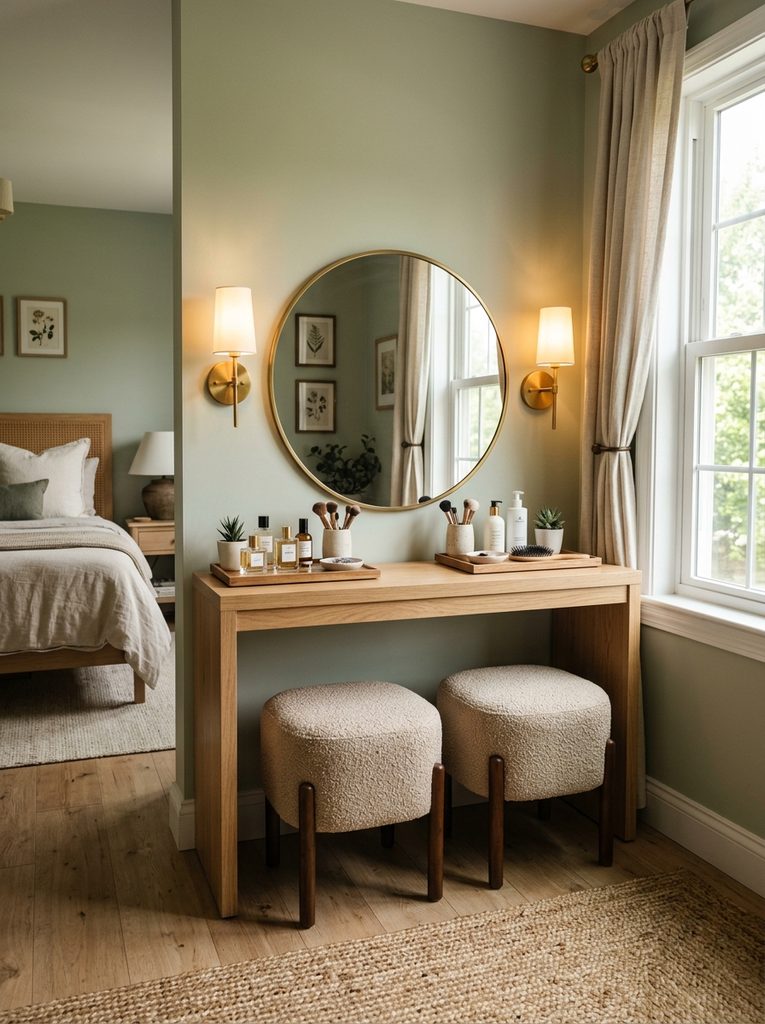
A shared vanity corner gives both partners a designated spot for morning routines without cluttering shared dresser space. Two stools and a divided tray system keep personal items organized, which helps prevent the daily friction that comes from sharing limited surface space.
How to Get the Look
- A vanity table with a round or arched mirror
- Two stools, matching or complementary
- Small trays or organizers to separate each person’s items
- Sconce lighting on either side of the mirror
- A nearby window for natural daylight, if possible
Styling Tips
Divide storage clearly, even if it’s just two labeled trays, so grooming items don’t blend together. This works particularly well in larger primary bedrooms with an unused corner or nook.
Bed and Nightstand Proportion Guide
| Bed Size | Recommended Nightstand Width | Walking Space Per Side |
|---|---|---|
| Queen | 18–24 in / 46–61 cm | At least 24 in / 61 cm |
| King | 20–26 in / 51–66 cm | At least 24–30 in / 61–76 cm |
| California King | 20–26 in / 51–66 cm | At least 24–30 in / 61–76 cm |
These are general guidelines — always measure your specific room before purchasing furniture, since layouts vary by architecture and door placement.
Final Thoughts
Sometimes the smallest styling change — a matching lamp, a layered throw, a shared reading nook — can completely shift how a shared bedroom feels. These master bedrooms decor ideas are meant to help the room feel like it truly belongs to both people using it, not just one. Save this list to Pinterest, talk through which idea fits your space and your routines, and start with whichever change feels most exciting to try first.

Indy Santos is a passionate interior styling specialist and home living enthusiast with a focus on contemporary decor, smart space planning, and affordable design inspiration. At Inspired Homex, she provides readers with fresh decorating concepts, actionable advice, and professional guidance to create comfortable, elegant, and well-organized homes that reflect their personal style.