

Introduction
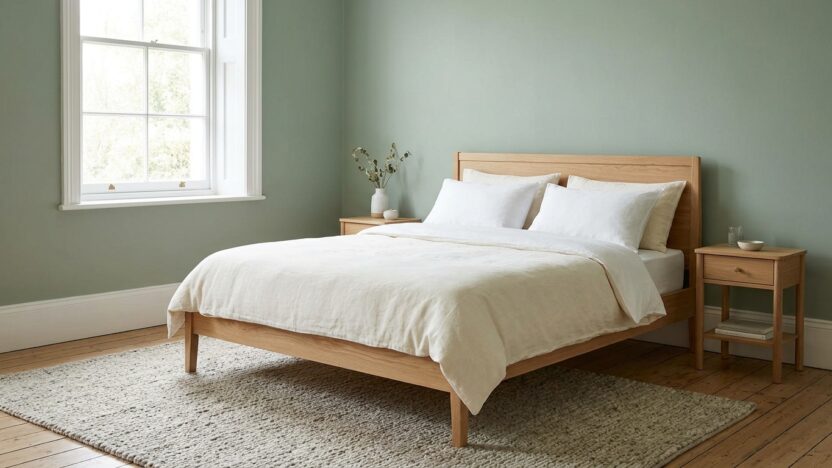
Your bedroom should feel like the most restful room in your entire house, but the wrong color choice can quietly work against that goal without you even realizing it. The right bedroom color schemes do more than just look pretty in photos. They actually change how relaxed you feel the moment you walk through the door.
I’ve noticed that people often default to safe, all-white bedrooms because they’re afraid of getting color wrong. But a thoughtfully chosen palette, even a bold one, can feel just as calming as plain white walls, sometimes even more so. The key is choosing colors that work together intentionally rather than picking shades in isolation.
In this guide, I’m sharing 9 beautiful bedroom color schemes that bring genuine coziness into the room, whether you love warm earth tones, soft neutrals, or something a little more daring.
Key Takeaways
- The right color scheme can make a bedroom feel calmer, warmer, and more restful
- Warm neutrals and earth tones tend to create the coziest overall mood
- Layering two to three colors, rather than just one, adds depth without feeling busy
- Matte and textured paint finishes feel warmer than glossy ones in bedrooms
- Lighting changes how a color looks, so always test paint swatches at different times of day
- Cool tones can still feel cozy when paired with warm wood and soft textiles
- A monochromatic palette in one color family often feels more sophisticated than mixing many colors
Why the Right Color Scheme Matters So Much
Color affects mood more than most people realize, and nowhere is that more important than in the bedroom. A color scheme that’s too cool, too stark, or too visually busy can make it harder to wind down at night, even if you can’t quite put your finger on why the room feels off.
In my experience, the coziest bedrooms almost always lean warm, even when they include cooler colors like blue or green. That warmth usually comes from the undertones in the paint, the wood finishes in the furniture, or the textiles layered throughout the room. Getting that balance right is really the secret behind a bedroom that feels genuinely restful.
Idea 1: Warm Greige and Cream
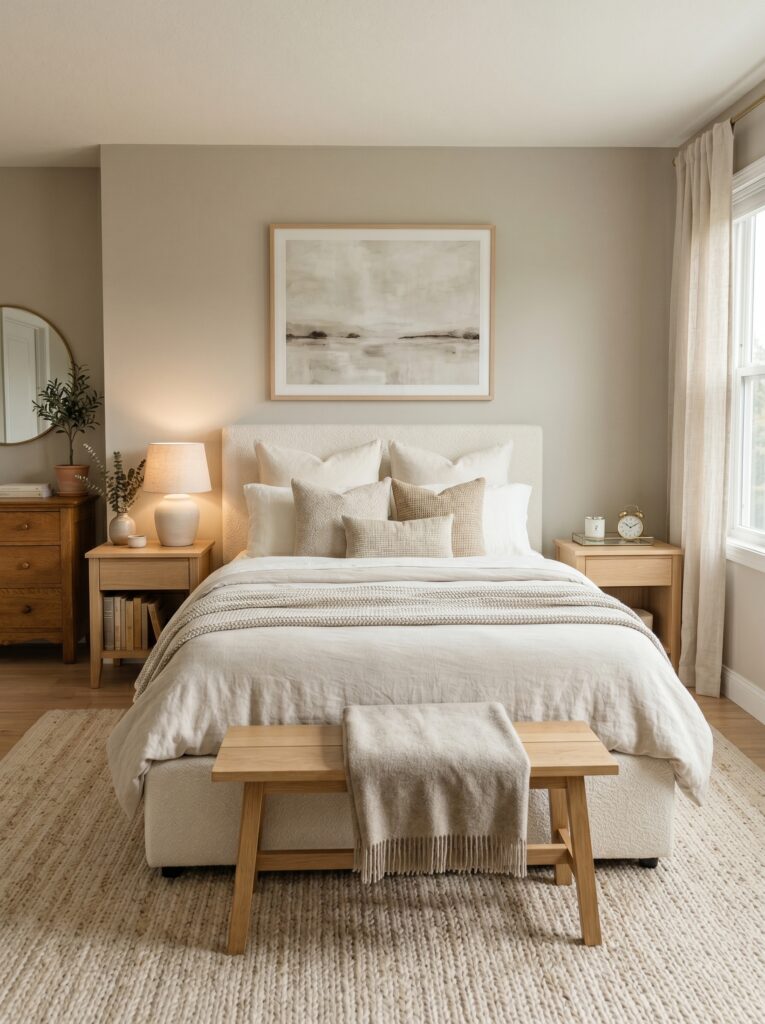
This is one of the most universally cozy color schemes because it leans on warm neutrals that feel calming without being boring. Homeowners love it because it works in almost any home style, and it creates a soft, enveloping mood that feels effortless to live with.
Key Elements:
- Warm greige or taupe wall paint
- Cream or ivory upholstered bed frame
- Layered oatmeal and white bedding
- Natural wood nightstands
- Linen curtains in a soft neutral tone
- Woven textures like jute or rattan
How to Style It:
- Choose a greige paint with warm undertones rather than cool gray undertones.
- Layer your bedding in varying shades of cream, oatmeal, and white for depth.
- Add natural wood furniture to bring warmth against the neutral walls.
- Hang linen curtains to soften the windows without adding extra color.
- Introduce one woven texture, like a jute rug or rattan headboard, for added warmth.
- Keep accessories minimal so the layered neutral tones remain the visual focus.
Idea 2: Terracotta and Warm White
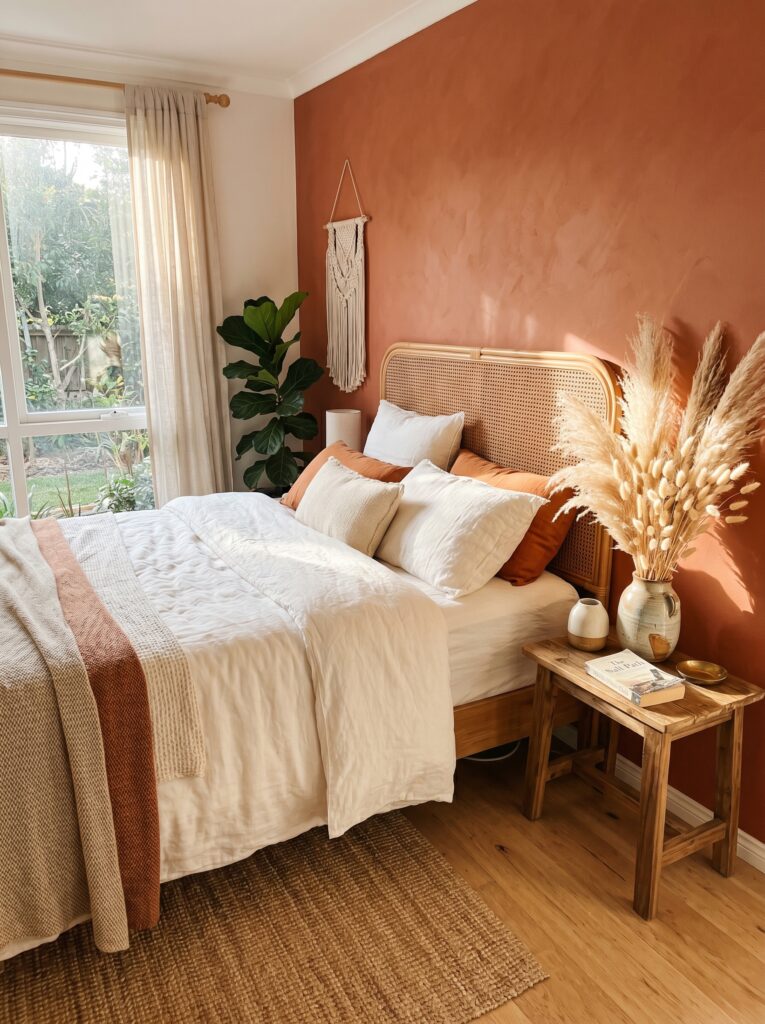
Terracotta brings genuine warmth and a sun-baked, earthy quality into a bedroom that feels both cozy and a little adventurous. It’s loved for its rich, grounding mood, and it works especially well in bedrooms with good natural light, creating a warm, inviting retreat.
Key Elements:
- One terracotta accent wall, typically behind the bed
- Warm white or ivory bedding
- A rattan or wicker headboard
- Dried florals like pampas grass or eucalyptus
- Natural wood flooring or furniture
- Woven textures throughout
How to Style It:
- Paint just the headboard wall in terracotta, keeping the remaining walls warm white.
- Choose a rattan or wicker headboard to complement the earthy tone.
- Layer warm white bedding to keep the room feeling bright despite the bold accent wall.
- Add dried florals in a simple ceramic vase for a soft, natural touch.
- Bring in additional woven textures, like a jute rug, to reinforce the earthy mood.
Idea 3: Sage Green and Soft White
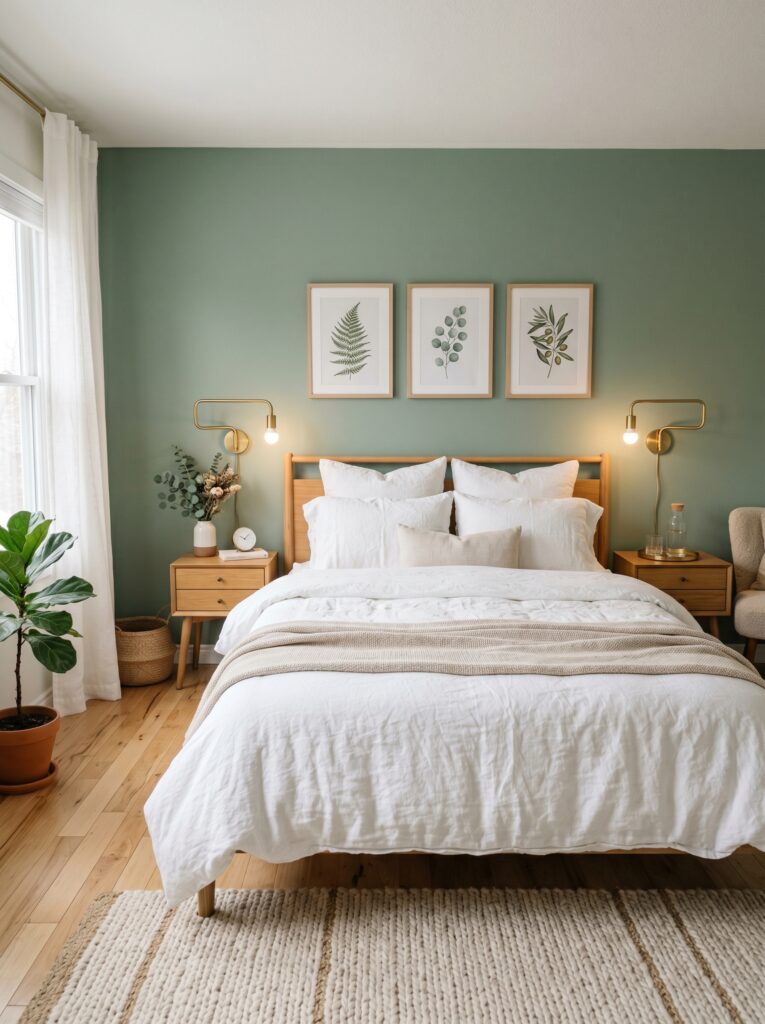
Sage green has become one of the most popular bedroom colors in recent years because it manages to feel both calming and a little sophisticated. It’s loved for its connection to nature, and it works beautifully in bedrooms of any size, creating a fresh, grounding mood.
Key Elements:
- Soft sage green wall paint
- White or cream linen bedding
- Brass or gold accent lighting
- Simple botanical artwork
- Natural wood furniture
- A neutral area rug
How to Style It:
- Choose a muted, soft sage rather than a bright or saturated green for the calmest effect.
- Pair with white or cream bedding to keep the room feeling light and airy.
- Add brass lighting fixtures to bring warmth against the cool-leaning green.
- Hang one or two simple botanical prints above the headboard for a cohesive, nature-inspired touch.
- Furnish with natural wood pieces to reinforce the organic, grounded mood.
A helpful styling trick is to test your sage green swatch at both morning and evening light — sage can shift dramatically cooler or warmer depending on the time of day.
Idea 4: Deep Navy and Warm Wood
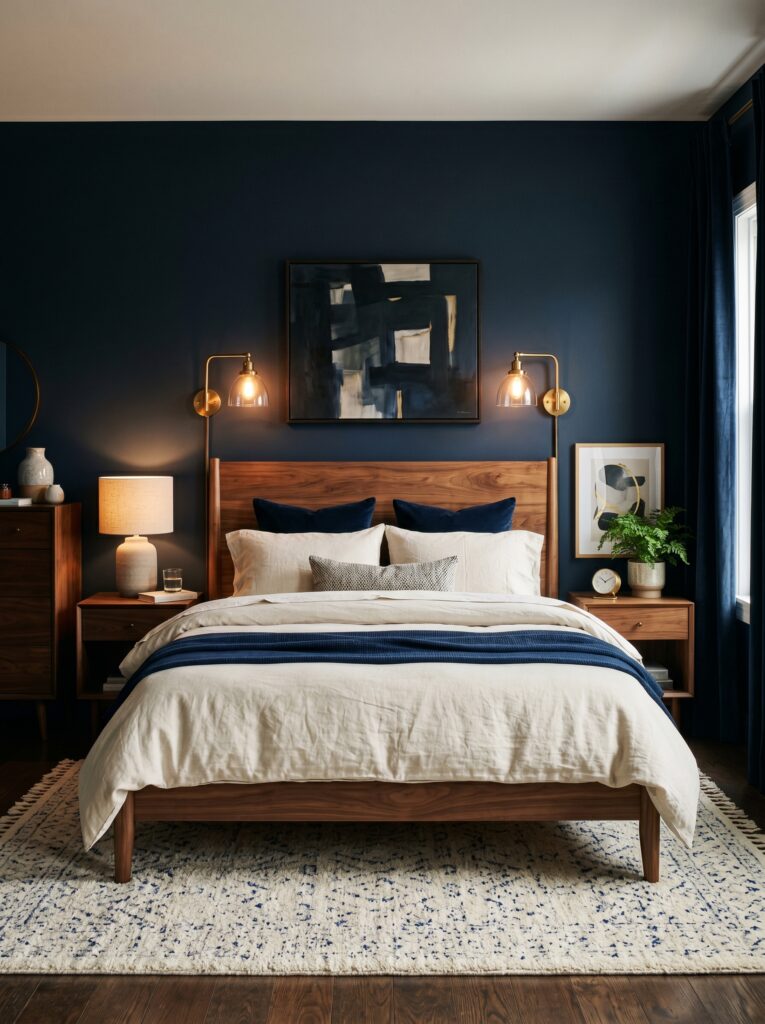
Deep navy might seem like an unusual choice for coziness, but paired with warm wood tones, it creates a rich, enveloping atmosphere that feels like a true retreat at the end of the day. It’s loved for its sophisticated mood, and it works especially well in primary bedrooms, creating a warm, cocooning feel despite the cool base color.
Key Elements:
- Deep navy wall paint
- A warm walnut or oak wood bed frame
- Cream or ivory linen bedding
- Brass wall sconces
- Soft ambient lighting
- Rich-textured accent pieces like velvet or boucle
How to Style It:
- Choose a deep, slightly warm navy rather than a cool, flat blue-black.
- Pair with warm wood furniture to balance the coolness of the wall color.
- Layer cream bedding to create contrast and keep the room from feeling too dark.
- Add brass sconces for warm, flattering evening light.
- Introduce one richly textured accent piece, like a velvet bench or boucle chair, for added coziness.
I’ve tried navy in a north-facing room before, and pairing it with warm brass lighting made a huge difference in keeping the space from feeling too cold or cave-like.
Idea 5: Blush Pink and Warm Neutral
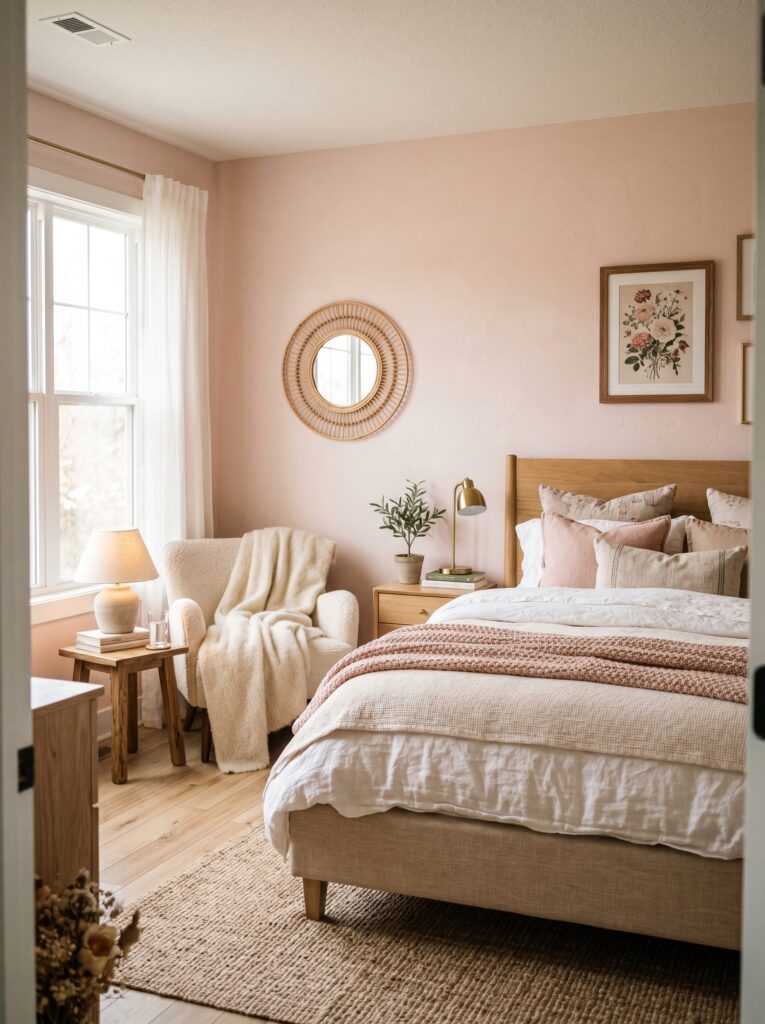
Blush pink paired with warm neutrals creates a gentle, romantic color scheme that feels soft without veering into overly sweet or juvenile territory. It’s loved for its calming, nurturing mood, and it works beautifully in primary bedrooms or guest rooms, creating a serene, comforting atmosphere.
Key Elements:
- Soft blush pink wall paint
- Warm beige or oatmeal linen bedding
- Natural wood furniture
- A small reading nook or accent chair
- Soft, warm-toned lighting
- Minimal, simple accessories
How to Style It:
- Choose a muted, dusty blush rather than a bright or cool-toned pink.
- Pair with warm beige or oatmeal bedding to ground the softness of the pink.
- Furnish with natural wood pieces to keep the room feeling warm and balanced.
- Add a small reading nook with a cream throw for a cozy, lived-in touch.
- Keep lighting warm and soft, avoiding anything too bright or clinical.
Idea 6: Charcoal and Warm Camel
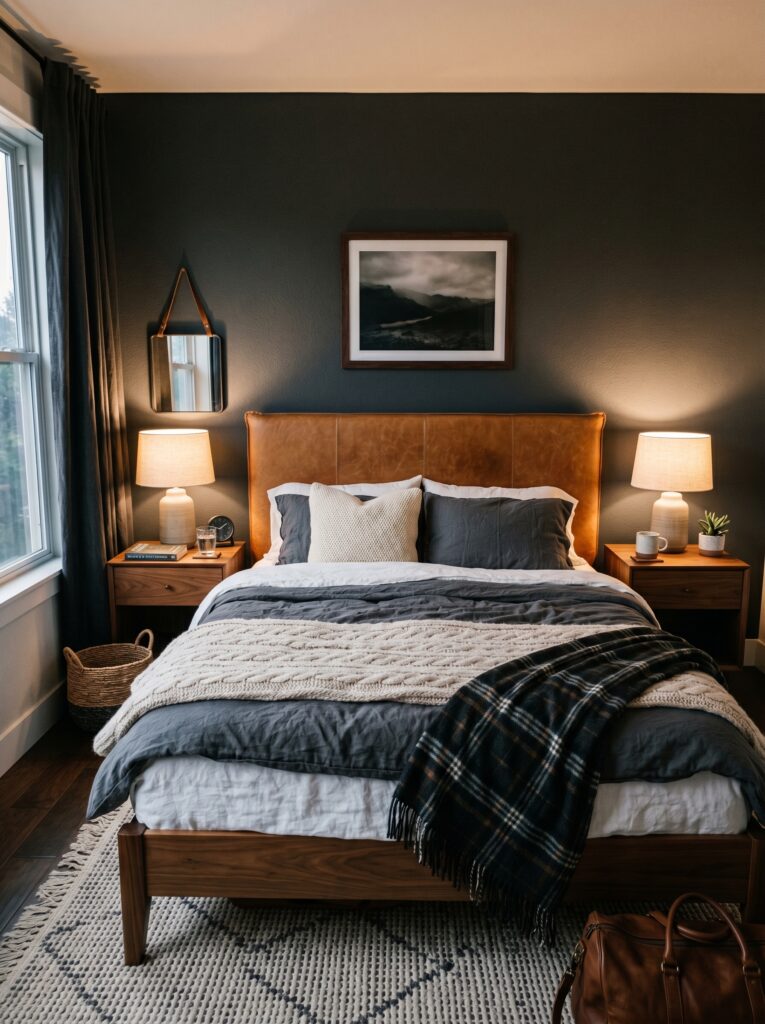
This color scheme combines the depth of charcoal with the warmth of camel, creating a cozy, slightly masculine mood that still feels inviting rather than cold. It’s loved for its rich, grounded character, and it works especially well in primary bedrooms, creating a warm, retreat-like atmosphere.
Key Elements:
- Charcoal gray wall paint
- A camel leather or suede headboard
- Warm wood nightstands
- Layered wool throws
- Soft ambient lighting
- Minimal, intentional artwork
How to Style It:
- Choose a warm-leaning charcoal rather than a flat, cool gray for the walls.
- Pair with a camel leather or suede headboard to introduce warmth and texture.
- Layer wool throws on the bed for added coziness and tactile interest.
- Add warm wood nightstands to soften the room’s more masculine edge.
- Keep lighting soft and warm-toned to avoid an overly stark or cold feeling.
Idea 7: Soft Terracotta and Dusty Blue
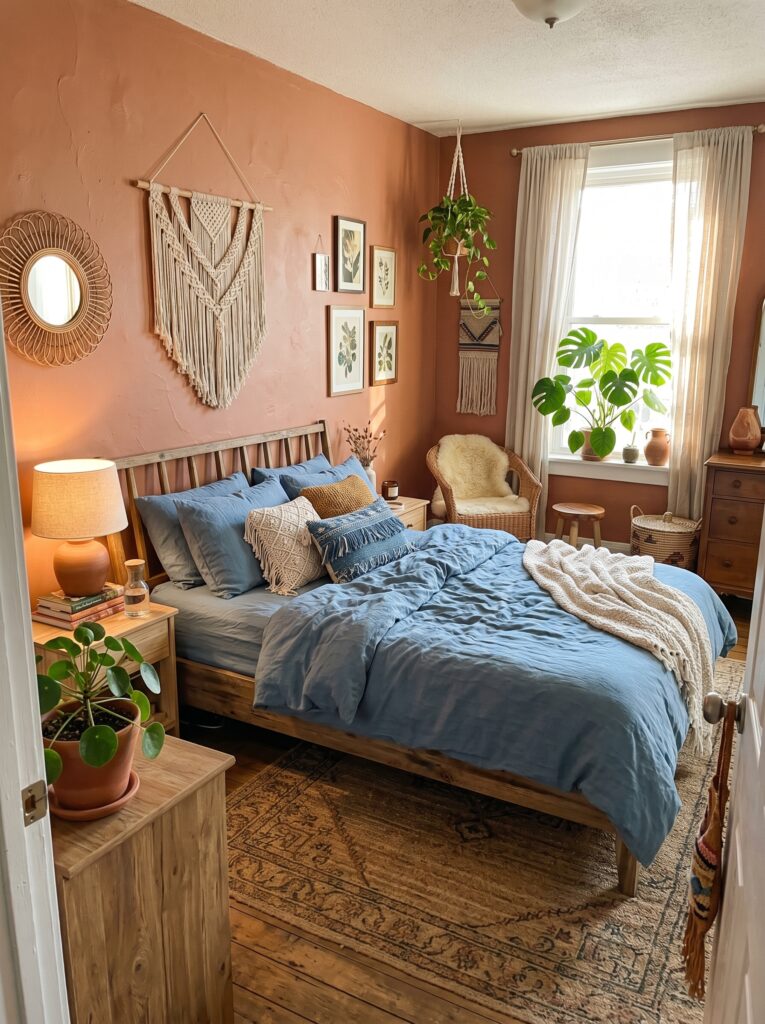
Pairing warm terracotta with cooler dusty blue creates a complementary color scheme that feels both balanced and visually interesting. It’s loved for its bohemian, collected character, and it works especially well in eclectic or globally-inspired bedrooms, creating a warm yet layered mood.
Key Elements:
- Soft terracotta wall paint
- Dusty blue bedding or accent pillows
- Natural wood furniture
- Woven baskets or textiles
- Warm-toned lighting
- A mix of global or vintage-inspired accessories
How to Style It:
- Choose muted, dusty versions of both terracotta and blue rather than bright, saturated tones.
- Use terracotta as your dominant wall color, with blue introduced through bedding and pillows.
- Add natural wood furniture to ground the complementary color pairing.
- Layer in woven textures, like baskets or a jute rug, for added warmth.
- Mix in one or two vintage or global-inspired accessories for a collected, well-traveled feel.
Idea 8: Warm Ivory Monochromatic
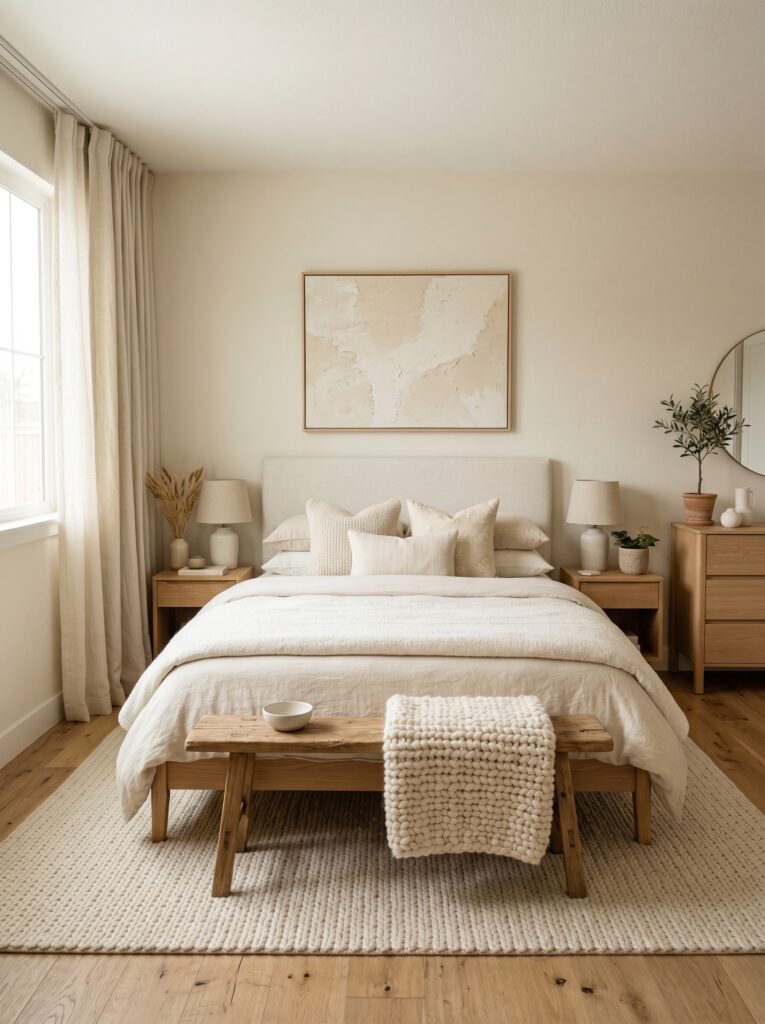
A monochromatic ivory palette uses just one color family in varying shades and textures, creating a sophisticated, calming look that feels intentional rather than plain. It’s loved for its effortless elegance, and it works beautifully in bedrooms of any size, creating a soft, cohesive mood.
Key Elements:
- Warm ivory wall paint
- Layered ivory and cream bedding in varying shades
- Natural wood flooring
- Ivory or cream curtains
- Texture variety: linen, knit, and woven fibers
- Minimal, intentional accessories
How to Style It:
- Choose three to four shades within the ivory and cream family for your walls, bedding, and curtains.
- Layer different textures within the same color family — linen sheets, a knit throw, a woven rug.
- Keep furniture in natural wood tones to add warmth without introducing new colors.
- Add one or two simple accessories, like a ceramic vase or ceramic lamp, in the same tonal family.
- Rely on texture variation, rather than color, to keep the room from feeling flat.
In my experience, monochromatic bedrooms often feel more luxurious than rooms with multiple bold colors — the cohesion does a lot of the visual work without trying too hard.
Idea 9: Olive Green and Warm Brass
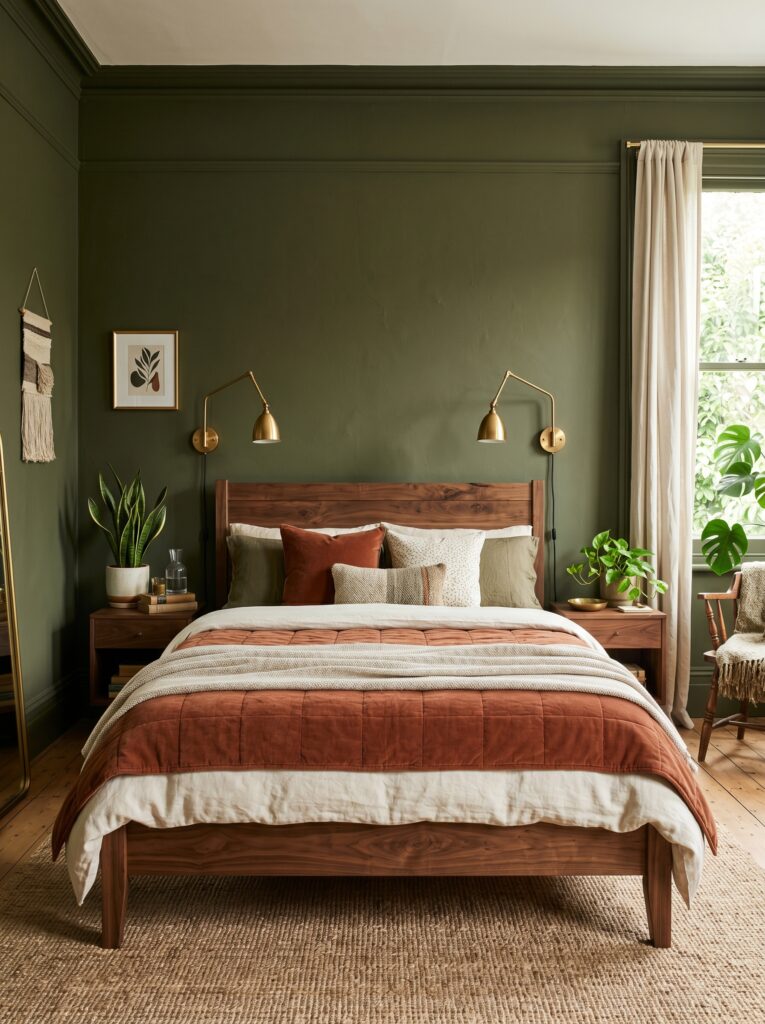
Olive green brings an earthy, slightly vintage-inspired richness to a bedroom that feels both grounded and a little unexpected. It’s loved for its connection to nature and warmth, and it works especially well in primary bedrooms, creating a cozy, organic retreat.
Key Elements:
- Deep olive green wall paint
- A warm wood bed frame
- Brass accent lighting
- Layered textiles in cream and rust tones
- Natural fiber rugs
- Vintage-inspired accessories
How to Style It:
- Choose a deep, slightly muted olive rather than a bright or yellow-leaning green.
- Pair with warm wood furniture to reinforce the earthy, grounded mood.
- Add brass lighting fixtures for warmth and a touch of vintage elegance.
- Layer textiles in cream and rust tones to complement the olive backdrop.
- Add a natural fiber rug underfoot to complete the organic, earthy feel.
Bedroom Color Scheme Comparison Guide
| Color Scheme | Best For | Mood Created | Lighting Pairing |
|---|---|---|---|
| Warm Greige & Cream | Any bedroom style | Soft, enveloping | Warm white bulbs |
| Terracotta & Warm White | Sunny, bright rooms | Earthy, inviting | Warm white bulbs |
| Sage Green & Soft White | Nature-inspired spaces | Fresh, grounding | Brass or gold fixtures |
| Deep Navy & Warm Wood | Primary bedrooms | Rich, cocooning | Warm ambient lighting |
| Blush Pink & Warm Neutral | Romantic, soft spaces | Gentle, comforting | Soft warm lighting |
| Charcoal & Warm Camel | Masculine, modern rooms | Grounded, retreat-like | Warm ambient lighting |
| Terracotta & Dusty Blue | Eclectic, global styles | Balanced, layered | Warm white bulbs |
| Warm Ivory Monochromatic | Minimalist bedrooms | Calm, sophisticated | Soft natural light |
| Olive Green & Warm Brass | Earthy, vintage styles | Cozy, organic | Brass fixtures |
Common Decorating Mistakes to Avoid
- Choosing colors based only on trends. A color scheme should suit your room’s natural light and your own comfort, not just what’s popular.
- Ignoring undertones. Many neutrals and grays have hidden cool or warm undertones that only show up once painted on the wall.
- Skipping a sample swatch test. Always paint a small section and observe it at different times of day before committing.
- Using only cool-toned lighting. Warm bulbs make almost every color scheme feel cozier, especially in the evening.
- Overloading the room with too many colors. Two to three colors, layered thoughtfully, almost always look more cohesive than five or six.
- Forgetting texture. Color alone isn’t enough — linen, wool, and wood all add the warmth that makes a scheme feel truly cozy.
Final Thoughts
Choosing from these bedroom color schemes is really about finding the palette that makes you want to climb into bed and stay there a little longer. Whether you’re drawn to warm neutrals, deep moody tones, or something in between, the right colors can transform your bedroom into a genuine retreat.
I’ve seen how simple decorating changes like these can completely transform how a home feels without requiring a major renovation. Start with just one color scheme from this list, paint a sample swatch, and see how it feels in your own space before committing to the full room.
Save this article to your Pinterest board for your next bedroom refresh, and share it with anyone who’s ready to make their space feel a little cozier.

Indy Santos is a passionate interior styling specialist and home living enthusiast with a focus on contemporary decor, smart space planning, and affordable design inspiration. At Inspired Homex, she provides readers with fresh decorating concepts, actionable advice, and professional guidance to create comfortable, elegant, and well-organized homes that reflect their personal style.